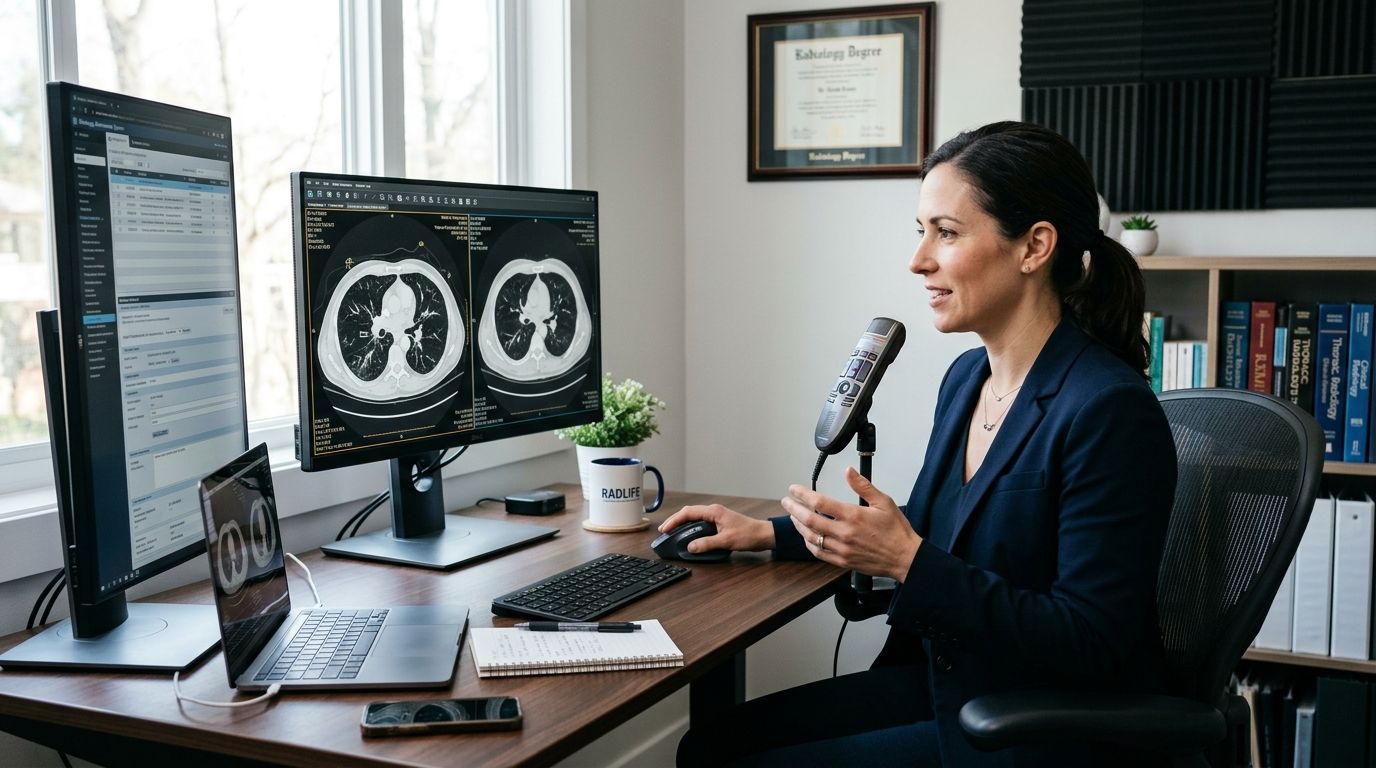
Starting an independent teleradiology practice means forming a legal entity, licensing yourself in every state where the patient physically sits, getting credentialed at each client site, and locking in malpractice tail coverage before you sign a single contract. The step most radiologists underestimate is the home reading room: hospitals won't hand over PACS access until your workstation, network, and monitor setup clear their read-out standards.
- How to start a teleradiology practice comes down to five sequential steps, not one application: entity, licensure, credentialing, tail coverage, and a compliant reading room.
- State medical licensure follows the patient's location, not yours, so multi-state coverage is the real bottleneck in 2026.
- Malpractice tail from your prior employer has to be resolved before a new independent contract can close.
- Direct hospital contracts and teleradiology-company contracts require the same credentialing steps but pay and control differently.
Why this matters
Every state medical board runs independently, and reading a study for a patient physically located in Texas requires a Texas license even if you're sitting in Oregon. That's the single biggest constraint on scaling an independent teleradiology practice in 2026, and it's why most radiologists starting out stack licenses one state at a time instead of chasing all 50 up front — a process covered in detail in maintaining multi-state licenses as a teleradiologist.
The appeal is obvious: control over your schedule, direct negotiation on per-study or RVU rates, and no group politics. The administrative load is the trade-off, and it lands entirely on you until you've built out the paperwork most employed radiologists never see.
How do you start an independent teleradiology practice?
- Form your business entity and get your NPI. Most states require a PC, PLLC, or professional corporation for a solo physician practice, depending on that state's corporate-practice-of-medicine rules. Apply for an individual NPI and, if you plan to bill under a group, a Type 2 group NPI.
- License yourself in every state where studies will originate. The jurisdiction is set by the patient's location, not yours — a national footprint means a national licensing project, run one board at a time.
- Get credentialed and privileged at each client site. Hospitals and imaging centers run their own medical staff credentialing regardless of your state license, and it typically spans months per facility rather than weeks, so start this before your last W-2 paycheck clears.
- Enroll with Medicare/Medicaid and set up payer contracts. PECOS enrollment (CMS-855B or 855I depending on your entity structure) has to be active before you can bill federal payers under your own tax ID.
- Build a compliant home reading room. Diagnostic-grade monitors, ambient lighting, network redundancy, and PACS access controls all factor into whether a facility clears you to read remotely — see how to build a compliant home reading room for teleradiology for the specifics facilities check.
- Secure malpractice tail and go-forward coverage. If you're leaving a claims-made policy at a hospital or group, tail coverage has to be resolved before a new independent contract closes — leaving it unresolved is the single most common reason a signed teleradiology deal stalls.
- Sign service agreements directly with facilities, imaging centers, or a teleradiology company. This is the fork in the road: direct hospital contracts give you rate control, teleradiology-company contracts give you volume without the sales work.
Why licensing and credentialing timelines vary
- Number of states you're targeting — each additional state license adds its own board backlog and renewal cycle.
- CAQH profile completeness — an incomplete CAQH file is the top reason hospital credentialing offices bounce an application back.
- Whether the facility requires ACR accreditation verification on its own equipment before it will onboard a new remote reader.
- State medical board processing volume, which fluctuates year to year and isn't something you can expedite by paying more.
- Whether you're joining an existing teleradiology company's group NPI versus billing entirely under your own new entity — the former usually moves faster.
- PACS and VPN integration complexity at each individual facility, since no two hospital IT departments run identical remote-access setups.
Malpractice tail coverage before you leave your W-2 job
Tail coverage insures claims reported after a claims-made policy ends but tied to acts that happened while it was active — and it is the line item most radiologists forget to price out before resigning. If your prior employer's policy is claims-made rather than occurrence-based, you're on the hook for tail unless your contract states otherwise, and an independent practice can't legally take assignments while that gap sits open. Evaluating malpractice tail costs before you leave a job walks through how that math actually plays out against a signing bonus or new contract's economics.
“If your malpractice tail isn't resolved before your last W-2 day, no independent contract will close.”
Contracting directly with hospitals vs. joining a teleradiology company
This is the fork that determines how much of the administrative load in the steps above you carry yourself.
| Path | Who owns the credentialing burden | Revenue model | Best for |
|---|---|---|---|
| Independent direct hospital contract | You, facility by facility | You set per-study or RVU rates | Radiologists with existing hospital relationships and negotiation leverage |
| Through an established teleradiology company | Company handles most of it under its group NPI | Fixed per-study or salaried rate | Radiologists who want reading volume without running a business |
| Locum tenens via a staffing agency | Agency-managed, per assignment | Hourly or per-shift rate | Radiologists testing a market before committing to their own entity |
Once credentialed, hospitals treat an independent teleradiology contractor like any other remote vendor touching PHI: expect a vendor risk review before PACS access gets turned on. Health systems increasingly route independent readers through the same hospital security questionnaires used to vet EHR integrations and imaging software vendors, covering encryption standards, VPN configuration, and audit logging for the home reading room — budget time for that review alongside credentialing, not after it.
Before picking a path, it's worth comparing what independent-contract and locum teleradiology work actually pays across markets. RadBoard aggregates 5,000+ radiology positions from 20 sources, including teleradiology-company and direct-hospital listings, which gives you a real baseline before you negotiate your first independent rate.
Related questions
Do you need a separate business entity for a teleradiology practice?
Yes — most states require a professional corporation, PLLC, or equivalent structure before you can bill payers or sign facility contracts as an independent physician, and the entity type depends on that state's corporate-practice-of-medicine rules.
Can one radiologist read for hospitals in multiple states remotely?
Yes, but only in states where that radiologist holds an active medical license, since licensure jurisdiction follows the patient's location rather than the reader's physical location.
What should you check before signing a teleradiology contract?
Rate structure, malpractice tail responsibility, and non-compete or non-solicitation terms are the three clauses that cause the most disputes after signing — how to evaluate a teleradiology contract before signing breaks down what to flag before you commit.
FAQ
How long does credentialing take for an independent teleradiologist?
Credentialing timelines vary by facility board cycle and state licensing backlog, and typically span months per site rather than weeks. Starting this process while you're still employed elsewhere avoids a gap between jobs.
Do independent teleradiologists need their own PACS system?
Most independent teleradiologists connect to the client facility's existing PACS remotely through a secured VPN rather than buying a full PACS system. You do need a diagnostic-grade reading workstation that meets each facility's display and network standards.
Is malpractice tail coverage required to start an independent practice?
Yes, if you're leaving a claims-made malpractice policy from a prior employer, tail coverage has to be resolved before a new independent contract can legally take effect. Occurrence-based policies don't carry this requirement.
How much does it cost to start a teleradiology practice?
Costs vary by state licensing fees, malpractice tail premiums, and home reading room setup, so there's no single national figure. Checking current fee schedules directly with your state medical board and malpractice carrier is the only reliable way to price it out.
Is it better to contract directly with hospitals or join a teleradiology company?
Direct hospital contracts give you more control over rates and scheduling but put the full credentialing and vendor-review burden on you. Joining an established teleradiology company shifts most of that administrative load to the company in exchange for a fixed rate.
Do you need ACR accreditation to start an independent teleradiology practice?
ACR accreditation applies to the imaging facility's equipment, not to the reading physician, but some hospitals verify their own accreditation status as part of onboarding a new remote reader. Check the specific facility's requirement rather than assuming it applies universally.
Can you do teleradiology part-time alongside a W-2 job?
Yes, many radiologists run a limited independent teleradiology contract alongside full-time employment, provided the contract terms and non-compete language allow it. Reviewing your current employment contract for restrictive covenants before signing anything new is the first check.
One last thing
The paperwork sequence above — entity, licensure, credentialing, tail, reading room — is the same whether you're targeting three states or thirty, so the radiologists who move fastest are the ones who start the multi-state licensing applications months before they've even lined up their first contract. If you want to gauge market rates before you leave your W-2 job, cross-reference open teleradiology and locum listings on RadBoard, which pulls from 20 sources ranging from health systems to staffing agencies, before you set your independent rate.