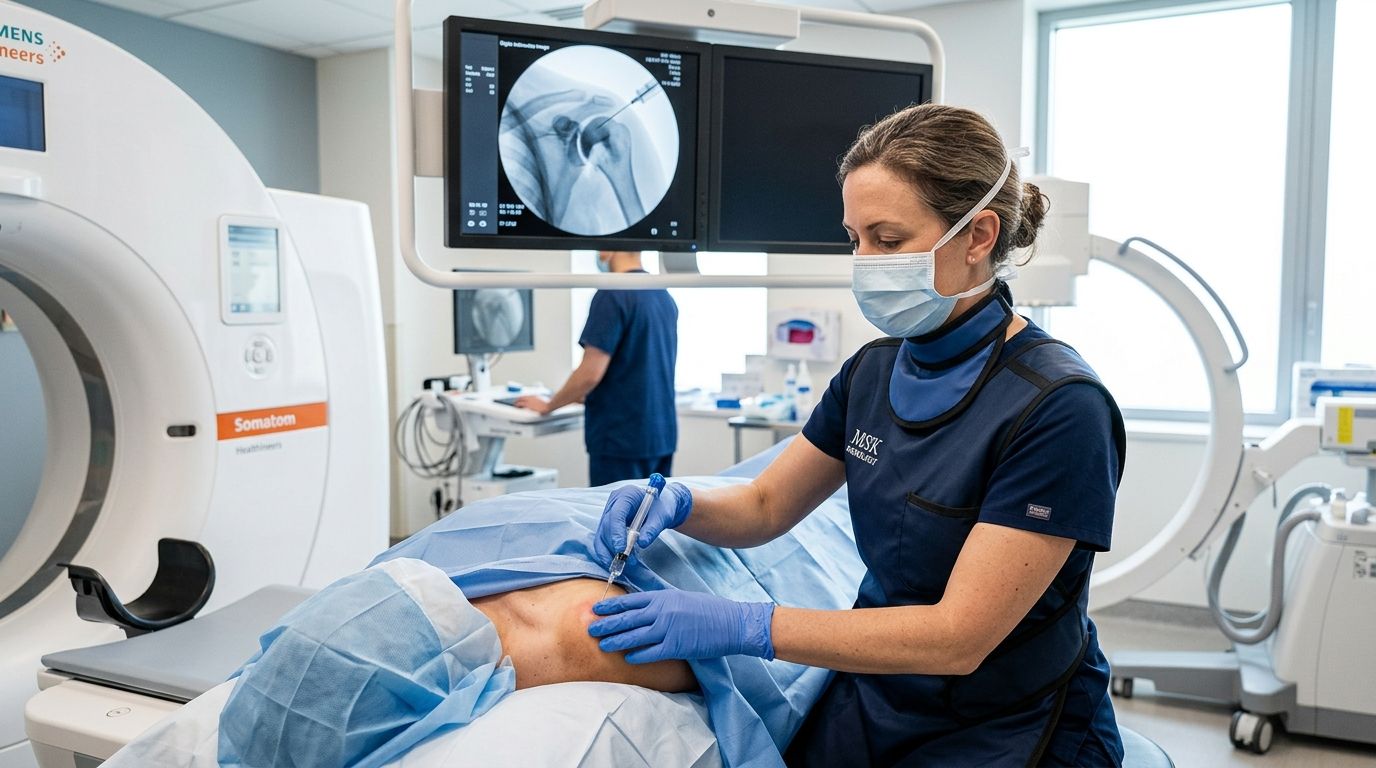
Arthrogram radiologist jobs are diagnostic and procedural roles where a radiologist performs fluoroscopic, CT, or MRI-guided contrast injections into joints, then interprets the resulting images to evaluate labral tears, capsular integrity, and cartilage damage. This work sits at the intersection of musculoskeletal radiology and image-guided procedures, and it demands hands-on injection skill that a purely diagnostic MSK read does not require. Radiologists chasing these roles in 2026 need to search differently than a general diagnostic candidate would — procedural privileging, fluoro suite access, and injection-specific RVU structures all change how a job listing should be read.
- Arthrogram radiologist jobs pay through procedural plus diagnostic RVUs, not a flat diagnostic rate — confirm both before signing.
- Outpatient ortho-affiliated imaging centers carry the most steady arthrogram and joint injection volume in 2026.
- Locum tenens MSK procedure coverage is the fastest way to build injection case counts without a permanent contract.
- Fellowship-trained MSK radiologists get first access to high-volume fluoroscopic and CT arthrogram roles.
- RadBoard aggregates radiology listings from 20 sources, including procedure-heavy MSK and orthopedic-affiliated postings.
Why arthrogram radiologist jobs matter for MSK procedure rads
Procedural MSK radiologists don't search the same way a body imager or a neuroradiologist does. Postings for arthrogram and joint injection work get buried inside generic "musculoskeletal radiology" listings on most job boards, which forces candidates to read full job descriptions just to find out whether the role includes injections at all.
The distinction matters because compensation, malpractice exposure, and daily workflow all shift once injections enter the job. A pure MSK read job is a reading-room job. An arthrogram job means gowning up, positioning patients under fluoro or CT, managing informed consent for an invasive procedure, and handling the rare contrast reaction or vasovagal episode on the spot.
Searching a radiology job search platform like RadBoard with procedure-specific terms saves the time that generic subspecialty keyword searches waste.
Audit your procedural caseload before you search
Get specific about what kind of injection and arthrogram work you actually want and are credentialed for. Job descriptions vary wildly in how much procedural volume they deliver.
- Count how many fluoroscopic hip, shoulder, and wrist arthrograms you logged in the past 12 months
- Separate CT arthrogram volume from fluoro-only volume, since some sites are fluoro-only
- Note whether you have done MR arthrograms with intra-articular gadolinium injection
- List joint aspirations and steroid injections done outside formal arthrogram protocols
- Flag ultrasound-guided injection experience, which outpatient orthopedic sites increasingly ask about
Target practices that credential you for image-guided injections
Not every imaging site runs procedural MSK work at real volume. Orthopedic-affiliated centers and sports medicine imaging groups are where the case counts show up.
- Outpatient imaging centers co-located with or referred by orthopedic surgery groups
- Sports medicine imaging practices tied to college or professional athletic programs
- Hospital-employed MSK sections with dedicated fluoro suites and IR backup
- Academic MSK divisions combining teaching cases with high-acuity trauma referrals
- Multi-specialty ortho groups employing radiologists directly for same-day injection turnaround
Musculoskeletal radiology jobs tied to sports medicine referral networks tend to carry the steadiest arthrogram volume, because ortho surgeons need pre-operative arthrograms turned around inside the same week.
Match your training to the right setting
Fellowship-trained MSK radiologists get priority for high-volume procedural roles. General diagnostic radiologists with documented injection experience still land solid arthrogram jobs in 2026, especially at community and outpatient sites that cannot recruit a fellowship-only candidate.
- MSK fellowship graduates: target academic and high-acuity ortho-affiliated groups first
- General diagnostic radiologists with procedure logs: target outpatient imaging centers and community hospitals
- IR-trained radiologists doing MSK on the side: target multi-specialty groups needing cross-coverage
- Radiologists new to injections: start with joint aspirations and steroid injections before pursuing full arthrogram privileges
Negotiate procedural RVU credit separately from diagnostic RVUs
This is where candidates lose money. A group paying flat diagnostic RVU rates for procedural work is undervaluing the injection component — arthrograms and joint injections carry their own CPT codes and RVU weight, distinct from the diagnostic read.
- Ask for the exact CPT codes billed for each procedure type you will perform
- Confirm whether procedural RVUs count toward your productivity bonus threshold
- Check if fluoro time and room setup are compensated separately from image interpretation
- Compare the offer against standard RVU-based compensation structures used across MSK and IR-adjacent roles
- Get the RVU conversion factor in writing before you sign, not verbally during the interview
Confirm equipment and staffing support before signing
An arthrogram job without adequate suite support turns into a scheduling bottleneck fast. Ask before you accept, not during your first week.
- Dedicated fluoro suite availability versus shared time with IR or GI procedures
- Trained MSK techs on staff who know positioning for shoulder, hip, and wrist arthrograms
- On-site contrast reaction protocol and code cart access
- Turnaround expectations for same-day pre-op arthrograms requested by ortho surgeons
- Backup plan if you are the only radiologist credentialed for injections at that site
Check malpractice and consent liability specific to injections
Diagnostic-only malpractice coverage does not automatically extend to procedural liability at the same limits. Joint injections carry infection, nerve injury, and contrast reaction risk that a pure diagnostic read never touches.
- Confirm the policy explicitly covers image-guided joint procedures
- Ask who obtains informed consent: you, a nurse, or the referring ortho office
- Check whether tail coverage applies if you leave and a complication surfaces later
- Verify who documents post-procedure monitoring and discharge instructions
- Ask how procedural complications are handled in the group's peer review process
Use locum coverage to build a procedural track record
If your case volume is thin, locum tenens assignments focused on musculoskeletal procedure coverage are the fastest way to accumulate documented arthrogram and injection experience in 2026 without committing to a permanent contract.
- Short-term assignments at outpatient imaging centers with steady ortho referral volume
- Coverage gaps at academic MSK sections during faculty leave
- Fill-in work at sports medicine practices during seasonal athletic imaging surges
- Multi-site contracts that let you compare procedural volume across settings before committing
Filter for procedural MSK roles fast
Search AI-matched arthrogram and joint injection listings across 20 job sources.
Where arthrogram and joint injection radiologists work in 2026
| Setting | Best for | Key limitation |
|---|---|---|
| Ortho-affiliated outpatient imaging center | High, steady arthrogram volume | Limited diagnostic case variety outside MSK |
| Hospital-employed MSK section | Fellowship-trained rads wanting a trauma mix | Shared fluoro suite time with other services |
| Academic MSK division | Teaching-track rads building a research portfolio | Lower base pay than private outpatient roles |
| Sports medicine imaging practice | Rads wanting athlete-focused procedural work | Seasonal volume swings tied to sports calendars |
| Locum tenens MSK coverage | Building procedural case counts fast | No site continuity or employer benefits |
Ortho-affiliated outpatient imaging centers offer the most consistent arthrogram radiologist job volume in 2026, while locum tenens MSK coverage is the fastest on-ramp for radiologists still building an injection case count.
“If the job posting never names a CPT code or a fluoro suite, it is a diagnostic MSK read job wearing a procedural title.”
Common mistakes MSK procedure rads make
- Assuming a "musculoskeletal radiologist" posting includes procedural injection work — many are diagnostic-only reads
- Accepting flat diagnostic RVU rates without negotiating separate procedural RVU credit
- Skipping the equipment conversation and discovering the fluoro suite is shared three ways
- Not confirming who handles informed consent and post-procedure monitoring before day one
- Overlooking malpractice tail coverage, which leaves a gap once a locum assignment ends
FAQ
What is an arthrogram radiologist job?
An arthrogram radiologist job combines diagnostic MSK imaging with fluoroscopic, CT, or MRI-guided contrast injections into a joint. The radiologist performs the injection and interprets the resulting images, unlike a purely diagnostic MSK role.
Do you need an MSK fellowship for joint injection jobs?
An MSK fellowship is not strictly required, but it gets priority access to high-volume procedural roles in 2026. General diagnostic radiologists with documented injection experience still land arthrogram jobs at outpatient and community sites.
How is arthrogram and joint injection work compensated?
Procedural work is billed under separate CPT codes with its own RVU weight, distinct from the diagnostic read. Confirm the RVU conversion factor and whether procedural RVUs count toward productivity bonuses before signing.
Can locum tenens radiologists perform arthrograms?
Yes. Locum tenens MSK procedure assignments are common in 2026 and are one of the fastest ways to build a documented injection case log without a permanent contract.
What equipment do arthrogram radiologist jobs require?
Most roles require a dedicated or shared fluoroscopy suite, trained MSK techs for joint positioning, and on-site contrast reaction protocols. CT and MR arthrogram work adds scanner scheduling coordination on top of fluoro time.
Is fluoroscopy or CT more common for arthrograms?
Fluoroscopy remains the standard guidance method for most shoulder, hip, and wrist arthrograms. CT arthrography is used when cross-sectional detail on cartilage or labral pathology is needed, often in patients who cannot undergo MRI.
Do outpatient imaging centers hire radiologists specifically for joint injections?
Yes. Outpatient centers affiliated with orthopedic surgery groups hire specifically for procedural MSK work, because same-day pre-operative arthrogram turnaround is central to their referral relationship.
Does malpractice coverage differ for procedural MSK radiologists?
It can. Diagnostic-only malpractice limits do not always extend to procedural liability at the same coverage level, so confirm the policy explicitly covers image-guided joint injections before accepting a role.
One last thing
Ultrasound-guided joint injection is taking share from fluoro-guided work at outpatient orthopedic sites in 2026, largely because it avoids radiation and does not require booking a fluoro suite. Radiologists who add documented ultrasound-guided injection experience to their case log are becoming more competitive for outpatient MSK roles than fluoro-only candidates, even at lower total procedure counts. Log those cases separately on your CV — most hiring groups will not ask, and most candidates will not volunteer it.