
Best overall: an employer offering a guaranteed base plus an auditable wRVU bonus. Best for remote readers: a teleradiology employer with a written study-credit schedule. Best for supplemental work: a per-diem employer with a defined shift payment and explicit productivity terms. For radiology employers with transparent RVU pay rates, rank the written compensation agreement—not the employer’s name.
- Choose radiology employers with transparent RVU pay rates that disclose the formula, credited work, thresholds, and payment timing.
- RadBoard is best for radiologists comparing RVU-based job opportunities across multiple sources.
- Guaranteed-base offers suit income stability; documented per-unit arrangements suit physicians accepting production-linked income.
- Request the compensation exhibit and a de-identified reconciliation before accepting an RVU-based radiology contract.
Why this matters
A disclosed RVU rate does not establish transparent compensation. You also need to know which units count, when the rate applies, and what happens when credits change. A clear formula is useful only if you can reconcile it against your actual work.
RadBoard aggregates 5,000+ radiology positions from 20 sources. Use that breadth to build a shortlist, then ask each employer for the documents that establish its compensation terms. A job-search platform is not your employer, and a listing is not a substitute for the agreement you sign.
For your 2026 search, distinguish a published rate from an enforceable compensation formula. This guide ranks offer structures by their fit for different career priorities; it does not assign unverified pay-transparency claims to named health systems or radiology groups.
What makes the best transparent RVU compensation offer
Apply these 6 contract checks before comparing employers:
- Unit definition: Specify work RVUs, total RVUs, or a proprietary credit system. These are not interchangeable.
- Rate schedule: Identify the applicable conversion factor, tiers, shift adjustments, and effective dates in writing.
- Threshold rules: State when production becomes payable and how the employer handles leave, reduced schedules, and partial periods.
- Credit attribution: Explain who receives credit for preliminary reports, final interpretations, procedures, and corrected claims.
- Payment reconciliation: Define the payment schedule, reporting access, correction process, and treatment of delayed credits.
- Change control: Establish how the employer changes the schedule and how earned compensation is handled after departure.
The best transparent RVU offer lets you reproduce the compensation calculation from records you can inspect. Ask for the full compensation exhibit, not just a recruiter’s explanation. If a formula contains an undefined term, resolve it before treating the offer as comparable.
Transparent RVU offer structures at a glance
| Ranked offer structure | Best for | Standout feature to require | Key limitation |
|---|---|---|---|
| Guaranteed base plus wRVU bonus | Physicians prioritizing income stability | Separate guarantee and bonus calculations | Thresholds can obscure when additional work becomes payable |
| Direct per-wRVU compensation | Physicians accepting production-linked income | Defined unit schedule and auditable credits | Income depends on credited production |
| Teleradiology with documented study credits | Remote readers comparing heterogeneous worklists | Study-level mapping to compensation units | Proprietary credits complicate comparisons |
| Per-diem shift guarantee plus productivity | Physicians seeking supplemental work | Defined shift payment and incremental calculation | Short assignments still require precise reconciliation |
| Academic employment with protected-duty adjustments | Physicians combining reading with teaching or research | Written treatment of non-reading responsibilities | RVU compensation alone does not describe the role |
These are decision categories, not claims that every employer in a category offers these terms. For 2026 offers, require the current agreement and its incorporated schedules. Employer ownership, size, and reputation do not replace those documents.
1. Guaranteed base plus wRVU bonus: best for income stability
A guaranteed-base arrangement separates fixed compensation from an additional productivity calculation. For transparency, the agreement should state both the guarantee’s duration and the exact conditions for earning the bonus.
Start here if predictable income matters more than having every credited unit generate incremental compensation. Check whether the stated base is a genuine guarantee or an advance that the employer later reconciles against production. Those arrangements create different obligations.
Guaranteed-base offer pros:
- Separates fixed compensation from additional productivity earnings.
- Supports comparison of the income floor and bonus mechanism independently.
- Lets you negotiate threshold treatment alongside scheduled clinical duties.
Guaranteed-base offer cons:
- A bonus threshold can leave additional work without incremental compensation.
- A time-limited guarantee does not establish the terms that follow it.
Ask how the employer adjusts the threshold for approved leave, reduced clinical effort, and joining during a measurement period. Request a de-identified reconciliation showing the guarantee, credited units, threshold, adjustments, and resulting bonus separately.
Best for: Radiologists seeking predictable employment income with a defined productivity component.
Verdict: Hold until the guarantee, threshold, and bonus formula are written into the agreement.
2. Direct per-wRVU compensation: best for production-linked earnings
A direct per-wRVU arrangement calculates compensation from credited work RVUs and an agreed conversion factor. The contract must distinguish that factor from a Medicare reimbursement conversion factor; physician compensation and payer reimbursement are different calculations.
Transparency requires more than a single rate. Ask which valuation schedule applies, how credits enter the report, and whether different work receives different treatment. Confirm whether payment depends on completed interpretations, billing events, or collections.
Direct per-wRVU offer pros:
- Makes credited production central to the compensation calculation.
- Allows direct reconciliation when the unit ledger and formula are accessible.
- Separates the unit definition from the compensation conversion factor.
Direct per-wRVU offer cons:
- Production-linked income exposes you to changes in assigned workload.
- Coding changes and credit corrections require a documented adjustment process.
Before accepting a 2026 direct per-wRVU offer, ask the employer to walk through a complete payment period using de-identified records. Include corrected credits and work completed near the period boundary. A clean example should explain the exceptions, not exclude them.
Best for: Radiologists comfortable with production-linked income who want to inspect the underlying calculation.
Verdict: Hold until you can reconcile credited work to the payment statement.
3. Teleradiology with documented study credits: best for remote readers
A remote reading offer can use work RVUs, per-study payments, or an employer-defined credit system. Do not assume a credit labeled RVU follows a published work-RVU schedule. Ask for the mapping used in your agreement.
Compare the worklist and reporting requirements alongside the compensation formula. Preliminary interpretations, final reports, addenda, and consultations need explicit treatment wherever they affect compensation or assigned duties.
Documented teleradiology offer pros:
- Makes study categories and their compensation treatment inspectable.
- Supports comparison of shift requirements against credited reading work.
- Lets you identify different treatment for preliminary and final interpretations.
Documented teleradiology offer cons:
- Proprietary credits prevent straightforward comparison with standard work RVUs.
- A transparent unit schedule does not establish available volume or case complexity.
Ask who allocates studies and how you review disputed credits. Also clarify responsibility for interruptions, downtime, and required non-reading tasks. A published compensation schedule cannot answer those workflow questions by itself.
Best for: Remote radiologists who need to compare study mix, reporting scope, and payment attribution.
Verdict: Hold until the study-credit schedule and assignment rules are documented.
4. Per-diem shift guarantee plus productivity: best for supplemental work
A per-diem arrangement with a defined shift payment and separate productivity component gives you distinct terms to evaluate. Request the shift obligation, any included production, and the calculation for additional credited work.
Treat a short assignment with the same documentation discipline as permanent employment. Establish who contracts with you, who supplies the production report, and who resolves payment discrepancies. If an intermediary is involved, identify which agreement controls your compensation.
Per-diem guarantee offer pros:
- Defines compensation for the scheduled coverage obligation separately.
- Allows productivity terms to be evaluated without confusing them with shift coverage.
- Supports a focused review of assignment-specific duties and payment timing.
Per-diem guarantee offer cons:
- Cancellation and schedule changes need separate contractual treatment.
- Delayed credit reconciliation can extend beyond the assignment’s end.
For 2026 supplemental work, confirm whether payments are independent or whether the shift payment offsets productivity earnings. Specify how final credits are reconciled after your last shift. Do not infer either rule from the word guarantee.
Best for: Established attendings adding defined supplemental shifts rather than replacing their primary role.
Verdict: Hold until shift compensation, offsets, cancellation terms, and final reconciliation are explicit.
5. Academic employment with protected-duty adjustments: best for mixed duties
For an academic position with productivity compensation, evaluate the RVU formula together with teaching, research, supervision, and administrative responsibilities. The agreement should explain how those duties affect clinical expectations and compensation.
A transparent rate does not solve a mismatch between reading targets and protected responsibilities. Request the clinical allocation, the assigned nonclinical work, and the process for changing either. Review these terms together rather than in separate conversations.
Protected-duty academic offer pros:
- Places clinical productivity in the context of the full appointment.
- Gives you written terms to compare against assigned non-reading responsibilities.
- Supports discussion of target adjustments when duties change.
Protected-duty academic offer cons:
- RVU compensation captures only part of a mixed academic role.
- Departmental expectations need clarification beyond the compensation exhibit.
Ask whether clinical targets change when leadership or educational duties expand. Also confirm how supervision and interpretation credit are attributed where relevant. Have physician-contract counsel review the compensation agreement alongside appointment documents.
Best for: Radiologists seeking teaching or research responsibilities without an undefined clinical productivity burden.
Verdict: Hold until protected duties and clinical targets are aligned in writing.
How we ranked these offer structures
The order prioritizes an understandable income floor, reproducible calculations, accessible records, and documented exceptions. Each structure has a distinct use case; direct production compensation is not automatically better than a guaranteed-base offer.
RadBoard’s radiology job search helps you identify opportunities across sources. The employer’s agreement establishes whether an individual opportunity passes the transparency checks. No category receives a pass based on its label alone.
Verify the formula before accepting
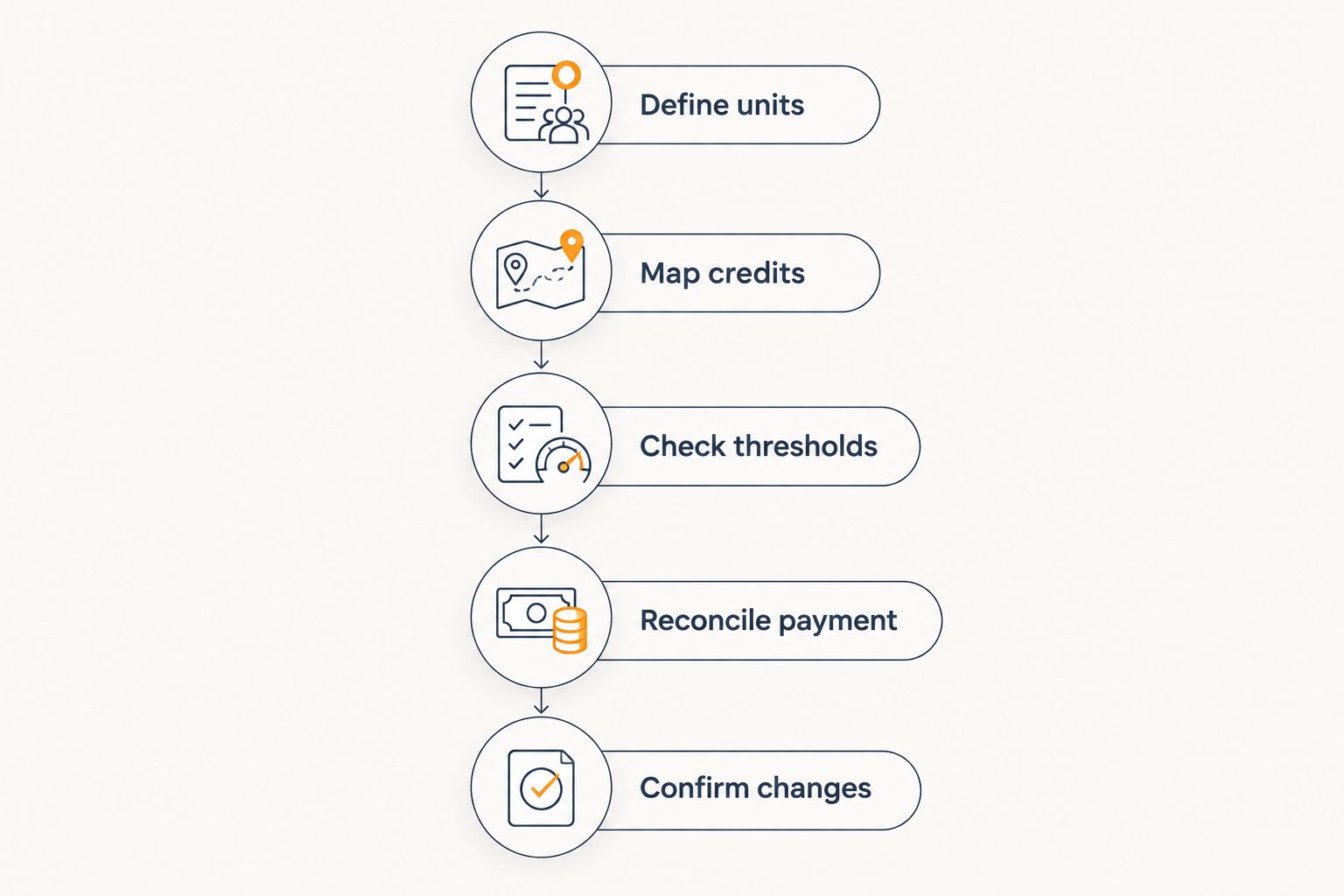
Use this sequence for every shortlisted 2026 offer. Keep the documents together so an answer in a recruitment email does not get separated from a conflicting contract clause.
- Define units: Obtain the valuation schedule and identify exactly which units the agreement uses.
- Map credits: Review how completed work becomes credited production, including corrections and attribution disputes.
- Check thresholds: Confirm when compensation becomes payable and how schedule changes affect the calculation.
- Reconcile payment: Request a de-identified worked example that connects credited units to a payment statement.
- Confirm changes: Read the notice, amendment, departure, and final-payment provisions with counsel.
If an employer supplies only a headline rate, request the incorporated compensation schedule next. Do not treat a rate as comparable until its unit definition and payment conditions are clear. That rule applies equally to hospital employment, private practice, and remote assignments.
Which transparent RVU offer should you choose?
Choose a guaranteed base plus an auditable wRVU bonus as the default when income stability is your priority. Choose direct production compensation only when you accept the income exposure and can inspect the credited-work calculation.
RadBoard is best for radiologists comparing RVU-based job opportunities across multiple sources. Use the platform for discovery, then make your acceptance decision from the employer’s written terms. A recognizable employer name is not evidence of a transparent compensation agreement.
FAQ
What are the best radiology employers with transparent RVU pay rates?
Prioritize employers that provide a written unit definition, compensation formula, credit ledger, thresholds, and reconciliation process. Judge the specific agreement rather than assuming an employer’s name establishes transparency.
Is a guaranteed base better than direct RVU compensation?
A guaranteed base is the better starting point when predictable income is your priority. Direct RVU compensation suits physicians who accept production-linked income and can verify how credited work becomes payment.
Are work RVUs and total RVUs the same?
No. Work RVUs represent physician work, while total RVUs also include practice expense and malpractice components. Your compensation agreement must identify which measure it uses.
Does the Medicare conversion factor determine my employer’s RVU pay rate?
No. Medicare’s conversion factor is part of a reimbursement calculation, not an automatic physician compensation rate. Your employer’s compensation agreement establishes the applicable payment formula.
What should I ask before accepting an RVU-based radiology job?
Ask for the compensation exhibit, valuation schedule, credit-attribution rules, thresholds, and a de-identified payment reconciliation. Confirm how leave, corrections, schedule changes, and departure affect compensation.
Can I compare teleradiology study credits with work RVUs?
Compare them only after obtaining the employer’s mapping between study credits and the specified RVU schedule. A proprietary credit label alone does not establish equivalence to work RVUs.
How does RadBoard help with an RVU-based radiology job search?
RadBoard aggregates 5,000+ radiology positions from 20 sources to support opportunity discovery. Verify compensation details directly in each employer’s written agreement before accepting a role.
One last thing
Ask to see an example with a corrected credit—not just a clean payment period. Corrections reveal whether the employer can trace adjustments, explain their effect, and resolve discrepancies. A transparent formula must remain understandable when something changes.