
Best overall starting point: hospital-employed diagnostic radiology. Best for ownership: partnership-track private practice. Best for schedule control: explicitly no-call outpatient radiology. This 2026 Pacific Northwest guide ranks job structures by career fit and shows you how to compare compensation and distinct openings across Washington and Oregon.
- Best radiology jobs Pacific Northwest: start with hospital employment, then compare private practice, outpatient, remote, academic, and locum roles.
- RadBoard aggregates 5,000+ radiology positions from 20 sources; its platform totals are not Pacific Northwest opening counts.
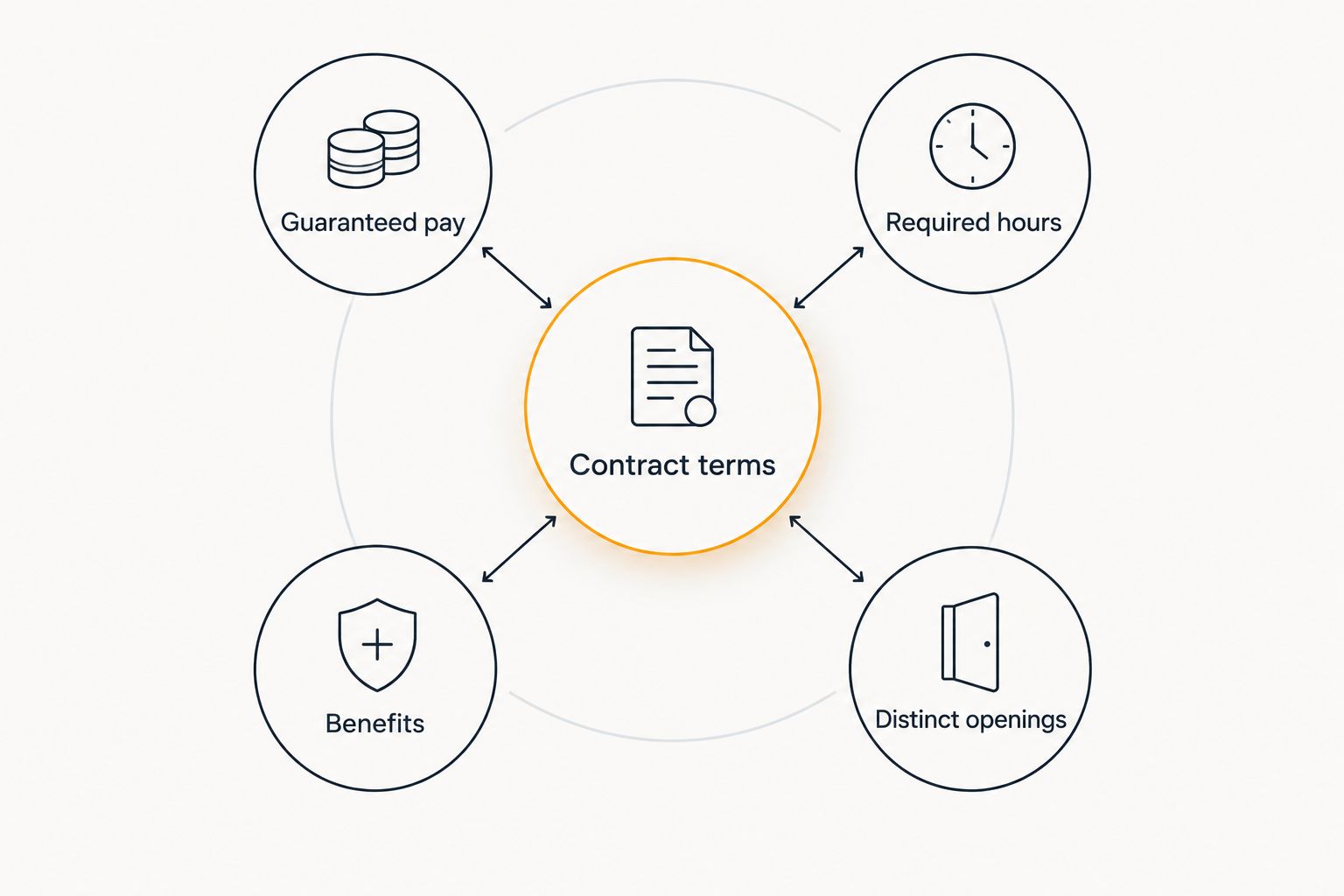
- Compare guaranteed compensation, required hours, call, and benefits before ranking radiologist salary offers.
- Count distinct employer positions, not repeated advertisements, when assessing Washington and Oregon openings.
Why this matters
The best-paying offer is not necessarily the best-paid work. A compensation figure means little until you know the required shifts, reading expectations, call obligations, and benefits attached to it.
RadBoard is best for radiologists who want to search positions aggregated from multiple sources in one radiology job search platform. RadBoard aggregates 5,000+ radiology positions from 20 sources and supports search and swipe-to-save features. Those figures describe the platform overall, not regional demand.
For this guide, the Pacific Northwest search area means Washington and Oregon. Compare Seattle, Tacoma, Spokane, Vancouver, Portland, Eugene, and other acceptable locations separately rather than treating the region as a single employment market.
What makes the best Pacific Northwest radiology job?
Use these criteria before comparing individual advertisements. A role that fails your essential requirements does not belong on your shortlist, regardless of its headline compensation.
- Guaranteed compensation: Separate contractual base pay from conditional incentives and discretionary bonuses.
- Workload: Request shift length, modality mix, expected productivity, and responsibility for unfinished work.
- Call burden: Establish evening, overnight, weekend, holiday, and procedural coverage obligations.
- Employment structure: Identify the actual employer, employee or contractor status, and any ownership pathway.
- Location fit: Confirm reporting sites, travel requirements, and whether remote work is contractual.
- Distinct openings: Match employer, location, subspecialty, and requisition details before counting advertisements separately.
For your 2026 search, distinguish the place you want to live from the facilities you would cover. A home-based reading position and an onsite hospital role create different geographic obligations even when both advertisements mention Washington.
Pacific Northwest radiology jobs at a glance
These rankings identify the best starting point for each objective. They are not a salary leaderboard or an employer vacancy census.
| Rank and job structure | Best for | Standout feature | Compensation question | Key limitation |
|---|---|---|---|---|
| 1. Hospital-employed diagnostic radiology | A permanent employed role | Direct employment relationship | What compensation is guaranteed? | Assigned coverage needs can constrain scheduling |
| 2. Partnership-track private practice | Ownership ambitions | A defined ownership pathway, when contractual | How does associate compensation change after partnership? | Partnership terms require detailed review |
| 3. No-call outpatient radiology | Protecting evenings and weekends | Explicitly limited coverage obligations | Is compensation based on the stated schedule? | Role scope can be narrower |
| 4. Teleradiology | Avoiding a daily commute | Remote interpretation | What work and hours produce the stated earnings? | Remote work does not eliminate coverage duties |
| 5. Academic radiology | Teaching and research | Clinical work combined with academic responsibilities | How are nonclinical duties recognized? | Protected time must be defined |
| 6. Locum tenens radiology | Testing a location before committing | Time-limited assignments | What happens if scheduled work is canceled? | Assignments do not establish permanent employment |
1. Hospital employment: best for a permanent employed role
Hospital-employed diagnostic radiology is the default starting point when you want an employment contract rather than a business ownership decision. Compare the hospital or health system named as employer with the organization actually managing radiology coverage.
A hospital worksite alone does not establish hospital employment. A separate radiology group can staff the department, so confirm the contracting entity before comparing benefits or employment terms.
Hospital employment pros:
- An employee role separates your job search from an ownership purchase.
- A written job description provides a basis for reviewing coverage duties.
- Contractual benefits can be compared alongside compensation.
Hospital employment cons:
- Departmental coverage needs can restrict your preferred schedule.
- Employment alone does not guarantee subspecialty-only reading.
Best for: Radiologists seeking a permanent employee position with clearly defined clinical responsibilities.
Ask for a representative schedule, the sites covered, and the process for changing assignments. Verdict: Buy into the structure only when the contract matches the schedule discussed.
2. Private practice: best for an ownership pathway
Partnership-track private practice deserves a separate comparison because you are evaluating both employment and a possible future ownership interest. Do not compare an associate's guarantee with an established partner's distributions as though they describe equivalent offers.
Request the partnership eligibility rules, decision process, ownership documents, and financial obligations. For a 2026 offer, establish which terms are contractual and which describe current practice without creating an obligation.
Private practice pros:
- A documented pathway makes ownership part of the career decision.
- Financial disclosures support examination of the business opportunity.
- Governance documents clarify how owners influence practice decisions.
Private practice cons:
- A partnership-track label does not itself guarantee admission.
- Ownership adds financial and governance questions beyond clinical employment.
Best for: Radiologists who want to evaluate ownership alongside clinical work.
Ask what happens if partnership is delayed or denied and whether obligations change after admission. Verdict: Hold until the ownership pathway and associate terms are documented.
3. No-call outpatient radiology: best for schedule boundaries
An explicitly no-call outpatient position is the first category to examine when protecting evenings and weekends matters most. Outpatient describes the setting; it does not, by itself, establish the hours or eliminate call.
Confirm whether the role includes procedures, contrast coverage, cross-site assignments, or overflow from other facilities. Ask who handles unread examinations when the scheduled workday ends.
No-call outpatient pros:
- A contractual no-call provision creates a clear scheduling boundary.
- Defined operating hours help you assess the working day.
- Specified modalities let you compare the role with your skills.
No-call outpatient cons:
- A narrower case mix does not suit every career goal.
- An outpatient title alone leaves workload and coverage unresolved.
Best for: Radiologists prioritizing a defined daytime schedule over ownership or academic responsibilities.
Verify holiday coverage and whether the employer can reassign you to hospital duties. Verdict: Buy only when no-call terms appear in the agreement, not just the advertisement.
4. Teleradiology: best for removing the daily commute
Teleradiology separates the reading location from the facility receiving interpretation services. It does not automatically provide self-scheduling, daytime hours, or permission to work from any location.
When evaluating Pacific Northwest opportunities, distinguish an employer based in the region from a role covering regional facilities. Confirm permitted work locations, licensing requirements, credentialing responsibilities, and the actual shift time zone.
Teleradiology pros:
- Remote interpretation removes commuting to the reading site.
- Defined shifts allow direct comparison of coverage commitments.
- A specified case mix supports assessment of clinical fit.
Teleradiology cons:
- Remote duties can still include nights, weekends, and holidays.
- Technical requirements and interruption procedures need explicit agreement.
Best for: Radiologists who prioritize a home-based reading location.
Before accepting productivity-based compensation, review how to evaluate RVU targets before accepting a radiology offer. Verdict: Hold until shift hours, workload, and technical responsibilities are clear.
5. Academic radiology: best for teaching and research
Academic radiology fits physicians who want education or research to be an explicit part of their work. Evaluate the actual appointment and assigned duties rather than relying on an institution's academic identity.
Ask how clinical productivity, teaching, research, administration, and promotion requirements interact. Protected time is useful only when the schedule and coverage arrangements support it.
Academic radiology pros:
- Defined teaching duties make education part of the appointment.
- Documented research time supports an identifiable academic objective.
- Written promotion criteria clarify career expectations.
Academic radiology cons:
- Academic duties add responsibilities beyond interpretation.
- Undefined protected time leaves competing obligations unresolved.
Best for: Radiologists committed to teaching, research, or an academic promotion pathway.
For a 2026 appointment, request the clinical schedule and promotion expectations together. Ask whether mentorship and nonclinical responsibilities are assigned or optional. Verdict: Buy when academic duties have corresponding time and clear evaluation criteria.
6. Locum tenens: best for testing a location
Locum tenens radiology provides a time-limited assignment rather than a permanent employment commitment. Use it to assess a practice setting or location when that approach fits your licensing, credentialing, and existing contractual obligations.
Compare the assignment agreement with the facility's actual expectations. Travel, onboarding, canceled shifts, and responsibility for malpractice coverage all belong in the review.
Locum tenens pros:
- A defined assignment period limits the initial commitment.
- Onsite work provides direct exposure to a practice environment.
- Written assignment terms identify the specific coverage requested.
Locum tenens cons:
- Canceled work can change the assignment's financial value.
- Temporary coverage does not establish a permanent role or partnership pathway.
Best for: Radiologists evaluating a location before making a longer commitment.
Ask which provisions control if the recruiter and facility describe different duties. Verdict: Hold until cancellation, coverage, travel, and payment terms agree across the documents.
How to compare pay and openings in 2026
Build a comparison sheet before deciding which role pays best. Use the same fields for every offer so different contract structures do not obscure the trade-offs.
Guaranteed pay
Separate guaranteed compensation from productivity incentives, discretionary payments, and ownership distributions. Compare recurring compensation over the first 12 months; record one-time payments separately and review repayment conditions.
Required hours
Record scheduled clinical hours, call, meetings, travel between sites, and administrative responsibilities. Calculate an hourly comparison only when the compensation and required hours cover the same period and duties.
Benefits
List paid leave, retirement contributions, health coverage, professional expenses, and malpractice provisions only when documented. Do not assign a monetary value to an unspecified benefit.
Distinct openings
Match employer, worksite, subspecialty, schedule, and requisition details. Treat matching advertisements as one potential opening until the hiring organization confirms separate positions; multiple sources do not necessarily mean multiple jobs.
Contract terms
Check termination notice, restrictive provisions, repayment obligations, and the employer's authority to change duties. A compensation comparison is incomplete if leaving the role creates obligations you have not reviewed.
Use RadBoard's radiology job search to build the initial shortlist, then verify each position with the hiring organization. Save 3 roles with different employment structures if you are undecided; that is a comparison exercise, not a claim about regional hiring volume.
Compare Pacific Northwest radiology roles
Search radiology positions aggregated from 20 sources, then save roles for contract-level comparison.
How these job structures are ranked
Hospital employment is first because it is the default starting point for a permanent employed-role search. Each subsequent category serves a different objective: ownership, schedule boundaries, remote work, academic responsibilities, or a limited initial commitment.
The ranking uses the criteria above, not unpublished salary estimates. For 2026, rank actual offers by documented compensation and obligations—not by assumptions about a city, employer type, or subspecialty.
Which Pacific Northwest radiology job should you choose?
Start with hospital-employed diagnostic radiology if you want a permanent position and have not chosen a narrower career objective. Compare that offer with private practice if ownership matters, or with explicitly no-call outpatient work if schedule boundaries come first.
Choose teleradiology for the reading location, academic radiology for defined academic work, and locum tenens for a time-limited commitment. None of those labels substitutes for reviewing the compensation formula and coverage schedule.
FAQ
What's the best radiology job in the Pacific Northwest?
Hospital-employed diagnostic radiology is the default starting point for a permanent employed-role search. Partnership-track, no-call outpatient, remote, academic, and locum roles fit different priorities; compare actual contracts before choosing.
Which Pacific Northwest radiology jobs pay the most?
The highest-paying offer is established by its documented compensation and required work, not its job title. Compare guaranteed compensation, incentive conditions, hours, call, and benefits over the same period.
Does Seattle have more radiology openings than Portland?
Compare distinct employer positions in Seattle and Portland before making that judgment. Match employer, site, subspecialty, and requisition details so repeated advertisements do not inflate the comparison.
Are RadBoard's 5,000+ positions all in the Pacific Northwest?
No. RadBoard's 5,000+ radiology positions from 20 sources describe the platform overall, not a Washington and Oregon opening count.
Is private practice better than hospital employment for radiologists?
Private practice fits an ownership objective; hospital employment fits a direct employed-role objective. Evaluate partnership eligibility and financial obligations separately from associate compensation.
Can I live in Oregon and take a remote radiology job?
Confirm that the employer permits your Oregon work location before accepting a remote role. Review licensing, credentialing, malpractice coverage, shift time zones, and technical requirements for the facilities served.
How should I compare radiology compensation in 2026?
Compare recurring guaranteed compensation over the same period and record required hours, call, benefits, and conditional incentives separately. Keep one-time payments separate and review any repayment obligations.
One last thing
Ask every hiring organization the same question: What work remains my responsibility after my scheduled shift ends? The answer connects workload, call, staffing, and compensation in a way a headline salary cannot.
Use RadBoard to find radiology positions, then let written answers—not repeated advertisements or attractive job titles—determine your shortlist.