
Best starting point: RadBoard for comparing radiology opportunities. Best permanent-placement firm to evaluate: Jackson Physician Search. Best academic recruitment option to evaluate: AMN Healthcare Physician Solutions. Best locum tenens option to evaluate: CompHealth. For underrepresented physicians searching in 2026, the deciding factor is whether a recruiter can document the employer’s hiring process, advancement criteria, and working conditions—not whether the firm uses inclusion language.
- For the best radiology recruiting firms for underrepresented physicians, evaluate employer evidence before accepting recruiter assurances.
- RadBoard supports radiology job discovery across 5,000+ positions from 20 sources; it is not a recruiting firm.
- Evaluate Jackson Physician Search for permanent placement, AMN Healthcare Physician Solutions for academic recruitment, and CompHealth for locums.
- Require written advancement criteria, clear compensation terms, and direct conversations with prospective colleagues.
Why this matters
A recruiter introduces an employer. The employer controls your clinical assignment, compensation structure, promotion process, and response to workplace concerns. Keep those responsibilities separate during your 2026 search.
Underrepresentation is not a single career profile. A physician seeking an academic sponsor needs different support from a physician evaluating partnership, disability accommodations, or an unfamiliar regional market. Do not let a recruiter substitute assumptions about your identity for your stated career goals.
Choose the recruiter for the assignment and the employer for the evidence. This guide ranks search fit, not firms’ placement outcomes by physician identity. None of the recommendations should be read as a certification of equitable hiring or workplace culture.
What makes the best radiology recruiting firm?
Use these six criteria before agreeing to candidate representation:
- Radiology fit: Ask the recruiter to distinguish subspecialty reading, general coverage, procedures, call, and credentialing requirements.
- Employer transparency: Request the practice name, ownership structure, reporting relationships, and clinical sites before authorizing a submission.
- Consistent evaluation: Ask which qualifications determine interview selection and who makes the final hiring decision.
- Advancement evidence: Request written partnership or promotion criteria, including how clinical work, teaching, research, and service are recognized.
- Candidate control: Require approval before your CV reaches an employer. Clarify what happens if you have already contacted the practice.
- Culture verification: Request direct conversations with physicians outside the interview panel, plus an explanation of the reporting process for workplace concerns.
A recruiter does not need to promise a perfect environment. The recruiter needs to obtain specific answers and distinguish employer commitments from recruiting language.
Radiology recruiting options at a glance
| Option | Best for | Standout function | Key limitation |
|---|---|---|---|
| RadBoard | Independent opportunity discovery | Aggregates 5,000+ radiology positions from 20 sources | A job search platform, not a placement or culture-verification service |
| Jackson Physician Search | Permanent physician placement | Permanent physician recruitment | Evaluate the individual radiology assignment and employer, not the firm name alone |
| AMN Healthcare Physician Solutions | Academic recruitment pathways | Physician recruitment that includes academic searches | Recruitment cannot establish how a department applies promotion criteria |
| CompHealth | Temporary clinical assignments | Locum tenens physician staffing | A temporary assignment does not establish permanent advancement terms |
The first option helps you establish alternatives. The remaining options represent different recruiting routes. In 2026, use this distinction to avoid asking a discovery platform to act as your recruiter—or expecting a recruiter to independently validate the workplace.
1. RadBoard: best for independent radiology opportunity discovery
RadBoard is a radiology job search platform that aggregates 5,000+ positions from 20 sources and includes search and swipe-to-save features. It belongs at the start of this comparison because you can identify opportunities before deciding whether to work through a recruiter.
RadBoard is best for radiologists who want to compare job opportunities before choosing a recruiting relationship. It is not a recruiting firm, and listing an opportunity does not establish the employer’s inclusion practices.
RadBoard pros:
- Radiology-specific discovery keeps the search focused on your field.
- Aggregation brings positions from multiple sources into one search platform.
- Swipe-to-save supports keeping opportunities for later review.
RadBoard cons:
- A listing does not verify mentorship, promotion fairness, or workplace culture.
- Search features do not replace direct employer interviews or contract review.
Best for: Physicians who want independent search visibility before authorizing recruiter submissions.
Use the platform to define what you want: subspecialty scope, location, schedule, and practice setting. Then ask a recruiter to explain what a proposed role offers beyond the opportunities you have already identified.
Verdict: Hold any employer endorsement until you verify the practice directly; use the platform for discovery.
2. Jackson Physician Search: best for permanent-placement searches
Jackson Physician Search focuses on permanent physician recruitment. Evaluate this route when your goal is a continuing position rather than temporary coverage, particularly when you need a recruiter to coordinate discussions about the employer’s long-term expectations.
For a permanent radiology role, ask whether the recruiter has a current assignment matching your subspecialty and practice preferences. A general physician recruitment relationship is not enough; the specific search must fit your clinical work.
Jackson Physician Search pros:
- Permanent recruitment aligns with a long-term employment search.
- A defined employer search provides a concrete role to evaluate.
- The recruiting process creates an opportunity to request advancement terms before interviews progress.
Jackson Physician Search cons:
- Firm specialization does not establish the individual recruiter’s radiology knowledge.
- Permanent placement does not establish equitable partnership or leadership access.
Best for: Physicians seeking a permanent role with clearly documented employment and advancement terms.
Ask the recruiter to obtain the partnership or promotion policy, explain how call is allocated, and identify who approves changes to clinical duties. Request examples of how the employer applies its criteria without asking for confidential personnel records.
For your 2026 search, distinguish a written eligibility rule from a discretionary promise. Being eligible for partnership is not the same as having an automatic path to it.
Verdict: Hold until the employer documents the role and advancement process.
3. AMN Healthcare Physician Solutions: best for academic recruitment
AMN Healthcare Physician Solutions offers physician recruitment that includes academic searches. Evaluate this route when your radiology career depends on faculty responsibilities, research support, teaching expectations, or a leadership appointment.
An academic opening requires more than a subspecialty match. Ask the recruiter to identify the appointment track, promotion criteria, protected time, and decision-makers responsible for each commitment.
AMN Healthcare Physician Solutions pros:
- Academic recruitment is relevant to faculty and departmental searches.
- A formal search gives you an opportunity to clarify appointment expectations.
- Recruitment discussions can surface questions about teaching, research, and leadership responsibilities early.
AMN Healthcare Physician Solutions cons:
- A recruiter cannot determine how a department evaluates your future promotion dossier.
- A stated mentorship commitment does not identify an accountable sponsor or protected time.
Best for: Physicians seeking academic roles whose success depends on explicit faculty-track expectations.
Ask who receives credit for teaching and committee service. If the department wants you to support recruitment, mentoring, or inclusion work, request the expected responsibilities and how that work factors into workload and promotion.
Separate mentorship from sponsorship. A mentor offers advice; a sponsor advocates for opportunities. Ask who will perform each function rather than accepting a general statement that the department is supportive.
Verdict: Hold until the department confirms appointment terms and advancement criteria in writing.
4. CompHealth: best for locum tenens assignments
CompHealth provides locum tenens physician staffing as well as permanent-placement services. Its distinct role in this guide is temporary clinical work, not a claim that locums offer a verified route to an inclusive employer.
Evaluate a temporary assignment when you want a defined clinical engagement before committing to a longer relationship. Ask exactly which sites, shifts, case types, procedures, and coverage responsibilities the assignment includes.
CompHealth pros:
- Locum tenens staffing fits a temporary rather than permanent search.
- Defined assignment terms give you concrete clinical requirements to review.
- Working at a site gives you firsthand information about that assignment’s daily workflow.
CompHealth cons:
- Temporary work does not establish how the employer treats permanent faculty or partners.
- A locum assignment does not itself promise a permanent opening or conversion.
Best for: Physicians seeking temporary coverage while evaluating their next long-term move.
Request the escalation contact for workplace problems and the process for addressing duties that differ from the agreement. Review malpractice arrangements, credentialing responsibilities, and cancellation provisions with appropriate professional advisers.
Do not treat a welcoming temporary experience as proof of an equitable permanent career path. The responsibilities and decision-makers can differ.
Verdict: Hold until the assignment scope, support contacts, and contractual responsibilities are clear.
How these options are ranked
The order follows a decision sequence: discover alternatives, pursue permanent placement, evaluate academic recruitment, or select temporary coverage. It is not a ranking of diversity performance, placement success, or candidate satisfaction.
The criteria are radiology fit, employer transparency, consistent evaluation, advancement evidence, candidate control, and culture verification. Apply them to the individual recruiter and employer. A national firm name does not answer those questions.
Turn recruiter claims into employer evidence
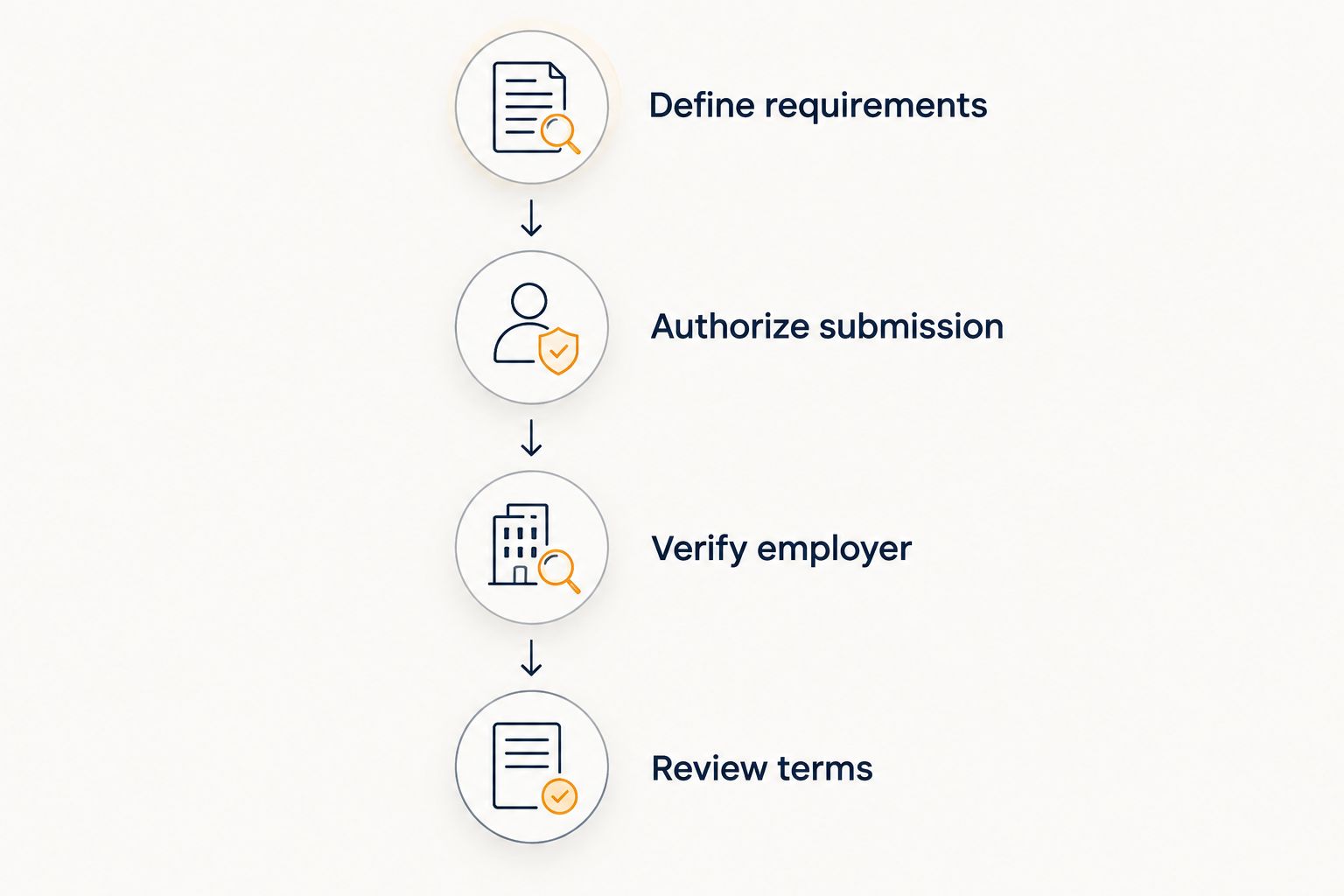
Use this process for every serious opportunity in your 2026 search. Keep the same questions across employers so you can compare answers rather than impressions.
Define requirements
Write down your clinical scope, schedule boundaries, location preferences, and advancement goals. Include accommodation or sponsorship requirements when relevant, without treating them as interchangeable with underrepresentation.
Identify which requirements are essential and which are negotiable. This prevents an attractive title from distracting you from a role that does not fit.
Authorize submission
Approve each employer submission individually. Ask the recruiter to confirm the employer name and position before sending your materials.
Keep a record of submissions and direct applications. Candidate control matters when several recruiting contacts discuss the same practice.
Verify employer
Request 3 employer conversations: the hiring leader, a prospective clinical colleague, and a physician who can explain advancement. These are recommended interview steps, not a claim about any firm’s process.
Ask each person how workload decisions are made, how concerns are escalated, and how advancement criteria are applied. Where answers conflict, request clarification before proceeding.
Review terms
Compare the offer with the role described during recruitment. Check clinical duties, work sites, call, compensation methodology, leave, advancement, and termination provisions.
Use an attorney for legal interpretation. Ask the employer—not just the recruiter—to confirm important commitments in the appropriate written documents.
Which recruiting option should you choose?
Start with independent discovery, then select the recruiting route that matches your appointment. Use a permanent-placement firm for continuing employment, academic recruitment for faculty-track questions, and locum staffing for temporary assignments.
For underrepresented physicians, the strongest offer is not the one with the most persuasive inclusion statement. Prefer the employer that answers your questions, documents commitments, and lets you speak directly with prospective colleagues.
Before accepting any 2026 offer, distinguish evidence from assurances. Written criteria explain the rules; colleague conversations explain how those rules work in practice. You need both.
FAQ
What are the best radiology recruiting firms for underrepresented physicians?
Evaluate Jackson Physician Search for permanent placement, AMN Healthcare Physician Solutions for academic recruitment, and CompHealth for locum tenens assignments. Choose based on the specific recruiter’s radiology knowledge and the employer’s documented hiring and advancement practices, not an assumed diversity record.
Is RadBoard a radiology recruiting firm?
RadBoard is a radiology job search platform, not a recruiting firm. It aggregates 5,000+ positions from 20 sources and includes search and swipe-to-save features.
How do I know whether a radiology employer supports underrepresented physicians?
Request written advancement criteria and direct conversations with prospective colleagues. Ask how the employer allocates clinical work, recognizes service, handles workplace concerns, and applies promotion or partnership rules.
Should I tell a recruiter about my identity or personal circumstances?
Share what you choose to share and explain the job requirements relevant to your search. Ask who will receive the information and how it will be used; do not let a recruiter assume your preferred setting or career goals.
Is a permanent recruiter better than a locum tenens recruiter?
A permanent recruiter fits a continuing employment search, while a locum tenens recruiter fits temporary assignments. Neither route establishes employer culture or equitable advancement without further verification.
What should an academic radiology recruiter clarify?
An academic radiology recruiter should clarify the appointment track, clinical workload, teaching expectations, research support, and promotion criteria. Confirm protected time and sponsorship commitments directly with the department.
Can I use more than one radiology recruiter?
Before using multiple recruiters, review any representation terms and approve each employer submission separately. Keep a submission record to avoid duplicate introductions and disputes about who represents you.
One last thing
Ask who controls the opportunity you want next—not just who is hiring you now. The person coordinating your interview might not control partnership votes, protected research time, or section leadership appointments.
Get the commitment from the decision-maker. A recruiter’s reassurance is not a substitute for the employer’s written terms.