Travel radiology work spans six distinct assignment types, and picking the wrong one costs you either income or license headaches across state lines. Best overall for multi-state flexibility: locum tenens teleradiology. Best for subspecialists: neuroradiology locum coverage between contracts. Best for testing a market: locum-to-permanent assignments.
- Locum tenens teleradiology wins for radiologists chasing travel radiology jobs without relocating every 13 weeks.
- General diagnostic locum coverage moves fastest through credentialing because it needs no subspecialty verification.
- Neuroradiology and MSK locum slots pay a premium but require fellowship documentation before agencies will submit you.
- Locum-to-permanent contracts let you scout a practice across states before signing a permanent offer in 2026.
- The Interstate Medical Licensure Compact cuts multi-state licensing time for radiologists who plan to work three or more states.
Why this matters
A radiologist chasing travel radiology jobs in 2026 is choosing between six real assignment structures, not one generic "locum" category. Each structure has a different licensing burden, a different contract length, and a different fit for how much physical relocation you're willing to do.
Get the category wrong and you'll spend three weeks waiting on a state license for a 13-week assignment, or you'll take a general diagnostic contract when your fellowship training in neuroradiology could have earned a subspecialty premium instead. Maintaining active licenses across states is the single biggest bottleneck locum radiologists report, and it's solvable months before you accept an assignment, not after.
RadBoard tracks 5,000+ radiology positions from 20 sources, which means locum-specific listings sit alongside permanent roles instead of scattered across five different staffing agency portals. That matters when you're comparing a teleradiology locum slot against an onsite MSK fill-in for the same quarter.
What makes the best travel radiology assignment
- Licensing overhead — how many state medical licenses the assignment actually requires versus what one Compact license covers
- Contract length and renewal terms — most locum radiology contracts run in 13-week blocks, some extend
- Subspecialty premium — whether fellowship training (neuro, MSK, breast, IR) earns above general diagnostic rates
- Physical relocation requirement — onsite fill-in versus remote teleradiology coverage
- Credentialing speed — how fast an agency can get you reading at a new site
- Path to permanent placement — whether the assignment can convert if you like the practice
At a glance: travel radiology assignment types
| Assignment type | Best for | Standout feature | Key limitation |
|---|---|---|---|
| Teleradiology locum | Remote flexibility across states | No physical relocation between sites | Multi-state license stack still required |
| General diagnostic locum | Fast credentialing, broad coverage | Shortest onboarding timeline | Lower subspecialty premium |
| Neuroradiology locum | Fellowship-trained subspecialists | Premium rate for stroke/tumor reads | Requires fellowship documentation upfront |
| Emergency radiology fill-in | Fast-paced trauma center coverage | High shift variety, short blocks | Overnight and weekend-heavy scheduling |
| MSK sports imaging locum | Orthopedic referral network coverage | Niche demand from sports medicine groups | Smaller pool of open slots |
| Locum-to-permanent | Scouting a practice before committing | Built-in conversion path | Longer total commitment if it converts |
1. Teleradiology locum tenens: best travel radiology jobs for remote flexibility
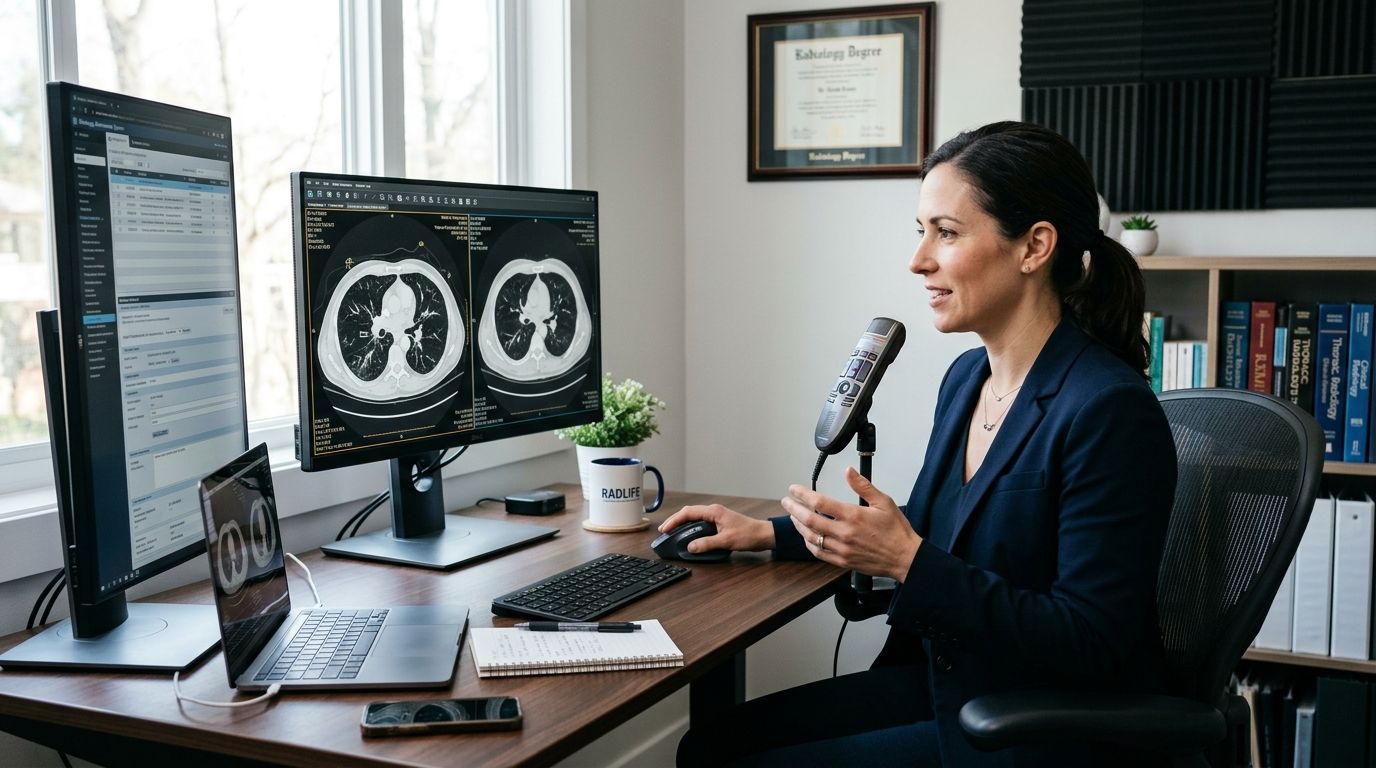
Locum tenens teleradiology coverage fills short-term reading gaps for hospitals and outpatient groups without requiring you to physically show up on site. You read from a home workstation or a compliant reading room, cover night or weekend blocks, and move to the next contract when it ends.
Teleradiology locum pros:
- No physical relocation between contracts
- Stackable with a full-time job as supplemental income
- Shorter onboarding once PACS access is granted
Teleradiology locum cons:
- Still requires an active license in the patient's state, not just your home state
- Reading room compliance requirements vary by contracting hospital
- Night and weekend blocks are common because that's where the coverage gap sits
Best for: radiologists who want travel radiology jobs without packing a bag. Verdict: pursue this first if licensing is manageable.
2. General diagnostic locum tenens: best for fast multi-state placement
General diagnostic locum assignments cover routine CT, MRI, and plain film volume at hospitals and imaging centers with staffing gaps. Agencies move these fastest because there's no fellowship verification step slowing down credentialing.
General diagnostic locum pros:
- Fastest path from application to first shift
- Broadest pool of open assignments at any given time
- Good entry point for radiologists new to locum work
General diagnostic locum cons:
- Rate sits below subspecialty locum work
- Volume can be high with limited case variety
Best for: radiologists who want volume and speed over subspecialty premium. Verdict: solid default if you're new to locum work in 2026.
3. Neuroradiology locum tenens: best for fellowship-trained subspecialists between contracts
Neuroradiology locum coverage fills gaps at stroke centers and academic sites that need fellowship-trained readers for code stroke and tumor board volume. These assignments pay a premium because the reader pool is smaller.
Neuroradiology locum pros:
- Rate premium over general diagnostic work
- High case complexity keeps skills sharp between permanent roles
- Frequently available at academic and stroke centers year-round
Neuroradiology locum cons:
- Requires documented fellowship training before agencies submit you
- Fewer open slots than general diagnostic locum
Best for: fellowship-trained neuroradiologists bridging contract gaps. Verdict: worth the wait for the right stroke center slot.
4. Emergency radiology locum: best for fast-paced trauma center fill-ins
Emergency radiology locum assignments cover trauma bay volume at Level I and Level II centers when a permanent hire falls through or a physician is out. Shifts run heavy on overnight and weekend blocks because that's when trauma volume peaks.
Emergency radiology locum pros:
- High shift variety keeps the work from feeling repetitive
- Short-block contracts fit well between longer commitments
- Trauma centers pay competitively for reliable overnight coverage
Emergency radiology locum cons:
- Schedule leans overnight and weekend-heavy
- Turnaround time expectations are tighter than routine diagnostic work
Best for: radiologists who want acute-care variety over routine caseload. Verdict: take it if you handle overnight shifts well.
5. MSK sports imaging locum: best for orthopedic referral network coverage
Musculoskeletal locum assignments fill gaps at outpatient imaging centers tied to orthopedic and sports medicine referral networks. Demand is niche but steady, especially around centers with athlete populations.
MSK sports imaging locum pros:
- Consistent referral volume from orthopedic partners
- Outpatient setting with lighter call burden than hospital-based work
MSK sports imaging locum cons:
- Smaller pool of open slots compared to general diagnostic or teleradiology
- Concentrated in specific metro areas with sports medicine infrastructure
Best for: MSK-fellowship radiologists targeting orthopedic-adjacent practices. Verdict: consider it if you're near a sports medicine hub.
6. Locum-to-permanent: best for scouting a practice before committing
Locum-to-permanent radiology assignments let you work a contract with the option to convert to a permanent hire if both sides want it. It's the only structure on this list built specifically to reduce the risk of a bad permanent hire.
Locum-to-permanent pros:
- Real trial period before signing a long-term contract
- Practice sees your work before making a permanent offer
Locum-to-permanent cons:
- Total time commitment runs longer than a standalone locum contract
- Conversion isn't guaranteed even if you want it
Best for: radiologists relocating and wanting to confirm fit first. Verdict: apply if you're open to staying if it clicks.
How we ranked these
Each assignment type was weighed against the six criteria above: licensing overhead, contract length, subspecialty premium, relocation requirement, credentialing speed, and conversion path. No single category wins on every criterion, which is why the six slots above don't compete with each other — a teleradiology reader and an MSK sports imaging locum are solving different problems.
Which travel radiology assignment should you choose?
If licensing across multiple states is your main constraint, teleradiology locum tenens wins because relocation isn't part of the equation. If you're fellowship-trained and want premium rates, neuroradiology or MSK locum coverage makes more sense than general diagnostic work. If you're relocating permanently and want to de-risk the decision, locum-to-permanent beats a straight permanent hire. For radiologists finding their footing in locum work generally, general diagnostic assignments remain the fastest way onto the schedule in 2026.
Working with a staffing agency that specializes in locum tenens placement speeds up credentialing regardless of which category you pick, since they already have relationships with the sites carrying open slots.
Search travel radiology jobs now
Filter 5,000+ listings from 20 sources for locum and teleradiology openings.
FAQ
What are the best travel radiology jobs for multi-state locum work?
Teleradiology locum tenens ranks highest for radiologists who want multi-state coverage without relocating, followed by neuroradiology and MSK locum work for fellowship-trained subspecialists seeking a rate premium.
Do travel radiology jobs require a license in every state you work in?
Yes, you need an active license in the state where the patient is located, even for remote teleradiology reads. The Interstate Medical Licensure Compact speeds this up for radiologists working three or more states.
How long do locum tenens radiology contracts typically run?
Locum radiology contracts commonly run in 13-week blocks, with some extending by mutual agreement between the radiologist and the contracting site.
Is teleradiology locum work better than onsite locum coverage?
Teleradiology locum work eliminates physical relocation between contracts, which makes it better for radiologists prioritizing flexibility, but onsite locum assignments in emergency or MSK imaging often carry a higher rate premium.
Can a locum tenens radiology contract convert to a permanent job?
Yes, locum-to-permanent structures are built specifically for this, letting a radiologist and a practice confirm fit before either side commits to a permanent contract.
Which radiology subspecialty earns the highest locum premium?
Neuroradiology and MSK locum assignments generally carry higher rates than general diagnostic coverage because fewer fellowship-trained readers are available to fill those slots.
Where can I find travel radiology jobs from multiple staffing agencies at once?
Aggregator platforms that pull listings from multiple sources let you compare locum, teleradiology, and permanent radiology openings in one search instead of checking each agency separately.
One last thing
The Interstate Medical Licensure Compact doesn't eliminate the need for separate state licenses, it just speeds up the paperwork — radiologists still pay per-state fees and still need to renew each license on its own schedule. Budget for that overhead before you commit to a multi-state locum schedule for 2026, because it's the line item that catches first-time travel radiologists off guard.