
Yes—radiologists can moonlight without breaching their contract when the work complies with their employment agreement, incorporated policies, and any required approval. For a 2026 moonlighting arrangement, confirm permission before accepting shifts; employer consent does not replace malpractice coverage, licensing, credentialing, or work-authorization requirements.
- Can radiologists moonlight without breaching their contract? Yes, when the arrangement satisfies their contract and required approvals.
- Written permission should identify the outside employer, clinical duties, schedule, and any restrictions.
- Remote radiology and weekend shifts still require review for exclusivity, conflicts, and coverage.
- RadBoard supports radiology job discovery, not legal clearance for outside work.
Can radiologists moonlight without breaching their contract?
Yes, but free time is not contractual permission. Your agreement determines whether outside clinical work is permitted, prohibited, or subject to consent. Start with the entire agreement—not just the paragraph labeled moonlighting—and use this guide to reading a radiology employment contract to organize your review.
Follow these steps before committing to an assignment:
- Read the restrictions. Identify outside-employment, exclusivity, conflict-of-interest, and approval provisions.
- Define the assignment. Document the hiring entity, facilities, services, schedule, and reading locations.
- Request permission. Follow the agreement’s process and identify who has authority to approve.
- Confirm coverage. Verify that malpractice insurance applies to the specific outside duties.
- Clear practice requirements. Confirm licensing, privileges, credentialing, and any applicable work authorization.
- Retain the record. Save the approval, relevant agreements, and coverage documents before starting.
These are 6 review steps, not a substitute for legal advice. Have an attorney familiar with physician employment and the applicable state law resolve ambiguous language before you rely on it.
Why this matters
Moonlighting creates obligations to another organization while your primary employment obligations continue. A shift outside your normal hours still needs review if your agreement restricts outside professional services or requires advance consent.
Keep permission and readiness separate. An approved assignment still needs appropriate coverage and practice authorization; a fully credentialed assignment still needs to satisfy your employment contract. Neither process substitutes for the other.
For your 2026 review, keep the executed agreement, amendments, and incorporated policies together. Reviewing an unsigned offer or an outdated policy alone does not establish what governs your current employment.
Which contract clauses need attention?
Outside employment and exclusivity
Look for language addressing outside medical practice, professional services, consulting, or employment. Read the scope carefully: a restriction on professional services is not necessarily limited to shifts at a competing hospital.
Identify whether the clause requires notice, consent, or an amendment. Notification is not approval when the contract requires approval. Ask your attorney to distinguish an outright prohibition from an activity allowed with permission.
Conflicts and competing services
Compare the proposed assignment with your employer’s facilities, customers, and service relationships. Give the approving person enough information to evaluate the actual work rather than describing it only as occasional radiology coverage.
For remote work, identify the facilities receiving your interpretations. Your physical location alone does not explain whether the assignment overlaps with a restricted customer or service relationship.
Scheduling and primary duties
Read provisions covering availability, call, productivity, and performance. Check the outside schedule against your primary obligations, including coverage changes and emergency responsibilities.
Do not promise simultaneous availability to separate employers. If an outside shift depends on your primary schedule remaining unchanged, explain that dependency before accepting it.
Compensation and employer resources
Check whether the agreement addresses outside professional income, billing rights, or use of institutional resources. Confirm who receives payment for the proposed services and whether any reporting obligation applies.
Do not assume permission to moonlight includes permission to use your employer’s workstation, software, staff, or patient information. Obtain separate authorization where needed and follow applicable privacy and security requirements.
Internal shifts, external locums, and remote work
The assignment’s structure determines which questions to ask. Use this comparison to prepare your request—not to decide that an entire category is automatically permitted.
| Arrangement | Best for | Practical advantage | Limitation to resolve |
|---|---|---|---|
| Internal extra shifts | Radiologists seeking additional work within their current organization | Existing clinical relationships provide a starting point | Confirm separate shift terms, scheduling approval, and coverage |
| External locum assignments | Radiologists considering defined outside assignments | The proposed facility and duties can be described in advance | Resolve outside-work permission, competing services, and credentialing |
| External teleradiology | Radiologists seeking remote supplemental reading | Avoids travel to the reading site | Identify covered facilities, practice locations, licensing, and technology requirements |
Choose an arrangement you can describe precisely enough to approve. Internal work still needs clear terms; an external assignment needs disclosure; remote work needs more detail than the name of the recruiting company.
A recruiter’s description of flexibility does not modify your primary agreement. Ask for the proposed clinical scope and contract before requesting clearance, then compare the final assignment with what your employer approved.
Why moonlighting permission varies
Your answer depends on the documents and assignment, not a universal rule for radiologists. Focus your review on these factors:
- Contract wording: Determine which activities are restricted and whether an exception process exists.
- Incorporated policies: Check outside-work, conflicts, scheduling, and resource-use policies referenced by the agreement.
- Approval authority: Identify the person or office authorized to grant permission or amend the agreement.
- Clinical overlap: Disclose the outside organization, facilities, and services so conflicts can be assessed.
- Schedule compatibility: Show how outside work fits around call, availability, and primary duties.
- Professional status: Confirm requirements specific to your training, privileges, licensing, insurance, and work authorization.
For a 2026 assignment, review the current documents rather than relying on a colleague’s approval. Their agreement, duties, and outside employer do not establish permission for yours.
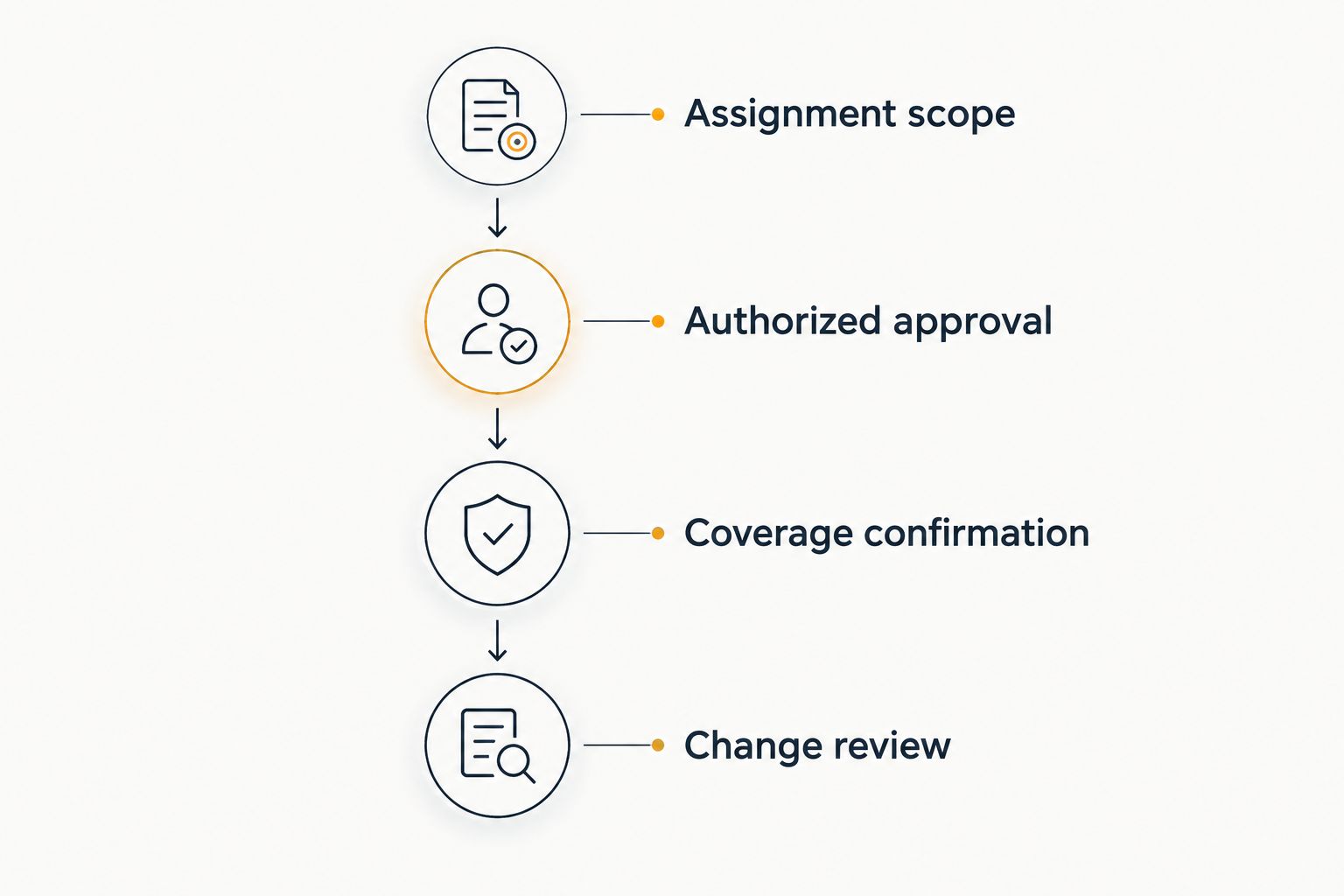
How do you get written approval for moonlighting?
Use a short, specific request supported by the proposed assignment details. Ask the authorized decision-maker to confirm the permitted scope and any conditions before you sign an unconditional commitment or begin clinical work.
Assignment scope
Provide the outside organization’s legal name, participating facilities, clinical duties, and where you will perform the work. Specify whether the assignment involves interpretations, procedures, contrast coverage, or another service.
Include the proposed schedule and how scheduling changes will be handled. A description such as occasional evenings leaves essential details unresolved.
Authorized approval
Follow the approval mechanism in your agreement. If the contract requires a signed amendment, an informal conversation does not satisfy that requirement.
Ask for clear written confirmation of what is approved. If the response is ambiguous, resolve it rather than treating silence or a general expression of support as consent.
Coverage confirmation
Request written confirmation from the insurer or responsible coverage provider that the outside services fall within the policy. Review covered duties, locations, effective dates, exclusions, and responsibilities when coverage ends.
Keep this confirmation separate from employer permission. Approval of the activity does not itself establish insurance coverage.
Change review
Compare each material assignment change with the approved scope. Adding facilities, changing duties, or expanding availability requires another review when the existing permission does not cover it.
Set a personal reminder to revisit your clearance when either employment agreement changes. A 2026 approval should not become a permanent assumption about every future assignment.
Can I moonlight if my contract does not mention it?
Contract silence is not a complete clearance. Review the rest of the agreement and any incorporated policies for outside-work restrictions, conflicts, availability requirements, and obligations concerning professional income.
Have an employment attorney assess the documents together. Avoid treating the absence of the word moonlighting as proof that every outside clinical activity is permitted.
Does a non-compete-free contract allow outside radiology work?
No—a contract without a non-compete does not automatically permit moonlighting. Exclusivity and outside-employment approval provisions address work during employment separately from restrictions that apply after departure.
Have counsel review the applicable clauses and state law. Do not assume that a question about one restriction resolves every other obligation in the agreement.
Can residents and fellows moonlight with employer permission?
Employer permission alone is not sufficient for residents and fellows. Confirm program approval, institutional requirements, applicable training standards, licensing, supervision, and coverage before accepting clinical work.
Ask the program how moonlighting must be reported and counted toward work-hour requirements. If your ability to work depends on immigration status, obtain qualified immigration advice before accepting outside employment.
Find an assignment after defining your permitted scope
Write down your approved duties, facilities, schedule, and reading locations before comparing opportunities. This turns employer permission into a practical screening checklist rather than a document you consult after accepting work.
RadBoard is for radiologists comparing career opportunities across multiple job sources. The radiology job search platform aggregates 5,000+ positions from 20 sources; its role is discovery, not determining whether an assignment complies with your contract.
Use RadBoard to identify opportunities, then request the assignment details from the hiring organization. A listing is a starting point—not written employer approval, verified insurance, or a completed credentialing file.
Find radiology opportunities
Compare opportunities across 5,000+ radiology positions from 20 sources.
FAQ
Can radiologists moonlight without breaching their contract in 2026?
Yes, radiologists can moonlight in 2026 when the assignment complies with their employment agreement, incorporated policies, and required approvals. Confirm malpractice coverage and practice requirements separately before starting.
Do I need written permission to take weekend radiology shifts?
You need written permission when your agreement or applicable policy requires it. Weekend timing does not exempt an assignment from outside-employment or exclusivity provisions.
Can my department chair approve my moonlighting?
Your department chair can provide effective approval only if the applicable agreement and policies give that person the required authority. Follow any specified consent or amendment process.
Does my employer's malpractice insurance cover outside shifts?
Do not assume your employer's malpractice insurance covers outside shifts. Obtain written confirmation that the specific services, facilities, and dates are covered.
Can I read remotely for another group on my days off?
You can accept remote outside work only after resolving contractual permission and applicable practice requirements. Identify the facilities served, reading location, clinical duties, and schedule during the review.
What should I do if my employer refuses moonlighting permission?
Do not start an assignment that requires permission your employer has refused. Ask whether a narrower scope or formal amendment is acceptable, and have counsel review your options.
Can RadBoard confirm whether a moonlighting job violates my contract?
RadBoard is a radiology job search platform, not a source of contractual clearance. Have qualified counsel review your agreement and obtain any required employer approval before accepting outside work.
One last thing
Check the legal entity on the final assignment agreement against the entity named in your approval. A familiar recruiter or facility name does not answer who is contracting with you or which sites you will serve.
Keep the approved scope beside the final agreement before signing. Resolve differences in employer, facilities, duties, or schedule while you can still change the terms—not after your first shift.