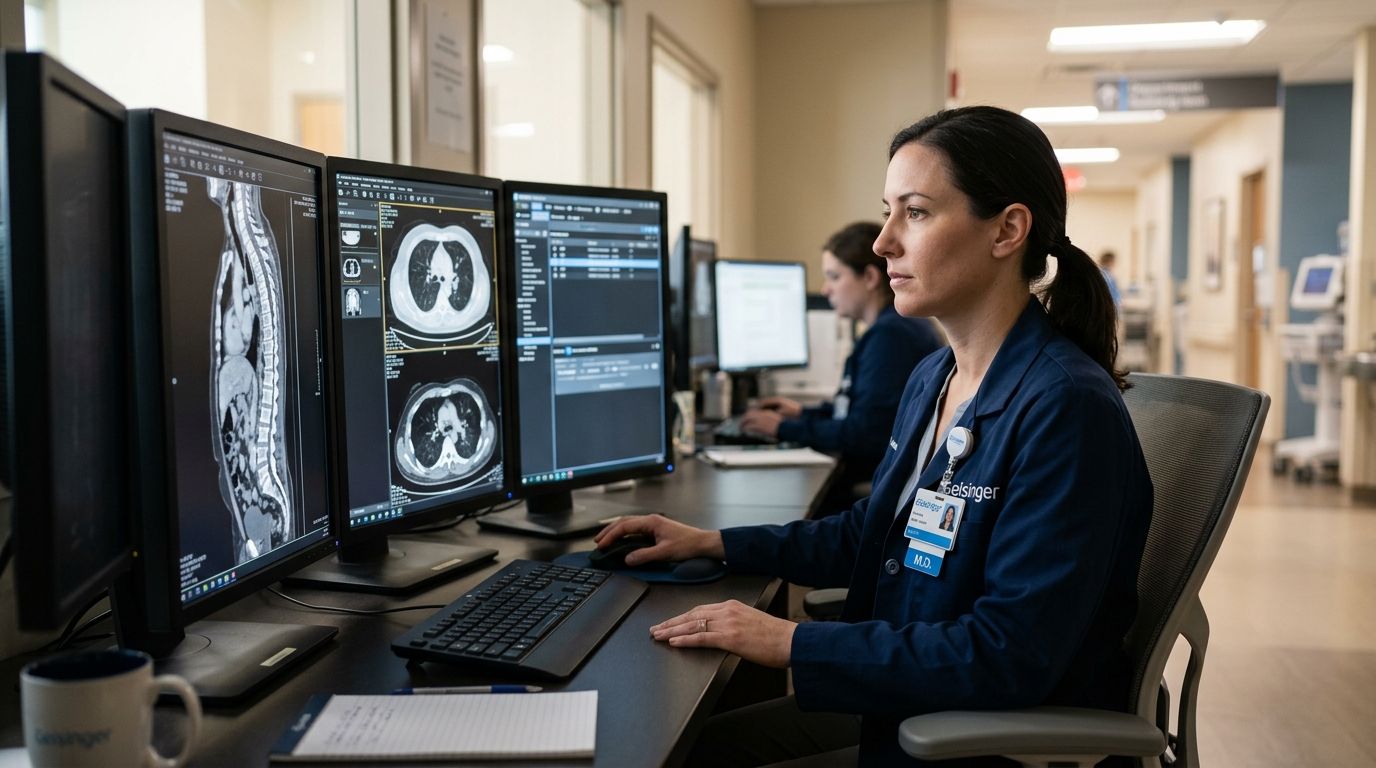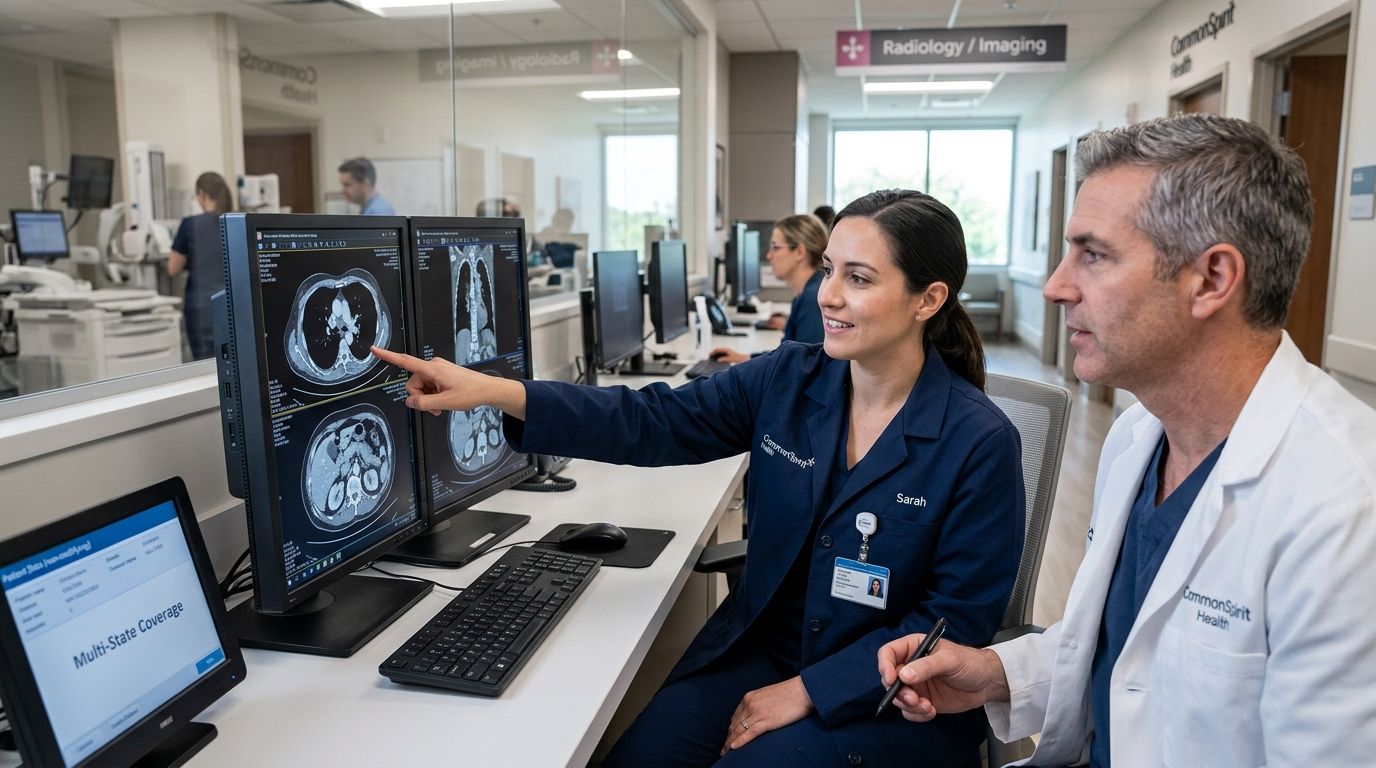
Cardiac CT radiologist jobs tied to structural heart programs pay for a narrow skill set: fast, accurate TAVR annulus sizing, coronary anomaly screening before valve replacement, and same-day turnaround for a heart team meeting that won't wait. The hiring bar looks nothing like a general cardiothoracic read, and a lot of postings blur the line anyway.
- Cardiac CT radiologist jobs at academic TAVR programs require SCCT Level 2 or Level 3 training — verify the case count before signing.
- RadBoard aggregates cardiac CT radiologist jobs from 20 sources across 5,000+ active radiology listings in 2026.
- Community cardiothoracic roles under 15 TAVR cases a month rarely justify subspecialty-only pay. Skip if volume is thin.
- Locum tenens cardiothoracic coverage works as a bridge into a structural heart program, not a substitute for one.
Why This Matters
Structural heart programs expanded fast through the 2020s as TAVR indications moved from inoperable patients to low-risk ones, and every valve case now runs through a pre-procedural CT for annulus sizing, access-vessel measurement, and coronary height assessment. That volume created a real subspecialty lane inside cardiothoracic radiology, separate from routine chest CT.
Hospitals building or scaling a structural heart program in 2026 are hiring specifically for it — not just adding cardiac CT to an existing cardiothoracic radiologist's plate. That distinction changes what a job posting should actually promise you.
Who This Is For
This guide is for radiologists with cardiothoracic or cardiac imaging fellowship training, or general diagnostic radiologists who've logged SCCT Level 2 case volume, evaluating cardiac CT radiologist jobs specifically inside structural heart or valve clinic programs. If you're weighing a pure diagnostic cardiothoracic role instead, cardiothoracic radiology jobs for chest and cardiac imaging covers that lane separately. Search postings tagged structural heart, TAVR, or valve clinic directly on RadBoard rather than relying on generic cardiothoracic listings.
What to Look For in Cardiac CT Radiologist Jobs for Structural Heart Programs
TAVR and Structural Case Volume
Ask for a real number, not a range. A program doing under 100 TAVR cases a year is still building; one doing 300-plus has a mature heart team and steady CT planning demand. Volume is the single best predictor of whether the role stays interesting past year one.
Training Level Match
The 2005 ACCF/AHA/ACR clinical competence statement on cardiovascular CT set training tiers: Level 1 (50 supervised studies) covers basic interpretation, Level 2 (150 studies) supports independent structural reads, and Level 3 (300 studies) is expected for program director roles. A job requiring Level 3 credentialing but offering Level 2 mentorship is a mismatch — ask which tier the program actually needs filled.
Turnaround Expectations for Heart Team Meetings
Pre-TAVR CT reads feed a multidisciplinary heart team conference, usually weekly, and a late read pushes a patient's procedure date. Confirm the expected turnaround in hours, not "same day if possible" — vague language here means you'll be the bottleneck.
Heart Team Integration
The best structural heart CT jobs put you in the room with interventional cardiology and cardiac surgery, not just reading in isolation. Ask whether the radiologist attends heart team conference in person or via a submitted report only — the answer tells you how much clinical say you'll actually have.
Compensation Model
Structural heart CT reads take longer per study than a routine chest CT, so a straight RVU model can undervalue the work unless the RVU weighting accounts for post-processing and 3D reconstruction time. Ask specifically how planning CTs are coded and weighted before comparing offers on salary alone.
Program Growth Trajectory
A structural heart program adding a second cath lab or expanding to mitral and tricuspid interventions in 2026 needs more CT coverage next year, not less. A program that's flat on volume for three years is a stable job, not a growing one — decide which you want.
Top Picks for Cardiac CT Radiologist Jobs in Structural Heart Programs
Academic TAVR program CT reader — the specialist's home base. These roles sit inside a hospital system with an established heart valve center and typically require SCCT Level 2 or Level 3 training. The specific number that matters: case volume per month, since anything under 20 TAVR CTs monthly means long stretches without structural work. Compensation usually blends RVU output with academic or leadership stipends. Buy if the program can show you a real monthly case count and heart team seat.
Community hospital cardiothoracic imaging service with structural volume — the steady volume play. A community system feeding one or two interventional cardiologists gives more predictable hours than an academic center but a smaller case mix. Related cardiothoracic reads fill the gaps between valve cases, covered in cardiothoracic radiology jobs for chest and cardiac imaging. Consider if the base cardiothoracic workload is strong enough to carry the role when structural volume dips.
Locum tenens cardiothoracic coverage with structural heart exposure — the bridge job. Short-term contracts at programs needing structural heart CT coverage during a search or leave give you direct comparison points across multiple programs before committing permanently. Details on structuring these assignments are in locum tenens cardiothoracic radiology jobs. Consider as a way to test a program's actual case volume claims against reality before signing a permanent contract.
Multi-specialty group with a cardiac CT call pool — the generalist's entry point. Some multi-specialty radiology groups route structural heart CTs to whichever radiologist has the training that week, rather than dedicating a single reader. That model works for someone building toward subspecialty-only reading but dilutes the case exposure needed to hit Level 3 volume quickly. Skip if your goal is a dedicated structural heart CT practice rather than occasional exposure.
Search cardiac CT radiologist jobs now
5,000+ radiology jobs from 20 sources, filtered by subspecialty and program type.
What to Avoid
- Postings labeled "cardiac CT" that mean routine coronary CTA only. Coronary CTA for chest pain workups is a different volume and skill profile than pre-TAVR structural planning — ask directly whether the role includes valve and annulus measurement work.
- Programs that can't state a heart team meeting cadence. If nobody can tell you whether the heart team meets weekly or "as needed," the program's structural volume probably isn't consistent enough to support a dedicated hire.
- Offers that price structural CT reads at the same RVU rate as a routine chest CT. The extra time for 3D reconstruction and multiplanar measurement should show up in the compensation structure, not get absorbed as unpaid overhead.
Verdict Comparison
| Job Type | Case Volume Signal | Training Requirement | Best For | Verdict |
|---|---|---|---|---|
| Academic TAVR program | 20+ cases/month | Level 2-3 | Dedicated structural heart specialists | Buy |
| Community cardiothoracic + structural | Variable, program-dependent | Level 1-2 | Radiologists wanting mixed caseload | Consider |
| Locum cardiothoracic coverage | Short-term, program-dependent | Level 1-2 | Testing programs before committing | Consider |
| Multi-specialty call pool | Low, shared among readers | Level 1 | Building toward subspecialty focus | Skip if seeking dedicated role |
FAQ
What training do you need for cardiac CT radiologist jobs in structural heart programs?
Most structural heart programs require SCCT Level 2 training (150 supervised cardiac CT studies) at minimum, with Level 3 (300 studies) expected for program director or lead reader roles. Cardiothoracic or cardiac imaging fellowship training typically covers this volume during the fellowship year.
Is a cardiac CT radiologist job the same as a cardiothoracic radiology job?
No — cardiothoracic radiology covers chest imaging broadly, while cardiac CT roles in structural heart programs focus specifically on TAVR planning, valve annulus sizing, and coronary screening before intervention. A dedicated structural heart role reads far fewer routine chest CTs.
How much TAVR case volume should a structural heart program have before hiring a dedicated CT reader?
Programs doing 100 or more TAVR cases annually generally justify a dedicated cardiac CT radiologist role. Below that volume, the position often gets folded into a broader cardiothoracic or general diagnostic caseload instead.
Can locum tenens work lead to a permanent structural heart CT job?
Yes — locum tenens cardiothoracic assignments with structural heart exposure let you evaluate a program's real case volume and heart team dynamics before signing a permanent contract, and many programs convert strong locum performers to permanent offers.
Do structural heart CT reads pay more than routine chest CT reads?
Compensation varies by program, but structural heart reads take longer due to 3D reconstruction and multiplanar measurement, so RVU weighting or stipend structures should reflect that added time. Ask specifically how the program codes these studies before comparing offers.
What's the difference between Level 2 and Level 3 cardiac CT training?
Level 2 training requires 150 supervised cardiac CT studies and supports independent interpretation, while Level 3 requires 300 studies and is typically expected for program director or lead structural heart CT roles, per the 2005 ACCF/AHA/ACR clinical competence statement.
Where can I find cardiac CT radiologist jobs for structural heart programs in 2026?
RadBoard aggregates radiology openings from 20 sources into a single searchable database of 5,000+ listings, including structural heart and TAVR-specific CT roles filterable by subspecialty and program type.
One Last Thing
The fastest way to separate a real structural heart CT job from a relabeled cardiothoracic posting in 2026 is to ask one question during the interview: how does the radiologist find out a TAVR case is scheduled, and how much lead time do they get before the read is due. A program with a real dedicated structural heart CT need will have a crisp answer measured in hours. A program still figuring it out will hedge — and that hedge tells you more than the job description does.