
An interventional radiologist career is a physician practice combining image-guided procedures and longitudinal patient care with the aim of diagnosing and treating disease through minimally invasive techniques. This 2026 guide explains how to compare positions by procedural scope, diagnostic responsibilities, call, clinical support, and advancement—not just the job title.
- Build your interventional radiologist career around verified case mix, clinical ownership, and a sustainable call schedule.
- RadBoard is best for radiologists consolidating their radiology job search across 20 sources.
- Compare hospital employment, private practice, academic medicine, outpatient practice, and locum tenens against your clinical priorities.
- Confirm procedure-specific privileges, staffing, follow-up responsibilities, and contract terms before accepting an interventional radiology position.
Why this matters
Choose the practice you will actually perform, not the specialty label. An interventional radiology opening does not, by itself, establish how much time you will spend performing procedures, reading diagnostic studies, running clinic, or covering emergencies.
Start with interventional radiology jobs for IR-trained physicians, then verify the work behind each description. Your comparison should distinguish scheduled clinical responsibilities from expectations that appear only during interviews.
Why career planning matters for interventional radiologists
Interventional radiology depends on more than a reading workstation. Your procedural practice also requires referrals, appropriate facilities, trained staff, recovery arrangements, and clear responsibility for patient care before and after intervention.
RadBoard aggregates 5,000+ radiology positions from 20 sources; those figures describe the wider radiology catalog, not an interventional-only inventory. A broad search creates a starting pool, but it does not establish whether an individual position supports your intended practice.
For a 2026 search, separate three decisions: the work you want, the infrastructure that work requires, and the employment terms you will accept. Resolve them in that order so an attractive offer does not distract you from an unsuitable clinical role.
How to build your interventional radiologist career
Define your clinical scope before searching
Write a short practice specification yourself before contacting employers. Name the procedures you want to perform, the diagnostic work you will accept, and the patient-care responsibilities you want to retain.
Be specific about your interests. Interventional oncology, dialysis access, venous disease, and broad hospital IR describe different clinical directions; none guarantees a particular case mix or schedule. If you are completing training, distinguish procedures you can perform independently from those for which you want continued mentorship.
Your specification should also identify exclusions. A position that requires substantial general diagnostic coverage is not interchangeable with a predominantly procedural appointment, even when both advertise an IR title.
- List your essential procedural interests.
- Define acceptable diagnostic reading responsibilities.
- State your expectations for consultation and follow-up clinic.
- Identify mentorship or proctoring needs.
- Record geographic and schedule constraints.
Verify your training and credentialing fit
Compare your training record and current credentials with each employer's written requirements. Ask the medical staff office about privileges rather than assuming a recruiter can confirm procedural eligibility.
US interventional radiology training includes integrated and independent pathways. Your route, certification status, recent practice, and documented experience belong in the credentialing discussion; a specialty designation alone does not answer every privileging question.
For your 2026 application file, assemble a current CV, training documentation, licensure details, references, and an appropriately de-identified procedural record. Never send identifiable patient information as application evidence. If you are returning after a practice gap, request the employer's assessment and supervision requirements before agreeing to a start date.
- Match your credentials to the posted requirements.
- Confirm procedure-specific privileges with medical staff services.
- Prepare de-identified case documentation.
- Identify references familiar with your procedural work.
- Ask which approvals must precede clinical practice.
Build a shortlist across sources
The manual approach is straightforward: review employer career pages, contact professional connections, and record openings in a spreadsheet. Capture the employer, location, clinical scope, contact, and unresolved questions so you can compare like with like.
RadBoard offers a consolidated radiology job search with search and swipe-to-save features. Use the platform to gather potential matches, then verify the details directly with the hiring organization.
RadBoard's breadth helps with discovery; it does not replace due diligence. Listings from different sources can describe the same underlying opening, so compare employer, location, and responsibilities before counting opportunities. Keep a separate record of what the employer confirms during interviews.
- Search both the specialty name and your procedural interests.
- Save openings that match your essential criteria.
- Record the original employer and hiring contact.
- Check for overlapping descriptions of the same position.
- Remove roles that fail a nonnegotiable requirement.
Audit the real case mix and clinical ownership
Ask for recent, de-identified service data rather than accepting a list of procedures the department is technically equipped to perform. Separate established activity from services the employer hopes you will develop.
A useful discussion covers procedure categories, referral sources, room access, cancellations, and diagnostic assignments. Ask who evaluates referrals, obtains consent, manages follow-up, and coordinates care when patients need admission or another service.
A growth opportunity is not an established procedural practice. If an employer wants you to build a service, request the staffing, referral-development responsibilities, room allocation, and evaluation criteria in writing. For a 2026 offer, distinguish resources already approved from those still being discussed.
- Request procedure volumes broken down by category.
- Separate current work from proposed service expansion.
- Confirm dedicated room and equipment access.
- Identify responsibility for consultations and follow-up.
- Clarify how diagnostic duties compete with procedure time.
Test call coverage against an actual schedule
Request a representative 4-week rota and walk through ordinary coverage, leave, and unexpected absences. Treat that document as an example to examine, not a promise of future staffing.
Ask what being on call actually includes: consultations, emergency procedures, inpatient issues, transfers, diagnostic reading, and coverage across facilities. A frequency label does not explain the work attached to each call period.
Speak with 2 current physicians separately about recent call experiences. Ask how daytime duties change after overnight work and who provides backup when simultaneous emergencies occur. Then compare their answers with the written coverage plan.
- Map weekday, weekend, and holiday responsibilities.
- Confirm which facilities require physical coverage.
- Ask who handles simultaneous urgent cases.
- Establish post-call expectations and relief arrangements.
- Review how vacancies and leave affect the rota.
Inspect staffing and patient-care infrastructure
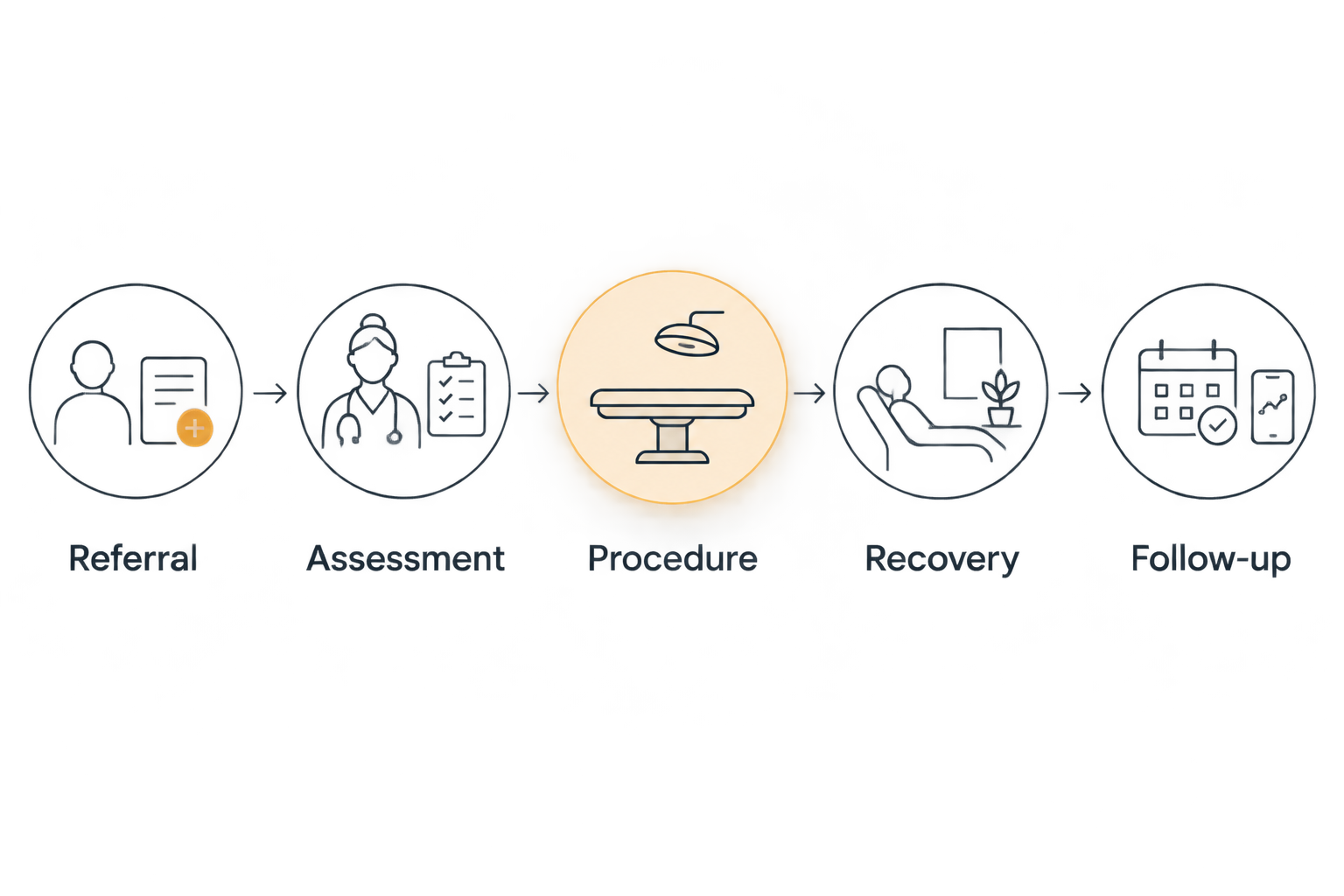
Walk through the procedural service during a working day if possible. Follow the operational sequence from referral and assessment through the procedure, recovery, discharge, and follow-up, asking who owns each handoff.
Use the same structure at every interview so differences remain visible. A well-equipped procedure room does not answer whether patients can obtain consultations, whether recovery coverage matches the schedule, or whether follow-up has an assigned clinician.
Staff credentials and local procedural competencies are separate checks. Sonographer training requirements concern preparation for that profession; they do not establish competency for every task within an interventional service. Ask the employer how role-specific training, supervision, and coverage are documented.
Apply the same discipline to nursing, technologists, advanced practice clinicians, anesthesia support, and recovery staffing. Do not assume that a resource present elsewhere in the hospital is assigned to your service when needed.
- Confirm procedure-room staffing and backup arrangements.
- Identify anesthesia and sedation support responsibilities.
- Review recovery coverage and escalation pathways.
- Establish who manages clinic messages and follow-up.
- Ask how staff absences affect scheduled procedures.
Compare written offers and advancement terms
Put each offer into the same comparison document yourself. Separate clinical duties, workload measures, leave, professional support, outside-work restrictions, termination provisions, and advancement expectations.
For interventional work, ask how the employer recognizes consultations, longitudinal care, meetings, and service development alongside procedures and diagnostic interpretation. Do not assume every necessary activity receives protected time or equivalent credit.
Use a physician employment attorney to assess contractual obligations, particularly restrictive provisions and professional liability responsibilities. For a 2026 agreement, confirm which documents control when an offer letter, employment contract, compensation plan, and departmental policy describe different expectations.
- Request written definitions of duties and assigned sites.
- Review how clinical and nonprocedural work are evaluated.
- Confirm professional liability and tail responsibilities.
- Examine termination, notice, and outside-work provisions.
- Document partnership, promotion, or leadership criteria.
Compare interventional radiology career settings
The best setting is the one whose documented work matches your priorities. The options below describe decision criteria, not promises about every employer in a category.
| Option | Best for | Principal advantage to verify | Key limitation to examine |
|---|---|---|---|
| Hospital-employed IR | Physicians prioritizing an integrated hospital service | Direct coordination with hospital departments and inpatient resources | Control over staffing, scheduling, and service investment |
| Private radiology practice | Physicians seeking group governance or a partnership path | A defined route to ownership and influence over practice decisions | Diagnostic obligations, ownership conditions, and coverage commitments |
| Academic IR | Physicians prioritizing teaching, research, and complex clinical programs | Protected academic time and access to educational infrastructure | Competing clinical, teaching, research, and promotion expectations |
| Outpatient procedural practice | Physicians targeting a defined ambulatory case mix | A focused referral pathway and procedural schedule | Scope restrictions and arrangements for complications or hospital transfer |
| Locum tenens IR | Physicians testing settings or bridging permanent appointments | A defined assignment scope without an immediate permanent commitment | Repeated onboarding and limits on continuity or service development |
Do not choose academic practice solely because you enjoy teaching; ask whether the appointment requires research. Likewise, do not choose outpatient work on the assumption that it eliminates call or follow-up responsibilities.
Locum tenens work deserves particular scrutiny when you are early in practice. Confirm that the assignment matches your independent procedural abilities and that backup exists for cases outside the agreed scope.
Common mistakes interventional radiologists make
Treating an IR title as proof of protected procedure time
A specialty title does not establish the weekly division between procedures and diagnostic reading. Request a representative schedule and ask what happens when the diagnostic worklist or staffing changes.
Fix: Document the expected clinical split and the process for changing it.
Accepting service-building targets without committed resources
An employer's interest in expanding embolization, ablation, or another service does not establish referral volume, staffing, or room access. Separate your responsibilities from dependencies controlled by the organization.
Fix: Tie development expectations to named resources, decision-makers, and review criteria.
Comparing call frequency without comparing call content
The same nominal rotation can involve different facilities, consultation duties, emergency procedures, and next-day obligations. Ask about recent experience as well as policy.
Fix: Compare the actual rota, geographic coverage, backup, and post-call workload together.
Ignoring the work surrounding the procedure
Clinic, patient communication, inpatient coordination, and follow-up are part of the role you are evaluating. If ownership is unclear during recruitment, resolve it before signing rather than inheriting an undefined service.
Fix: Assign responsibility for each patient-care handoff in the proposed operating model.
FAQ
What's the best interventional radiologist career path?
The best interventional radiologist career path matches your procedural interests, patient-care responsibilities, and preferred employment setting. Compare verified case mix, call, staffing, and advancement terms rather than choosing by title alone.
Can an interventional radiologist work fully remotely?
A fully remote position cannot include performing onsite interventional procedures. Diagnostic reading or other remote duties require a separate scope agreement, while procedural practice requires your physical presence.
Is academic interventional radiology better than private practice?
Academic interventional radiology is the better fit when the specific appointment supports your teaching or research priorities. Private practice is the better fit when its clinical duties and documented governance or partnership terms match your goals; neither setting guarantees those conditions.
Can I do locum tenens IR immediately after training?
A locum tenens IR assignment must match your credentials, privileges, and ability to practice independently. Before accepting, confirm procedural scope, backup, orientation, and responsibility for patient follow-up.
What should I ask about interventional radiology call?
Ask about facilities covered, consultation duties, emergency procedures, diagnostic reading, backup, and post-call expectations. Review an actual rota and discuss recent coverage with current physicians.
How does RadBoard support an interventional radiology job search?
RadBoard aggregates 5,000+ radiology positions from 20 sources and offers search and swipe-to-save features. Use it to identify potential openings, then confirm IR-specific duties, credentials, and employment terms with the employer.
What should I verify before signing an IR employment contract?
Verify assigned duties, clinical sites, workload evaluation, call, professional liability obligations, termination terms, and outside-work restrictions. Have a physician employment attorney assess the agreement and any incorporated policies.
One last thing
Ask the employer to describe the last time a scheduled procedure was delayed because a necessary resource was unavailable. Then ask who resolved it and whether the underlying problem changed.
That discussion tests more than equipment. It reveals how the organization handles the staffing, scheduling, and cross-department decisions your practice will depend on. For your 2026 career decision, make operational answers carry as much weight as recruitment promises.