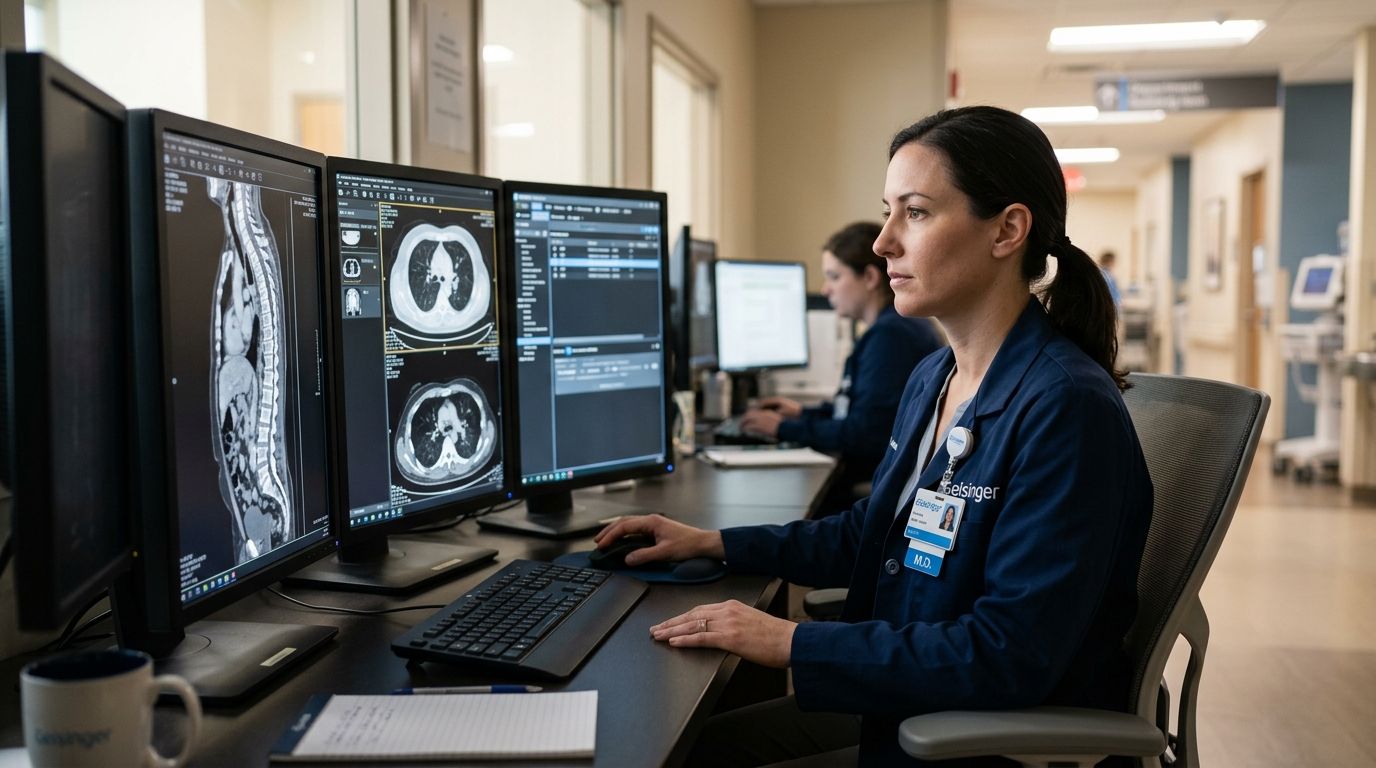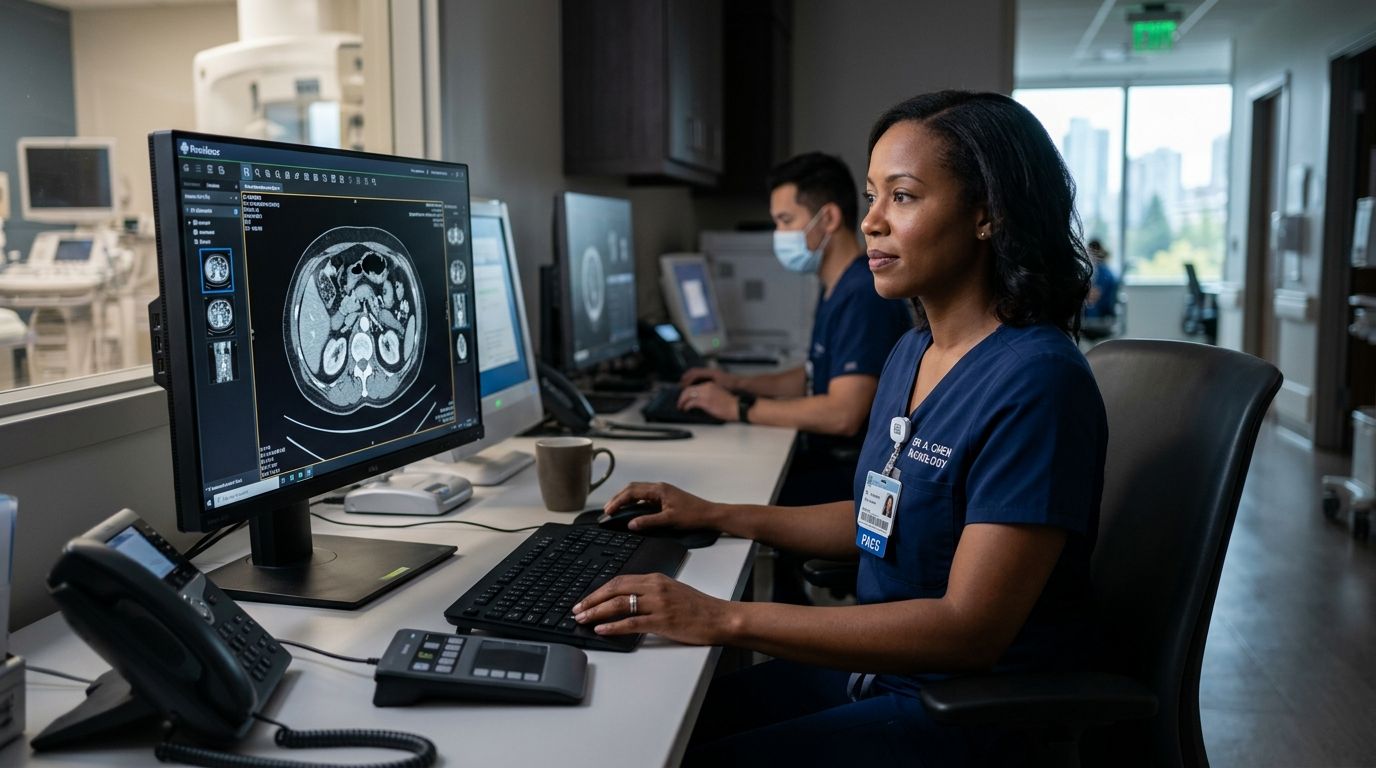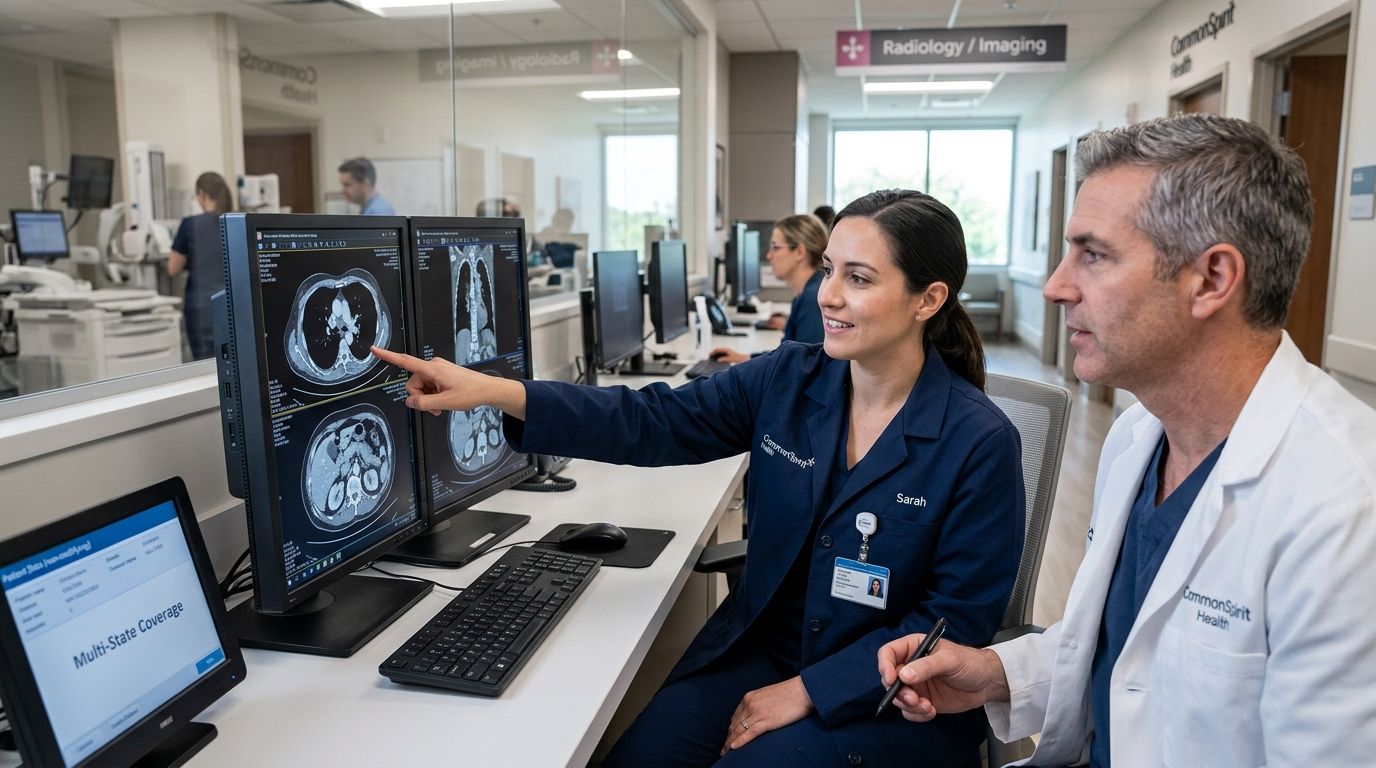
CommonSpirit radiology jobs put a radiologist inside one of the largest nonprofit hospital networks in the country, with imaging sites spread across more than 20 states under a single employer instead of one hospital contract. Multi-state coverage changes what you need to check before applying — licensing, call structure, and how sites hand off patients differ from a single-hospital job in ways a generic job listing won't spell out.
- CommonSpirit radiology jobs cover hospitals across 20+ states, best for radiologists who want employer stability over solo private practice.
- Multi-state coverage means separate state licenses and DEA registrations per site — plan for that before you apply in 2026.
- RadBoard's radiology job search platform tracks CommonSpirit alongside 20 other sources across 5,000+ active listings.
- Employed, locum, and teleradiology coverage models handle cross-site call differently — compare all three before signing.
Why CommonSpirit radiology jobs matter for multi-state coverage
CommonSpirit Health formed from the 2019 merger of Catholic Health Initiatives and Dignity Health, and it still operates under both legacy names at the local level even though the system runs as one employer. A radiologist covering radiology jobs covering multiple hospital sites inside a system this size deals with a different set of logistics than someone reading for a single freestanding imaging center.
The practical difference is licensing load and call structure. A radiologist reading for three CommonSpirit sites across two states needs active licenses and DEA registrations in both, plus clarity on whether call rotates across sites or stays local. Multi-state coverage is a scheduling and compliance question first, a salary question second — get the structure wrong and the compensation number stops mattering.
Update your search for CommonSpirit-specific openings
CommonSpirit doesn't post every opening under one job title or one careers page — regional divisions still use CHI and Dignity Health branding in some markets. Before you assume a listing is comprehensive:
- Search by regional division name, not just "CommonSpirit," since some postings still carry legacy CHI or Dignity Health labels
- Filter for state, since a single system posting can span facilities hundreds of miles apart
- Check whether the listing specifies employed, locum, or teleradiology backfill — the same site may run all three
- Note the subspecialty mix requested; multi-site coverage often asks for broader general-diagnostic range than a single hospital job
Confirm licensing requirements for every state you'd cover
This is the step radiologists skip most often, and it's the one that delays start dates. A job that covers two or three CommonSpirit facilities across state lines means two or three separate medical board applications, DEA registrations, and often separate malpractice tail considerations.
- Check whether the states involved participate in the Interstate Medical Licensure Compact, which can shorten the license timeline for eligible physicians
- Confirm DEA registration is required per state of practice, not just per employer
- Ask whether the hospital system's credentialing office handles multi-state applications or leaves it to you
- Budget for licensing lead time before committing to a start date — this is the single biggest cause of delayed onboarding for multi-state roles
Compare employed, locum, and teleradiology coverage models
CommonSpirit sites fill multi-state gaps three different ways, and each shifts risk and flexibility differently. An employed radiologist gets system benefits and stability but less control over which sites they cover. A locum assignment lets you test a region before committing. Teleradiology backfill covers after-hours or overflow reads without relocating.
- Employed roles typically include system-wide benefits and a defined home base with occasional cross-site travel
- Locum tenens assignments run shorter and are useful for evaluating a region or division before signing a permanent contract
- Teleradiology backfill requires active licenses in every state you read for, even without setting foot on-site
- Hybrid arrangements combine a primary site with remote overflow reading for neighboring facilities
Evaluate call schedule and cross-site read volume
Multi-state coverage often means call responsibilities span more than one facility, sometimes more than one time zone within the same division. Ask specifically how call rotates before you sign, not after.
- Ask whether call rotates across all covered sites or stays fixed to your primary facility
- Clarify whether nighthawk or teleradiology partners handle overnight reads for smaller sites in the rotation
- Get read volume expectations in writing per site, since rural and urban facilities in the same division rarely match
- Confirm whether cross-site coverage counts toward RVU targets or gets compensated separately
Negotiate multi-state licensing and DEA support
A system spanning 20-plus states should be equipped to support the paperwork burden it creates, and that support is negotiable.
- Ask for employer reimbursement of license and DEA fees in every state you're asked to cover
- Confirm malpractice tail coverage extends across all states in your assignment, not just your home state
- Request a defined timeline for adding new-state licensure if the coverage footprint expands later
- Get any home workstation or hybrid-schedule stipend in writing if part of your reads happen remotely
Track openings systematically instead of checking one careers page
A system this large posts openings across its own site, third-party boards, and recruiter channels at the same time, and listings go stale fast. RadBoard aggregates radiology postings from 20 sources into one AI-searchable feed, so a CommonSpirit-specific search surfaces state and subspecialty matches instead of a single division's page.
- Search by state to isolate CommonSpirit openings within the regions you're licensed for
- Swipe-to-save listings that specify multi-site or cross-division coverage so you can compare them side by side
- Set filters for employed versus locum versus teleradiology to avoid applying to a coverage model you don't want
- Re-check saved listings weekly — multi-state postings that require broad licensing often stay open longer and get re-negotiated
Vet the offer against system-wide compensation benchmarks
A multi-state role should pay for the added licensing burden and travel, not just match a single-site salary. Compare the base, RVU structure, and any multi-state stipend against what similar-size nonprofit systems offer before you sign.
- Ask how base salary and RVU incentives apply when reads span multiple sites
- Confirm whether multi-state stipends are a flat add-on or tied to number of active licenses
- Compare the offer's call burden against single-site roles in the same market
- Check whether the contract defines a minimum guaranteed floor if cross-site volume drops
Search CommonSpirit radiology openings now
Filter 5,000+ radiology jobs by state and coverage model with AI search and swipe-to-save.
Coverage models compared
| Option | Best for | Key limitation |
|---|---|---|
| CommonSpirit employed radiologist | Physicians who want single-employer stability across multiple states | Cross-site call can span several facilities, sometimes multiple time zones within a division |
| Locum tenens at CommonSpirit sites | Radiologists testing a region before committing long-term | Shorter contracts mean less continuity with referring clinicians |
| Teleradiology backfill for CommonSpirit sites | Physicians who want remote flexibility with occasional onsite work | Requires active licensure in every state you read for, no exceptions |
| Independent contractor coverage | Physicians who want control over their own multi-site schedule | No employer-sponsored license reimbursement or malpractice tail by default |
CommonSpirit radiology jobs work best for radiologists who want hospital-employed stability inside a large nonprofit system rather than the autonomy of solo private practice. That's the trade-off to weigh before anything else.
Common mistakes radiologists make with CommonSpirit multi-state jobs
- Assuming one license covers the whole system. CommonSpirit spans 20-plus states, and each covered site needs its own medical board license and DEA registration.
- Underestimating cross-site call burden. A single contract can mean call responsibilities across two or three facilities instead of one.
- Ignoring legacy branding on job listings. Some CommonSpirit postings still carry CHI or Dignity Health names locally, which makes searches miss openings if you only search "CommonSpirit."
- Skipping negotiation on license and DEA reimbursement. Multi-state paperwork costs add up fast, and system employers typically have room to cover them.
- Treating remote backfill as licensing-free. Teleradiology coverage for a CommonSpirit site in another state still requires an active license there — physical presence isn't what triggers the requirement.
FAQ
What is CommonSpirit Health and how many states does it operate in?
CommonSpirit Health is a nonprofit hospital system formed from the 2019 merger of Catholic Health Initiatives and Dignity Health, operating hospitals across more than 20 states. Some sites still carry the CHI or Dignity Health name locally even though the system runs as one employer.
Do CommonSpirit radiology jobs require licenses in multiple states?
Yes, if the position covers more than one state's facilities, you need an active medical license and DEA registration in each state you read for. Interstate Medical Licensure Compact eligibility can shorten the application timeline for qualifying physicians.
Are CommonSpirit radiology jobs mostly employed or contract positions?
CommonSpirit posts a mix of employed, locum tenens, and teleradiology backfill roles depending on the site and division. Check the listing details rather than assuming one model applies system-wide.
How does call work across multiple CommonSpirit hospital sites?
Call structure varies by division and can rotate across all covered sites or stay fixed to a primary facility. Ask specifically how call is assigned before signing, since this detail is rarely spelled out in the initial job posting.
Can teleradiologists cover CommonSpirit sites remotely?
Yes, but you still need an active license and DEA registration in every state where the covered facility sits, even if you never travel there. Remote coverage does not remove the licensing requirement.
How do CommonSpirit radiology jobs compare to Ascension or other faith-based systems?
Both are large nonprofit systems with multi-state footprints and employed physician models, though the specific states, divisions, and coverage structures differ by system. Compare individual job postings rather than assuming system-wide parity.
Where can I find current CommonSpirit radiology openings for 2026?
RadBoard aggregates radiology postings from 20 sources including large health systems, searchable by state and subspecialty with AI-powered filtering. Save listings as you find them since multi-state postings can stay open for extended negotiation periods.
Does the Interstate Medical Licensure Compact help with CommonSpirit multi-state jobs?
Yes, for physicians eligible under the compact, it can speed up license applications in participating states compared to filing separately in each one. Not every state CommonSpirit operates in participates, so confirm eligibility state by state.
One last thing
The detail most radiologists miss when evaluating CommonSpirit radiology jobs in 2026 is that legacy branding still shapes local job postings — a listing under "Dignity Health" or "CHI" is a CommonSpirit job, and searching only the parent system name will miss it. Check both names before deciding a region has no openings.