
Instead of manually collecting employer rankings before every compensation discussion, build a radiology employer leaderboard salary negotiation worksheet that connects each ranking to comparable job terms and a specific request. Use the leaderboard to select employers, then use dated listings, recruiter confirmations, and your written offer to support your 2026 negotiation.
- RadBoard suits radiologists comparing job listings across sources; employer rankings alone do not establish compensation benchmarks.
- A radiology employer leaderboard salary negotiation workflow needs matched roles, dated evidence, and a written request.
- Separate guaranteed compensation, conditional earnings, workload, and benefits before comparing employers.
- Use salary benchmarks as context; negotiate against verified terms for the actual position.
Why this matters
An employer leaderboard orders employers by a particular measure. It does not establish what a specific radiologist should earn unless its methodology, underlying roles, and compensation definitions support that conclusion.
RadBoard aggregates 5,000+ radiology positions from 20 sources. RadBoard is best for radiologists comparing job listings across sources. That breadth supports discovery; individual listings still need verification before they become negotiation evidence.
For a 2026 discussion, separate employer visibility from offer quality. Several advertisements from one organization do not necessarily represent several distinct vacancies, and a prominent ranking does not explain call burden, productivity requirements, or guaranteed compensation.
Your output is not another employer ranking. It is a defensible explanation of which contract term you want changed and why.
Before you start
- Materials: Gather the leaderboard and its methodology, relevant job descriptions, your written offer, and recruiter correspondence. Record when you accessed each source; retain copies for your own review without redistributing confidential material.
- Workspace: Prepare a spreadsheet and a document for a 1-page negotiation brief. The bold field names below are columns you create, not RadBoard interface labels; this workflow requires no assumed export or integration.
- Gotcha: Identify what the leaderboard actually measures before copying its order. Posting volume, advertised compensation, employee reviews, and benefits are different measures. If the ranking criteria are unclear, use it only to identify employers for further research.
Employer evidence register
Start with the evidence behind each employer, not its ordinal position. Keep the original ranking intact in your notes so your later shortlist does not silently become a claim about the entire market.
- Define the comparison. Write your target subspecialty, geography, employment arrangement, shift pattern, and clinical scope at the top of the worksheet. Separate daytime outpatient work from overnight coverage, and employed roles from independent contracting.
- Create the record fields. Add Employer, Role, Source, Access date, Posting date, Ranking basis, and Verification status. Enter an unknown value as unknown rather than inferring it from an employer name.
- Record the actual organization. Distinguish the recruiting organization, practice, and worksite whenever the listing identifies them. Ask who would employ or contract with you if those entities differ.
- Deduplicate advertisements. Check employer, location, schedule, requisition identifier, and description. Treat apparent copies as one potential position until a recruiter confirms otherwise.
- Classify the evidence. Label each record as a leaderboard observation, advertised term, recruiter-confirmed term, or written offer. Preserve disagreements rather than overwriting the earlier source.
Expected result: Each shortlisted employer has a traceable record showing what you know, where it came from, and what remains unconfirmed.
RadBoard's radiology job search platform supplies discovery material, not a substitute for employer confirmation. A posting you find there becomes useful evidence when you establish that its role and terms match your comparison.
Which evidence belongs in the negotiation?
Choose evidence according to the question you need answered. No single source establishes every part of an offer.
| Evidence option | Best for | Strength | Limitation | Recommended use |
|---|---|---|---|---|
| Employer leaderboard | Employer discovery | Organizes employers around a stated measure | Rank does not establish individual contract terms | Build a research list |
| Job advertisement | Initial role comparison | Records advertised duties and compensation structure | Terms can be incomplete or superseded | Identify questions to verify |
| Recruiter confirmation | Clarifying a specific position | Resolves ambiguity about schedule or eligibility | Verbal statements leave no written record | Request written confirmation |
| Written offer or agreement | Evaluating proposed terms | States the terms being proposed to you | Missing definitions still require clarification | Anchor your counterproposal |
Comparable role worksheet
Compare equivalent work before comparing compensation. A higher advertised figure does not answer whether a role requires more shifts, broader coverage, or a different employment arrangement.
- Match clinical scope. Record subspecialty work, general diagnostic coverage, procedures, supervision, and teaching or administrative duties. Mark material differences instead of treating every radiologist position as interchangeable.
- Match scheduled work. Add Clinical hours per week, Shifts per year, Call, Weekend coverage, Leave, and Nonclinical time. Ask how the employer defines a full-time role and whether call sits inside or outside the stated schedule.
- Separate compensation components. Create fields for guaranteed pay, productivity-dependent earnings, call compensation, temporary incentives, and benefits. Do not present conditional earnings as guaranteed compensation.
- Capture productivity mechanics. Record the metric, threshold, measurement period, attribution rules, and payment timing. Distinguish work relative value units from collections or other measures; they are not interchangeable inputs.
- Check employment costs and obligations. Ask about malpractice arrangements, equipment responsibilities, licensing support, and repayment conditions. Record who pays and what triggers an obligation without assigning an unsupported monetary value.
- Choose usable comparators. Retain roles with clearly matched duties and schedules. Keep less comparable roles in a separate context group rather than averaging them into your central argument.
Expected result: Your worksheet distinguishes genuine compensation differences from differences in work, risk, or employment structure.
For your 2026 worksheet, use explicit units wherever the employer supplies them: hours per week, shifts per year, and work RVUs per measurement period. Leave a blank when the denominator is unknown. A precise-looking calculation built on assumed hours is not a reliable comparison.
Compensation normalization rules
Compare recurring guaranteed compensation with recurring guaranteed compensation. Keep temporary incentives separate, and preserve the conditions attached to productivity earnings.
Use an hourly comparison only when the scheduled hours and compensation period are defined. If call availability, administrative work, or extra coverage is unresolved, describe those omissions beside the calculation rather than presenting an all-in hourly result.
Do not turn a collections arrangement into an RVU rate without the necessary contractual inputs. Ask the employer to explain the formula using its own definitions.
Negotiation brief
Translate the worksheet into a decision document. Ask for a defined contract change, not recognition of an employer's leaderboard position.
- State the role being negotiated. Summarize the subspecialty, schedule, location, employment arrangement, and responsibilities in the proposed position. This becomes the reference point for every comparator.
- State your primary request. Identify the exact term you want revised: guaranteed compensation, the productivity formula, call obligations, protected time, or another documented term. Keep the request separate from the supporting explanation.
- Select the strongest evidence. Use matched roles whose terms you can substantiate. Explain differences openly; omit a comparator if its missing information prevents a fair comparison.
- Connect your qualifications to the work. Include documented experience relevant to the position, such as subspecialty coverage or leadership duties. Use only accomplishments you can support, without patient-identifiable information or confidential employer data.
- Define an acceptable alternative. Specify which other contract change would address the same concern if the employer declines your primary request. Do not treat unrelated benefits as equivalent without assessing their value to you.
- Request written revisions. Send the brief to the person responsible for discussing the offer. Ask that agreed changes appear in the revised offer or agreement, not only in meeting notes.
Expected result: You have a 1-page brief that names the requested change, explains the comparison, and identifies an acceptable alternative.
The negotiation brief should follow the same sequence each time: role, request, evidence, alternative, written revision. This keeps the discussion focused when an employer challenges a comparator or proposes a different solution.
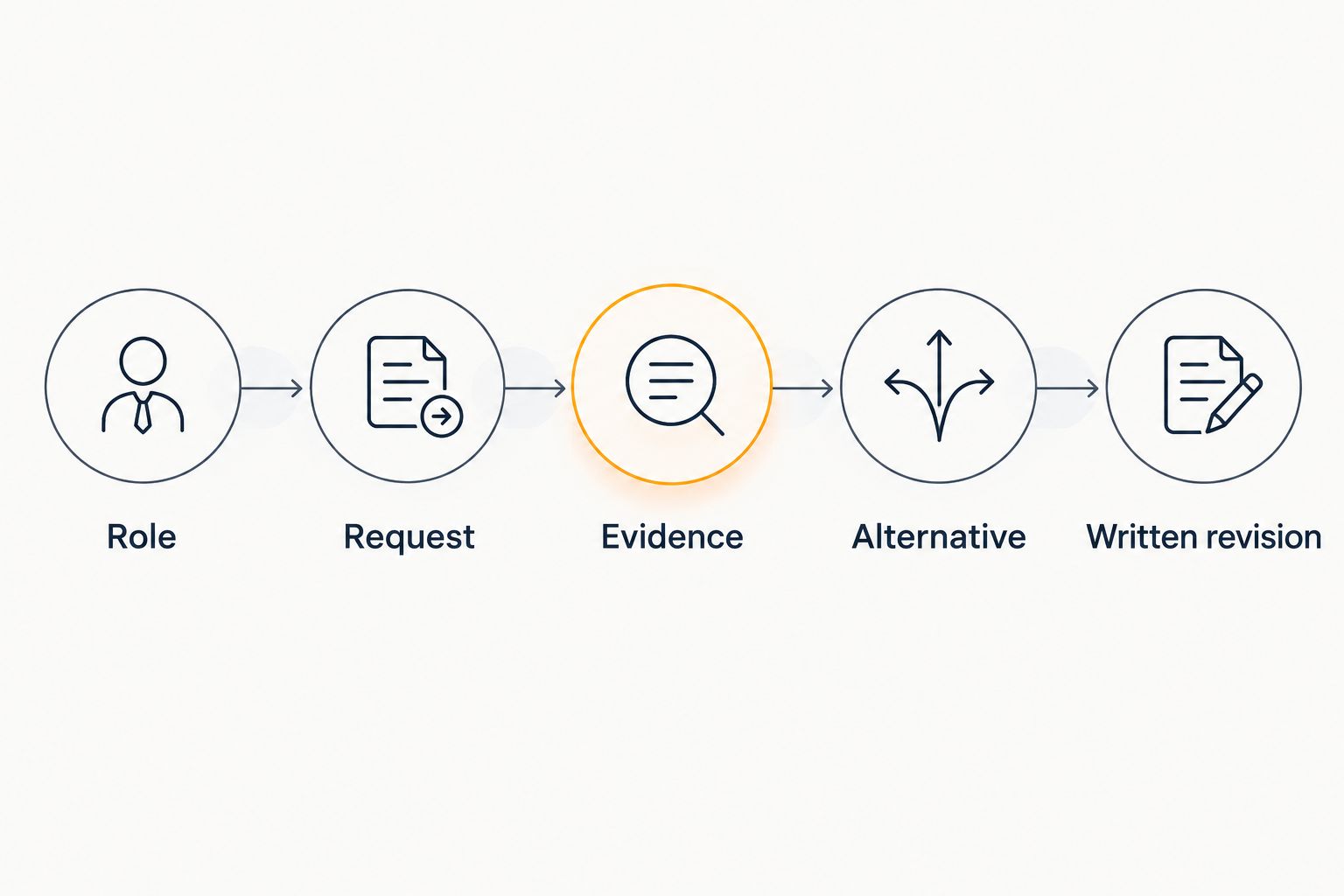
Do not claim to hold another offer unless you actually hold it. Advertised terms are market context; your own written competing offer is evidence of a specific alternative available to you, subject to its conditions.
Offer revision record
A successful conversation is not the endpoint. Check whether the revised document actually resolves the issue you raised.
- Log the response. Record the employer's answer against each requested change. Separate accepted revisions, declined requests, and unanswered questions.
- Compare versions. Review the revised offer alongside the earlier version. Check that compensation changes have not introduced different workload expectations or new conditions.
- Inspect definitions. Recheck guarantee duration, productivity calculations, call obligations, payment timing, and any repayment language affected by the revision.
- Resolve inconsistencies. Ask for conflicting statements to be reconciled in writing. Use qualified physician-employment counsel to assess legal obligations before signing.
Expected result: Your decision rests on the current proposed agreement, with unresolved issues identified rather than buried in correspondence.
For a 2026 offer, retain the dated evidence and document versions supporting your decision. Do not describe an earlier advertisement as the employer's current position after the employer has supplied revised terms.
Refresh the worksheet when an offer changes
Use the same workflow for a second employer's offer or a revision from your preferred employer. This is a manual refresh process, not an assumed automatic leaderboard feed.
- Preserve the original. Add the new terms as a dated version so you can see what changed.
- Recheck comparability. A revised shift pattern or clinical scope changes the comparison, even when the compensation heading stays the same.
- Update the request. Remove issues the revision resolves and focus your next response on the remaining decision points.
- Reconfirm alternatives. Ask whether a competing offer's terms and response deadline remain valid before referring to it again.
Expected result: Each negotiation round uses current evidence rather than a mixture of old advertisements and revised offers.
Troubleshooting
The leaderboard has no methodology
Use the employer names for discovery, but exclude the ranking from your compensation argument. Ask for the measure, data period, and inclusion criteria before treating it as comparative evidence.
Advertisements appear to describe the same vacancy
Group the records provisionally and ask the recruiter whether they represent separate requisitions. Do not count copied advertisements as independent evidence of hiring demand.
Advertised compensation conflicts with the offer
Ask the employer to explain the difference in writing. Check schedule, experience requirements, location, productivity assumptions, and compensation components before describing the discrepancy as like-for-like.
The employer rejects your comparators
Ask which specific characteristics make them unsuitable. Correct genuine mismatches, then return to the requested term using the remaining evidence rather than defending the ranking itself.
Higher earnings depend on an unclear target
Keep the conditional amount outside your guaranteed-pay comparison. Request the productivity formula, threshold, attribution rules, and payment timing before evaluating the proposed earnings.
Customize your workflow
Expand the worksheet around the term that matters most to your decision. For a productivity-based offer, add the definitions covered in the guide to evaluating RVU targets before accepting a radiology offer.
For call-heavy work, document coverage expectations and backup arrangements. For remote work, record workstation responsibilities and scheduling requirements. Keep these as separate negotiation items rather than compressing every difference into a single employer score.
Use RadBoard to broaden your radiology job search when your current comparators do not match the position. Repeat the verification process for each new role; more listings do not automatically mean stronger evidence.
FAQ
How do I use a radiology employer leaderboard for salary negotiation?
Use the leaderboard to identify employers, then verify comparable job terms before making a compensation request. Ranking alone does not establish the terms appropriate for your subspecialty, schedule, or responsibilities.
Does a higher employer ranking mean a better salary offer?
A higher ranking does not establish a better salary offer. Check what the ranking measures and compare the actual guarantee, workload, conditional earnings, and benefits.
Is RadBoard useful for comparing radiology employers?
RadBoard supports employer discovery by aggregating 5,000+ radiology positions from 20 sources. Verify individual listing terms with the employer before using them in a negotiation.
Can I negotiate without another written offer?
You can request revised terms without another written offer. Support the request with relevant experience, documented responsibilities, and verified comparable listings; do not describe an advertisement as an offer you hold.
What should I compare besides guaranteed salary?
Compare scheduled work, call, productivity requirements, benefits, and contractual obligations. Keep temporary incentives and conditional earnings separate from recurring guaranteed compensation.
What if a recruiter promises better terms verbally?
Request the promised terms in writing and check that the revised offer or agreement includes them. Record unresolved differences before making your decision.
How current should my negotiation evidence be in 2026?
Use the latest employer-confirmed terms you can obtain and record each source's date. Reconfirm older listings when schedule, compensation structure, or role scope remains uncertain.
One last thing
Your strongest comparator is not necessarily the highest-paying advertisement; it is the role whose terms you can explain and verify. Before sending your counterproposal, remove every comparison you cannot defend without assumptions. A shorter evidence set makes the remaining argument easier to assess.