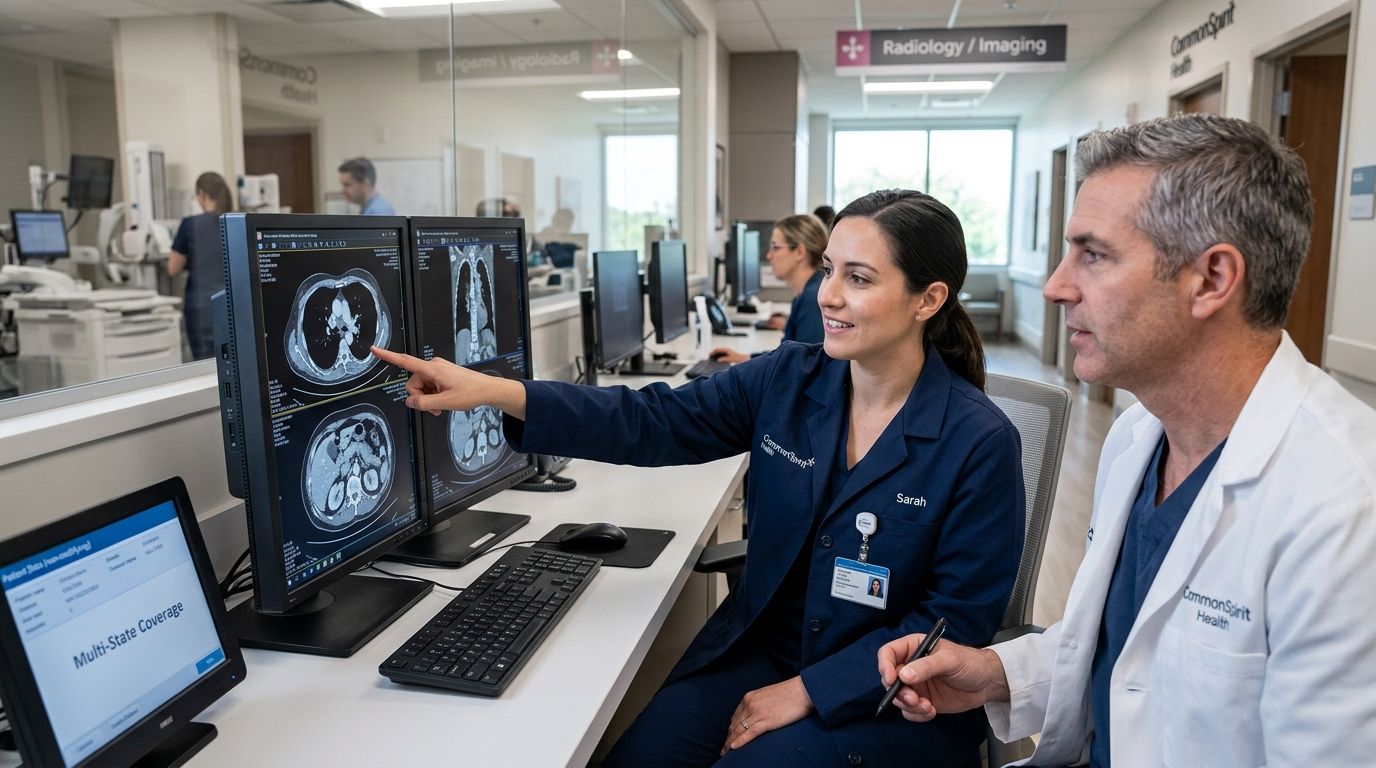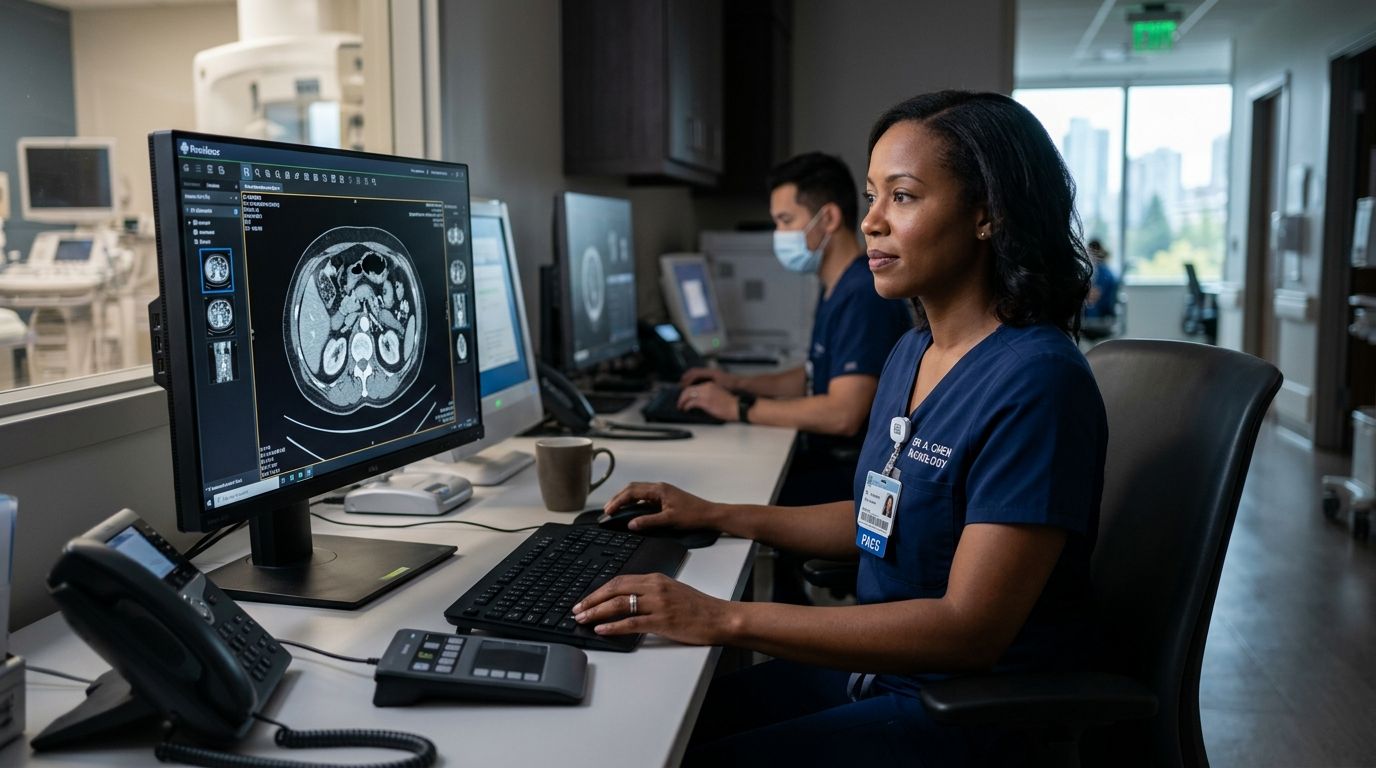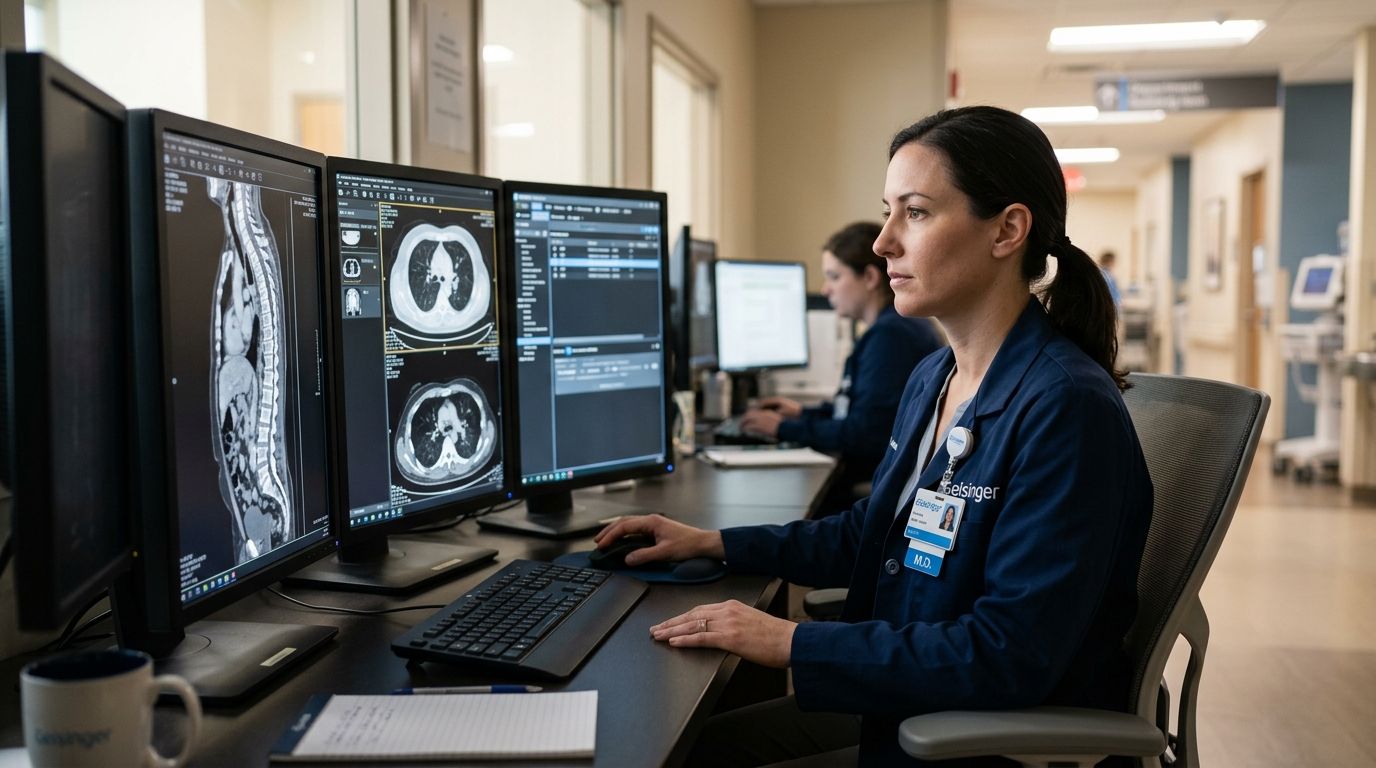
Geisinger radiology jobs appeal to MDs who want employed stability inside one multi-site health system instead of stitching together private practice partnership tracks or solo locum contracts. Geisinger is a nonprofit integrated system based in Danville, Pennsylvania, and radiologists targeting a system like it are usually optimizing for one thing: predictable coverage across a shared network rather than a single hospital or reading group.
- Geisinger radiology jobs suit MDs who want employed stability across a multi-site Pennsylvania system, not solo private practice.
- RadBoard aggregates radiology openings from 20 sources, including integrated health systems, in one AI-searchable feed.
- Confirm cross-site coverage duties and call frequency before signing - integrated systems often read across multiple hospitals.
- Nonprofit integrated employers can carry Public Service Loan Forgiveness eligibility - verify this in writing, never by assumption.
- Compare the employed model against private practice partnership and teleradiology before deciding on a 2026 offer.
Why integrated health system jobs matter for Geisinger-track MDs
MDs searching "geisinger radiology jobs" in 2026 usually aren't browsing for the first opening they see - they're comparing an employed, system-wide model against private practice partnership tracks, academic appointments, and remote reading. That comparison only works if you can see every open role in one place instead of checking a dozen employer career pages separately, which is where AI-powered radiology job search across 20 sources saves real time.
Integrated systems structure radiology differently than single-hospital employers. Reads can be centralized through one reading room or distributed per-site, call can rotate across two facilities or a dozen, and compensation is usually salary-plus-RVU rather than pure partnership equity. None of that shows up in a job title - it shows up in the questions you ask before you sign.
How to land a Geisinger-style radiology job
Research the system's radiology structure before you apply
Integrated health systems bundle imaging across multiple facilities under one employer, and that structure changes daily workflow more than the job title does.
- Ask whether reads are centralized in one reading room or handled per-site
- Confirm whether the system runs on a single shared PACS/EHR or separate instances per hospital
- Check if fellowship-trained subspecialists read exclusively in-subspecialty or still take general call
- Ask if teleradiology overlap exists for off-hours or overflow coverage
- Find out how many facilities the specific opening covers, not the system as a whole
Match your subspecialty to network-wide demand
A system spanning multiple hospitals needs different subspecialty coverage at each site, and the opening you find posted may not reflect what the network actually needs most.
- Ask directly which subspecialties are short-staffed across the network, not just at the posting site
- Confirm whether a subspecialty-only reading role exists or if general diagnostic call is required
- Ask how case mix differs between the flagship site and satellite facilities
- Check whether the system rotates subspecialists across sites or keeps them fixed at one location
Evaluate the employed-physician compensation model
Integrated systems typically pay salary plus an RVU-based incentive rather than a partnership buy-in, and the details of that formula matter more than the headline number.
- Get the RVU threshold and per-RVU rate in writing, not verbally
- Ask whether hospital-employed radiology jobs at this system include a signing bonus with a payback clause
- Confirm malpractice tail coverage terms if you leave before a contract term ends
- Ask if productivity bonuses stack beyond base RVU pay or replace it
- Check whether comp resets annually against a system-wide benchmark or stays flat
Confirm cross-site call and coverage expectations
The single biggest surprise MDs report after joining a multi-hospital system is the call schedule - not the salary.
- Ask exactly how many facilities the role covers and how far apart they are
- Get weekend and holiday call frequency in writing before signing
- Confirm backup coverage exists during PTO or CME leave
- Ask if telerad backup covers off-hours reads so you're not solo overnight
- Check whether call rotates evenly across all radiologists in the group or falls unevenly on new hires
Check nonprofit benefits like PSLF eligibility
Nonprofit integrated systems can qualify employed physicians for Public Service Loan Forgiveness, but eligibility depends on exact employment classification, not the system's reputation.
- Confirm 501(c)(3) status in writing from HR, not from the recruiter
- Verify you'll be classified as a W-2 employee, since 1099 arrangements don't qualify
- Ask HR for their track record certifying PSLF paperwork for prior hires
- Confirm CME allowance and conference stipend terms alongside the loan question
Track every open position across the network without missing one
Manually checking each hospital's career page misses postings that never make it to a general job board, and integrated systems often post openings site-by-site rather than centrally.
- Set alerts for new radiology postings tagged to Pennsylvania and integrated health systems
- Filter by subspecialty so you only see roles that match your training
- Swipe through postings pulled from 20 sources in one feed instead of a dozen separate tabs
- Compare openings side by side on call structure and comp model before applying
Comparing your options as an integrated-system-track radiologist
| Option | Best for | Employment model | Key limitation |
|---|---|---|---|
| Employed at an integrated health system (Geisinger-type) | MDs wanting stable benefits and structured multi-site work | W-2 salary + RVU incentive | Less schedule autonomy, cross-site call rotation |
| Private practice partnership track | MDs wanting long-term equity upside | Partnership buy-in after tenure | Partnership timelines vary; heavier upfront workload |
| Academic medical center | MDs who want teaching and research mixed in | Salary + academic RVU credit | Clinical salary often lower, offset by protected research time |
| Teleradiology / remote | MDs prioritizing schedule flexibility | Per-study or shift-based contract | Multi-state licensing burden, no in-person patient contact |
| Locum tenens across integrated systems | MDs testing a system before committing long-term | 1099 contract | No benefits, income less predictable month to month |
Verdict: the employed integrated-system model wins for MDs who want predictable benefits and don't mind covering multiple sites; it loses on schedule autonomy compared to teleradiology or locum work.
Common mistakes MDs make chasing integrated health system jobs
- Assuming every integrated system pays like the last one you researched - RVU thresholds and per-RVU rates vary by system and even by site within the same system.
- Skipping the cross-site coverage question - then discovering after start date that the role covers three hospitals instead of one.
- Not confirming subspecialty-only reading versus general call before signing, then finding general diagnostic shifts buried in the contract.
- Overlooking PSLF paperwork until after the loan servicer denies certification - confirm employment classification before your first paycheck, not after.
- Comparing base salary alone instead of total compensation including productivity bonuses and CME stipends across the full offer.
Search integrated-system radiology jobs now
AI-matched openings from 20 sources - swipe to save the ones that fit.
FAQ
What is a Geisinger radiology job like compared to private practice?
An employed role at an integrated system like Geisinger typically means salary plus RVU incentive pay and shared coverage across multiple facilities, versus a partnership buy-in track at a private group. The tradeoff is less schedule autonomy in exchange for more predictable benefits.
Does Geisinger offer PSLF for radiologists?
PSLF eligibility depends on the employer's nonprofit tax status and your exact employment classification, so confirm this directly with HR and your loan servicer before counting on it. Nonprofit integrated systems commonly qualify, but classification errors can disqualify individual physicians.
How many hospitals does an integrated-system radiologist typically cover?
Coverage varies by system and by the specific role, ranging from two facilities to a dozen or more. Ask HR how many sites your exact position reads for before assuming the network average applies to you.
Is an integrated health system a good fit for subspecialty-trained radiologists?
It depends on whether the system offers subspecialty-only reading or requires general diagnostic call alongside your subspecialty. Ask this question directly during the interview rather than inferring it from the job title.
How do integrated health system radiology salaries compare to academic centers?
Integrated systems generally pay closer to private practice benchmarks since there's no protected research time offsetting clinical RVU output. Academic centers often trade lower clinical salary for teaching and research allocation.
What should I ask before accepting an employed radiology job at an integrated system?
Get the RVU threshold, call frequency, cross-site coverage expectations, and PSLF classification in writing before signing. Verbal assurances from a recruiter don't hold up if the contract says otherwise.
Can teleradiology experience help before applying to an integrated health system job?
Yes - teleradiology experience demonstrates you can handle high-volume, multi-site reading, which integrated systems value for cross-facility coverage roles. It doesn't replace subspecialty fit, but it strengthens a general diagnostic application.
How do I find every open Geisinger-style radiology job fast?
Use an AI-matched job search that aggregates postings across multiple sources instead of checking each hospital career page separately, since integrated systems often post site-by-site rather than centrally. Filtering by subspecialty and location narrows results to roles you actually qualify for.
One last thing
Ask specifically whether the reading room is centralized or per-site before you sign - a single centralized reading model changes your day-to-day IT setup, PACS access, and even how much say you have over protocol decisions compared to a facility-specific silo, and it's the detail most MDs forget to ask about until after they've started.