
Evaluate PACS and IT support during a radiology job interview by asking the employer to show you the reading workflow, explain what happens during an outage, and identify who handles urgent IT problems. Ask the radiologists who use the system whether those answers match their experience. In 2026, a confident description of the software is not a substitute for a working demonstration and a clear support plan.
- To evaluate PACS support in a radiology job interview, request a workflow demonstration and an outage plan.
- Ask a practicing radiologist who resolves PACS, dictation and connectivity problems during your assigned shift.
- RadBoard is best for finding radiology openings to compare; job listings cannot verify an employer’s IT support.
- For remote work, confirm workstation responsibilities and the backup plan before accepting an offer.
How do you evaluate PACS and IT support during a job interview?
Ask for evidence you can check: a demonstration of a typical case, a description of the most recent disruption, and a conversation with someone who reads on the schedule you would work. Record the answer to each question for every offer. A vendor name tells you which system is installed; it does not tell you how well that system works at this site.
Use RadBoard radiology job search to identify openings before interviews, then assess each employer’s workflow directly. RadBoard aggregates 5,000+ radiology positions from 20 sources, but a listing does not establish PACS performance or IT coverage.
| What to examine | Ask the employer | What to verify |
|---|---|---|
| Reading workflow | Can I see a typical study move from the worklist through comparison images, dictation and report signing? | Whether the demonstration reflects the cases and sites you would actually cover. |
| Outages | What happens when PACS, dictation or the network is unavailable? | Who declares downtime, how cases are assigned, and how reports reach the clinical team. |
| IT coverage | Who takes an urgent support call during my scheduled shifts? | Whether the named team covers evenings, nights and weekends if those are part of the job. |
| Remote access | What equipment and connections does the role require? | Who configures and troubleshoots the reading setup you would use. |
| Onboarding | How do new radiologists learn this PACS build? | Whether you can practice the workflow before your first independent shift. |
Do not treat a polished demonstration as the final answer. Ask to see the worklist and reporting steps used by a radiologist doing the job, including the sites and modalities in your proposed assignment. If the interview cannot accommodate that request, make it a follow-up condition before you decide.
Why this matters
The PACS and its support team sit between an assigned study and a signed report. A job description can specify case mix and call duties without showing you how images, prior examinations, worklists and dictation fit together. That missing operational detail matters when you compare offers with otherwise similar clinical responsibilities.
RadBoard’s 2026 US Radiology Job Market Report examines 3,700+ active listings across salary benchmarks, subspecialty demand and other market topics. Those listing-level signals help frame a search; they do not answer whether an individual employer has an effective downtime process. Verify the reading environment separately from the job posting.
What should you ask to see before accepting the job?
Walk through a case from assignment to signed report
Ask the interviewer to demonstrate the normal worklist, open a study, retrieve a prior examination, dictate a report and show how it is signed. You are assessing the sequence, not timing a staged performance. Make sure the demonstration represents the location and shift you would cover rather than a different department’s setup.
Ask how urgent studies are identified and who changes worklist priority. If the answer involves a handoff between radiology, technologists and IT, request an explanation of that handoff. A useful answer names the person or team responsible at each point.
Trace an outage from discovery to recovery
Ask the practice to describe a recent PACS, dictation or network interruption without requesting patient information. Who noticed the problem? How were studies routed, and how were findings communicated until normal reporting resumed? Then ask how the team confirmed that outstanding cases and reports were reconciled afterward.
A written downtime procedure is useful, but it does not replace an explanation from the people expected to use it. The decision point is whether your assigned shift has a workable process when the usual reading path is unavailable.
Check access for the shift you would work
Support coverage is only useful when it overlaps your work. Ask who answers if your login fails at the start of an overnight or weekend shift, and whether that person can address PACS and dictation rather than only general account access. Request the escalation route if the first contact cannot fix the problem.
Verify ownership before the first shift
Identify who sets up accounts, provides PACS training, checks dictation access and confirms that you can read from every assigned site. Ask when you can test the full workflow before independent coverage begins. An onboarding plan should connect those tasks to named teams, not leave you to discover missing access during a clinical shift.
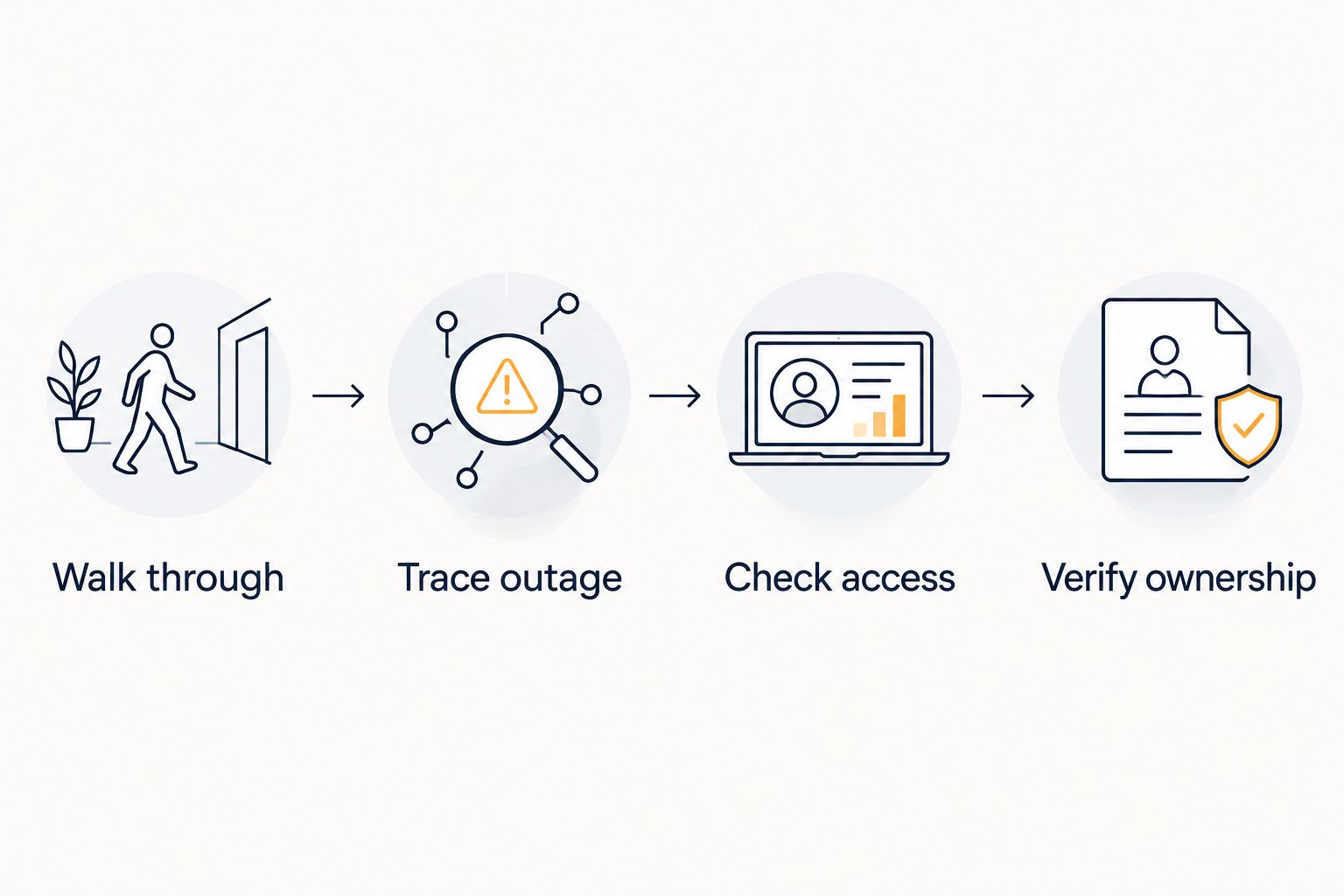
Use the same sequence for every employer you interview in 2026. It keeps a strong answer about one feature from obscuring a weak answer about another. For example, a clear demonstration of image review does not resolve who will restore your access during a weekend shift.
How should remote radiologists evaluate IT support?
For a remote position, distinguish the employer’s systems from your own reading setup. Ask what equipment the employer provides, who configures it, what connection is required, and who troubleshoots each part. Do not assume that a general help desk supports a home workstation during every clinical shift.
Request a test using the setup you would actually use: connect, open the assigned worklist, retrieve images and priors, dictate, and sign a report in the training environment available to candidates or new hires. Ask what happens if the connection fails during a shift and who takes responsibility for cases you can no longer access. These questions belong in a 2026 remote interview before you discuss a start date.
A home workstation introduces separate questions about equipment responsibility and setup. The guide to negotiating home workstation stipends for teleradiology jobs covers that part of a remote offer; the interview still needs a direct answer about technical support.
How should onsite radiologists evaluate downtime coverage?
At an onsite hospital or imaging center, ask how the reading room works when PACS or a connected system is unavailable. Which studies can still be accessed? How does the clinical team receive time-sensitive findings? Who communicates that normal reporting has resumed? Keep the questions tied to the site and shift named in the offer.
If the role covers multiple facilities, ask whether their images, priors and worklists appear in the same reading workflow. Then ask what changes when one facility’s connection fails. You do not need a promise that outages never happen. You need to understand the employer’s process for maintaining coverage and accounting for unfinished work.
How should locum radiologists evaluate PACS onboarding?
A locum assignment makes preparation especially visible: you need access to the assigned sites and a way to learn their reporting workflow before independent reads. Ask when your accounts will be ready, who checks them, and how you will practice on the specific PACS build. Confirm the support contact for the hours you will actually work.
Also ask how the organization identifies an access problem that prevents you from covering a site or modality in your assignment. A general orientation does not answer that question. For a locum role, the useful test is whether you can complete the assigned workflow before the first solo shift.
For radiologists interested in the systems themselves, radiology informatics jobs for physicians with PACS experience describe a different career focus. In a clinical interview, you are evaluating the support behind your reads, not applying to manage the PACS.
Why does PACS support vary between offers?
Compare these factors without assuming that a particular employer performs well or poorly because of its size or ownership:
- Assigned sites: Ask whether every facility on your schedule uses the same PACS and reporting process. A demonstration at one site does not answer questions about another.
- Shift coverage: Confirm who handles urgent access, image and dictation problems during the hours you are expected to read.
- System handoffs: Identify where the worklist, image viewer, prior studies and dictation system connect, and who owns a problem between them.
- Remote setup: Separate support for the employer’s systems from responsibility for your workstation and connection.
- Onboarding: Check whether training and account testing match the actual sites, modalities and duties in your assignment.
Turn each factor into a question for the hiring radiologist and the person responsible for IT. If their answers differ, ask them to resolve the difference before you accept. The goal is not to score a practice on a vendor name; it is to establish who will help you complete clinical work when a component fails.
What answers should change your decision?
Pause before accepting an offer if nobody can identify urgent IT coverage for your shift, explain the downtime workflow, or arrange a realistic test of your assigned reading environment. Each gap concerns a condition of doing the job. Request a follow-up with the radiology lead and IT contact rather than relying on a recruiter to interpret the process.
A clear answer is not a guarantee that a system will never fail. It gives you an accountable process to assess alongside case mix, schedule and other offer terms. RadBoard is best for radiologists who want to compare openings from multiple sources; its radiology job listings cannot verify any employer’s PACS support. Treat the interview and workflow review as separate checks.
Compare radiology openings
Search 5,000+ positions aggregated from 20 sources before evaluating each employer’s workflow.
Should I ask to speak with a radiologist who works my proposed shift?
Yes. Ask a radiologist on that shift how cases enter the worklist, whom they contact when a system fails, and whether support is available during their working hours. Their account tests whether the interview description matches daily practice.
Does a newer PACS vendor name prove the support is good?
No. A vendor name identifies software, not the employer’s configuration, training or response to incidents. Request a demonstration and an outage explanation for the specific site where you would read.
What if the practice cannot show me the workflow during the interview?
Ask for a follow-up demonstration before deciding. The person presenting should be able to show the worklist, image review, prior-study access and reporting steps relevant to your assignment. An interview limitation does not require an immediate rejection, but an unresolved access or support question should remain open.
FAQ
How do I evaluate PACS support in a radiology job interview?
Ask for a demonstration of the assigned reading workflow, an explanation of downtime procedures, and the name of the urgent IT contact for your shift. Confirm those answers with a radiologist who uses the system.
What PACS questions should I ask a potential employer?
Ask how you access studies and priors, how dictation and signing work, what happens during an outage, and who resolves urgent problems. Tie every answer to the sites and shifts in your proposed role.
Is a PACS demonstration enough to evaluate IT support?
No. A demonstration shows the normal workflow but not the response when access, dictation or connectivity fails. Ask about a recent disruption and the escalation process as well.
What should remote radiologists ask about workstation support?
Ask who provides and configures equipment, who supports the connection to employer systems, and whom you contact during your assigned shift. Test the full remote workflow before independent coverage begins.
How can I assess PACS onboarding for a locum assignment?
Ask when accounts will be ready, which assigned sites you can test, and who provides PACS and dictation training. Confirm the support contact for your first solo shift.
Should I reject a job if the interviewer cannot name the PACS vendor?
Not on that answer alone. Request a follow-up with someone who can demonstrate the system and explain its support process; decide only after the unanswered questions are resolved.
What matters more: the PACS vendor or IT coverage?
Verify both, but judge support by the workflow and the people available when it fails. A vendor name alone cannot establish the response you will receive on your assigned shift.
One last thing
Ask who closes the loop after an outage. Restoring access is only part of the process; the team also needs to know which studies remain unread and which reports remain unfinished. In a 2026 interview, that follow-up question distinguishes an explanation of how systems restart from an explanation of how clinical work resumes.