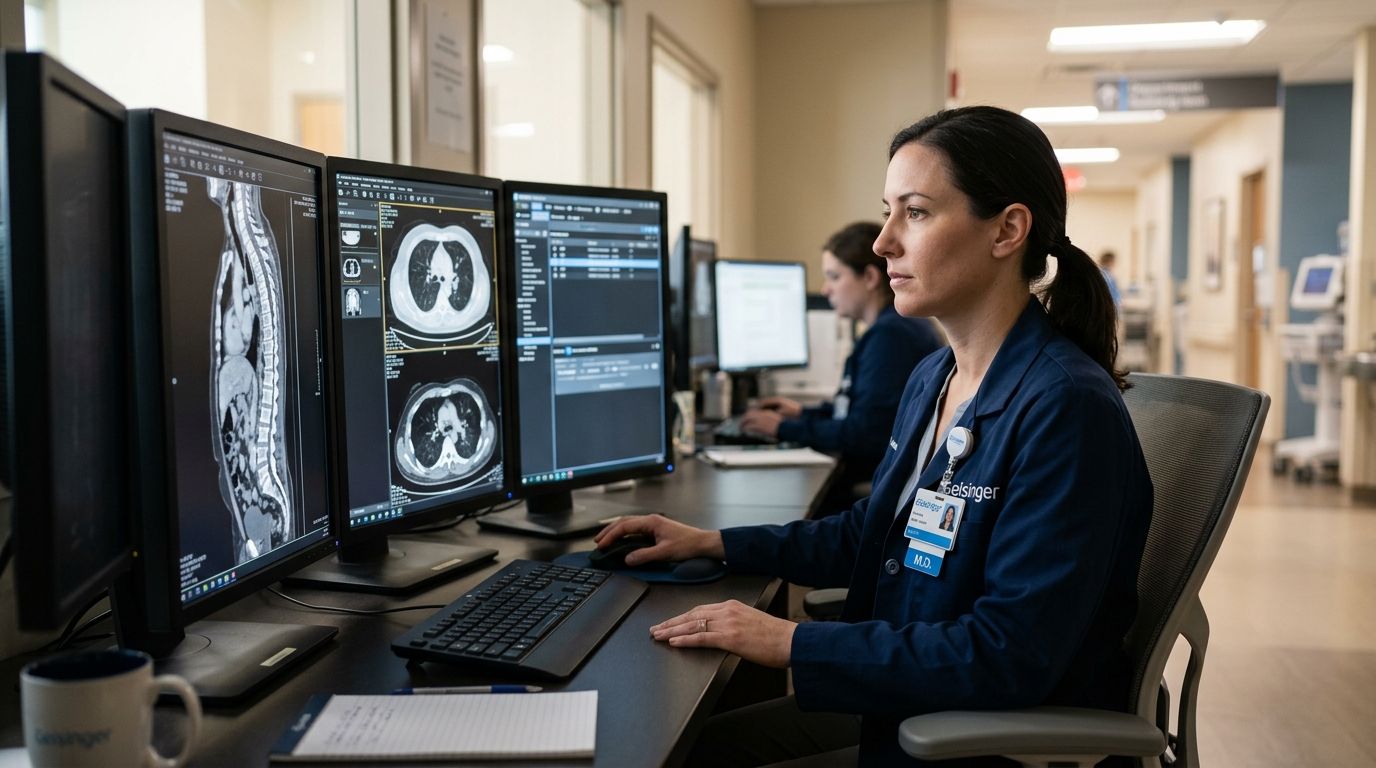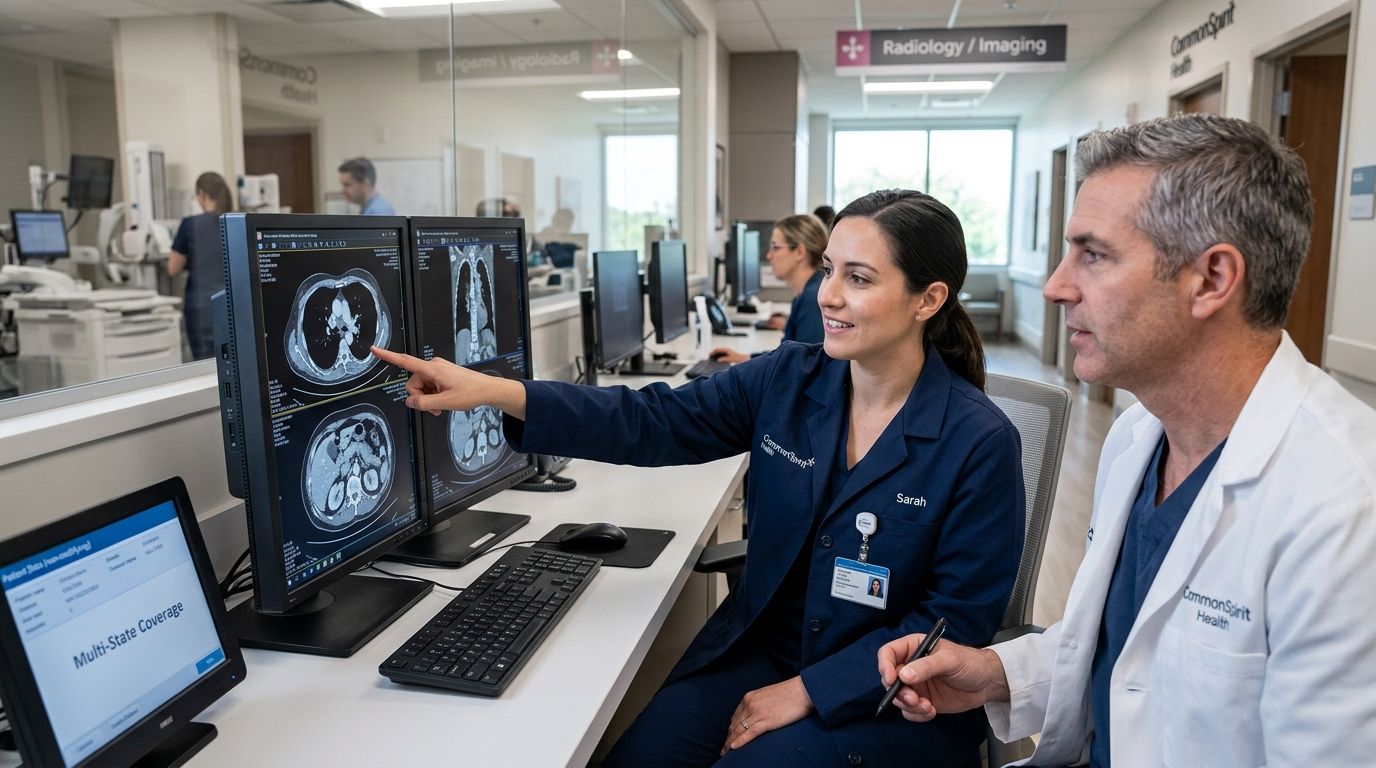
Hybrid onsite and remote radiology jobs split the work week between a physical reading room or procedure suite and a home workstation, usually on a fixed ratio like three days onsite and two days remote. Split-schedule MDs take these roles to keep procedural or team-facing duties without losing the flexibility of remote diagnostic reads.
- Hybrid onsite remote radiology jobs in 2026 typically split 2-3 remote days with 2-3 onsite days weekly.
- RadBoard aggregates 5,000+ radiology jobs from 20 sources, including hybrid split-schedule listings updated for 2026.
- Procedural subspecialties (IR, mammography, fluoroscopy) stay onsite-heavy; diagnostic CT and MR reads convert best to remote days.
- Multi-state licensing and malpractice tail coverage are the two most-missed contract items in hybrid offers.
- Verdict: hybrid schedules fit diagnostic-heavy subspecialists who still want one procedure day onsite each week.
Why hybrid onsite and remote radiology jobs matter for split-schedule MDs
A fully remote teleradiology contract works for pure diagnostic reading, but it doesn't work if your subspecialty includes ultrasound-guided biopsy, fluoroscopy, or interventional procedures that require your hands in the room. A fully onsite job solves the procedural problem but reintroduces the commute, the call rotation, and the fixed schedule that pushed you to look for something different in the first place.
Hybrid onsite and remote radiology jobs exist because employers face the same tension from the other side: they need procedure coverage on-site but can't always justify a full FTE reading room seat five days a week when diagnostic volume varies. Groups build hybrid contracts as a retention tool for radiologists like you who won't take fully remote or fully onsite, and as a staffing tool that fills onsite coverage without paying for five days of physical presence when three will do.
Searching RadBoard's radiology job platform surfaces both dedicated hybrid postings and standard listings where the split schedule is negotiated after the offer, not advertised in the title. That distinction matters for how you search and how you negotiate — treat every posting as a hybrid candidate until you've confirmed otherwise.
Map your subspecialty's remote-eligible reads
Not every study type converts to a home workstation. Sort your own case mix before you talk to any recruiter about a split schedule.
- Remote-friendly: diagnostic CT, MR (non-interventional), screening mammography with CAD support, nuclear medicine interpretation, chest and body imaging
- Onsite-only: fluoroscopy and barium studies, ultrasound-guided biopsy, image-guided procedures, breast biopsy, most interventional radiology work
- Gray zone, depends on the group: STAT reads during off-hours, protocoling, tumor board prep
If your case mix is more than 60-70% remote-eligible, you have leverage to ask for a heavier remote split. If it's closer to even, expect a 3-2 or 4-1 onsite-favoring schedule instead.
Negotiate the onsite-to-remote day ratio before you sign
Get the ratio written into the contract, not agreed to verbally in the interview. Verbal splits drift toward more onsite days once you're on staff.
- Specify exact days or a rotating pattern, not just "2-3 days remote"
- Confirm RVU credit and productivity bonuses apply equally to remote and onsite output
- Ask who covers your onsite responsibilities (tumor boards, procedures, teaching) on your remote days
- Define what counts as "onsite" — physical presence requirement, not just availability
- Confirm PACS and EMR access is identical from your home workstation
Build a compliant home reading workstation
A hybrid contract is only as good as your remote setup. Groups vary widely on what they'll pay for versus what you're expected to supply.
- Dual DICOM-calibrated monitors matched to your onsite reading resolution
- A dedicated, encrypted VPN connection separate from home internet traffic
- Backup internet (cellular hotspot or second ISP) for connectivity redundancy
- A private, HIPAA-compliant reading space — not a shared home office
- Written confirmation of who owns and maintains the equipment after you leave
Before you accept a number for equipment or internet reimbursement, review how other radiologists structure this ask in negotiating home workstation stipends for teleradiology jobs.
Secure multi-state licensing for remote days
If your remote reads route to a facility in a different state than your onsite work, you need an active license in that state before day one, not after.
- Check whether the destination state participates in the Interstate Medical Licensure Compact
- Start license applications 3-4 months ahead of your hybrid start date — processing times vary widely by state
- Confirm the employer covers licensing fees for states tied to the remote portion of the role
- Verify your DEA registration covers each state where you'll be reading, if applicable
- Keep a renewal calendar; a lapsed license in one state can pull you off remote days entirely
Confirm malpractice and tail coverage covers both settings
Onsite procedural liability and remote diagnostic liability are different risk categories, and not every policy covers both without an endorsement.
- Ask specifically whether the policy covers reads performed from your home state for a facility in another state
- Confirm tail coverage terms if you leave — hybrid contracts sometimes carve out different tail terms for the remote portion
- Verify claims-made vs. occurrence coverage applies uniformly across onsite and remote work
- Get the malpractice carrier's name and policy limits in writing, not just "we cover you"
Clarify call and backup coverage on remote days
A dropped VPN connection or a home internet outage during a STAT read is the scenario hybrid contracts most often leave undefined.
- Ask what the escalation path is if you can't connect during a remote shift
- Confirm whether remote-day call responsibilities differ from onsite-day call
- Check if there's a backup radiologist on standby for connectivity failures
- Get clarity on how remote-day overnight or weekend call factors into your total call burden
Compare hybrid offers against pure onsite and pure remote roles
Line up all three formats before deciding. The right fit depends on how much of your case mix is procedural versus diagnostic, and how much you value physical presence for career growth like partnership tracks or leadership visibility.
| Option | Best for | Key limitation |
|---|---|---|
| Hybrid split schedule | Radiologists who need procedure days but want remote diagnostic flexibility | Requires multi-state licensing and a compliant home workstation |
| Fully onsite | Radiologists building toward partnership or leadership tracks | No remote flexibility; full commute and onsite call rotation |
| Fully remote teleradiology | Diagnostic-only subspecialists with no procedural duties | Limited visibility for promotion; isolation from care teams |
| Locum-to-hybrid trial | Radiologists testing a group before committing to a permanent split | Shorter contract terms and less schedule predictability upfront |
If you're coming from a fully remote role and testing whether you want more onsite time back, transitioning from teleradiology back to onsite practice walks through what to expect readjusting to in-person call and procedure volume.
Search hybrid radiology jobs now
5,000+ radiology jobs from 20 sources, filterable by schedule type.
Common mistakes split-schedule MDs make
- Signing before the onsite/remote ratio is in writing. A verbal "mostly hybrid" agreement tends to shift toward more onsite days within the first year.
- Underestimating license lead time. Waiting until after signing to start a multi-state license application can delay your remote start date by months.
- Assuming RVU parity without confirming it. Some groups quietly weight onsite RVUs higher than remote RVUs in bonus calculations.
- Skipping the malpractice tail question for remote work. Tail coverage terms for the remote portion of a hybrid contract sometimes differ from the onsite portion.
- Treating hybrid as a permanent label. Case mix, staffing needs, and group ownership structure change; revisit your split ratio at each contract renewal, not just at hire.
For radiologists weighing whether the hybrid model fits a broader career shift, combining part-time academic and private practice radiology work covers a related split-schedule structure worth comparing against a pure onsite/remote hybrid.
FAQ
What are hybrid onsite and remote radiology jobs?
Hybrid onsite and remote radiology jobs split the work week between a physical reading room or procedure suite and a home workstation, commonly on a 3-2 or 4-1 ratio. Procedural subspecialties like interventional radiology or mammography biopsy typically require more onsite days than diagnostic-only reading roles.
How many days do hybrid radiologists work remotely?
Most hybrid radiology contracts in 2026 set remote days at two to three per week, with the remainder onsite for procedures, call coverage, or team meetings. The exact split depends on your subspecialty's procedural load and should be written into the contract, not left verbal.
Do hybrid radiology jobs pay less than fully onsite roles?
Pay structure depends on the group's compensation model, not the schedule format itself. Confirm whether RVU credit and productivity bonuses apply equally to remote-day and onsite-day output before comparing total compensation across offers.
Can interventional radiologists work hybrid schedules?
Yes, but IR-trained physicians typically keep a heavier onsite ratio because image-guided procedures require physical presence. Diagnostic-only reading blocks on non-procedure days are the most common remote component for IR-trained radiologists in hybrid roles.
What license do I need for hybrid onsite remote radiology jobs across state lines?
You need an active medical license in the state where the imaging facility or patient is located for each remote read, regardless of where you physically sit. Check whether that state participates in the Interstate Medical Licensure Compact to speed up the application.
Is hybrid radiology work available right after fellowship?
Some groups offer hybrid schedules to new attendings, though many prefer a fully onsite ramp-up period first to build case volume and team familiarity. Ask directly during interviews whether hybrid scheduling is available from day one or only after a defined onsite tenure.
How do I find hybrid onsite remote radiology jobs in 2026?
Search platforms that aggregate listings across multiple sources and filter by schedule type, since many groups don't label a role "hybrid" in the title even when the split is negotiable. RadBoard aggregates 5,000+ radiology jobs from 20 sources, which surfaces both labeled hybrid postings and standard roles worth asking about.
What equipment do I need for the remote days of a hybrid job?
You need DICOM-calibrated dual monitors, a dedicated encrypted VPN connection, backup internet, and a private HIPAA-compliant reading space. Confirm in writing whether the employer or you cover the cost of this equipment before you sign.
One last thing
Ask whether your hybrid contract labels remote days as "telework" or as a separate off-site duty status for tax and malpractice purposes. That single classification affects your home-office tax treatment and which state's tax authority considers your remote income sourced there — a detail split-schedule MDs routinely find out only after their first filing season, not before signing in 2026.