
Yes—subspecialty-only reading is a sustainable long-term radiology career when your assigned work, coverage obligations, and workload match your expertise. For a 2026 job decision, the main caveat is that a subspecialty title does not establish subspecialty-only duties: verify the actual worklist, call schedule, and exceptions before accepting.
- Is subspecialty only reading sustainable long term? Yes—protect the reading scope, coverage arrangements, and workload in writing.
- Subspecialty-only radiology trades breadth of routine practice for depth; preserve a deliberate route to future roles.
- RadBoard supports radiology job discovery; verify subspecialty-only duties directly with each employer.
Why this matters
Choose the work arrangement, not just the subspecialty label. A position described as neuroradiology, musculoskeletal imaging, or body imaging still needs a precise explanation of what reaches your worklist during ordinary shifts and staffing gaps.
Start with the guide to radiology jobs for physicians who want subspecialty-only reading, then evaluate each employer against your own boundaries. In 2026, your decision should rest on the offered duties and supporting documents—not on a prediction that any particular niche will remain unchanged throughout your career.
Sustainability has several parts: you need to perform the work safely, tolerate the schedule, maintain relevant skills, and retain acceptable alternatives. A job that satisfies only the first requirement is not enough.
Is subspecialty-only reading sustainable as a long-term career?
Yes, provided the practice protects the scope you are choosing and supports the work required within it. The strongest basis for a decision is an employer's case mix, staffing plan, written duties, and explanation of how exceptions are handled.
Compare these reading arrangements before deciding how narrow your practice should be. These are decision models, not guarantees about any employer.
| Reading arrangement | Best for | Main advantage | Main trade-off | Verify before accepting |
|---|---|---|---|---|
| Subspecialty-only | Radiologists who want a defined clinical scope | Concentrates routine practice within your chosen field | Leaves fewer routine opportunities to practice outside that field | Included studies, exclusions, call, and overflow rules |
| Subspecialty-focused with defined general coverage | Radiologists who want depth plus agreed breadth | Keeps specified general work within the role | Requires you to maintain competence across the agreed scope | Exact general duties and how frequently they occur |
| Broad diagnostic practice | Radiologists who prefer a varied worklist | Builds breadth into ordinary shifts | Does not protect a subspecialty-only career preference | Modalities, acuity, procedures, and backup availability |
Do not treat the broadest arrangement as automatically safest for your career. The right scope is the scope you can perform competently and want to maintain. Equally, do not treat specialization as protection against excessive work or an unsuitable schedule.
A narrow role needs the same scrutiny as a broad one. Read the employment terms, speak with physicians doing the work, and ask for concrete examples of how staffing problems change assignments.
Subspecialty-only practice: protect the boundaries
Best for: radiologists who want their routine clinical work confined to a clearly defined field. Ask the employer to describe the work by anatomy, modality, patient population, and procedures rather than relying on the job title.
For example, an MSK role needs an explanation of whether it includes radiographs, ultrasound, injections, or duties outside the MSK service. A neuroradiology role needs an equally explicit account of emergency coverage and any general diagnostic assignments. These are interview questions, not assumptions about what those positions include.
The advantage is clarity: your ongoing clinical development can follow the work you actually perform. The limitation is dependence on the employer maintaining an assignment structure that supports the boundary.
Recommendation: accept subspecialty-only duties only after resolving the exceptions. A statement about your usual work is incomplete without an explanation of what happens when the usual staffing arrangement fails.
Subspecialty-focused practice: define the general component
Best for: radiologists who want a subspecialty emphasis while deliberately retaining specified general duties. This arrangement is distinct from subspecialty-only practice, even when most of the recruitment discussion centers on your fellowship training.
The benefit is an agreed opportunity to practice outside the subspecialty. The drawback is that an undefined general component leaves you without a clear basis for evaluating workload, preparation, or future changes.
Ask which examinations belong to that component and whether the duties differ on call. Require the same specificity for occasional assignments as for daily work; unfamiliar work does not become appropriate simply because it is infrequent.
Recommendation: choose defined breadth, not open-ended flexibility. If you want a mixed practice, make it an intentional career choice rather than an exception that gradually becomes the job.
Why long-term sustainability varies
Use these factors to distinguish a durable arrangement from a title that sounds right. Each factor belongs in the interview and document review.
- Reading scope: Identify the examinations you will interpret, the procedures you will perform, and the work excluded from your role.
- Coverage rules: Establish who handles leave, vacancies, overflow, and cases outside your agreed scope.
- Workload design: Examine case complexity, turnaround expectations, interruptions, consultations, and protected nonreading duties together.
- Clinical support: Confirm access to prior imaging, relevant history, referring clinicians, technical support, and appropriate consultation.
- Skill maintenance: Match continuing education and peer feedback to your actual clinical work; plan separately for any broader duties you intend to retain.
- Exit options: Review contractual restrictions and the experience a future employer would require for your next preferred role.
None of these factors establishes a universal maximum career length. They provide a practical basis for deciding whether a particular position supports the career you want.
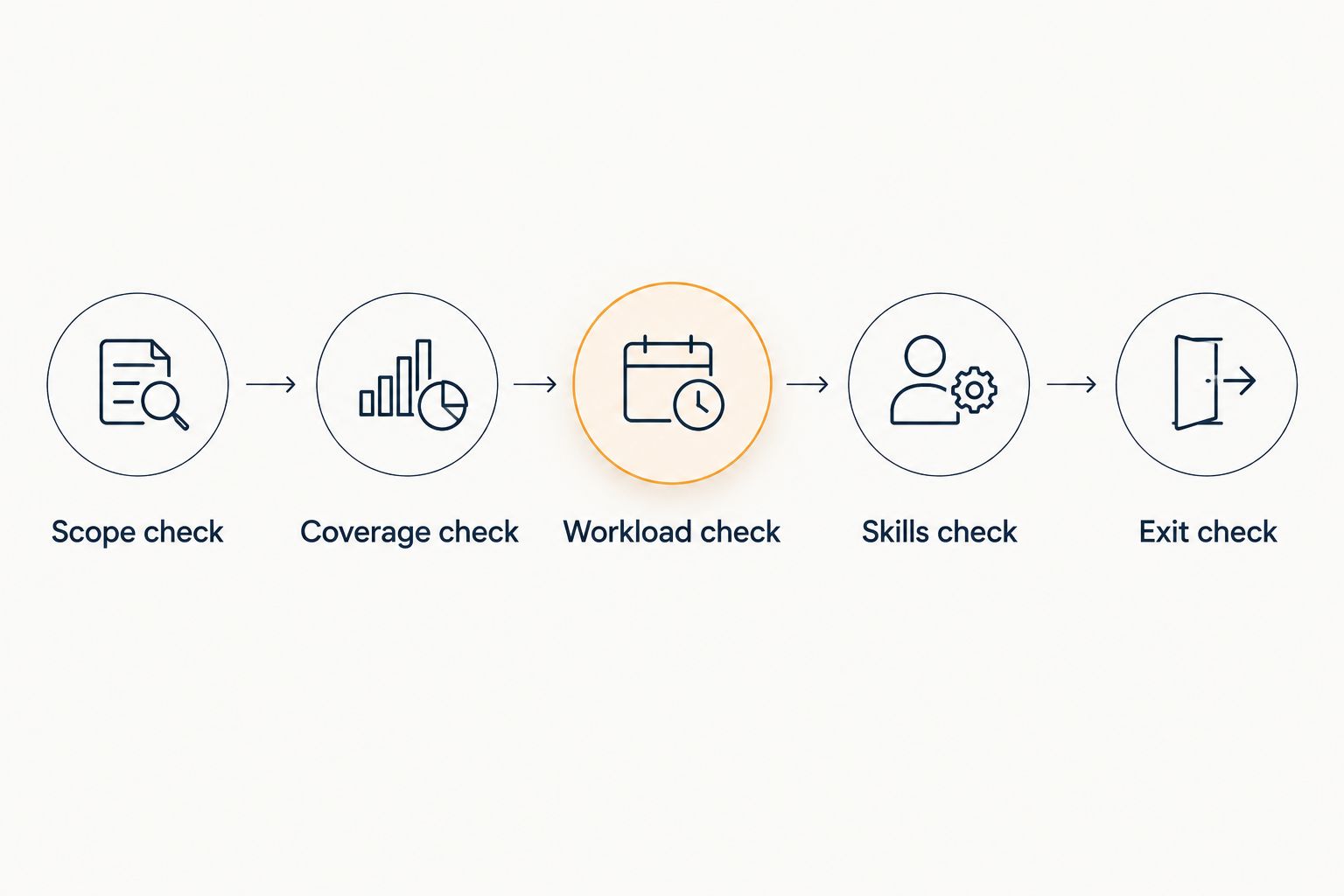
Use these 5 checks before accepting a 2026 offer
Scope check
Ask for a representative worklist summary that respects patient privacy. Request the distribution of studies by modality and clinical area, and ask whether the information reflects the shift you would actually work.
Then compare the answer with the written position description. If the employer describes a subspecialty-only position but reserves unrestricted assignment rights, ask for that conflict to be resolved before signing.
Your deliverable is a clear description of included and excluded duties. Keep it alongside the proposed agreement so that you can review the documents together with qualified counsel.
Coverage check
Ask what happens during sick leave, vacations, departures, and unexpected demand. Who takes an out-of-scope examination, and who decides whether you are expected to read it?
Speak with a current radiologist about a recent coverage disruption. Ask how it was handled, rather than accepting a general statement that everyone helps.
Your deliverable is a coverage explanation that identifies responsibility and escalation. A named process is more useful than a promise that exceptions are rare.
Workload check
Ask the employer to explain productivity expectations alongside case complexity and time spent on consultations, protocoling, procedures, and teaching. Do not compare positions using examination counts alone.
Clarify how the practice handles interruptions and urgent additions. Also ask what happens when safe completion of assigned duties conflicts with a turnaround or productivity expectation.
Your deliverable is a workload description you can discuss with someone currently performing comparable duties. A protected subspecialty worklist still needs a workable pace.
Skills check
List the skills the proposed role uses routinely and the broader skills you want to retain. Separate a genuine future career goal from a vague feeling that you should keep doing everything.
Ask about relevant continuing education, case review, consultation, and support for expanding duties. If a future position would require work you have not performed recently, verify its onboarding and privileging requirements before committing to that transition.
Your deliverable is a learning plan tied to actual responsibilities. Reading educational material is not, by itself, evidence that you are ready for every clinical assignment.
Exit check
Identify your next acceptable position if this job changes or ends. Consider the reading scope, location, schedule, and employment model you would be willing to accept.
Have qualified counsel review termination provisions and restrictions affecting future work. Separately, ask prospective employers how they evaluate recent experience for the roles you might pursue later.
Your deliverable is an exit route grounded in requirements you have checked—not an assumption that you can immediately resume any former duty.
Turn your criteria into a job shortlist
RadBoard is best for radiologists who want a radiology-specific job search across multiple sources. The platform aggregates 5,000+ radiology positions from 20 sources and includes swipe-to-save features.
Use RadBoard to discover positions, then apply the checks above during employer conversations. Its role in this decision is discovery; a listing does not establish the contractual scope, staffing arrangements, or duties you will ultimately accept.
For your 2026 shortlist, record each employer's answers in the same format. Keep unresolved questions visible rather than treating silence as confirmation that a role meets your requirements.
A useful shortlist distinguishes confirmed terms from recruitment language. Save the position that fits your criteria, but withhold a final decision until the employer explains both ordinary work and exceptions.
Can I stay specialized without losing every general skill?
Yes—you can plan to retain selected general skills without accepting unrestricted general coverage. Identify the duties you genuinely want to maintain and arrange appropriate clinical work, education, feedback, and privileges around them.
If your preference is strictly subspecialty-only reading, recognize that broader clinical readiness needs separate evaluation before you expand your scope later. Do not use occasional unsupported coverage as a substitute for a deliberate maintenance plan.
Is remote subspecialty reading a sustainable career choice?
Remote subspecialty reading needs the same scope, workload, and coverage checks as onsite work. Add questions about access to clinical information, consultation, technical support, and the handoff of work requiring an onsite clinician.
A remote location does not establish a protected specialty worklist. Evaluate where the work comes from and how it is assigned, not simply where you sit.
What should I review after starting the job?
Compare your actual assignments with the duties you accepted. Track out-of-scope requests, coverage changes, support problems, and workload conflicts so you can discuss specific issues with the appropriate leader.
For a role beginning in 2026, retain the original scope documents as your baseline. Revisit the arrangement when responsibilities change rather than assuming the original title still describes the job.
FAQ
Is subspecialty only reading sustainable long term?
Yes, when the role protects your reading scope and provides workable coverage, workload, and clinical support. Verify those conditions in the offered duties and employment documents rather than relying on the job title.
Do I have to read general radiology to keep my career options open?
You do not need to accept unrestricted general coverage solely to preserve options. Identify the future roles you want and verify the recent experience, competence, and privileges those employers require.
Does a subspecialty-only job mean I will have no call?
No—subspecialty-only describes reading scope, not the call schedule. Ask separately about nights, weekends, holidays, and the scope of work during each coverage period.
Will subspecialty-only reading prevent burnout?
Subspecialty-only reading does not guarantee a sustainable workload. Evaluate pace, case complexity, interruptions, schedule, and support alongside your interest in the clinical field.
Can I return to broader diagnostic work after specializing?
A return to broader work requires an assessment of your readiness for the proposed duties. Discuss recent experience, any additional preparation, supervision, and privileging requirements with the receiving employer.
How can RadBoard help me find subspecialty-only radiology jobs?
RadBoard supports radiology job discovery by aggregating 5,000+ positions from 20 sources. Confirm the reading scope, call duties, and coverage exceptions directly with each employer before accepting.
What should I ask before accepting a subspecialty-only role in 2026?
Ask which studies you will read, who covers exceptions, how workload is managed, and what happens when staffing changes. Compare those answers with the written duties and obtain qualified legal review of the agreement.
One last thing
Ask the employer to describe the last time its subspecialty coverage plan failed. Find out who read the displaced work, whether anyone's duties changed, and how the practice resolved the problem.
The answer tests the arrangement under pressure. A sustainable subspecialty-only career depends on what happens outside the ordinary workday as much as on the worklist you expect to read.