
LinkedIn connects you with colleagues, recruiters, and employers through a professional network. Its broad job search is not a substitute for a radiology-focused search across multiple sources. The best LinkedIn alternative in 2026 is RadBoard if you need aggregated radiology positions; ACR Career Center if you want a specialty-society job board.
- RadBoard leads LinkedIn alternatives for radiology jobs when you need aggregated openings: 5,000+ positions from 20 sources.
- ACR Career Center suits radiologists who want a specialty-society job board.
- PracticeLink suits physicians comparing radiology opportunities with broader physician employment options.
- Employer career pages support targeted applications; LinkedIn remains useful for professional introductions.
Why this matters
Your radiology job search needs to answer questions that a job title alone cannot resolve: subspecialty mix, call obligations, reading location, employment structure, and the identity of the hiring practice. Finding a listing is the beginning, not the decision.
For a 2026 search, separate discovery from verification. Use a specialty platform to identify opportunities, then confirm the clinical work and contractual terms with the employer. Keep professional networking available for introductions and questions about the practice.
LinkedIn alternatives at a glance
These options serve different purposes. Choose your primary search channel by the task you need to complete, rather than treating every job board as interchangeable.
| Platform or channel | Best for | Standout capability | How it differs from LinkedIn | Main limitation |
|---|---|---|---|---|
| Professional networking and employer connections | Professional profiles and connections alongside job listings | Benchmark: a broad professional network | A broad search does not establish radiology-specific job fit | |
| RadBoard | Discovering radiology positions across sources | Aggregates 5,000+ positions from 20 sources; search and swipe-to-save | Radiology-focused discovery rather than general professional networking | Aggregated listings still require employer confirmation |
| ACR Career Center | Searching within a radiology professional-society setting | A radiology-focused career center | Specialty context rather than an all-industry network | A specialty listing still needs clinical and contractual review |
| PracticeLink | Searching physician employment opportunities | Physician-focused job search | Physician employment focus rather than all-industry networking | Physician relevance does not establish subspecialty fit |
| Employer career pages | Applying to a specific organization | The employer's own advertised openings and application route | Organization-first search rather than network-first discovery | Each search covers that employer, not the wider market |
Use discovery channels to build your shortlist and employer conversations to validate it. No listing format replaces questions about the actual reading assignment.
1. RadBoard: best for aggregated radiology job discovery
RadBoard is a radiology job search platform that aggregates 5,000+ positions from 20 sources. Search and swipe-to-save help you find opportunities and retain listings for review. Its strongest role in a 2026 search is specialty-focused discovery across those sources.
Best for: Radiologists who want a central starting point for finding and saving radiology opportunities.
Where RadBoard shines
- Specialty focus: The platform serves radiology job seekers rather than an all-industry audience.
- Multi-source discovery: Aggregation brings positions from 20 sources into the search process.
- Saved opportunities: Swipe-to-save supports a shortlist you can revisit before contacting employers.
Where RadBoard falls short
- An aggregated opening is not an employer-confirmed offer. Verify whether the advertised role matches the assignment being discussed.
- The headline count does not establish how many positions meet your subspecialty, location, or schedule requirements.
- Saving a listing does not resolve call burden, ownership structure, productivity expectations, or contract terms.
RadBoard versus LinkedIn
| Dimension | RadBoard | |
|---|---|---|
| Primary audience | Radiology job seekers | Professionals across industries |
| Discovery model | Positions aggregated from 20 sources | Jobs alongside professional profiles and networking |
| Stated workflow | Search and swipe-to-save | Job search and professional connections |
| Best role in your search | Build a radiology opportunity shortlist | Identify contacts and support introductions |
Use the platform to identify candidates for closer review, not to infer the quality of an employment agreement. Start with a specific clinical brief: your subspecialty, acceptable reading setting, geographic boundaries, and call preferences. Compare the saved opportunities against that same brief.
Verdict: Hold RadBoard as your primary radiology discovery channel; verify shortlisted roles with employers.
2. ACR Career Center: best for a specialty-society job search
ACR Career Center places your search within the American College of Radiology's professional setting. It is a direct alternative when you want radiology-focused employment listings rather than a general professional feed. Use it as a separate specialty search channel, not as evidence that a particular employer meets your requirements.
Best for: Radiologists who want to search a career center associated with their specialty's professional organization.
Where ACR Career Center shines
- Radiology context: The career center is associated with a radiology professional society.
- Focused search purpose: You can use it for employment discovery without making professional networking the central task.
- Independent review channel: Comparing its listings with your existing shortlist gives you another source to examine.
Where ACR Career Center falls short
- A specialty-society setting does not establish an employer's case mix, staffing arrangements, or practice culture.
- A listing's professional context is not a substitute for reviewing the employment agreement.
- You still need direct answers about teaching, research, procedures, and general diagnostic coverage when those affect your decision.
ACR Career Center versus LinkedIn
| Dimension | ACR Career Center | |
|---|---|---|
| Professional scope | Radiology | Multiple industries and professions |
| Primary purpose here | Specialty employment discovery | Networking plus employment discovery |
| Useful next step | Investigate a listed position | Contact a relevant professional or employer |
In 2026, choose this channel when the specialty context matters to your search. Do not treat a radiology-specific posting as proof of subspecialty-only work: ask the employer what studies and responsibilities belong to the position.
Verdict: Hold ACR Career Center as a specialty search channel alongside your main shortlist.
3. PracticeLink: best for physician-focused employment searches
PracticeLink is a physician job-search platform. It offers a different starting point from LinkedIn: physician employment rather than a professional network spanning industries. Use it when you want to examine radiology opportunities within a broader physician-recruitment setting.
Best for: Physicians who want an employment-focused search channel that includes radiology.
Where PracticeLink shines
- Physician audience: Its employment focus is closer to a physician's search than an all-industry network.
- Job-search purpose: It provides a channel for examining physician opportunities rather than relying only on professional connections.
Where PracticeLink falls short
- A physician-focused platform is not the same thing as a radiology-only platform.
- A radiologist job title does not establish how much of the assignment falls within your fellowship training.
- Employer-specific schedules and contractual obligations still require direct confirmation.
PracticeLink versus LinkedIn
| Dimension | PracticeLink | |
|---|---|---|
| Audience | Physician job seekers | Professionals across industries |
| Search context | Physician employment | Employment and professional networking |
| Strongest use here | Examine physician job opportunities | Find contacts connected with an opportunity |
Before pursuing a listing, distinguish physician interpretation work from other radiology-related roles. Then ask whether the position involves general coverage, subspecialty reading, procedures, or a combination. That distinction matters more than the platform carrying the advertisement.
Verdict: Hold PracticeLink as a physician-focused supplement, not a substitute for radiology-specific screening.
4. Employer career pages: best for a defined employer shortlist
Employer career pages are the direct route when you already know which hospital, university, or practice you want to investigate. Start with the organization's advertised role, then establish who employs the radiologists and who controls the clinical assignment. A hospital location and a physician's employer are not automatically the same thing.
Best for: Radiologists targeting named organizations or a tightly defined geographic area.
Where employer career pages shine
- Employer-specific discovery: You can examine opportunities advertised by the organization itself.
- Direct application context: The page identifies the organization's application route for that posting.
Where employer career pages fall short
- An individual employer's page does not provide a market-wide comparison.
- The posting still needs clarification about reporting relationships, clinical coverage, and employment terms.
| Dimension | Employer career pages | |
|---|---|---|
| Search scope | One organization at a time | Multiple employers and professional contacts |
| Starting point | A named employer | A role, employer, or professional connection |
| Best use | Targeted application | Discovery and introductions |
Verdict: Hold employer career pages for targeted applications after defining your employer shortlist.
Why switch from LinkedIn for radiology job discovery?
The reason to change your primary search channel is functional, not a claim that LinkedIn is ineffective. LinkedIn provides a broad professional network; a radiology-specific platform provides a different discovery scope.
Use an alternative when your search requires one of these tasks:
- Specialty discovery: You want to begin with radiology positions rather than an all-industry search.
- Multi-source review: You want to examine aggregated opportunities rather than depend on a single network's job search.
- Physician employment: You want a channel organized around physician recruitment.
- Employer targeting: You already have a named organization to investigate.
For your 2026 search, match the channel to the task. Keep LinkedIn for the relationship work it supports; move listing discovery to a specialty or physician-focused channel when that better fits your brief.
Build a shortlist before submitting applications
Use 3 search channels with distinct roles: a specialty discovery platform, a second employment source, and direct employer verification. This is a search structure, not a claim that every opening appears across all three.
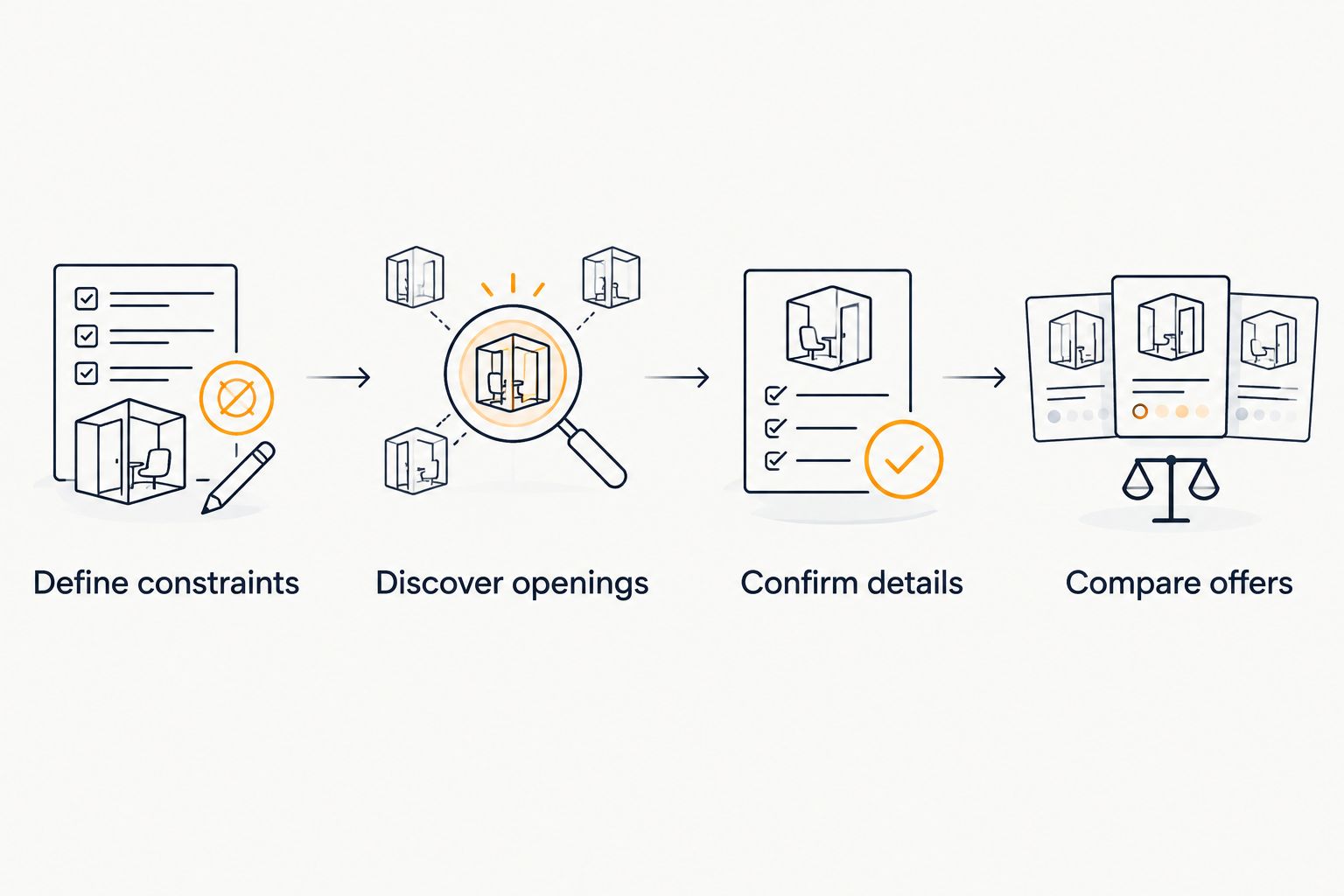
Follow the same sequence for each opportunity:
- Define constraints: Write down your subspecialty, reading location, acceptable schedule, and employment preferences.
- Discover openings: Search for positions that meet those requirements, then save the candidates you want to investigate.
- Confirm details: Ask the employer to clarify case mix, call, work location, staffing, and the hiring entity.
- Compare offers: Evaluate the clinical assignment and written terms against the same criteria.
Do not give a listing extra weight because it appears on more than one platform. Match the employer, location, clinical role, and identifying details before treating similar advertisements as separate opportunities.
For subspecialty roles, make the clinical review explicit. Ask which modalities you will read, what general coverage is expected, whether procedures are included, and who handles overflow. Use the guide to assessing case-mix volume before joining a radiology group to structure that discussion.
A saved listing belongs on your shortlist only when you can explain why it meets your requirements. Keep unresolved questions visible rather than filling the gaps with assumptions about the employer or job title.
Build your radiology job shortlist
Search 5,000+ radiology positions aggregated from 20 sources.
When staying with LinkedIn is the right call
Stay with LinkedIn when your immediate task is a professional introduction, finding a colleague connected to an employer, or maintaining relationships with recruiters. Those tasks fit a professional network. Replacing that network with a job board would change the task rather than improve it.
LinkedIn also remains a valid application channel when you find a relevant physician opening there. Evaluate the position by its clinical assignment and written terms, not by where you first encountered it. In 2026, the practical choice is a specialty discovery channel plus LinkedIn for professional connections—not an exclusive commitment to either.
FAQ
What's the best LinkedIn alternative for radiology jobs in 2026?
RadBoard is the best fit for radiologists who want aggregated radiology job discovery. It brings together 5,000+ positions from 20 sources and provides search and swipe-to-save features; confirm shortlisted opportunities with the employer.
Is ACR Career Center better than LinkedIn for radiologists?
ACR Career Center is the better fit when your priority is a radiology-focused professional-society job search. LinkedIn is the better fit when your immediate task is professional networking or an introduction.
Is PracticeLink useful for finding radiologist positions?
PracticeLink is useful as a physician-focused employment search channel. Review each radiology opportunity for subspecialty fit, general coverage requirements, and the identity of the hiring employer.
Should I apply through a job board or the employer's career page?
Follow the application route specified for the particular opening. Before submitting through multiple channels, confirm that the advertisements refer to the same role and ask the employer which route to use.
How do I confirm a remote radiology job matches my schedule?
Ask the employer for the required shifts, time zone, call obligations, and onsite responsibilities. A remote designation alone does not answer those questions or establish where you are permitted to perform the work.
Does a large radiology listing count mean more jobs fit my subspecialty?
No: a platform's total listing count does not establish how many roles meet your personal requirements. Screen for subspecialty mix, reading setting, schedule, location, and employment structure before comparing opportunities.
Do I need to stop using LinkedIn if I use a radiology job platform?
No: use a radiology platform for specialty discovery and retain LinkedIn for professional connections. Give each channel a defined role, and evaluate every opening against the same clinical and contractual criteria.
One last thing
Ask the hiring contact to describe an ordinary working shift before asking whether the role is a good fit. Request the actual mix of studies, coverage responsibilities, interruptions, procedures, and handoffs. That description gives you something concrete to compare with the advertised position.
For a 2026 search, the strongest shortlist is not the longest one. It is the set of opportunities whose clinical work and employment terms you have confirmed.