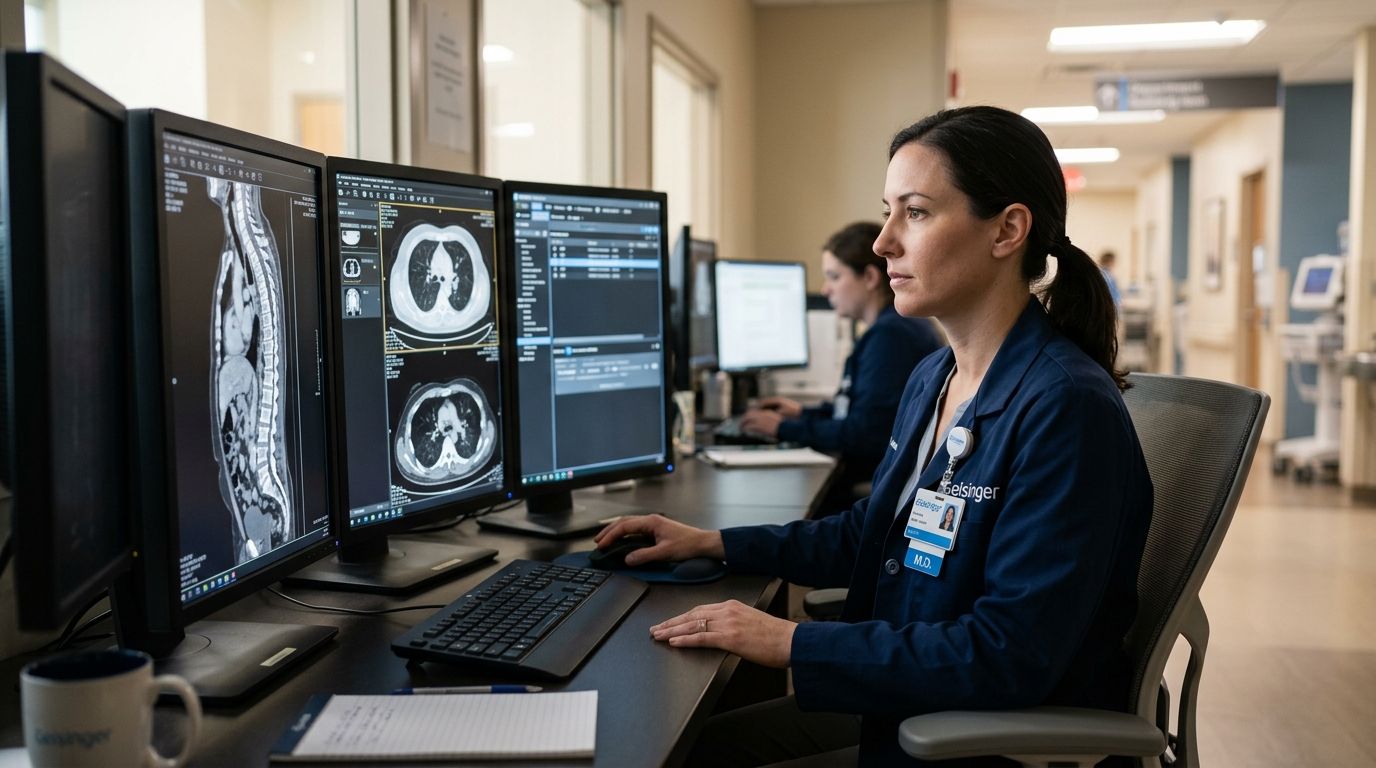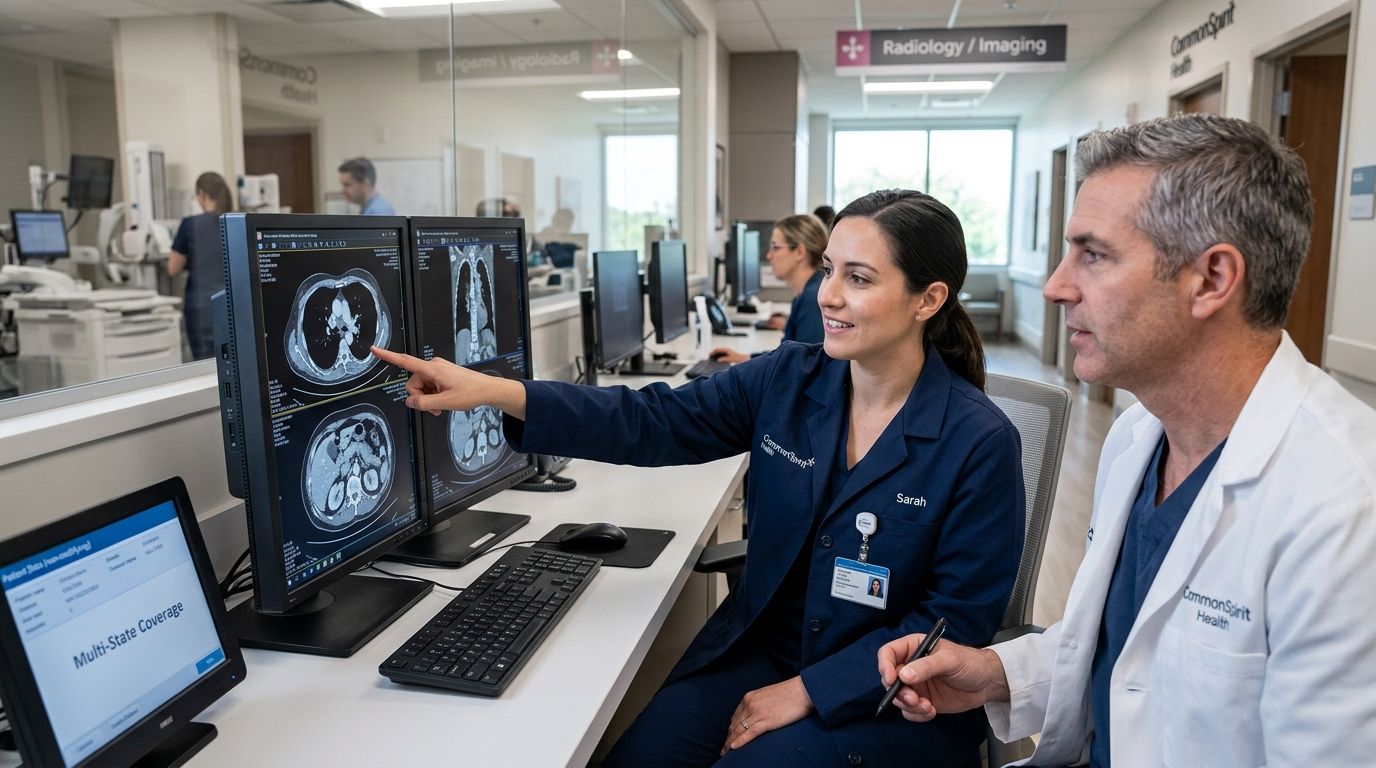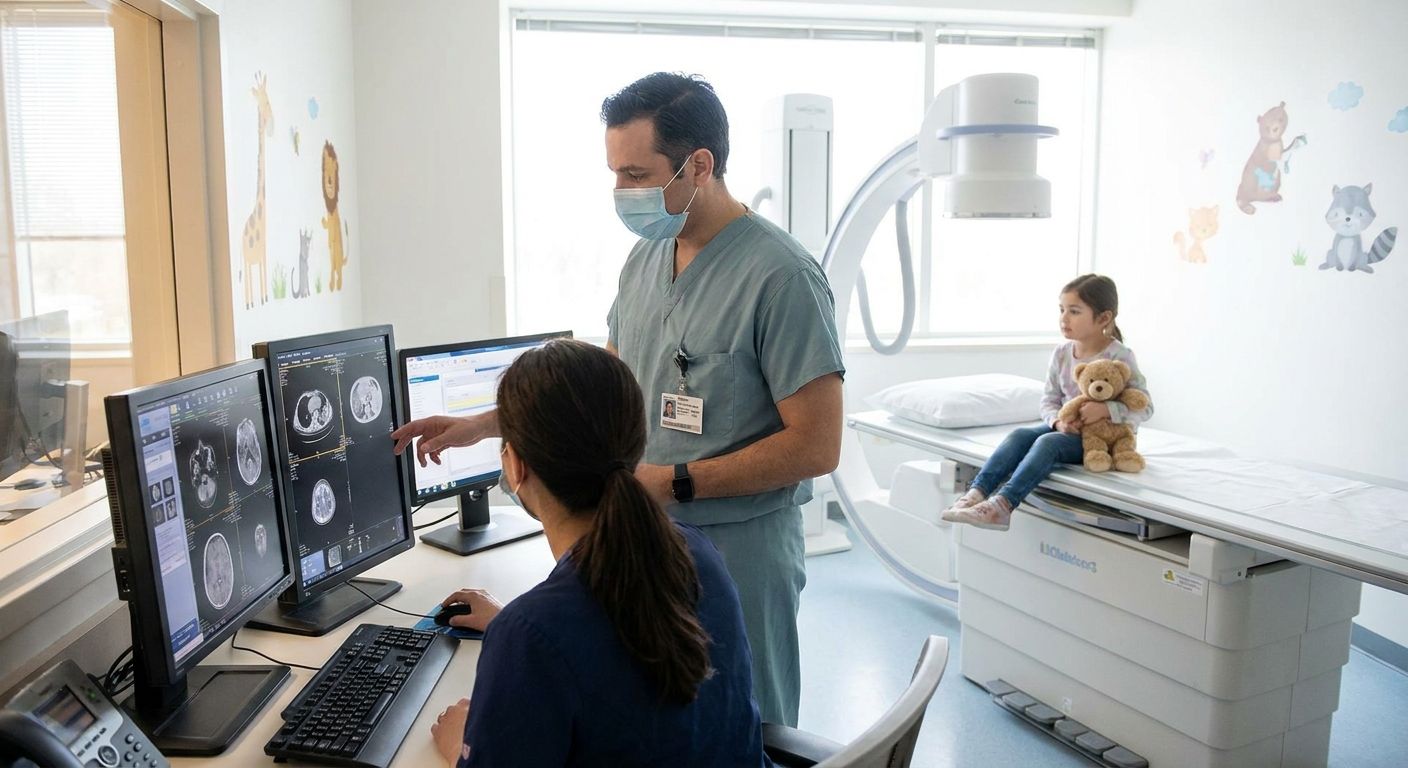
Pediatric emergency radiology jobs at children's trauma centers demand two hard-to-find things at once: pediatric imaging fluency and trauma-pace turnaround, and hospitals screening for both in 2026 have a short candidate list to pick from.
- Pediatric emergency radiology jobs at Level I trauma centers require in-house call and fellowship training in 2026 — buy the credential first.
- Locum tenens pediatric radiology fill-ins let general radiologists test trauma coverage before committing full-time.
- Pediatric neuroradiology dual-training opens more emergency radiology jobs at academic trauma centers — a strong career move.
- RadBoard tracks 5,000+ radiology jobs from 20 sources, including pediatric emergency openings across 3,700+ active listings in 2026.
Why this matters
Pediatric radiology is one of the smaller American Board of Radiology subspecialty certificates, and Level I pediatric trauma centers verified by the American College of Surgeons require 24/7 imaging coverage capable of reading trauma studies on children under load. That combination — pediatric-specific interpretation plus trauma-pace throughput — is not something every diagnostic radiologist is trained or credentialed for.
Hospitals feel this gap every night shift. General radiologists without pediatric fellowship training often get pulled onto pediatric call anyway, and trauma centers without a deep bench lean on locum tenens coverage to fill nights and weekends. If you're evaluating pediatric emergency radiology jobs in 2026, the credential bar and call structure matter more than the base salary line.
Who this is for
This guide is built for three groups: fellowship-trained pediatric radiologists targeting Level I or Level II children's trauma centers, general diagnostic radiologists with pediatric call experience who want to formalize into a trauma-focused role, and locum tenens radiologists looking to fill overnight pediatric trauma gaps between contracts. If you fall into any of these buckets, RadBoard surfaces pediatric emergency openings alongside 5,000+ other radiology jobs pulled from 20 sources, so you're not scanning ten different hospital career pages by hand.
What to look for in pediatric emergency radiology jobs
Trauma center verification level
A Level I pediatric trauma center carries a different staffing obligation than a Level II or III site — Level I designation under ACS criteria typically means 24/7 in-house imaging response, not backup call. Confirm the designation before you assume the call schedule matches what you're used to at an adult trauma center.
In-house vs. backup call structure
Some children's hospitals staff pediatric radiology in-house around the clock; others run backup call where a pediatric radiologist is reachable but not physically present overnight. In-house call at a busy Level I site means higher trauma volume per shift, which changes your effective hourly workload even if the base salary looks identical to a backup-call job.
Fellowship or CAQ requirement
Many children's hospital postings list ACGME pediatric radiology fellowship or ABR Certificate of Added Qualification as a hard requirement, not a preference. If you're a general radiologist without that training, filter for postings that explicitly welcome general radiologists with pediatric experience — don't assume you'll be considered for a fellowship-required listing.
Subspecialty overlap
Pediatric trauma reads frequently cross into neuroradiology (head trauma, non-accidental injury workups), musculoskeletal imaging (growth plate fractures), and body imaging (blunt abdominal trauma). A job that expects you to cover all three without backup is a heavier lift than one where subspecialists rotate coverage.
Malpractice tail and night differential
High-acuity pediatric trauma reads carry higher liability exposure than routine outpatient pediatric imaging. Check whether the employer covers malpractice tail costs and whether night or weekend trauma coverage comes with a differential — this detail separates a fair offer from a thin one on a call-heavy schedule.
Top picks for pediatric emergency radiology jobs in 2026
Pediatric radiology jobs at children's hospitals — the safe pick. These roles sit inside dedicated children's hospitals rather than general trauma centers bolting on a pediatric wing. Fellowship training is almost always required, and in-house coverage is the norm at Level I sites in 2026. Pediatric radiology jobs at children's hospitals list openings by subspecialty overlap and call structure. Buy if you're fellowship-trained and want the deepest pediatric-only caseload.
Locum tenens pediatric radiology for hospital fill-ins — the flexible pick. These assignments plug staffing gaps at children's hospitals running short-staffed overnight or seasonal coverage. Contract length varies by site, and pay tends to run higher per shift than a comparable permanent role to offset the lack of benefits. Locum tenens pediatric radiology fill-ins work well if you want to test a trauma center's culture before signing permanent. Consider if you value schedule control over long-term stability.
Pediatric neuroradiology jobs for dual subspecialty training — the high-value pick. Head trauma and non-accidental injury workups are among the highest-stakes reads at a children's trauma center, and dual training in pediatric radiology plus neuroradiology makes you eligible for roles general pediatric radiologists can't fill alone. Pediatric neuroradiology jobs tend to concentrate at academic Level I centers. Buy if you already hold or are pursuing dual fellowship training — the leverage on job offers is real.
Emergency radiology jobs for fast-paced trauma reads — the generalist pick. These postings skew toward adult and mixed-population trauma centers, but some children's hospitals hire general emergency radiologists for daytime trauma coverage while reserving pediatric subspecialists for complex cases. Emergency radiology jobs for trauma reads is worth scanning if you have pediatric call experience but no formal fellowship. Consider if the listing explicitly accepts general radiologists with documented pediatric trauma volume.
Locum tenens emergency radiology for trauma center fill-ins — the wildcard. These short-term assignments cover adult and pediatric trauma centers interchangeably depending on the site, and pediatric-specific volume varies widely by contract. Confirm pediatric case mix before signing — some assignments are almost entirely adult trauma with a handful of pediatric consults. Skip unless the recruiter confirms meaningful pediatric trauma volume in writing.
Search live pediatric radiology openings
5,000+ radiology jobs from 20 sources, updated for 2026.
What to avoid
- General teleradiology nighthawk contracts without pediatric-specific protocols. These pay well and read fast, but most nighthawk services route true pediatric trauma studies to a pediatric-credentialed radiologist anyway — you may not get the pediatric caseload you're looking for.
- Freestanding ERs advertising "pediatric-friendly" imaging without ACS pediatric trauma verification. Friendly waiting rooms don't mean pediatric-trained radiology coverage. Verify the trauma designation, not the marketing language.
- Practices that bundle pediatric call onto general radiologists with no CAQ support or backup. If a group expects you to cover pediatric trauma reads solo without a pediatric radiologist on backup, that's a liability and workload problem dressed up as a staffing solution.
Verdict comparison
| Track | Employment Model | Call Intensity | Subspecialty Depth | Credential Bar | Verdict |
|---|---|---|---|---|---|
| Children's hospital pediatric radiology | Hospital-employed | High (in-house at Level I) | Pediatric-only | Fellowship/CAQ required | Buy |
| Locum tenens pediatric fill-in | Contract | Variable by assignment | Pediatric-only | Fellowship preferred | Consider |
| Pediatric neuroradiology (dual) | Academic/hospital | High, complex cases | Pediatric + neuro | Dual fellowship | Buy |
| General emergency radiology | Hospital-employed | High, mixed population | General trauma | Pediatric experience helps | Consider |
| Locum tenens emergency radiology | Contract | Variable, often adult-heavy | Mixed | General board certification | Skip unless pediatric volume confirmed |
FAQ
What is a pediatric emergency radiology job at a children's trauma center?
It's a radiologist role reading trauma imaging on pediatric patients at a hospital designated as a children's trauma center under ACS criteria. Level I sites typically require 24/7 in-house pediatric radiology coverage rather than backup call.
Do you need a pediatric radiology fellowship for trauma center jobs?
Most Level I children's hospital postings require an ACGME pediatric radiology fellowship or ABR Certificate of Added Qualification. Some Level II or III sites will consider general radiologists with documented pediatric call experience instead.
Is pediatric neuroradiology training required for children's trauma center jobs?
No, but dual training in pediatric radiology and neuroradiology makes you eligible for a wider range of postings, especially for head trauma and non-accidental injury workups at academic centers. Standard pediatric radiology fellowship covers general trauma reads without the neuro add-on.
What's the difference between Level I and Level II pediatric trauma centers for hiring?
Level I centers verified by the American College of Surgeons generally require 24/7 in-house imaging response, while Level II sites often run backup call models. This directly affects shift intensity and whether a role expects overnight physical presence.
Can general radiologists work at children's trauma centers without a pediatric fellowship?
Yes, at some Level II and III sites that accept documented pediatric call volume in place of fellowship training. Level I academic centers are far less flexible on this requirement in 2026.
Are locum tenens pediatric radiology jobs common at trauma centers?
Yes, hospitals use locum tenens pediatric radiologists to cover overnight and seasonal staffing gaps at children's trauma centers. Contract length and pediatric case mix vary by assignment, so confirm both before signing.
How is call structured for pediatric emergency radiology jobs?
Call is either in-house, where you're physically present overnight, or backup, where you're reachable remotely. In-house call at a high-volume Level I trauma center means a heavier per-shift workload than backup call at a smaller site.
Does malpractice coverage differ for pediatric trauma reads?
High-acuity pediatric trauma imaging carries higher liability exposure than routine pediatric outpatient reads, and not every employer covers the malpractice tail on exit. Confirm tail coverage and night differential pay before accepting a call-heavy pediatric trauma role.
One last thing
Most job seekers assume the credential bar for pediatric emergency radiology is just "pediatric fellowship, yes or no" — it's not. In 2026, the sites doing the most hiring are Level I academic centers stacking dual-subspecialty demand: pediatric radiology plus neuroradiology or MSK, because head trauma and growth-plate fracture reads outpace what a single pediatric radiologist can cover solo on a busy overnight shift. If you're choosing between finishing a general pediatric radiology fellowship or adding a second subspecialty year, the second year is what gets you into the highest-acuity Level I roles first.