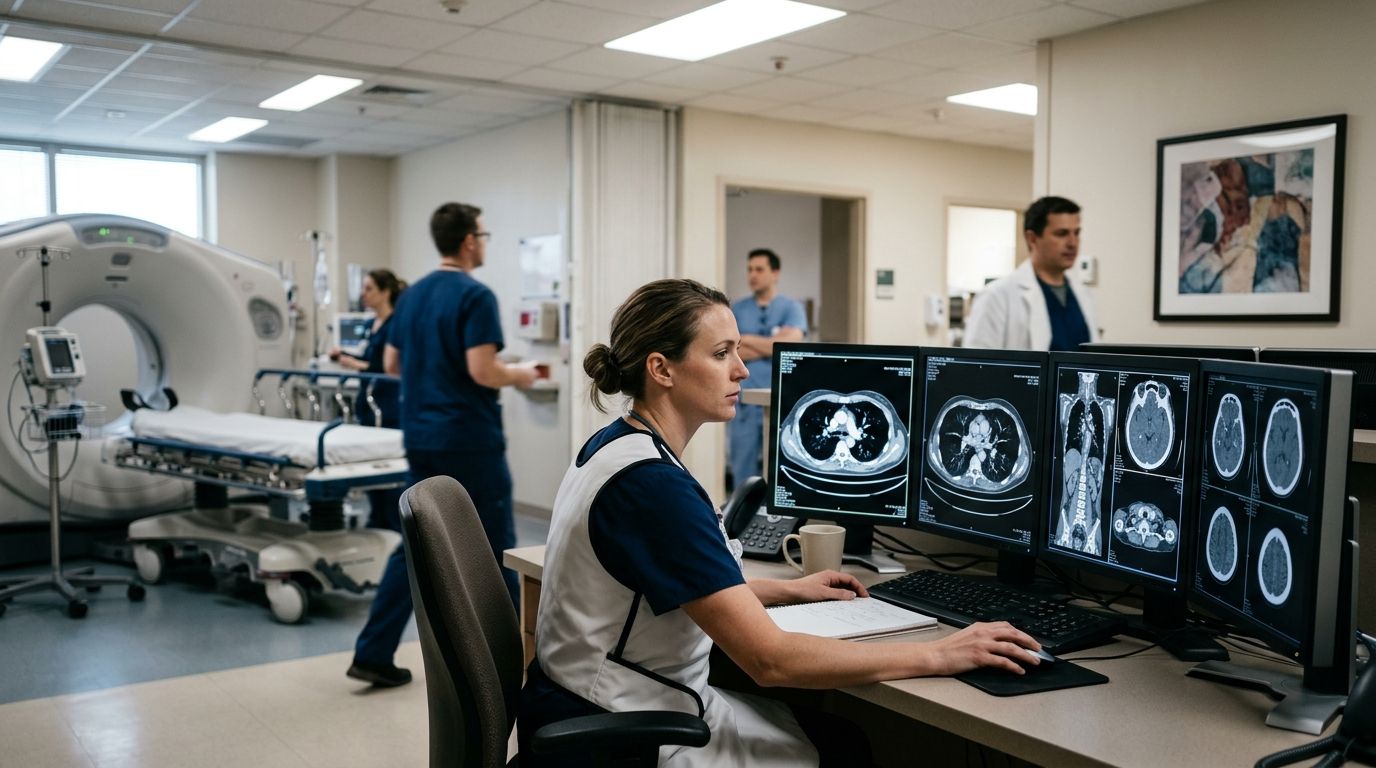
Level 1 trauma center radiology jobs put you in the highest-volume, highest-acuity imaging seat in emergency medicine — reading pan-scan CTs, code-stroke studies, and polytrauma workups on a schedule built around trauma bay activations, not a shift clock. These positions cluster at hospitals verified by the American College of Surgeons or designated by state trauma systems as Level 1, meaning imaging has to be available around the clock. Searching for one of these roles in 2026 takes a different playbook than a standard diagnostic radiology search.
- Level 1 trauma center radiology jobs require call coverage for pan-scan CT and code-stroke reads around the clock.
- Cross-training in neuroradiology, body imaging, and MSK trauma reads matters more than a single fellowship credential.
- RadBoard aggregates trauma and emergency radiology openings from 20 sources alongside 5,000+ total radiology listings.
- Locum tenens trauma coverage is a lower-commitment way to test a Level 1 center before signing a permanent contract.
Why this matters
Trauma radiology work isn't a subspecialty so much as an operating environment. Level 1 designation requires immediate CT access and a full bench of surgical subspecialists, which pushes imaging turnaround into minutes for polytrauma activations. RadBoard's job platform tracks these openings alongside 5,000+ radiology listings pulled from 20 sources, which matters because trauma call structure varies wildly between postings that all use the same generic "emergency radiology" title.
That variance is the whole game. Two Level 1 trauma center radiology jobs at hospitals ten miles apart can carry completely different call burdens, backup coverage, and reimbursement per study. Sorting that out before you apply saves months of back-and-forth with a recruiter who doesn't know the difference either.
Why trauma center radiology jobs matter for acute imaging radiologists
Level 1 verification criteria call for immediate imaging response and subspecialist backup for major trauma — that structure shapes the job itself, not just the case mix. Call is heavier, contrast protocols are fixed rather than discretionary, and the radiologist reading a pan-scan at 2 a.m. is often producing the read that decides whether a patient goes straight to the OR.
Radiologists chasing acute imaging careers in 2026 need to evaluate call frequency, backup depth, and subspecialty mix before they compare salary lines — the compensation number means nothing without knowing what it's buying.
“If a trauma center can't name your backup radiologist for a mass casualty activation, that gap becomes your 2 a.m. problem.”
How to land a Level 1 trauma center radiology job
Confirm the facility's trauma verification level and call structure
ACS-verified Level 1 and state-designated Level 1 don't carry identical coverage rules — check which one applies before assuming 24/7 means what you think it means.
- Ask whether the radiology group staffs 24/7 in-house or runs a home/backup pool after hours
- Confirm attending backup is guaranteed for polytrauma or major vascular injury reads
- Find out if nights are read internally or routed to a teleradiology partner
- Ask how trauma activations reach the reading radiologist — direct page or triage tech first
Map the subspecialty mix you'll actually read
Trauma pan-scans cross subspecialty lines constantly. A Level 1 trauma job leans on:
- Neuroradiology for code-stroke CT/CTA, C-spine trauma, and intracranial hemorrhage
- Body imaging for solid organ injury grading on blunt and penetrating trauma CTs
- Musculoskeletal imaging for extremity and pelvic fracture characterization under time pressure
- Cardiothoracic reads for aortic injury screening on trauma CTAs
- Pediatric trauma coverage if the center runs a combined adult/pediatric trauma bay
General emergency radiology jobs for trauma reads cover a similar mix outside the Level 1 designation, which is a useful comparison point when you're weighing acuity against call burden.
Evaluate the call schedule and shift volume
Monthly averages hide the real picture. Ask for per-shift numbers instead.
- Average trauma activations per 24-hour shift, not per month
- In-house night float coverage versus home-call stipend structure
- Whether call rotates in blocks (7-on/7-off) or by individual week
- Whether trauma call stacks on top of a full outpatient diagnostic load
Check STAT turnaround and the technology stack
A trauma read is only as fast as the system behind it.
- Ask the contracted STAT turnaround time for trauma pan-scans
- Confirm PACS and voice recognition support rapid multi-series review
- Ask whether AI triage tools flag intracranial hemorrhage or pneumothorax ahead of your read
- Find out whether protocoling for trauma studies is preset or handled mid-shift by the reading radiologist
Price the compensation structure for acute call
Base salary tells you almost nothing about what a trauma-heavy contract actually pays.
- Separate base salary from night and weekend trauma call differentials
- Confirm whether RVU targets account for the lower per-study reimbursement on many trauma CTs — see how to evaluate RVU targets before accepting an offer for the full breakdown
- Confirm malpractice coverage explicitly names trauma and emergency reads
- Ask about stipends tied to in-house overnight presence versus home call
Negotiate the call schedule before signing
This is the step most radiologists skip, and it's the one that determines whether year one feels sustainable. Work through how to negotiate your radiology call schedule before you sign, not after.
- Put activation caps or backup triggers in writing, not verbal agreement
- Ask for a schedule review tied to actual trauma volume, not projected volume
- Confirm vacation coverage doesn't default to you absorbing unfilled trauma call
- Negotiate a hard cap on consecutive overnight shifts
Search targeted trauma and emergency radiology openings
Once you know what you're looking for, filtering generic radiology postings by hand is slow. An AI-powered search that reads job descriptions for call structure and subspecialty requirements gets you to relevant listings faster than scrolling a hospital career page.
- Filter for "Level 1 trauma," "trauma call," or "emergency radiology" in the title or description
- Cross-check postings against state-published ACS-verified trauma center lists
- Save openings that spell out subspecialty coverage requirements upfront
- Compare in-house versus home-call structure across shortlisted offers before applying
Find open trauma radiology jobs
Search and swipe to save Level 1 trauma and emergency radiology openings.
Level 1 trauma center job options compared
| Option | Best for | Key limitation |
|---|---|---|
| Academic Level 1 trauma center | Radiologists who want teaching cases alongside high trauma volume | Lower base pay relative to community systems, heavier resident supervision load |
| Community hospital Level 1 trauma center | Radiologists who want high trauma volume without academic obligations | Call often rotates through a smaller group with less backup depth |
| Freestanding trauma-only reading contract | Radiologists who want to specialize in trauma reads exclusively | Case mix skews narrow — little outpatient or elective imaging exposure |
| Locum tenens trauma coverage | Radiologists testing a trauma center before committing long-term | Contracts run short-term with less predictable month-to-month income |
Common mistakes trauma-track radiologists make
- Signing before confirming in-house vs. home call — "24/7 coverage" often means someone else takes first overnight trauma, not you
- Underestimating pediatric trauma exposure at combined adult/pediatric Level 1 centers without confirming pediatric fellowship backup exists
- Ignoring RVU dilution from high trauma CT volume reimbursed at lower per-study rates than elective imaging
- Skipping malpractice tail verification that explicitly extends to emergency and trauma reads
- Accepting a call schedule with no cap on consecutive night shifts, which drives early burnout in trauma-heavy roles
FAQ
What's the difference between a Level 1 and Level 2 trauma center for radiology jobs?
Level 1 requires in-house imaging and subspecialist availability around the clock, while Level 2 can rely more on transfer agreements and backup call under American College of Surgeons trauma verification standards. Radiologists at Level 1 sites see higher polytrauma and pan-scan volume as a result.
How much call is typical at a Level 1 trauma center radiology job?
Call frequency varies by group size and whether the center runs in-house overnight coverage or a home-call model. Ask for average trauma activations per shift before signing, not a monthly average that hides busy nights.
Do I need a fellowship to work at a Level 1 trauma center?
No single fellowship is required, but cross-training in neuroradiology, body imaging, and emergency radiology reads makes you more competitive for trauma-heavy call pools. Many groups value breadth over a single subspecialty credential.
Is trauma radiology higher paying than general diagnostic radiology?
Compensation structures vary by group and typically include separate call differentials for nights and weekends. Check whether RVU targets account for the lower reimbursement on many trauma CT studies rather than assuming trauma work carries a flat premium.
Can locum tenens radiologists work Level 1 trauma coverage?
Yes, many Level 1 centers use locum tenens radiologists to fill short-term trauma and emergency coverage gaps, particularly overnight and weekend shifts. This is a common way to test a facility before a permanent commitment.
What subspecialties matter most for trauma center radiology jobs?
Neuroradiology for code-stroke and intracranial hemorrhage, body imaging for pan-scan CT grading, and musculoskeletal imaging for fracture characterization cover most trauma bay reads. Cardiothoracic reads for aortic injury round out the mix.
How do I find open Level 1 trauma center radiology jobs?
Search radiology job aggregators for postings that specify trauma call, filter by subspecialty coverage requirements, and cross-check the facility's verification status against state trauma center lists. Platforms that pull listings from multiple sources surface postings a single hospital career page won't.
Is night float or home call more common at Level 1 centers?
It depends on group size — larger academic groups often run in-house night float, while smaller community groups lean on home-call stipend models. Confirm which structure applies before comparing offers on salary alone.
One last thing
The clause most radiologists skip reading in a trauma contract is the backup-call trigger — the line defining when a second radiologist gets paged in during a mass casualty activation. Get that written down before you sign, not after your first multi-victim MVC night at a Level 1 trauma center running on a single reader.