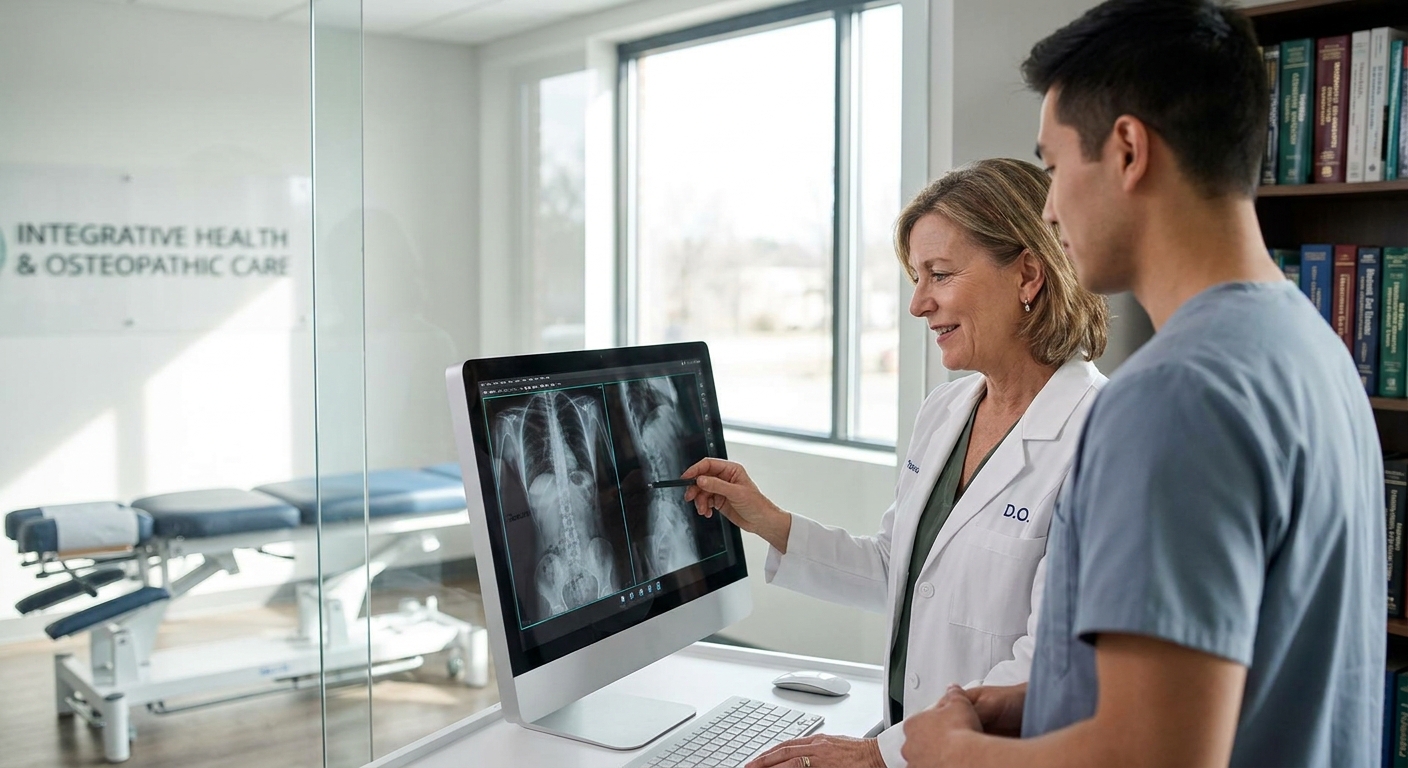
DO-trained radiologists face a job market that no longer distinguishes between osteopathic and allopathic training on paper, but culture, call structure, and partnership timelines still vary widely by practice type in 2026.
- Single GME accreditation since 2020 means DO radiologist jobs post through the same ACGME pipeline as MD roles, no separate track.
- Community health centers and hospital-employed groups screen for board certification and RVU output, not DO vs MD degree, in 2026.
- Partnership-track private practice remains the slowest path to ownership for any new grad, DO or MD, typically 2-3 years.
- RadBoard aggregates 5,000+ radiology positions from 20 sources, filterable by employment model and call burden.
Why this matters
The 2014 merger agreement between the AOA and ACGME completed its transition in 2020, folding every US residency into a single accreditation system. That means DO radiologist jobs in 2026 are not a separate labor market — they're the same postings MD grads see, filtered by which practices historically hire osteopathic-trained physicians without friction.
What still matters for DO grads: some hospital systems and community-based programs built their pipelines around AOA-legacy training and keep informal preferences for DO candidates who trained at DO-heavy residencies. RadBoard surfaces those postings alongside everything else, so you're not relying on word-of-mouth to find them.
Who this is for
This guide is for DO-trained radiologists and radiology residents — whether you trained at an osteopathic medical school, completed an AOA-legacy residency before the 2020 merger, or hold dual COMLEX/USMLE scores and want to know which practice types actually value that background instead of treating it as a footnote on your CV.
What to look for in DO radiologist jobs at osteopathic practices
Board certification pathway clarity
Ask explicitly whether the group requires ABR certification or accepts AOBR (American Osteopathic Board of Radiology) legacy certification for physicians who trained before the merger. Some hospital credentialing committees still run outdated bylaws that name only one board — get this in writing before you sign anything.
Residency pipeline history
Groups that historically recruited from AOA-legacy programs tend to have leadership who trained the same way you did, which shows up in how call schedules and mentorship get structured. A quick LinkedIn scan of the group's current radiologists tells you more than the job posting does.
RVU model transparency
DO grads coming out of community-based residencies often have more hands-on procedural volume than academic-track peers — that's leverage in RVU-based comp negotiations. Ask for the group's average RVU-per-read benchmark and how it maps to your subspecialty mix.
Call burden and site coverage
Osteopathic-heritage hospitals are frequently community or safety-net facilities with leaner overnight staffing. Confirm whether call is in-house, home-call, or shared with a teleradiology backup service before you commit.
Partnership timeline in writing
Partnership-track private practice groups love to say "typically two to three years" verbally and then extend it once you're employed. Get the buy-in formula, the equity percentage, and the timeline as contract language, not a conversation.
Malpractice and tail coverage terms
Smaller osteopathic-heritage groups sometimes skip tail coverage to save on premiums, which leaves departing physicians exposed. Confirm who pays the tail before your start date, not after you've signed.
Top picks by practice type
Partnership-track private practice — the slow-and-steady pick. These groups run 2-3 year buy-in timelines and reward RVU output directly, which favors DO grads with high-volume community training. Verdict: Consider if you want equity and can tolerate a multi-year vesting period — start with partnership-track private practice roles to compare buy-in structures across groups.
Hospital-employed radiology — the stability pick. Salaried structure with defined RVU thresholds instead of ownership stakes, and osteopathic-heritage hospital systems often staff these positions from their own legacy residency alumni. Verdict: Buy if predictable income matters more than equity — the hospital-employed radiology roles breakdown covers benefits variance by system size.
Community health center imaging — the mission-driven pick. These sites carry lighter overnight call than trauma centers and frequently qualify for federal loan repayment programs tied to underserved-area service. Verdict: Consider for new grads prioritizing work-life balance over top-of-market salary — see community health center imaging roles for site-type comparisons.
Multi-specialty group practice — the generalist pick. Broader case mix than a single-subspecialty group, useful for DO grads who trained across multiple modalities during residency rather than fellowship-narrowing early. Verdict: Consider, especially in year one or two out of training when subspecialty commitment feels premature.
Compare DO-friendly radiology openings
Search 5,000+ active postings by employment model, call burden, and location.
What to avoid
- Groups that dodge the certification question. If a recruiter can't tell you whether the credentialing committee accepts AOBR legacy certification, that ambiguity becomes your problem after you've relocated.
- "Partnership track" with no written timeline. A verbal promise of equity is not a contract term — if the offer letter doesn't name a year and a percentage, treat it as an employed position, not a partnership.
- Postings that hide call frequency. "Shared call" can mean 1-in-6 or 1-in-15 depending on group size — get the actual rotation before you accept, not during onboarding.
Verdict comparison
| Practice type | DO-friendliness | Call burden | Partnership speed | Verdict |
|---|---|---|---|---|
| Partnership-track private practice | High (community pipeline) | Moderate-high | 2-3 years | Consider |
| Hospital-employed | High (legacy alumni hiring) | Moderate | None (salaried) | Buy |
| Community health center | High (mission alignment) | Low | None (salaried) | Consider |
| Multi-specialty group | Moderate | Moderate | Varies by group | Consider |
Before you evaluate any offer against this table, run the group's stated culture against reality — the practice culture evaluation guide walks through the questions that expose gaps between the recruiter pitch and the actual work environment.
FAQ
Are DO radiologist jobs different from MD radiologist jobs in 2026?
No, DO radiologist jobs run through the same single GME accreditation system as MD roles since the 2020 AOA-ACGME merger completed. Postings don't separate by degree type, though some hospital systems informally favor candidates from osteopathic-heritage residency pipelines.
Do hospitals still recognize AOBR certification for DO radiologists?
Some hospital credentialing bylaws still name AOBR (American Osteopathic Board of Radiology) alongside ABR for physicians who certified before the 2020 merger. Confirm this in writing with the credentialing committee before signing, since bylaws vary by system.
What's the best entry point for a DO radiologist finishing residency in 2026?
Hospital-employed positions and community health center roles typically onboard new grads fastest, since they run salaried RVU models without a multi-year partnership buy-in. Partnership-track private practice pays off more long-term but requires a 2-3 year vesting commitment.
How much call do DO-heritage hospital radiology jobs require?
Call burden depends on hospital size and overnight teleradiology backup, not degree type. Community and safety-net hospitals with osteopathic heritage often run lighter in-house call than academic trauma centers, but confirm the exact rotation before accepting.
Is partnership track worth it for a DO-trained radiologist?
Partnership track is worth it if the offer letter names a specific buy-in timeline and equity percentage, typically 2-3 years. Verbal promises without contract language are not partnership tracks, they're employed positions with extra steps.
Do community health centers hire DO radiologists differently than private practice?
Community health centers generally screen for board certification and loan-repayment eligibility rather than degree pedigree. They tend to offer lighter call and mission-driven work at the tradeoff of below-top-market compensation compared to private practice partnership tracks.
What should a DO radiologist ask before accepting a hospital-employed job?
Ask for the RVU-per-read benchmark, the call rotation frequency, and whether the credentialing committee accepts your certifying board. Hospital-employed roles trade equity for salary stability, so get the RVU threshold and bonus structure in writing.
One last thing
The degree distinction that used to matter for radiology hiring closed in 2020 when the single GME accreditation system finished its rollout — what actually separates DO-friendly practices from the rest in 2026 isn't a checkbox on the application, it's whether the group's current radiologists trained the same way you did. Check who's already on staff before you check what the posting says about culture.