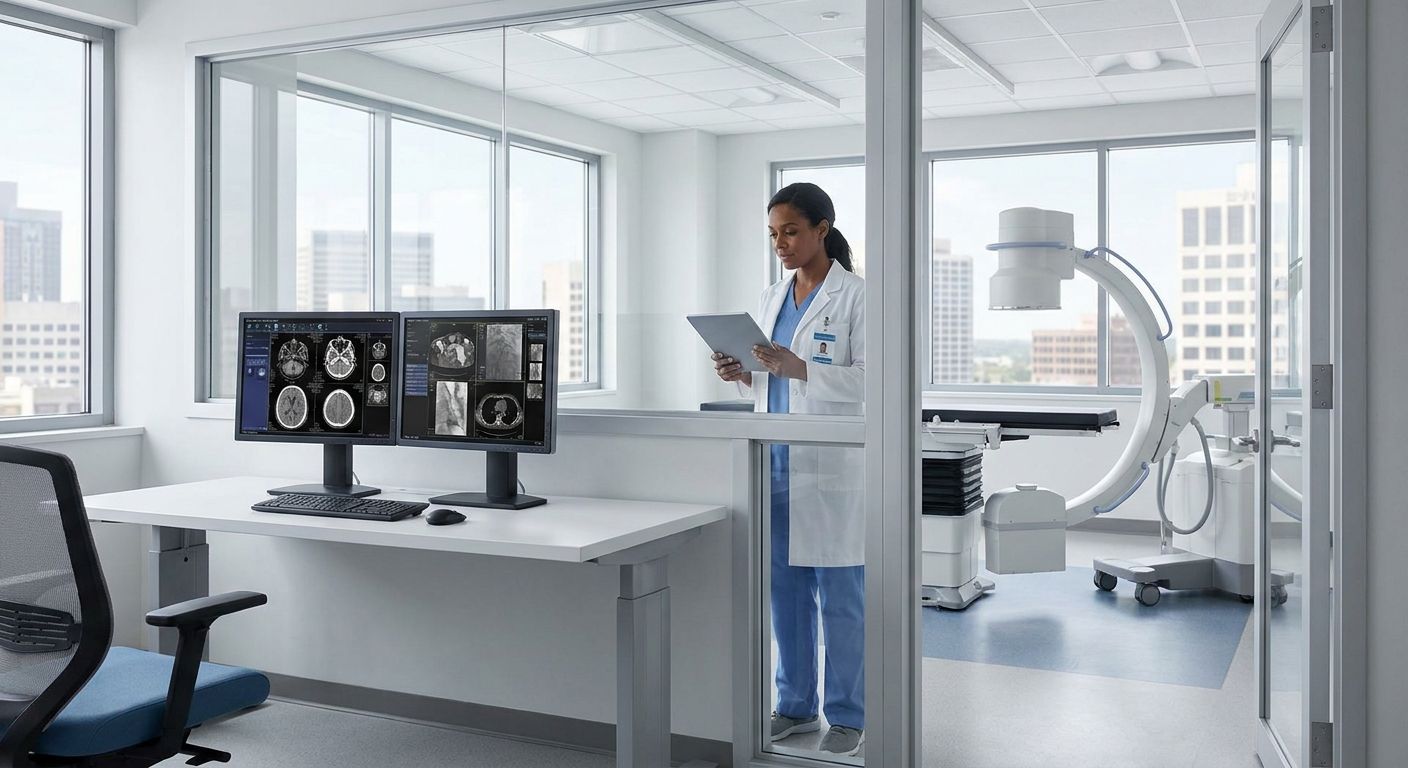
Dual training in interventional and diagnostic radiology opens doors that single-track residents never see — and it closes off a few paths too, since most employers want to know which side of your CV you'll actually staff. This guide breaks down where dual-trained IR/DR physicians land in 2026 and which setups are worth signing.
- Hospital-employed hybrid IR/DR roles are the safest 2026 pick for dual trained interventional diagnostic radiologist jobs — Buy.
- Private practice partnership tracks pay more over 5 years but require 3-5 years before equity vests — Consider.
- Per diem IR work stacks well against a DR-heavy primary job for supplemental income — Buy.
- Pure academic tracks without a dedicated angio block often underuse IR training within 18 months — Skip if procedural volume matters to you.
Why this matters
Dual credentialing costs an extra year of fellowship, and in 2026 employers still don't have a standard way to value it. Some groups pay a blended RVU rate across both modalities. Others quietly slot you into a DR-only reading pool and never staff the angio suite. The gap between those two outcomes is often a single line in the offer letter about procedural minimums.
Who this is for
This guide is for board-certified or board-eligible radiologists who completed both a diagnostic radiology residency and an interventional radiology fellowship (or an IR/DR integrated residency) and want a job that actually uses both skill sets. If you're deciding between a role built around IR-trained physicians and a straight diagnostic reading job, the criteria below tell you what to check before you sign.
What to look for in dual-trained IR/DR jobs
Procedural volume guarantee
A verbal promise of "plenty of cases" means nothing once you're three months in and the group has quietly routed embolizations to a competing practice. Get a written minimum — even a soft target like 8-10 procedural days per month — because that number is what protects your IR skills from atrophying inside a DR-heavy schedule.
Call split between IR and DR
Dual-trained physicians frequently end up covering both diagnostic overnight call and IR emergent call in the same rotation, which is the fastest route to burnout. Ask the group to define, in writing, how many nights per month are IR-only versus combined coverage before you accept a 2026 start date.
Credentialing and privileging pathway
Hospitals credential IR privileges separately from DR privileges, and the process can take 60-90 days per facility. A group that has already built a fast-track privileging pathway for dual-trained hires saves you a quarter of lost procedural income.
Compensation blend across modalities
Most dual-trained contracts pay either a flat blended rate or separate RVU rates for reads versus procedures. The blended model is simpler but can undervalue high-RVU procedures like TACE or Y-90; the split model rewards procedural volume but adds compensation complexity you need modeled before you sign.
Malpractice tail coverage for procedural work
IR carries a materially different malpractice profile than diagnostic reads. Confirm the group's tail coverage explicitly names interventional procedures, not just diagnostic interpretation, or you're exposed the day you leave.
“The single line in the offer letter about procedural minimums predicts more about job satisfaction than the base salary number does.”
Top picks for dual-trained IR/DR physicians in 2026
Hospital-employed hybrid role — the safe pick. Community and regional hospitals in 2026 are staffing combined IR/DR positions to cover gaps left by retiring solo IR physicians. Look for a written 40/60 or 50/50 split between procedural and diagnostic time. Hospital-employed radiology roles typically bundle malpractice tail coverage and defined call caps, which matters more here than at a startup imaging center. Verdict: Buy for physicians who want predictable scheduling and don't need equity upside in year one.
Private practice partnership track — the equity play. Multi-specialty and single-specialty groups still recruit dual-trained physicians specifically to build out or defend an IR service line, and partnership tracks in 2026 typically vest over 3-5 years. Partnership-track private practice roles pay less on the buy-in path but compound once you're a partner sharing in the group's technical and professional fee revenue. Verdict: Consider if you can commit to a 5-year horizon and the group discloses its IR case volume in writing before you sign.
Per diem IR — the supplemental wildcard. If your primary job is DR-only or underuses your procedural training, per diem IR coverage fills the gap without requiring a job change. Per diem interventional radiology work pays procedure-based rates that often exceed your blended hourly rate at a full-time job, and it keeps your CPT codes and case log current for credentialing elsewhere. Verdict: Buy for anyone whose main contract has quietly shifted toward diagnostic-only reads.
What to avoid
- Academic-only tracks with no dedicated angio block. Teaching hospitals sometimes recruit dual-trained physicians for research output, then staff procedures through a separate IR-only division — your fellowship training goes unused within 18 months.
- Blended RVU contracts with no procedural floor. If the contract doesn't guarantee a minimum number of procedural RVUs per quarter, the group can (and will) shift your schedule toward reads whenever staffing gets tight.
- Non-compete clauses that don't distinguish IR from DR. A broad geographic non-compete can block you from picking up per diem IR work at a competing facility even after you leave a DR-heavy job.
Search dual-trained IR/DR openings now
Filter 5,000+ radiology listings by procedural volume and call structure.
Verdict comparison
| Setup | Procedural volume | Call structure | Compensation model | Verdict |
|---|---|---|---|---|
| Hospital-employed hybrid | Moderate, contract-guaranteed | Defined IR/DR split | Blended RVU, salary floor | Buy |
| Private practice partnership | High, group-dependent | Shared IR/DR call | Buy-in then partner share | Consider |
| Per diem IR | Procedure-only, on-demand | No standing call | Per-procedure rate | Buy |
Before accepting any offer, run the numbers against a broader offer comparison — base salary alone hides the compensation gaps between these three setups.
FAQ
What are the best dual trained interventional diagnostic radiologist jobs in 2026?
Hospital-employed hybrid roles with a written procedural volume guarantee are the most reliable 2026 pick for dual-trained physicians, followed by private practice partnership tracks for long-term earning potential.
Is a dual-trained IR/DR radiologist paid more than a DR-only radiologist?
Compensation depends on the contract's RVU structure, not the credential alone. A blended-rate contract without a procedural floor can pay close to DR-only rates even with IR training on your CV.
How much procedural volume should a dual-trained IR/DR contract guarantee?
Groups recruiting dual-trained physicians in 2026 commonly guarantee 8-10 procedural days per month in writing to keep IR skills current; anything undefined in the contract tends to shrink over time.
Can a dual-trained radiologist do per diem IR work alongside a full-time DR job?
Yes, per diem IR coverage is common supplemental work for physicians whose primary contract has shifted toward diagnostic-only reads, provided the non-compete clause doesn't block procedural work at other facilities.
Does academic radiology use IR training as well as private practice does?
Not always. Academic centers sometimes route procedures through a separate IR-only division, leaving dual-trained hires staffing diagnostic reads instead of the procedures they trained for.
What should a dual-trained IR/DR physician negotiate before signing a contract?
Negotiate a written procedural volume minimum, a defined IR-versus-DR call split, and malpractice tail coverage that explicitly names interventional procedures, not just diagnostic interpretation.
How long does IR privileging take at a new hospital in 2026?
IR privileging typically runs 60-90 days per facility, separate from diagnostic radiology privileging, so dual-trained hires should confirm the group has a fast-track process before their start date.
One last thing
The 2026 radiology job market shows more groups explicitly recruiting for "dual-trained" or "hybrid IR/DR" positions than in prior years, largely because solo IR physicians are retiring faster than fellowships are producing replacements. That shift favors dual-trained candidates who negotiate the procedural floor upfront rather than accepting a vague blended-rate offer.