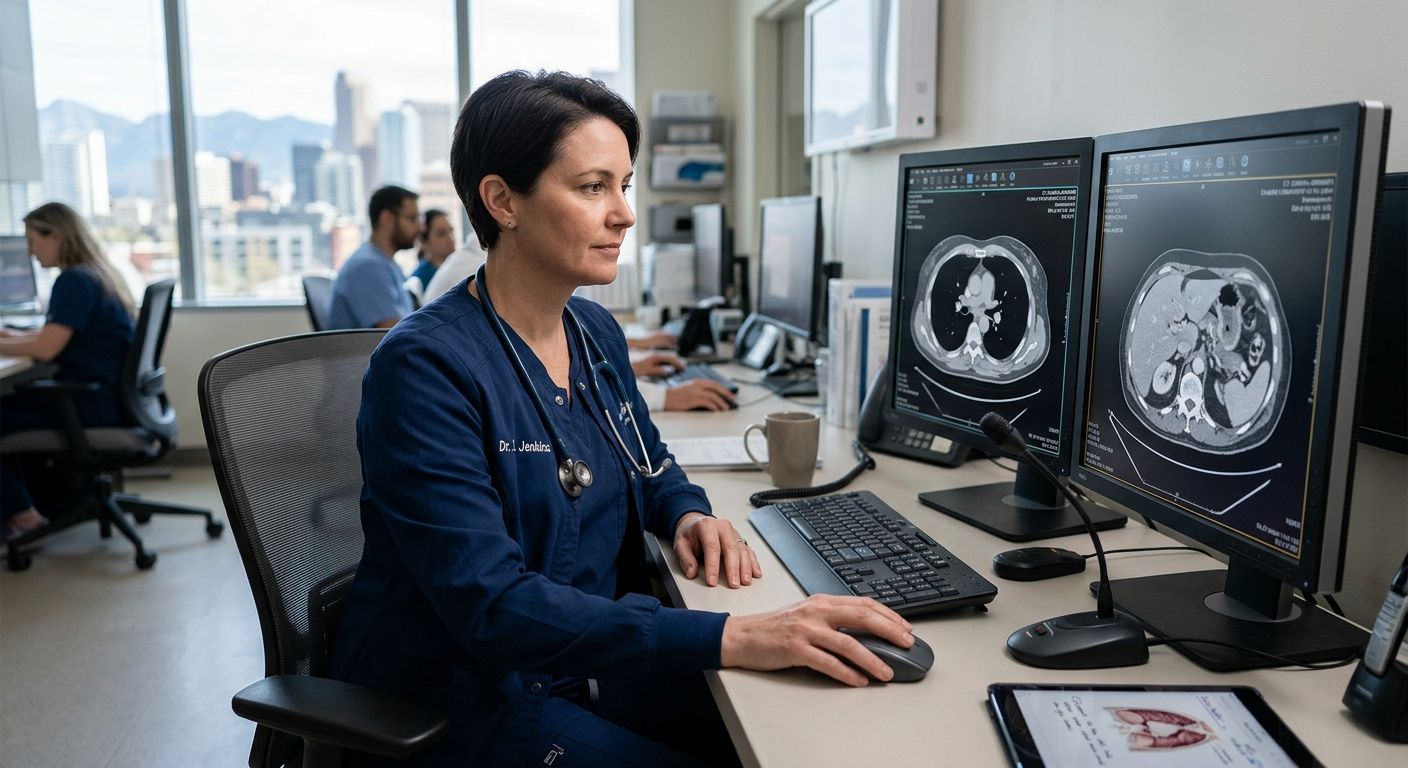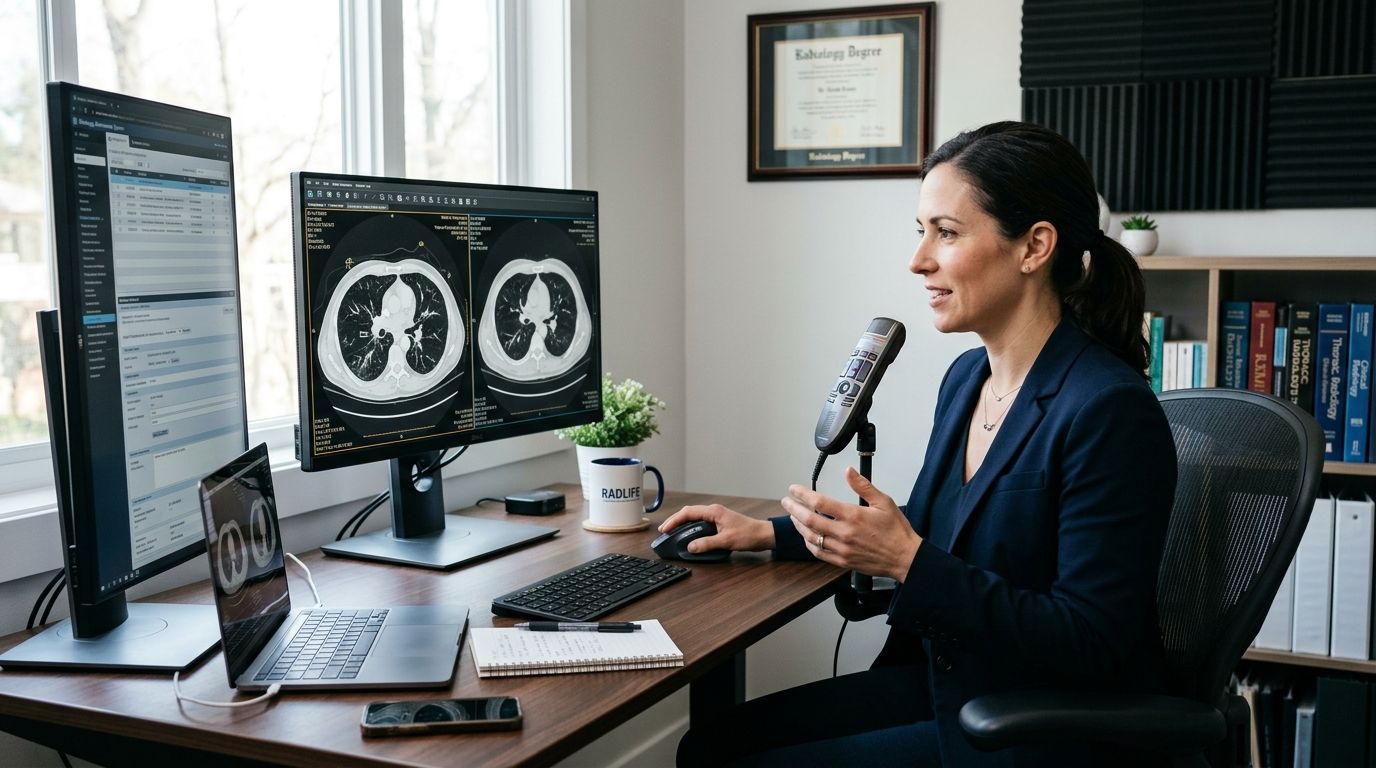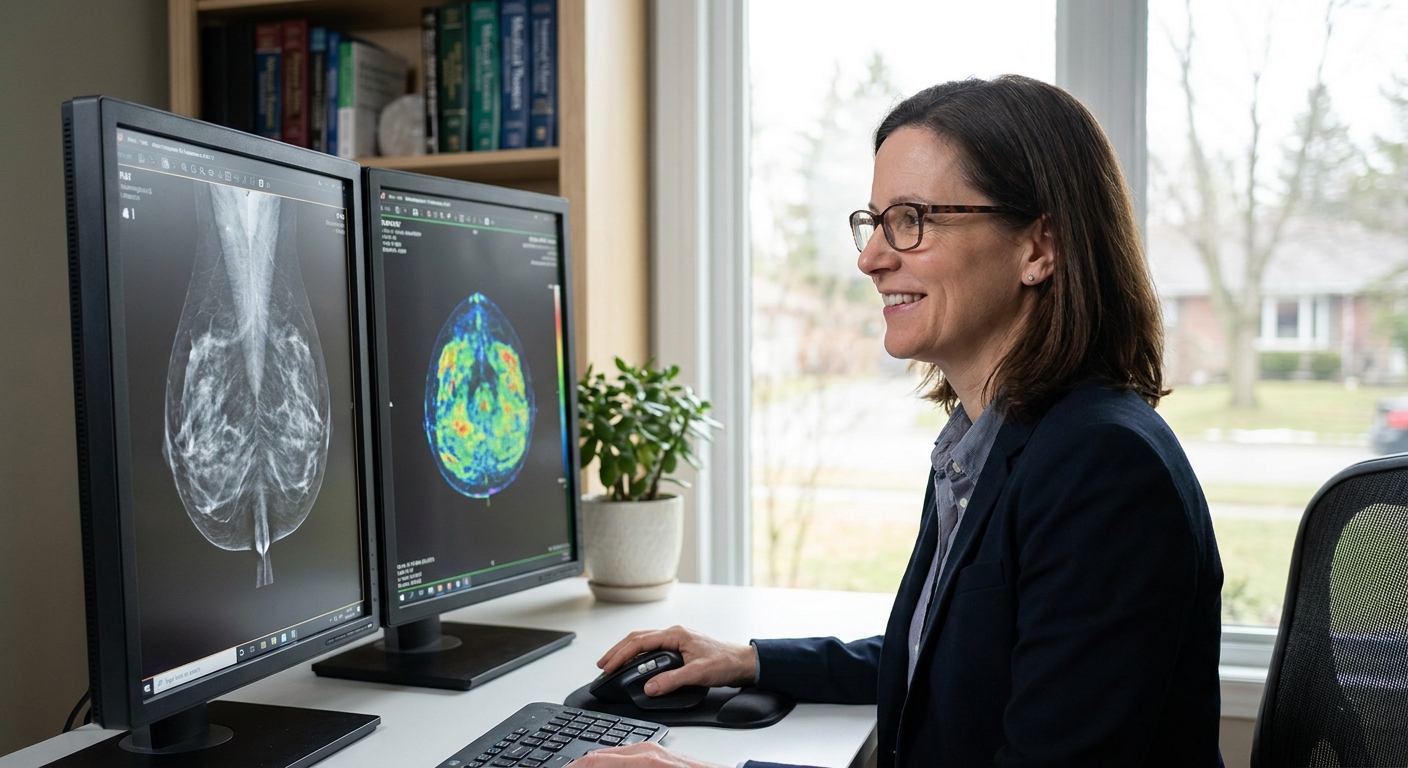
Remote breast imaging jobs let mammography-trained radiologists read screening and diagnostic mammograms, tomosynthesis, and breast MRI from a home reading room instead of a hospital breast center — the catch is that most listings labeled "remote" hide licensing gaps, monitor requirements, or volume expectations that only show up after you sign.
- Hospital system telework roles cover multi-state licensing and pay per RVU — Buy for most mammography-trained radiologists in 2026.
- National teleradiology panels post the highest-volume remote breast imaging jobs but often skip biopsy correlation — Consider only with on-site backup coverage.
- Screening-only read farms promising 200+ studies a day are the clearest red flag in remote breast imaging jobs for 2026 — Skip.
- RadBoard aggregates listings from 20 sources so you can compare remote breast imaging jobs against staff and locums openings side by side.
Why this matters
The radiologist shortage pushed more health systems toward remote reading arrangements through 2026, and breast imaging is one of the few subspecialties where the federal MQSA framework directly governs who can read what, from where. That means a "remote" mammography job isn't just a work-from-home perk — it's a licensing and credentialing puzzle first, a compensation question second.
A mammography-trained radiologist chasing remote work in 2026 has more options than three years ago, but also more variation in quality. The gap between a well-structured hospital telework contract and a volume mill is wide, and it's rarely visible in the job posting title.
Who this is for
This guide is built for fellowship-trained breast imagers and CAQ holders who already meet MQSA interpreting-physician requirements and want to shift some or all of their reading off-site — whether that's a radiologist relocating for a spouse's job, someone managing a chronic condition, or a subspecialist who wants to keep interpretation volume without the on-site biopsy clinic schedule.
What to look for in remote breast imaging jobs
Multi-state licensure support
MQSA requires the interpreting radiologist to hold a valid license in the state where the exam was performed, and remote breast imaging jobs routinely cross state lines. The Interstate Medical Licensure Compact (IMLC) now covers most states and can cut a new license approval from six-plus months to a few weeks, but only if the employer actively manages the applications. Ask upfront who pays the fees and who tracks renewal deadlines across every state you'll read for.
Modality mix and case complexity
A remote contract heavy on 2D screening mammograms looks easy until you realize it does nothing for your tomosynthesis (DBT) or contrast-enhanced mammography volume. MQSA's continuing experience requirement is 960 mammography interpretations every 24 months, and if your remote role is all low-complexity screening, you may need a second contract just to keep breast MRI or procedural privileges current elsewhere.
Workstation and monitor calibration
Diagnostic mammography interpretation legally requires FDA-cleared 5-megapixel monitors calibrated to the DICOM Grayscale Standard Display Function. A compliant dual 5MP home setup runs into four figures, and not every remote employer covers it. Confirm in writing whether the workstation is shipped and maintained by the employer or whether you're expected to buy and self-certify your own rig.
RVU-based compensation and volume caps
Most remote breast imaging jobs pay per wRVU rather than flat salary, and a standard screening mammogram generates roughly 0.7 to 1.0 RVU depending on payer mix. Without a volume cap, that structure rewards speed over correlation time on callback cases — ask for the daily or weekly study cap in the contract, not just the per-unit rate.
Malpractice coverage and credentialing turnaround
Check whether the malpractice policy is occurrence-based or claims-made with an employer-paid tail, because a self-funded tail on a breast imaging contract can cost tens of thousands of dollars if you leave. Credentialing and privileging at a receiving facility typically takes 60 to 120 days, so a remote role that expects you reading within two weeks of signing usually means the credentialing corners got cut.
Call schedule and STAT turnaround for callbacks
BI-RADS 4 and 5 recalls need a defined turnaround, usually 24 to 48 hours, and someone on the ground to perform the biopsy or additional views. A remote breast imaging job with no clear escalation path for same-day callbacks is a liability risk for you, not just the patient.
Top remote breast imaging job models
The safe pick: hospital system telework program. Health systems increasingly let staff breast radiologists read a portion of their week — often 1 to 3 days — from home once they've built tenure on-site, with licensing and monitor costs already covered under the existing employment contract. Compensation typically mirrors the on-site staff rate rather than a discounted remote rate. Verdict: Buy for most mammography-trained radiologists who already have an on-site relationship and want partial remote flexibility.
The volume play: national teleradiology panel. Large teleradiology groups post the highest-volume remote breast imaging jobs, often covering multiple client sites and time zones, with per-study RVU pay and flexible scheduling blocks. The tradeoff is that many panels route screening-only volume to remote readers and keep biopsy correlation on-site staff, so your case mix skews simple. Verdict: Consider if you already hold on-site privileges elsewhere for procedural volume, otherwise your MQSA continuing-experience mix gets thin.
The academic hybrid: university breast center telework weeks. Some academic breast centers now structure appointments as alternating on-site clinic weeks and remote reading weeks, keeping biopsy and tumor board responsibilities on-site while shifting pure interpretation off-campus. Licensing is single-state since it's the same health system, which simplifies the paperwork most remote roles complicate. Verdict: Consider for radiologists who want remote days without losing procedural involvement.
The wildcard: locums remote breast imaging coverage. Locums agencies increasingly staff short-term remote breast imaging coverage for facilities with radiologist vacancies, often at a premium day rate but with compressed credentialing timelines and inconsistent monitor provisioning. Verdict: Skip unless the agency confirms 5MP-calibrated equipment and completed state licensure before your start date — otherwise the premium rate gets eaten by setup costs and delayed starts.
What to avoid
- Screening-only "read farms" advertising 200-plus studies a day with no biopsy correlation exposure — they hollow out your continuing-experience mix under MQSA and burn out reading stamina fast.
- Employers that won't name who pays for multi-state licensing or tail malpractice coverage in writing before you sign — verbal promises on these two line items rarely survive contract review.
- "Remote" postings that require undisclosed on-site weeks once you're a few months in — get the on-site cadence, if any, written into the offer letter, not described as "mostly remote."
Verdict comparison
| Job model | Licensing support | Case mix | Comp structure | Verdict |
|---|---|---|---|---|
| Hospital system telework | Employer-managed, single or few states | Screening + diagnostic + biopsy correlation | Staff-rate salary or RVU | Buy |
| National teleradiology panel | Employer-managed, many states via IMLC | Screening-heavy, limited procedural | Per-RVU, high volume | Consider |
| Academic hybrid telework | Single-state | Full mix incl. procedural weeks | Academic salary + RVU bonus | Consider |
| Locums remote coverage | Agency-managed, variable speed | Facility-dependent | Day rate | Consider/Skip |
A radiologist comparing options across RadBoard's aggregated listings can filter for these traits faster than checking 20 individual employer career pages one at a time.
FAQ
What are the best remote breast imaging jobs for mammography-trained radiologists in 2026?
Hospital system telework programs are the strongest option in 2026 because they cover licensing and monitor costs and keep a full case mix including biopsy correlation. National teleradiology panels offer more volume but often skew screening-only.
Do remote breast imaging jobs require multiple state medical licenses?
Yes, MQSA requires the interpreting radiologist to be licensed in the state where the exam was performed, so any remote job reading for facilities in other states needs those licenses. The Interstate Medical Licensure Compact speeds this up compared to filing state by state.
How much does a home mammography reading workstation cost?
A compliant dual 5-megapixel diagnostic monitor setup calibrated to DICOM GSDF standards typically runs into four figures. Some employers provide and maintain the workstation as part of the remote contract, others expect the radiologist to buy and certify it.
Is remote mammography reading legal under MQSA?
Yes, as long as the interpreting radiologist meets MQSA interpreting-physician qualifications and holds a valid license in the state where the exam was performed. The equipment used to read the exam must also meet FDA display standards regardless of the radiologist's physical location.
How many mammograms do you need to read to stay MQSA qualified?
MQSA's continuing experience requirement is 960 mammography interpretations every 24 months. A remote job that's entirely low-complexity screening can still count toward this total, but a thin case mix can limit your eligibility for procedural or breast MRI privileges elsewhere.
What's a fair RVU rate for remote breast imaging jobs?
A standard screening mammogram generates roughly 0.7 to 1.0 RVU depending on payer mix, and remote per-study rates should be benchmarked against that range rather than a flat day rate. Always ask for the volume cap alongside the per-unit rate before comparing offers.
How long does credentialing take for a remote breast imaging job?
Credentialing and privileging at a receiving facility typically takes 60 to 120 days in 2026. A remote role promising a start date inside two weeks of signing usually means shortcuts were taken somewhere in that process.
Should mammography-trained radiologists negotiate remote job offers differently than on-site offers?
Yes — remote offers need explicit language on who pays for licensing, workstation equipment, and malpractice tail coverage, none of which are standard in an on-site contract. Reviewing a structured guide on negotiating a radiologist offer before signing catches most of these gaps.
One last thing
The detail most mammography-trained radiologists miss in 2026: a remote contract with no volume cap and a pure per-RVU structure can financially reward reading through callback correlation faster, which is exactly the behavior that increases BI-RADS discordance risk. If a remote breast imaging job won't put a daily study cap in writing, treat that as a bigger red flag than the pay rate itself.