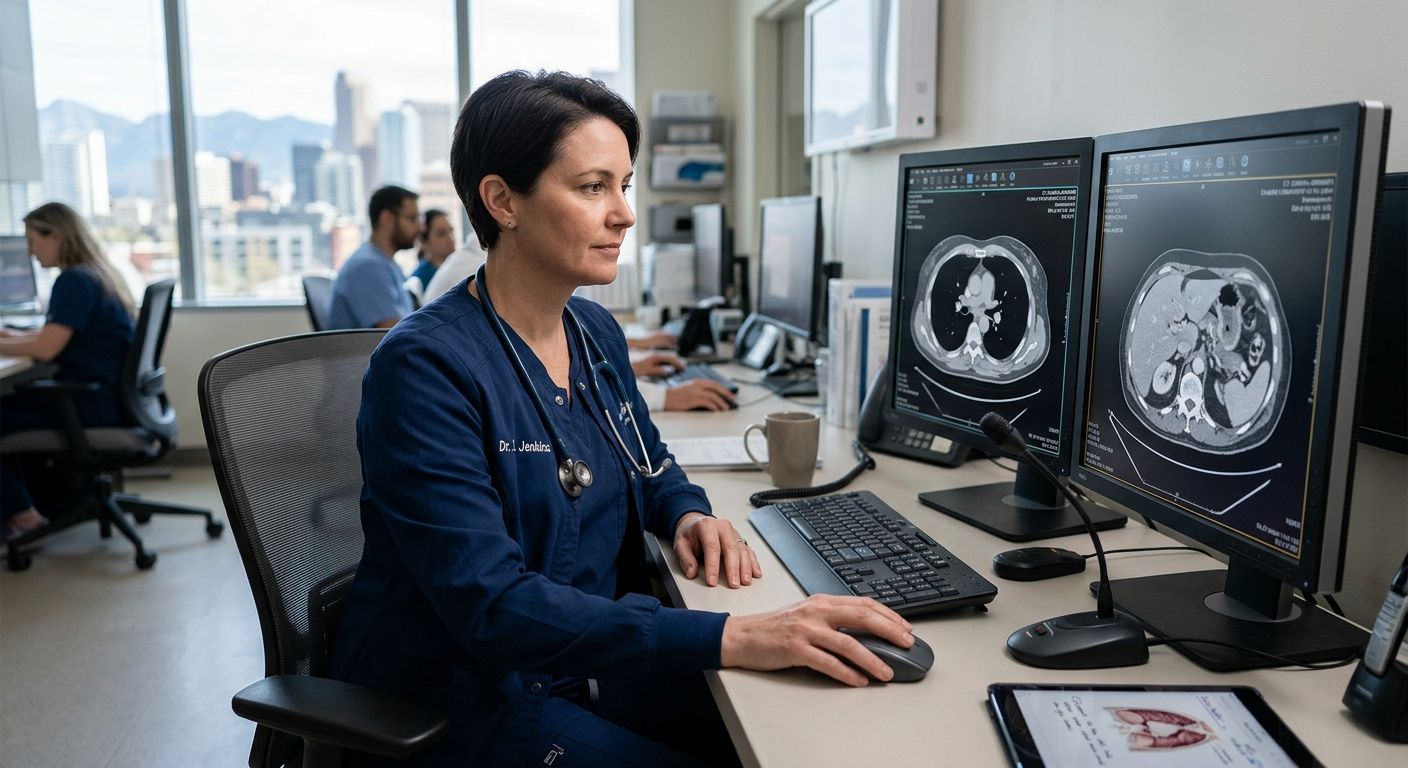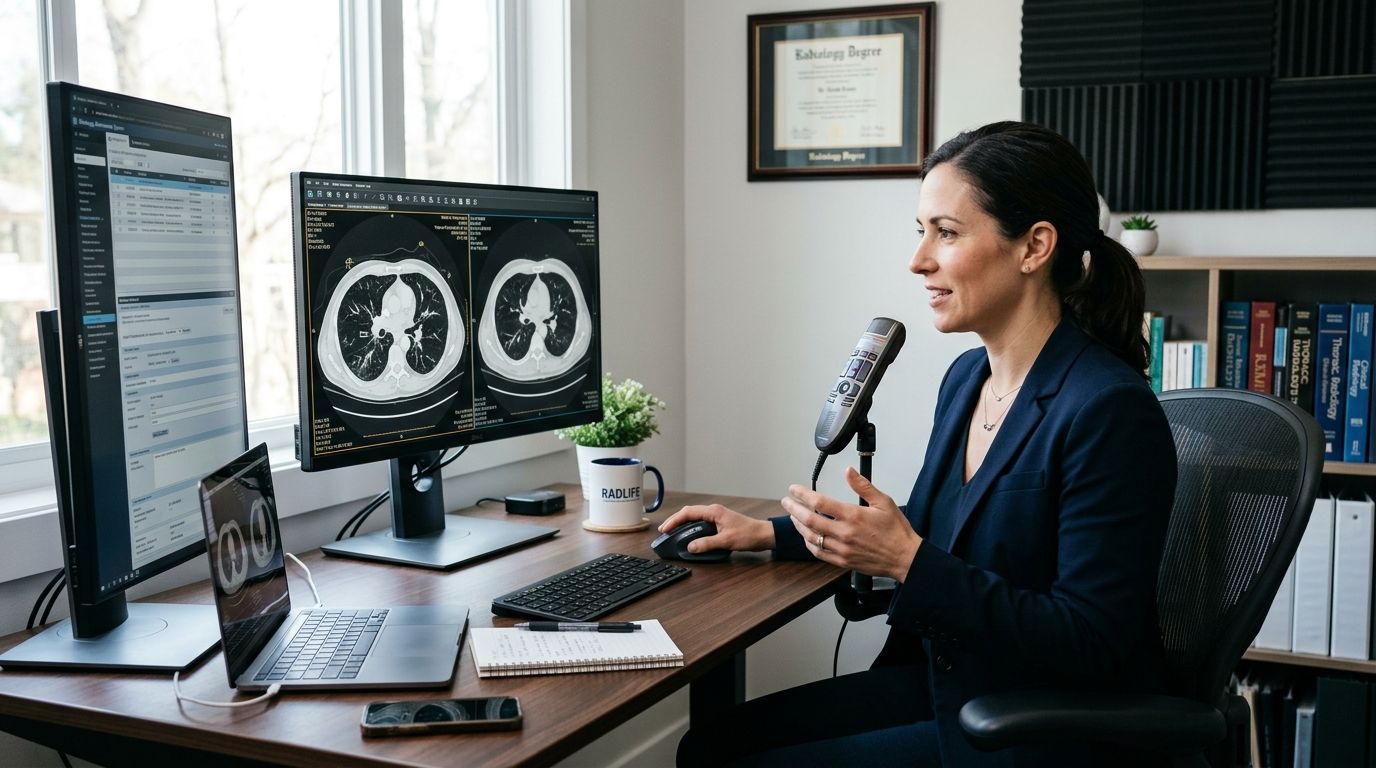
Teleradiology jobs range from national nighthawk coverage to hospital-employed remote-first roles, and the gap between them decides whether "remote" means real flexibility or a pager that never stops. Here's how to sort teleradiology jobs in 2026 and which structures actually deliver flexibility instead of just relabeling on-call work.
- National teleradiology groups offer volume and pay but fragmented, unpredictable hours: Consider, not Buy.
- Hospital-employed remote-first radiologist roles keep schedules structured and licensing light: the safe Buy for 2026.
- Subspecialty teleradiology jobs in neuro or MSK pay more per study but narrow your caseload: Consider.
- Locum teleradiology contracts give the most schedule control with zero benefits and unstable volume: the wildcard, Consider.
- Teleradiology postings with high RVU targets and no listed license requirements are the pattern to Skip.
Why this matters
Teleradiology stopped being a niche arrangement years ago. It's now one of the fastest-growing categories of radiology employment, and RadBoard's aggregator currently tracks 5,000+ radiology positions from 20 sources, a meaningful chunk of them remote or hybrid. You can browse teleradiology jobs on RadBoard and filter by coverage window instead of scrolling five different hospital career pages.
The catch: not every posting labeled "remote" behaves the same way. Some are structured shift work with a fixed panel. Others are open-ended RVU arrangements where your hours expand until the volume stops. RadBoard's 2026 US Radiology Job Market Report tracks subspecialty demand and ownership trends across 3,700+ active listings, and the pattern holds across specialties: the jobs marketed hardest on "flexibility" are often the ones with the least of it once you read the shift structure.
Who this is for
This guide is for practicing radiologists who want to reduce commute time, relocate without changing employers, or add remote shifts to an existing onsite job without signing up for an unpredictable nighthawk grind. If you're evaluating your first fully remote position, or comparing a locum teleradiology contract against a hospital-employed remote role, the criteria below apply directly to your decision.
What to look for in teleradiology jobs for remote flexibility
State licensing footprint
Every state a teleradiology job covers is a license you need to hold and maintain, and that burden compounds fast. A position covering three states is a manageable lift; one covering twelve means renewal deadlines and CME tracking across a dozen boards. Ask for the exact state list before you sign, not "most states."
Coverage window
Night, weekend, and holiday coverage pays differently than day-shift teleradiology, but it also determines whether "remote" actually frees up your daytime hours or just moves your on-call desk into your house. A fixed day-shift panel gives you a predictable calendar. Rotating nighthawk coverage gives you higher per-study rates and a schedule that swings.
Read volume and shift length
A teleradiology job with an uncapped RVU target isn't flexible, no matter what the posting says, because you work until the queue clears. Look for a stated study cap or a guaranteed floor with an RVU bonus on top, not a bonus-only structure.
Employment model
W-2 teleradiology jobs come with benefits, malpractice coverage, and tax withholding handled for you. 1099 locum teleradiology contracts pay more per study on paper but leave you covering your own malpractice tail, retirement contributions, and quarterly taxes. Neither is wrong, but the take-home comparison only works if you run both numbers, not the sticker rate.
PACS and technology access
Remote reading depends entirely on the employer's PACS setup, VPN reliability, and workstation provisioning. A job that ships you a validated diagnostic monitor and handles IT support is a different experience than one that expects you to configure your own remote access.
Subspecialty fit
Neuro, MSK, and body imaging show up repeatedly in subspecialty demand data from RadBoard's 2026 Job Market Report, and subspecialty teleradiology jobs generally pay a premium over general reads. The tradeoff is caseload variety: a pure neuro teleradiology contract means neuro all day, every shift.
Top picks by job type
National teleradiology group (nighthawk coverage) — the volume play. These groups route reads to whichever radiologist is online, often across a dozen or more contracted states. High per-study pay, but coverage windows swing between nights, weekends, and holiday blocks depending on staffing gaps. Consider, not Buy, unless you specifically want night-shift income.
Hospital-employed remote-first radiologist role — the safe pick. A single health system employs you directly, W-2, with a fixed day-shift panel and licensing limited to the states that system operates in. Lower peak pay than a nighthawk contract, but the schedule doesn't move around and benefits are included. Buy for anyone prioritizing predictability over top-line rate.
Subspecialty teleradiology (neuro or MSK) — the specialist niche. These roles pay a documented premium over general teleradiology reads because subspecialty demand outpaces supply, per RadBoard's 2026 Job Market Report. You'll read one body system almost exclusively. Consider if your fellowship matches the demand and you don't mind narrowing your caseload.
Locum teleradiology contract — the wildcard. Maximum schedule control: you pick blocks, decline others, and can hold multiple contracts at once. No benefits, no guaranteed volume between contracts, and you're 1099 the whole way. Before signing anything with a bonus-heavy structure, run the offer through RadBoard's guide on how to negotiate a higher radiologist salary offer so the per-study math actually holds up. Consider for radiologists who want variety over stability.
High-volume RVU teleradiology posting with no license list — the mill. If a listing won't name the states covered or caps studies only with a vague "reasonable volume" clause, that's the tell. Skip.
What to avoid
- "Remote flexibility" with mandatory in-person overnight backup. Some hospital contracts require one onsite overnight call shift per month buried in the fine print. That's not a remote job, it's a hybrid job marketed as remote.
- RVU-only pay with no floor. A per-study rate with zero guaranteed minimum means your income moves with referral volume you don't control, which is the opposite of flexibility.
- Unlisted license requirements at offer stage. If a recruiter can't tell you which states you'll need licensed before you sign, budget for months of unpaid onboarding while credentialing catches up.
“If a teleradiology job won't name the states it covers before you sign, that's the tell it's a volume mill, not a flexible schedule.”
Verdict comparison
| Job Type | Coverage Window | Licensing Burden | Verdict |
|---|---|---|---|
| National teleradiology group (nighthawk) | Nights/weekends, rotating | High, multi-state | Consider |
| Hospital-employed remote-first | Fixed day shift | Low, 1-2 states | Buy |
| Subspecialty telerad (neuro/MSK) | Day or mixed | Medium | Consider |
| Locum teleradiology contract | Variable, self-set | High, per-contract | Consider |
| Uncapped RVU posting, no license list | 24/7 rotating | Unclear | Skip |
FAQ
What are teleradiology jobs and how do they differ from onsite radiology jobs?
Teleradiology jobs let a radiologist read studies remotely through PACS access instead of sitting in a hospital reading room. The core work is identical; the difference is licensing requirements, technology setup, and how coverage windows are scheduled.
Is teleradiology better than onsite radiology for work-life balance in 2026?
It depends entirely on the coverage window and pay structure, not the fact that it's remote. A fixed day-shift teleradiology job beats most onsite schedules for flexibility, while an uncapped nighthawk contract can be harder on work-life balance than a standard hospital shift.
How much do teleradiology jobs pay compared to in-hospital roles?
Pay varies by coverage window and subspecialty rather than by remote status alone. Night and weekend teleradiology coverage and subspecialty reads like neuro or MSK typically command a premium per study over standard daytime general reads.
How many state licenses do you need for teleradiology jobs?
The count depends on how many states the employer's covered facilities sit in. Hospital-employed remote roles often need only one or two licenses, while multi-state nighthawk groups can require licenses in a dozen states or more.
Are teleradiology jobs 1099 or W-2?
Both structures exist. Hospital-employed remote roles are typically W-2 with benefits, while locum teleradiology contracts and many national group arrangements are 1099, which shifts malpractice and tax responsibility to you.
What subspecialties see the most demand in teleradiology?
Neuro and MSK subspecialty demand shows up repeatedly in RadBoard's 2026 US Radiology Job Market Report, which tracks demand patterns across 3,700+ active listings. General body and chest reads still make up the bulk of volume-based teleradiology work.
How do you find legitimate teleradiology jobs in 2026?
Cross-reference postings across multiple sources rather than trusting a single job board's listing. RadBoard aggregates 5,000+ radiology positions from 20 sources with AI-powered search and swipe-to-save filtering built specifically for sorting remote versus onsite roles.
Can teleradiology jobs lead to full-time remote radiologist careers?
Yes, a growing share of hospital-employed remote-first roles are structured as permanent full-time positions rather than transitional contracts. The trend tracks with ownership consolidation in radiology groups documented in 2026 market data.
One last thing
Ownership matters more than the job posting lets on. RadBoard's 2026 Job Market Report tracks ownership trends across radiology employers, and consolidation among national teleradiology groups changes call schedules and coverage requirements faster than most contracts get renegotiated. Ask who currently owns the group behind any teleradiology offer before you sign, not just what the schedule looks like today.