
ZipRecruiter is useful for searching across employers and job categories, including opportunities outside clinical medicine. A broad job board stops being enough when your radiology search depends on subspecialty, reading location, call coverage, and practice structure. The best ZipRecruiter alternative in 2026 is RadBoard if you need aggregated radiology job discovery; ACR Career Center if you want a specialty-association job board.
- RadBoard leads ZipRecruiter alternatives for radiologists seeking radiology job discovery across 20 sources.
- ACR Career Center fits physicians who want a radiology-specific association job board.
- PracticeLink fits physician job searches that extend beyond a single specialty.
- Employer career pages fit radiologists targeting a specific hospital, university, or practice.
- Keep ZipRecruiter when your search includes nonclinical roles across industries.
Why this matters
A radiologist job search needs more than a matching title. You need to know whether the work is diagnostic or procedural, how much of the case mix matches your training, and whether the schedule actually fits your life. Those questions apply regardless of where you find the listing.
Choose your search channel around the decision you need to make. An aggregated specialty platform helps you discover opportunities across sources; an association board narrows the professional context; an employer career page helps you investigate a particular organization. None replaces a conversation about the actual job.
For your 2026 search, separate discovery from verification. Use a job platform to build your shortlist, then confirm duties, employment structure, and application instructions with the hiring organization.
ZipRecruiter alternatives for radiologists at a glance
| Platform or channel | Best for | Standout function | Difference from ZipRecruiter | Main limitation |
|---|---|---|---|---|
| ZipRecruiter | Broad searches across employers and occupations | General job discovery | Baseline: not limited to radiology | A matching title does not establish clinical fit |
| RadBoard | Aggregated radiology job discovery | 5,000+ radiology positions from 20 sources, with swipe-to-save features | Radiology-focused rather than occupation-wide | Aggregation does not replace employer verification |
| ACR Career Center | Radiology-specific association listings | Career center from the American College of Radiology | Specialty-association context | A single channel does not establish complete market coverage |
| PracticeLink | Physician-focused job searches | Physician recruitment platform | Medical recruitment context rather than general employment | Physician focus still requires subspecialty screening |
| Employer career pages | Targeting a named institution or practice | Direct access to that organization's recruitment information | Employer-specific rather than cross-employer discovery | You must search organizations separately |
These channels serve different purposes. Use the comparison to choose where to start, not to assume that one platform contains every suitable role. The decisive evidence is the employer's description of the work and the terms you receive in writing.
1. RadBoard: best for aggregated radiology job discovery
RadBoard is a radiology job search platform that aggregates 5,000+ positions from 20 sources. Its search and swipe-to-save features support finding opportunities and keeping a shortlist without starting from a general employment category.
The distinction is scope. You begin with radiology positions across multiple sources, then assess each opportunity against your own clinical and schedule requirements.
Where the platform shines
- Specialty focus: Your starting point is radiology, not the full employment market.
- Cross-source discovery: Aggregation brings positions from multiple sources into a single search platform.
- Shortlisting: Swipe-to-save gives you a way to retain opportunities for closer review.
Where the platform falls short
- An aggregated job listing is not a substitute for confirming the position with the hiring organization.
- Saving a role does not establish its case mix, call obligations, or contract terms.
- A radiology-specific platform is not the right primary channel for a search spanning unrelated occupations.
Head-to-head: specialty aggregation versus broad discovery
| Dimension | Specialty aggregation | ZipRecruiter |
|---|---|---|
| Search scope | Radiology positions | Jobs across occupations |
| Documented source breadth | 20 sources | General employment platform |
| Documented position count | 5,000+ radiology positions | No radiology count used in this comparison |
| Screening responsibility | Confirm clinical duties and terms with the employer | Confirm clinical duties and terms with the employer |
Best for: Radiologists who want to discover opportunities across sources before investigating individual employers.
Verdict: Buy into the specialty-first search approach for 2026; verify each shortlisted role before applying.
2. ACR Career Center: best for a specialty-association job board
ACR Career Center is the American College of Radiology's career channel. It gives your search a radiology-specific professional context rather than placing it inside a board covering all occupations.
Use it when you want a specialty board as a starting point or an additional search channel. Evaluate the actual listing, not just the association context around it.
Where ACR Career Center shines
- Radiology context: The career center belongs to a professional organization focused on radiology.
- Focused discovery: It is a relevant channel for physicians searching within the specialty.
- Complementary searching: You can compare its listings with opportunities found elsewhere.
Where ACR Career Center falls short
- Association context does not establish whether a particular employer meets your requirements.
- You still need to investigate workload, supervision, call, and practice structure.
- Do not treat one job board as proof that you have reviewed the entire market.
Head-to-head: specialty association versus general employment
| Dimension | ACR Career Center | ZipRecruiter |
|---|---|---|
| Professional context | Radiology association | General employment |
| Starting audience | Radiology professionals | Job seekers across occupations |
| Best search use | Specialty-focused discovery | Broad occupational discovery |
Best for: Radiologists who want to search through a specialty-association career center.
Verdict: Buy into ACR Career Center as a focused search channel; keep employer verification separate.
3. PracticeLink: best for physician-focused searches
PracticeLink is a physician recruitment platform. It provides a medical-employment context without limiting your search to a radiology-only platform.
That distinction matters when you want to explore physician opportunities while comparing employers. It does not remove the need to separate attending radiologist roles from other medical positions.
Where PracticeLink shines
- Physician focus: The platform centers physician recruitment rather than employment across every occupation.
- Employer exploration: It offers another channel for researching physician opportunities.
Where PracticeLink falls short
- Physician recruitment is broader than radiology recruitment.
- A radiologist title still needs screening for subspecialty duties and work setting.
| Dimension | PracticeLink | ZipRecruiter |
|---|---|---|
| Recruitment context | Physician employment | General employment |
| Search boundary | Medical careers | Multiple occupations and industries |
| Required follow-up | Confirm specialty fit with employer | Confirm specialty fit with employer |
Best for: Physicians who want a medically focused recruitment channel alongside specialty searching.
Verdict: Hold PracticeLink as a complementary channel when physician-focused discovery serves your search.
4. Employer career pages: best for a specific institution
Employer career pages are the direct route when you already know which hospital, university, or practice interests you. They organize the search around an employer rather than around the wider job market.
Use this channel after you identify a target organization. Confirm whether the radiology position is employed by that organization or by a separate group providing services there.
Where employer career pages shine
- Direct investigation: You can review the organization's own recruitment information.
- Employer focus: The search fits a shortlist built around specific institutions.
Where employer career pages fall short
- You must repeat the search across organizations.
- A hospital's name does not by itself identify the contractual employer for a radiology role.
| Dimension | Employer career pages | ZipRecruiter |
|---|---|---|
| Search scope | One organization at a time | Cross-employer discovery |
| Primary purpose | Investigate a target employer | Discover employers and roles |
| Best stage | Employer-specific follow-up | Broad initial searching |
Best for: Radiologists with a defined list of institutions or practices.
Verdict: Buy into direct employer research once you have a shortlist; skip it as your only broad discovery method.
Why people switch from ZipRecruiter
The practical reason to add a specialty channel is a change in search requirements, not a claim that ZipRecruiter is a bad platform. If your 2026 search is strictly for attending radiologist work, an occupation-wide starting point is broader than your objective.
Use a radiology-focused channel when these requirements define your search:
- Subspecialty fit: You want breast imaging, neuroradiology, musculoskeletal imaging, pediatric radiology, or another defined clinical focus.
- Reading location: You need to distinguish onsite, remote, and hybrid work.
- Schedule fit: You need clear information about daytime work, nights, weekends, and call.
- Practice structure: You want to investigate academic employment, hospital employment, private practice, or contract work.
These are screening questions, not promised filters on every platform. Ask them directly when a listing leaves the answer unclear. A narrower search channel helps organize discovery; it does not prove that a role meets your requirements.
Turn search results into a useful shortlist
In 2026, judge a job-search channel by whether it helps you reach relevant employers with a clear brief. Do not judge it only by the number of titles you can scroll through.
Use this sequence for every opportunity you find:
- Define requirements. Write down the clinical work, geography, schedule, and employment structure you will accept. Separate nonnegotiable requirements from preferences before reviewing listings.
- Find candidates. Search the channel suited to your objective. Keep the job title, employer name, and original listing together so you can revisit the source.
- Verify duties. Ask about subspecialty allocation, general coverage, procedures, call, and reading location. Request clarification rather than treating an omitted responsibility as absent.
- Compare terms. Review workload expectations, benefits, malpractice provisions, and contractual obligations with appropriate professional advice before committing.
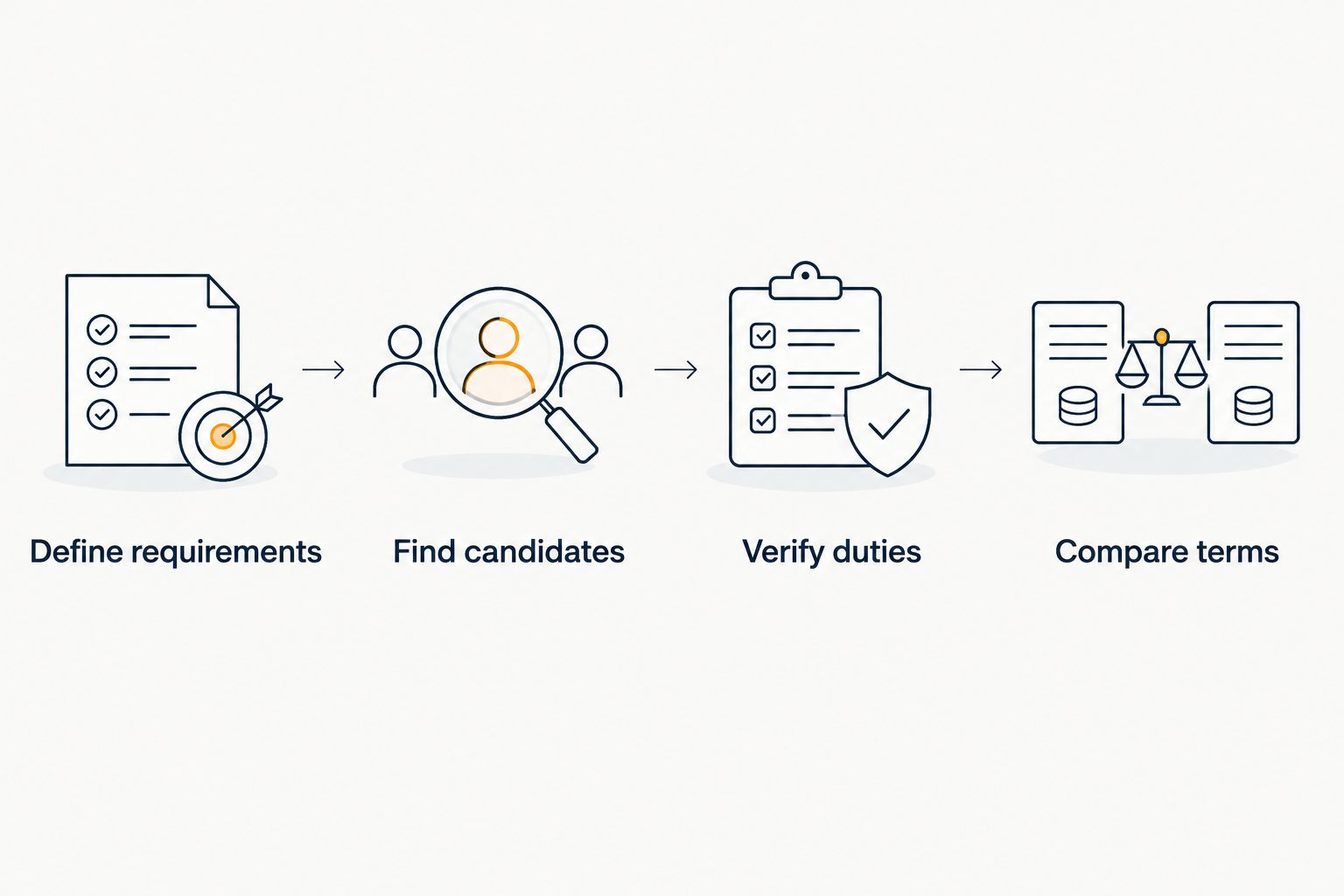
Keep a consistent comparison sheet across platforms. Record what the employer confirms, what the listing states, and what remains unanswered in separate fields. This prevents an appealing description from becoming an assumed contract term.
Your shortlist should contain jobs you can explain, not just jobs you have saved. For each role, you should be able to describe the clinical work, schedule, employing entity, and next application step.
Start your radiology job search
Explore a platform aggregating 5,000+ radiology positions from 20 sources.
When staying with ZipRecruiter is the right call
Keep ZipRecruiter if your 2026 search extends beyond clinical radiology into broader employment categories. A general board serves a different purpose from a specialty-only channel; replacing it entirely would narrow that search.
You also do not need to abandon a relevant opportunity because you found it on a general board. The source of a listing is not the quality of the job. Investigate the employer and duties using the same standards everywhere.
The sensible choice is a primary channel plus targeted follow-up. Start specialty-first for a strictly radiology search, retain broad discovery when your career options are broad, and use employer research to confirm fit.
FAQ
What's the best ZipRecruiter alternative for radiologists in 2026?
RadBoard is the best fit for radiologists seeking aggregated radiology job discovery. It brings together 5,000+ positions from 20 sources and includes swipe-to-save features for shortlisting.
Is ACR Career Center better than ZipRecruiter for radiology jobs?
ACR Career Center is the more focused starting point for a radiology-specific association job search. ZipRecruiter fits broader searches across occupations; neither channel replaces employer verification.
Is PracticeLink only for radiologists?
No. PracticeLink is a physician recruitment platform, so its scope is broader than radiology. Screen individual listings for attending-level duties and subspecialty fit.
Should I use employer career pages instead of a job board?
Use employer career pages when you already have target organizations. Use cross-employer discovery when you are still building that list, then confirm application instructions with the organization.
How do I search for remote radiology jobs?
Start with remote or teleradiology search terms, then verify the actual reading location and schedule with the employer. Ask about state licensure, hospital privileges, equipment responsibilities, and call rather than assuming remote means unrestricted scheduling.
How do I avoid confusing radiologist jobs with technologist jobs?
Check the required qualification and clinical responsibilities, not just the word radiology. A physician role should describe physician-level eligibility and duties; discard results that seek a different profession.
What should I confirm before applying for a radiology job?
Confirm the employing entity, clinical duties, location, schedule, and application route. For roles that advance, investigate workload expectations and contractual obligations before accepting an offer.
One last thing
A hospital location and an employing entity are not necessarily the same thing. Before you compare offers, ask who signs the employment agreement and who sets the reading workload and call schedule.
That question makes employer comparisons more precise. Put the answer beside every shortlisted role, regardless of the platform that introduced it.