
Start with UCSF, Stanford, and Duke when comparing cardiothoracic radiology fellowships in 2026; choose by the documented balance of chest imaging, cardiac CT, and cardiac MRI—not institutional reputation alone. This fit-based shortlist explains what to investigate at each program and how to connect fellowship training to your intended attending role.
- The best cardiothoracic radiology fellowship programs match your intended chest imaging and cardiac imaging practice.
- Compare UCSF, Stanford, and Duke using written rotation schedules and fellow-specific responsibilities.
- RadBoard is best for radiologists comparing job requirements before choosing a fellowship.
- Separate supervised interpretation from observation when evaluating cardiac CT and cardiac MRI training.
Why this matters
A fellowship title does not tell you what you will interpret independently. Chest CT, coronary CTA, and cardiac MRI require different training experiences, so a combined label is only the starting point.
Before comparing programs, examine the work you want afterward. The guide to cardiothoracic radiology jobs for chest and cardiac imaging provides a career-focused starting point for that comparison.
For your 2026 search, distinguish institutional capability from fellow participation. A hospital offering a particular examination does not establish that radiology fellows acquire, interpret, or receive feedback on those studies.
What makes the best cardiothoracic radiology fellowship?
Use these criteria before you assign any program a position on your application list:
- Training balance: Obtain the actual allocation of chest imaging, cardiac CT, cardiac MRI, electives, and other service assignments.
- Interpretation responsibility: Establish whether you produce preliminary reports, review cases with faculty, and receive specific corrections.
- Clinical integration: Ask how fellows participate in pulmonary, oncology, cardiology, and surgical discussions.
- Mentorship: Identify faculty whose clinical or research work matches your intended practice.
- Career preparation: Compare the curriculum with the responsibilities in jobs you would accept.
- Schedule clarity: Review service expectations, call, leave, and research arrangements before committing.
The strongest program is the one that can show how your weekly work builds the skills your next employer expects. A detailed schedule is more useful than an impressive list of equipment or affiliated hospitals.
Cardiothoracic fellowship shortlist at a glance
The order below is an application-research sequence, not a measured ranking of educational outcomes. Each institution offers cardiothoracic fellowship training; the use-case labels identify the question to investigate, not a claim that one institution outperforms another.
| Program | Best for: application focus | Standout feature to investigate | Key limitation of this recommendation |
|---|---|---|---|
| UCSF | Combined chest and cardiac training | How thoracic interpretation connects with cardiac CT and MRI responsibilities | The fellowship name alone does not establish the balance you will receive |
| Stanford | Cardiac-focused academic planning | How cardiac imaging experience connects with an appropriate faculty mentor | Institutional research activity does not establish protected fellow research time |
| Duke | Thoracic-focused clinical planning | How chest imaging responsibilities align with your intended clinical practice | A cardiothoracic curriculum still requires examination of its cardiac component |
For 2026 applications, obtain the current fellowship description directly from each institution. Use program materials to establish curriculum details and the program office to resolve anything the published description leaves unclear.
1. UCSF: best application focus for combined training
UCSF offers cardiothoracic imaging fellowship training. Put UCSF first on your research list if you want to evaluate a combined chest and cardiac pathway rather than begin with a narrowly defined modality preference.
The decisive question is balance. Ask the fellowship team to explain which activities are scheduled, which are elective, and which depend on arranging additional experience.
UCSF pros to evaluate:
- A cardiothoracic training pathway gives you a direct starting point for discussing both chest and cardiac goals.
- You can assess pulmonary, oncologic, and cardiac interests against a single proposed training schedule.
- The interview provides an opportunity to compare your desired clinical scope with named faculty supervision.
UCSF cons and decision limits:
- A combined designation does not guarantee equal time across chest CT, cardiac CT, and cardiac MRI.
- The institutional name does not answer questions about individual reporting responsibility or feedback.
- A broad curriculum is not automatically the right fit if your career goal requires concentrated modality-specific experience.
Request an example rotation schedule and ask a current fellow to describe an ordinary clinical week. Separate time spent observing cardiac studies from time spent interpreting them under supervision.
Best for: Applicants investigating combined thoracic and cardiac practice.
Verdict: Hold UCSF on your shortlist until the documented training balance matches your intended job.
2. Stanford: best application focus for cardiac academic goals
Stanford offers cardiovascular and thoracic imaging fellowship training. Investigate Stanford when your application centers on cardiac imaging and you want to examine how clinical training and academic mentorship fit together.
Start with the clinical role, not the research topic. Establish what you will do in cardiac CT and MRI before discussing publications, projects, or a future faculty position.
Stanford pros to evaluate:
- The cardiovascular and thoracic scope provides a relevant setting for discussing a cardiac-focused training plan.
- You can evaluate prospective mentorship alongside your clinical learning objectives.
- A focused application lets you ask precise questions about how cardiac experience connects with thoracic reporting.
Stanford cons and decision limits:
- A cardiovascular label does not establish how cardiac studies are divided among services or trainees.
- An appealing research project does not establish that the service schedule leaves time to complete it.
- Academic fit is incomplete without agreement about supervision, project ownership, and expected deliverables.
Ask who supervises each cardiac modality and how fellows receive reporting feedback. If research matters to you, request a realistic project scope and a clear explanation of when the work happens.
For a 2026 application, judge the proposed mentor relationship by its practical arrangements. A named project without time or supervision is not a training plan.
Best for: Applicants investigating cardiac-focused training with academic mentorship.
Verdict: Hold Stanford on your shortlist until both clinical participation and mentorship arrangements are clear.
3. Duke: best application focus for thoracic clinical goals
Duke offers cardiothoracic imaging fellowship training. Investigate Duke when your principal goal is chest imaging and you need to determine how much complementary cardiac training supports that goal.
Define the thoracic work you want to perform after fellowship. Pulmonary disease, thoracic oncology, screening, and postoperative imaging raise different questions about case exposure and clinical consultation.
Duke pros to evaluate:
- The cardiothoracic pathway provides a relevant framework for comparing chest and cardiac learning objectives.
- A thoracic-first application gives the interview a concrete clinical focus.
- You can assess whether the proposed cardiac component adds useful breadth to your intended practice.
Duke cons and decision limits:
- A chest-centered career plan still requires careful review of all assigned rotations.
- Conference participation does not establish that fellows present cases or receive direct feedback.
- Exposure to varied pathology does not establish how much independent interpretation you will undertake.
Ask the program to walk through a thoracic service day from protocol questions to final review. Then ask how cardiac rotations affect that schedule and whether electives address your specific training gaps.
The useful comparison is not whether a department sees complex disease. It is whether you will interpret relevant studies, discuss decisions, and learn from corrections.
Best for: Applicants investigating thoracic clinical practice with complementary cardiac experience.
Verdict: Hold Duke on your shortlist until fellow responsibilities support your chest-imaging goals.
How to compare programs after the first interview
Request 3 documents from every program: the rotation schedule, the fellow duty description, and the curriculum or learning objectives. These documents give you a consistent basis for follow-up questions.
Use the same sequence for each institution. Otherwise, a polished interview can leave you comparing detailed answers from one program with general impressions from another.
Define your job
Write a brief description of your intended attending role. Specify whether chest imaging, cardiac CT, cardiac MRI, teaching, or research is essential rather than merely interesting.
RadBoard aggregates 5,000+ radiology positions from 20 sources. Use radiology job descriptions to identify the responsibilities you want your fellowship to prepare you for; do not treat the aggregate listing count as a count of cardiothoracic vacancies.
Map the curriculum
Connect each essential responsibility to a scheduled training activity. If the connection rests on an elective, ask who approves it and how it fits around service assignments.
Verify your role
Ask what the fellow actually does: protocol studies, review images, draft reports, discuss findings, or observe. These are different experiences, and a useful curriculum distinguishes them.
Check the evidence
Compare the written schedule with a current fellow's account. Resolve discrepancies with the program director before you make your final preference list.
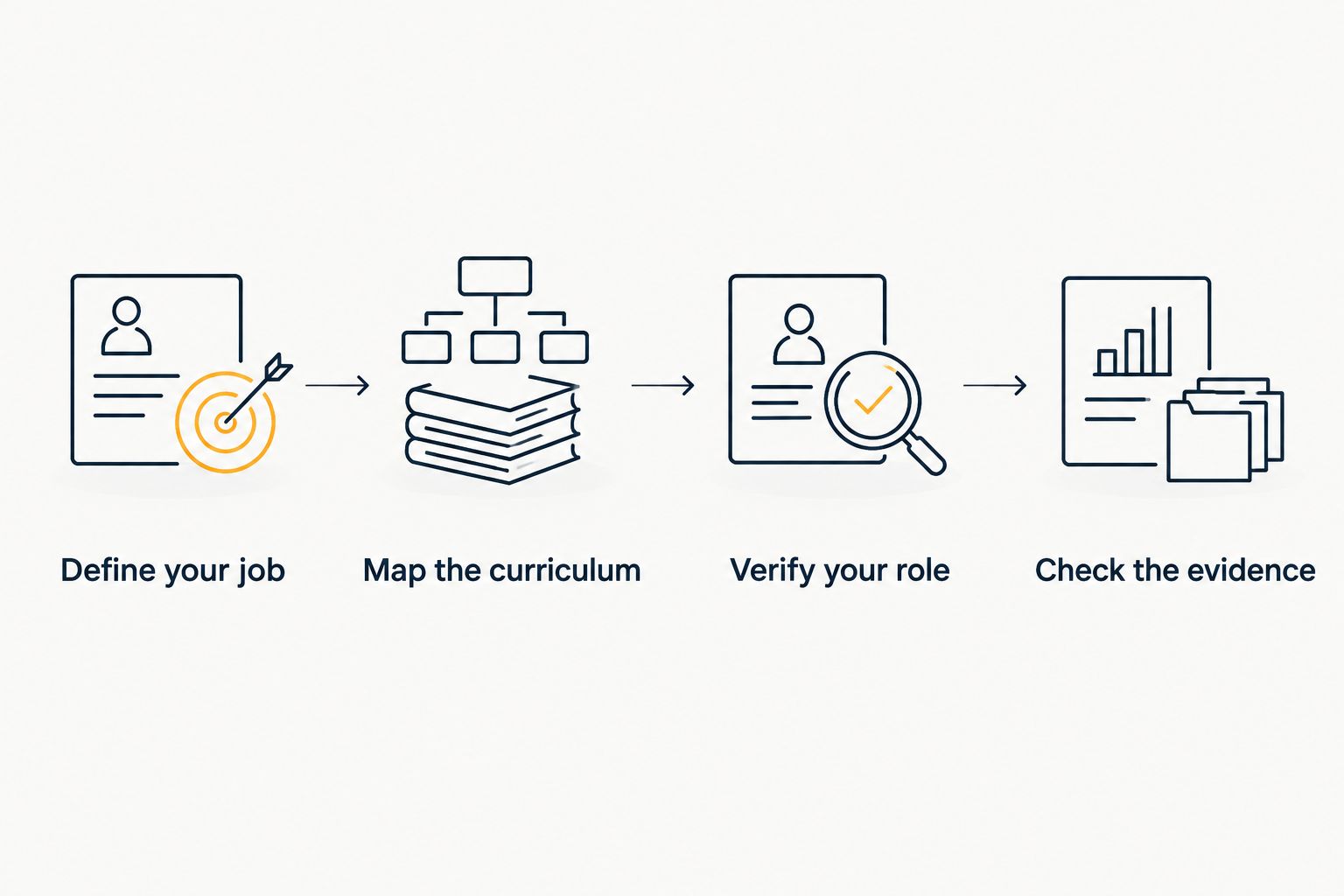
Your 2026 comparison sheet should record answers, not impressions. Replace entries such as strong cardiac exposure with the program's specific description of scheduled work, supervision, and interpretation responsibility.
Questions that separate exposure from training
Ask these questions during interviews, then record the answers in the same format for every program:
- Cardiac CT: Who protocols examinations, prepares reconstructions, drafts reports, and reviews corrections?
- Cardiac MRI: What is the fellow's role in acquisition planning, image analysis, and interpretation?
- Thoracic imaging: Which clinical questions will you handle, and how does faculty review work?
- Conferences: Do fellows present cases, explain imaging decisions, and receive feedback?
- Research: Who supervises the project, and where does project time appear in the schedule?
- Career preparation: How does the program help you document experience for attending applications?
Keep the answers distinct. A program can describe excellent thoracic teaching without answering your cardiac MRI question.
How this shortlist is ordered
UCSF, Stanford, and Duke are organized around different application questions: combined training, cardiac academic planning, and thoracic clinical planning. The order does not represent comparative case volumes, placement rates, or fellow satisfaction scores.
The selection criteria remain the same across all programs: training balance, interpretation responsibility, clinical integration, mentorship, career preparation, and schedule clarity. Move a program higher only when its documented arrangements fit your goals better.
Which program should you choose?
If you remain undecided, start by investigating combined chest and cardiac training at UCSF, then compare the actual schedule with Stanford and Duke. Do not make the institutional sequence your final preference order.
Choose the program that answers your essential clinical questions most clearly. If cardiac MRI is non-negotiable, a strong thoracic experience does not compensate for an undefined cardiac MRI role.
Use RadBoard to compare radiology job requirements while you assess those trade-offs. RadBoard supports radiology job search; it is not a fellowship accreditor or a source of verified program outcomes.
FAQ
What are the best cardiothoracic radiology fellowship programs in 2026?
UCSF, Stanford, and Duke are programs to investigate for cardiothoracic imaging training. Choose among them by the current curriculum, your interpretation responsibilities, and fit with your intended career—not this shortlist's order.
Is a cardiothoracic fellowship the same as a cardiac imaging fellowship?
No, the titles do not establish identical training. Compare the scheduled chest imaging, cardiac CT, and cardiac MRI responsibilities rather than assuming the names describe the same curriculum.
Is Stanford better than UCSF for cardiac imaging training?
This shortlist does not establish that Stanford is better than UCSF. Compare fellow-specific cardiac CT and MRI participation, supervision, and reporting responsibility before making that judgment.
What should I ask about cardiac MRI during a fellowship interview?
Ask what you will personally do in acquisition planning, image analysis, interpretation, and faculty review. Distinguish scheduled clinical responsibility from observation or optional experience.
How can I compare fellowship research opportunities?
Compare the named mentor, project scope, supervision arrangements, and time assigned to the work. Departmental research activity alone does not establish a workable fellow research experience.
Should I choose a fellowship based on my first attending job?
Use your intended attending responsibilities as a central selection criterion. Preserve enough breadth for other roles you would seriously consider, rather than optimizing your training around an employer's name.
Can RadBoard help me choose a cardiothoracic fellowship?
RadBoard can help you examine radiology job requirements before you choose training. It aggregates 5,000+ radiology positions from 20 sources, but those totals do not measure fellowship quality or cardiothoracic vacancies.
One last thing
Before submitting your 2026 preference list, ask each program to describe what a fellow does with a difficult study from acquisition through final review. That answer reveals more about your learning role than a list of diagnoses encountered.
Choose responsibility with supervision, not exposure without a defined role. You need to understand what you will do, who will review it, and how that feedback changes your next interpretation.