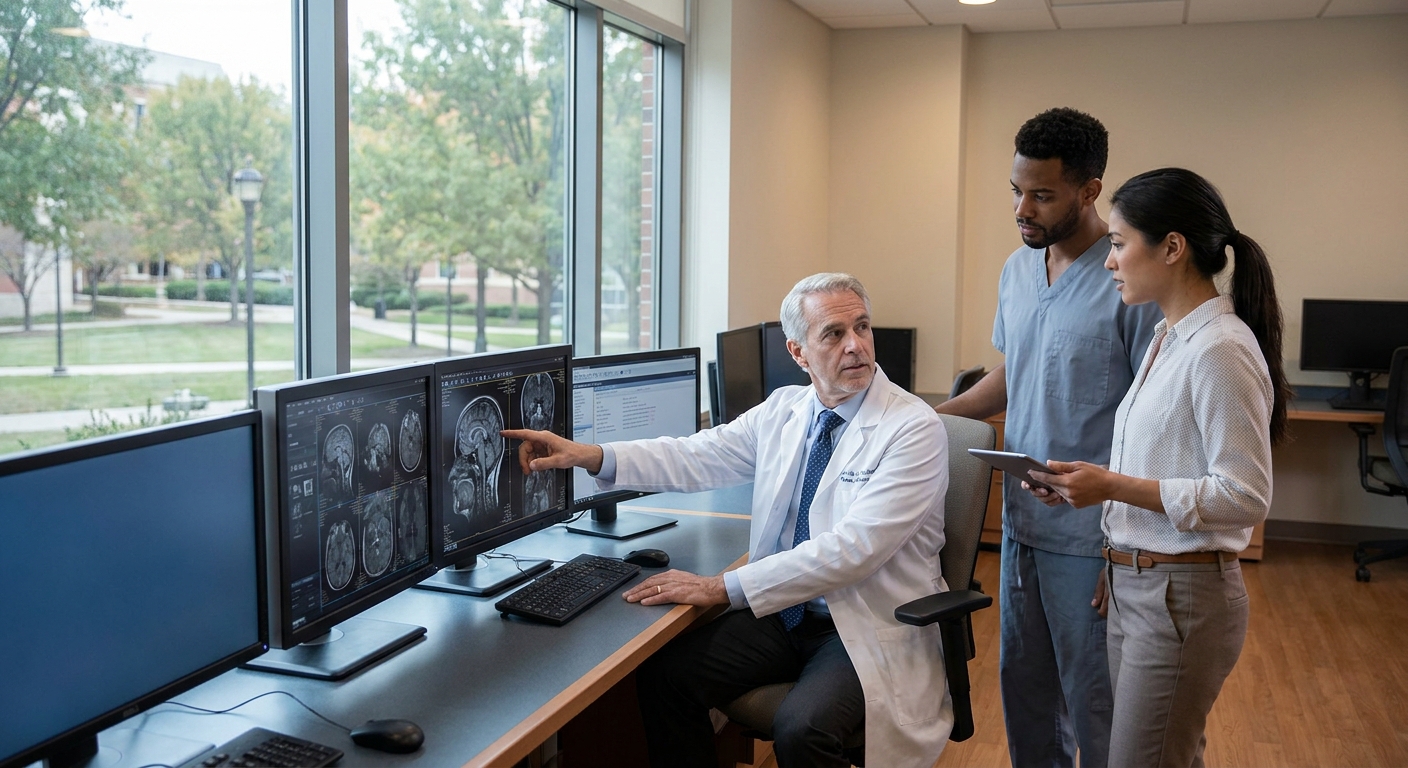
Academic radiology jobs in 2026 combine clinical reads with protected time for teaching residents, running research, and building a subspecialty program — a different trade-off than private practice pay-per-RVU work.
- Academic radiology jobs in 2026 trade top-end salary for protected teaching and research time.
- Neuroradiology fellowship jobs are the strongest academic entry point right now: Buy.
- Diagnostic radiology jobs for residency graduates remain the safest academic starting point: Buy.
- Interventional radiology academic tracks work only if call burden stays capped: Consider.
- Check the compensation gap before signing — negotiate the academic offer like you would private practice.
Why this matters
Academic radiology jobs in 2026 sit outside the standard job-board search. Most postings live inside university health system career pages, radiology department sites, or professional society boards rather than the general job aggregators that cover private practice and teleradiology openings. RadBoard indexes 5,000+ radiology positions from 20 sources, and academic listings show up alongside private practice, teleradiology, and locum roles — so filtering by subspecialty and program type matters more here than in a typical job search.
The 2026 radiology job market keeps splitting along the same fault line: clinical volume versus academic mission. Physicians who want to publish, teach fellows, and run a subspecialty division need a different filter than physicians optimizing for RVU pay. Getting that filter wrong costs a year — academic contracts run on annual cycles, and a mismatch usually means waiting until the next hiring season.
Who this is for
This guide is for radiologists finishing residency or fellowship who want an academic medical center appointment: protected time for research or teaching, resident and fellow supervision, and a subspecialty focus rather than a general diagnostic panel. It also applies to mid-career radiologists in private practice considering a move back to academics for program leadership or a division chief track.
If you're closer to finishing residency than fellowship, start with diagnostic radiology jobs for residency graduates — most junior academic appointments in 2026 still hire generalists into a two-year track before subspecialty focus locks in.
What to look for in academic radiology jobs
Protected non-clinical time
Academic radiology jobs are defined by the split between clinical reads and everything else. Postings in 2026 that don't state a specific protected-time percentage in the offer letter — 20%, 30%, 40% — are worth a direct question before you sign, because verbal promises about research time evaporate once the clinical schedule gets built.
Fellowship and residency program affiliation
Teaching load only counts if there's an actual program attached. A department with a residency and fellowship in your subspecialty means built-in trainees to supervise; a department without one means you're building a teaching program from zero, which eats into the research time you were promised.
Research infrastructure
Grant support, a biostatistics core, and existing IRB relationships separate real academic jobs from clinical jobs with an academic title. Ask what percentage of current faculty in the division hold active extramural funding — a division with zero funded faculty isn't a research environment, regardless of what the job title says.
Subspecialty alignment
Academic radiology jobs in 2026 increasingly hire by subspecialty rather than general diagnostic coverage. Neuroradiology, interventional radiology, and breast imaging carry the deepest academic pipelines because they map directly to fellowship training and procedure volume that justifies a dedicated division.
Academic rank and promotion track
Assistant, associate, and full professor tracks come with different tenure clocks and different publication requirements. A non-tenure clinical-track appointment usually means less pressure to publish but a lower ceiling on promotion — know which track you're signing before negotiating the rest of the offer.
Compensation structure
Academic pay in 2026 typically runs below private practice and teleradiology comparables, and that gap is the trade-off for protected time, not an oversight to fix later. Before you sign, read how to negotiate a higher radiologist salary offer — academic offers still have negotiable levers even when the base salary scale looks fixed.
Search academic radiology openings now
Filter 5,000+ radiology jobs from 20 sources by subspecialty and program type.
Top picks for academic radiology jobs in 2026
Neuroradiology fellowship track — the specialist pick. Neuroradiology divisions at academic medical centers run some of the deepest fellowship pipelines in the field, and fellowship-trained applicants get first look at faculty openings before they're posted publicly. Divisions with an active fellowship program typically carry protected academic time in the 20% to 30% range for junior faculty. Check neuroradiology fellowship jobs for current academic center openings. Buy if you're fellowship-trained and want a subspecialty division with built-in teaching load.
Interventional radiology academic track — the procedural pick. IR faculty positions carry academic titles but often come with heavier call than diagnostic academic roles, since procedure coverage doesn't pause for research days. Confirm the call schedule and protected time percentage before assuming the academic label means a lighter clinical load. See interventional radiology jobs for IR-specific academic and hybrid postings. Consider only if the call burden stays capped and protected time is written into the contract, not implied.
Diagnostic radiology academic entry — the safe pick. Most academic departments hire residency graduates into a general diagnostic faculty track before subspecialty focus is finalized, which means broader competition but more open positions in 2026 than subspecialty-only tracks. This is the lowest-risk academic entry point for physicians still deciding on a research focus. Buy for anyone finishing residency who wants an academic appointment without committing to a subspecialty yet.
Breast imaging academic subspecialty — the high-demand pick. Breast imaging carries strong demand across both academic and private practice settings in 2026, and mammography-trained faculty are frequently recruited to build or expand screening and biopsy programs alongside teaching responsibilities. Academic breast imaging roles often combine clinical volume with resident supervision on procedures. Consider if you're mammography-trained and want a subspecialty with demand outside academics as a fallback.
Verdict comparison
| Pick | Protected time | Call burden | Verdict |
|---|---|---|---|
| Neuroradiology fellowship track | 20-30% typical | Moderate | Buy |
| Interventional radiology academic | Varies by contract | High | Consider |
| Diagnostic radiology entry | 10-20% typical | Moderate | Buy |
| Breast imaging subspecialty | 15-25% typical | Low to moderate | Consider |
What to avoid
- "Academic-affiliated" community roles. Some postings use "academic affiliate" or "teaching hospital" in the title with no actual resident program attached — you'll read clinical volume with no protected time and no trainees to supervise.
- Locum coverage marketed as faculty positions. A short-term contract labeled "visiting faculty" without a promotion track or benefits isn't an academic appointment — it's locum work with better branding.
- Adjunct titles with zero protected time. An unpaid or low-stipend adjunct title looks good on a CV but delivers none of the research infrastructure or teaching load that makes academic radiology worth the pay cut.
FAQ
What is the difference between academic and private practice radiology jobs?
Academic radiology jobs include protected time for teaching residents or fellows and running research, while private practice jobs pay more but focus almost entirely on clinical volume. The trade-off in 2026 is typically 20% to 40% non-clinical time against a lower base salary.
Do academic radiology jobs require a fellowship?
Not always — many academic medical centers hire diagnostic radiology graduates straight out of residency into a general faculty track. Subspecialty academic positions like neuroradiology or interventional radiology typically do require fellowship training.
How much does an academic radiologist make in 2026?
Academic radiologist compensation runs below private practice and teleradiology comparables in most 2026 market data, in exchange for protected research and teaching time. The exact gap varies by institution, region, and subspecialty.
Is academic radiology harder to get into than private practice?
Subspecialty academic positions in neuroradiology and interventional radiology are more competitive due to limited fellowship-trained openings, but general diagnostic academic tracks for residency graduates are typically less competitive than top private practice groups.
What percentage of time do academic radiologists spend on research?
Protected academic time in 2026 commonly falls between 10% and 40% depending on rank and division, with junior faculty often starting near the lower end. Get the exact percentage written into the offer letter, not just discussed verbally.
Can radiologists switch from academic to private practice later?
Yes — moving from academic to private practice is common and generally easier than the reverse, since private groups value the teaching and procedural experience academic radiologists bring. Moving back into academics later usually requires re-establishing a research or teaching track record.
Are academic radiology jobs remote or in-person?
Most academic radiology jobs in 2026 are in-person given the resident supervision and procedural teaching requirements, though some departments allow partial remote reading days for diagnostic faculty. Fully remote academic appointments remain rare compared to teleradiology roles.
How competitive are academic radiology jobs in 2026?
Competitiveness depends heavily on subspecialty: neuroradiology and interventional radiology academic openings draw more fellowship-trained applicants than open slots, while general diagnostic academic tracks for residency graduates have more consistent openings.
One last thing
The compensation gap between academic and private practice radiology isn't disappearing in 2026, but it isn't fixed either — academic departments negotiate on protected time, start-up research funds, and signing bonuses even when the base salary scale looks rigid. Read the negotiation levers before you accept the first offer, not after.