Best overall starting point: Boston Children’s Hospital. Best for an academic pediatrics focus: Children’s Hospital of Philadelphia; best for a large children’s-hospital environment: Cincinnati Children’s; best for a Houston-based academic career: Texas Children’s Hospital; best for Pacific Northwest training: Seattle Children’s. This 2026 guide compares pediatric radiology fellowship programs by training environment and career fit, not an official national ranking.
- Boston Children’s Hospital leads this best pediatric radiology fellowship programs shortlist for broad academic pediatric imaging.
- CHOP, Cincinnati Children’s, Texas Children’s, and Seattle Children’s offer distinct institutional and geographic fits.
- Compare fellow responsibilities, supervision, case mix, and mentorship before ordering your applications.
- RadBoard supports the attending-job search, not fellowship accreditation or admissions verification.
Why this matters
A recognizable hospital name does not tell you who protocols examinations, performs ultrasound, leads consultations, or reviews overnight discrepancies. Those responsibilities determine what you can do independently after fellowship. Choose the training experience, not just the institution.
Start with your intended attending role. On RadBoard, a radiology job search platform aggregating 5,000+ positions from 20 sources, you can examine career opportunities before deciding which fellowship experiences matter most. Those figures describe the platform overall, not pediatric fellowship positions.
For your 2026 shortlist, separate established institutional strengths from details that require direct confirmation. Rotation schedules, faculty assignments, application requirements, and fellow responsibilities belong in the second category.
What makes the best pediatric radiology fellowship programs
Use these six criteria before comparing names:
- Clinical breadth: Look for neonatal, emergency, inpatient, outpatient, and complex referral imaging. Ask what fellows actually interpret.
- Hands-on responsibility: Establish who performs ultrasound, fluoroscopy, protocol selection, and clinical consultations. Observing a service is different from running it under supervision.
- Graduated supervision: Ask how responsibility changes during training and how attending support works after hours.
- Career-specific mentorship: Match a named mentor to your goal: clinical practice, education, research, or a focused imaging interest.
- Research feasibility: Request the project scope, mentor involvement, and scheduled time rather than relying on a list of publications.
- Practical fit: Evaluate location, family needs, appointment requirements, and the actual work schedule alongside academic interests.
Reject a ranking that treats hospital reputation as a substitute for fellow-level training information. A referral center’s services establish the institutional setting; they do not establish your personal case exposure.
Pediatric radiology fellowships at a glance
The order below is an editorial application shortlist. The use-case labels distinguish reasons to investigate each program; they do not claim that one institution exclusively offers a particular experience.
| Program | Best for | Standout institutional feature | Key limitation of the comparison |
|---|---|---|---|
| Boston Children’s Hospital | Broad academic pediatric imaging | Children’s hospital affiliated with Harvard Medical School | Institutional breadth does not establish individual fellow autonomy |
| Children’s Hospital of Philadelphia | Academic pediatrics focus | Children’s hospital affiliated with the University of Pennsylvania | Research opportunities require a specific mentor and feasible project |
| Cincinnati Children’s | Children’s-hospital-centered training | Pediatric academic environment affiliated with the University of Cincinnati | Hospital services do not prove rotation-level exposure |
| Texas Children’s Hospital | Houston-based academic careers | Pediatric training environment affiliated with Baylor College of Medicine | Institutional scope does not establish the fellow’s assignment pattern |
| Seattle Children’s | Pacific Northwest training | Pediatric academic environment affiliated with the University of Washington | Regional fit does not establish post-fellowship employment outcomes |
1. Boston Children’s: best for broad academic pediatric imaging
Boston Children’s Hospital is the default starting point for applicants seeking academic pediatric radiology training. Its Harvard Medical School affiliation provides an established academic setting; the important next question is how that setting translates into your daily responsibilities.
For a 2026 application decision, request the rotation schedule and discuss your intended attending role. Ask how general pediatric imaging, focused interests, teaching, and scholarly work fit together rather than assuming the hospital’s breadth reaches every fellow equally.
Boston Children’s pros:
- A dedicated pediatric hospital setting.
- An established medical-school affiliation.
- A relevant institution to investigate for an academic pediatric imaging career.
Boston Children’s cons and fit limits:
- Institutional reputation alone does not establish supervision quality or autonomy.
- An academic setting does not by itself answer whether the curriculum fits a community-practice goal.
Best for: Applicants seeking broad academic pediatric imaging who want to investigate several possible career directions.
Ask a current fellow to describe a recent clinical day, including consultations and feedback. Verdict: Hold final ranking until the daily training experience matches your goals.
2. CHOP: best for an academic pediatrics focus
Children’s Hospital of Philadelphia, commonly called CHOP, is affiliated with the University of Pennsylvania. It belongs on the shortlist for applicants who want pediatric radiology training within an established academic children’s-hospital environment.
Make the academic plan concrete. Identify the faculty member you would work with, the question you would study, and the clinical or educational responsibilities you want to develop. A named opportunity is more useful than a general promise of research access.
CHOP pros:
- A dedicated children’s-hospital setting.
- A University of Pennsylvania academic affiliation.
- A relevant environment to investigate for a clinician-educator or research-oriented career.
CHOP cons and fit limits:
- Faculty interests do not guarantee an available mentor for your project.
- Academic opportunities do not establish how much time your schedule assigns to them.
Best for: Applicants with a defined academic pediatrics goal who can identify a matching mentor.
Request an example of a completed fellow project and ask how it fit around clinical work. Verdict: Hold final ranking until mentorship and project expectations are specific.
3. Cincinnati Children’s: best for children’s-hospital immersion
Cincinnati Children’s is affiliated with the University of Cincinnati and offers a pediatric academic training environment. It is a useful program to investigate when you want your fellowship centered on the clinical work of a children’s hospital.
Focus your interview on breadth and participation. Ask how fellows encounter different patient ages, clinical services, and imaging modalities, then establish which tasks fellows perform rather than observe. A hospital’s clinical scope is not a substitute for a rotation map.
Cincinnati Children’s pros:
- A children’s-hospital-centered environment.
- An established university affiliation.
- A relevant setting for investigating pediatric clinical breadth.
Cincinnati Children’s cons and fit limits:
- Institutional services do not establish the distribution of fellow cases.
- A pediatric focus does not establish continued exposure to adult imaging if your eventual job requires it.
Best for: Applicants prioritizing pediatric clinical immersion over a particular coastal location or university brand.
Ask current fellows which clinical tasks required the most growth and how faculty supported that progression. Verdict: Hold final ranking until fellow-level breadth and responsibility are clear.
4. Texas Children’s: best for a Houston-based academic career
Texas Children’s Hospital is affiliated with Baylor College of Medicine in Houston. It belongs on the shortlist when that academic environment and location match your training and long-term career plans.
Keep institutional scale separate from individual experience. Request the actual assignment pattern, including where fellows work and how they interact with supervising faculty. If you have a focused interest, ask exactly where it fits within the general pediatric radiology curriculum.
Texas Children’s pros:
- An established pediatric hospital setting.
- A Baylor College of Medicine academic affiliation.
- A direct geographic fit for applicants targeting Houston.
Texas Children’s cons and fit limits:
- A hospital’s scope does not prove consistent access to a particular clinical experience.
- Training in Houston does not guarantee a subsequent local faculty appointment.
Best for: Applicants who want to train in Houston and can identify a matching clinical or academic objective.
Discuss both clinical assignments and your intended career direction during interviews. Verdict: Hold final ranking until the assignment structure supports your priorities.
5. Seattle Children’s: best for Pacific Northwest training
Seattle Children’s provides a pediatric academic environment affiliated with the University of Washington. It is the geographic-fit choice on this shortlist for applicants who want to investigate training in the Pacific Northwest.
Treat location as a legitimate criterion without turning it into an employment promise. Ask about teaching relationships, clinical responsibilities, and mentorship in your area of interest. Evaluate the fellowship on its educational terms before considering whether you want to remain in the region.
Seattle Children’s pros:
- A dedicated pediatric hospital environment.
- A University of Washington academic affiliation.
- A clear geographic fit for Pacific Northwest applicants.
Seattle Children’s cons and fit limits:
- Regional preference does not establish curriculum fit.
- Training relationships do not guarantee a later position in the region.
Best for: Applicants prioritizing Pacific Northwest training with a defined pediatric imaging goal.
Ask how faculty help fellows prepare for their intended practice setting, including opportunities outside the institution. Verdict: Hold final ranking until educational fit is as clear as geographic fit.
How we ranked
Boston Children’s is the default starting point for a broad academic search; the remaining programs occupy distinct application-planning slots. The comparison uses established hospital and university affiliations, not invented case counts, acceptance rates, placement results, or interview scores.
For 2026 decisions, verify program details through official fellowship materials and the program office. Use the ACGME directory for accreditation questions and the American Board of Radiology’s published requirements for certification questions. An institutional affiliation does not answer either.
Turn the shortlist into an application decision
Use the same sequence for every program. Consistent questions make differences visible without requiring a numerical score that gives uncertain information false precision.
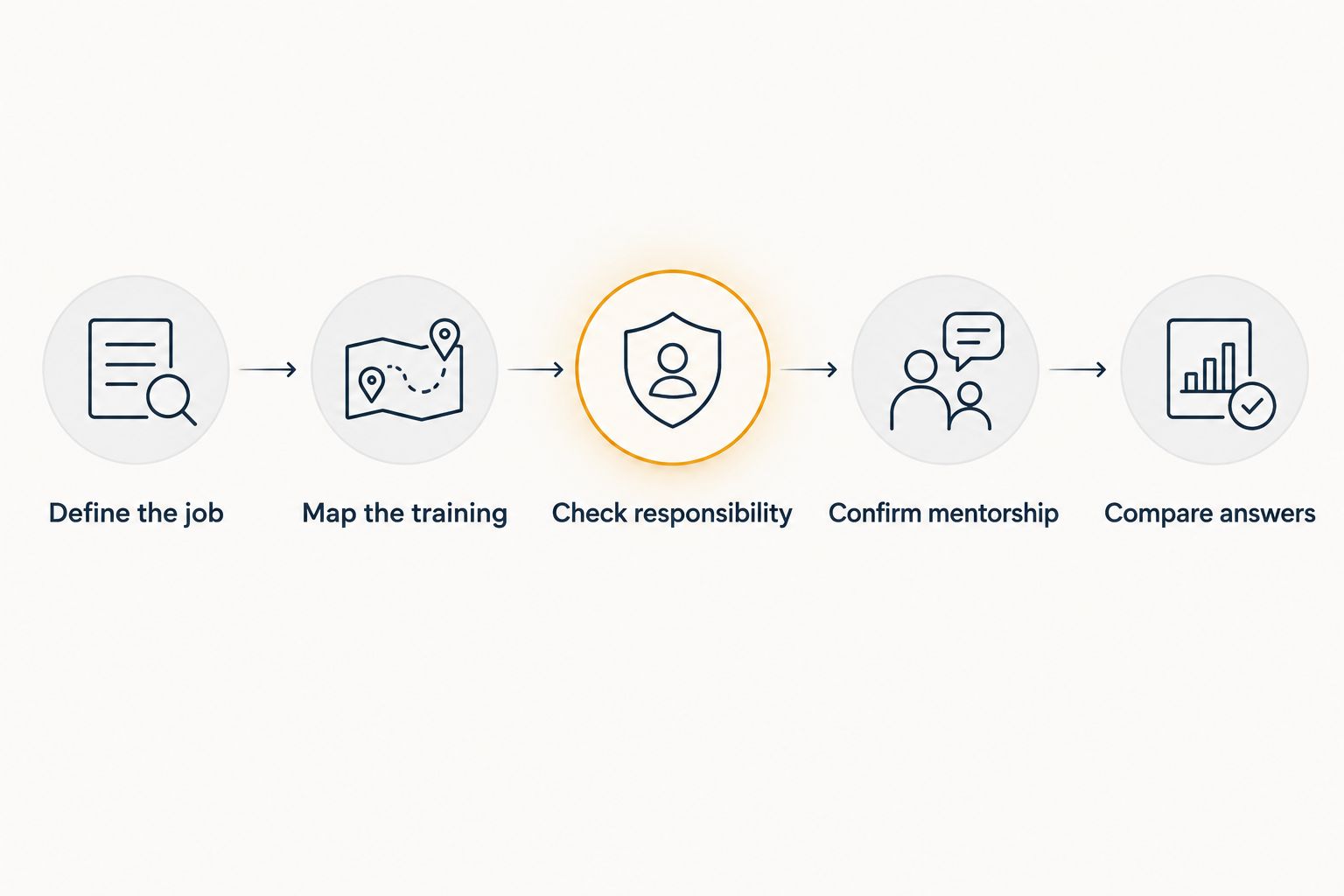
- Define the job. Write down your intended practice setting and the pediatric work you want to perform independently.
- Map the training. Request the rotation schedule and identify where each required skill is taught.
- Check responsibility. Ask who performs examinations, communicates findings, and reviews difficult decisions.
- Confirm mentorship. Identify the faculty member responsible for your focused clinical, teaching, or research goal.
- Compare answers. Record program-office answers alongside current-fellow descriptions and resolve discrepancies.
Prepare a one-page interview sheet with space for concrete examples. Instead of asking whether teaching is strong, ask how an attending corrected a fellow’s recent difficult interpretation. Instead of asking whether research is supported, ask how a fellow completed a project within the clinical schedule.
For career planning, RadBoard is best for radiologists comparing attending opportunities across multiple job sources. RadBoard’s radiology job search platform helps you examine the work you are training toward; it does not replace fellowship-program verification. Its limitation here is straightforward: job discovery and fellowship selection are different tasks.
Which pediatric radiology fellowship should you choose?
Start with Boston Children’s if you are undecided, then let documented training fit change the order. Choose CHOP for a defined academic pediatrics objective, Cincinnati Children’s for a children’s-hospital-centered search, Texas Children’s for Houston, or Seattle Children’s for the Pacific Northwest.
Your final 2026 order should follow the work you want to perform, the supervision you need, and the mentorship you can identify. A program moves up when its answers become concrete—not when its name becomes more familiar.
FAQ
What are the best pediatric radiology fellowship programs in 2026?
Boston Children’s, CHOP, Cincinnati Children’s, Texas Children’s, and Seattle Children’s form this editorial shortlist. The best individual choice depends on clinical responsibilities, mentorship, and your intended practice setting; this is not an official national ranking.
Is Boston Children’s better than CHOP for pediatric radiology fellowship?
Neither program is universally better for every applicant. Boston Children’s is this guide’s broad academic starting point, while CHOP is a focused option for applicants with a defined academic pediatrics goal and matching mentor.
How long is a pediatric radiology fellowship?
The standard ACGME-accredited pediatric radiology fellowship is 12 months. Ask the program whether any additional research or focused training is a separate appointment, and check the applicable certification requirements.
What should I ask current pediatric radiology fellows?
Ask current fellows to describe their actual responsibilities, supervision, feedback, and progression toward independent practice. Request recent examples rather than general assessments of the program.
Does a famous children’s hospital guarantee better fellowship training?
No, hospital reputation does not establish the quality of an individual fellow’s experience. Compare the rotation schedule, hands-on participation, attending support, and access to mentorship.
Do I need a separate fellowship for pediatric neuroradiology?
A pediatric radiology fellowship and a neuroradiology fellowship are distinct training pathways. Match your training plan to the work you intend to perform and verify the relevant ABR certification requirements directly.
Can RadBoard help me choose a pediatric radiology fellowship?
RadBoard supports career planning by helping you examine radiology job opportunities. Use official program materials, accreditation information, and conversations with fellows to evaluate fellowship training itself.
One last thing
Ask every program: Which clinical responsibility will I handle independently at graduation that I cannot handle confidently today? Then ask how the curriculum gets you there. The answer connects fellowship selection to the first attending job more directly than a hospital ranking does.