Protocoling-only radiologist jobs are rare, and most job boards never use the word "protocoling" in the title. Best overall: utilization review and precertification radiologist roles come closest to a true protocoling-only job. Best for remote flexibility: teleradiology protocoling-heavy shifts. Best for leaving clinical shifts entirely: non-clinical roles at AI and imaging tech companies.
- Utilization review and precertification roles are the closest match to protocoling only radiologist jobs in 2026.
- Teleradiology protocoling shifts exist but are rarer than full-read teleradiology contracts.
- Non-clinical AI company roles let radiologists build protocol logic instead of reading full studies.
- RadBoard aggregates 5,000+ radiology postings from 20 sources to help you spot these carve-out roles.
- Most employers don't label this work "protocoling-only" - search under utilization review, triage, or precertification instead.
Why this matters
Protocoling - reviewing an imaging order, choosing contrast versus non-contrast, and setting the acquisition sequence before a study happens - is real radiologist work, but almost no employer carves it out as a standalone job. It's usually bundled into a general reading shift, which means the physician who wants a genuine protocoling-only role has to know which settings separate that task from full diagnostic volume.
Six settings in 2026 come closest. Some, like utilization review, isolate protocoling almost completely. Others bundle it with a smaller amount of reading or informatics work. RadBoard's radiology job search pulls postings from 20 sources into one place, which matters here because these roles rarely show up with "protocoling" in the job title - you have to know the adjacent terms to find them.
What makes the best protocoling-only radiology job
- Volume separation - protocoling work is contractually distinct from a diagnostic reading list, not folded into a blended RVU count
- Schedule predictability - defined hours or shifts instead of open-ended on-call coverage
- Compensation clarity - hourly, salaried, or per-decision pay stated up front, not buried in a productivity formula
- Licensing fit - the role's state licensing and payer credentialing requirements match what you already hold
- Remote/onsite flexibility - whether the work can be done from a home reading room or requires onsite presence
- Career trajectory - whether the role is a bridge (semi-retirement, career break) or a standalone track
Protocoling-only radiology jobs at a glance
| Role type | Best for | Standout feature | Key limitation |
|---|---|---|---|
| Utilization review / precertification | Zero-reading protocol decision work | No image reading, no on-call | Pay is usually hourly or salaried, not RVU-driven |
| Teleradiology protocoling shifts | Remote flexibility with light reading | Home-based, flexible hours | Protocoling-only teleradiology postings are uncommon |
| Non-clinical AI/imaging tech roles | Leaving clinical shifts for product work | Builds protocol logic into software | Fewer openings, harder to reverse into clinical work |
| Quality assurance / peer review | Oversight-focused protocol audits | Directly values protocoling expertise | Rarely advertised as a standalone full-time role |
| Part-time / semi-retired protocoling shifts | Gradual step-down from full volume | Negotiable hours, keeps license active | Not a formally advertised job category |
| Academic informatics / PACS-integration | Protocol-logic system design | Ties to an academic promotion track | Usually paired with teaching duties |
1. Utilization review and precertification radiologist jobs: best for zero-reading protocol work
Insurers, third-party utilization management firms, and hospital UM departments employ radiologists to review imaging orders and approve, deny, or adjust the requested protocol before a study is ever scheduled. In many of these roles, the physician never reads the resulting images at all.
Utilization review radiologist jobs pros:
- Predictable weekday schedule with no case backlog
- No on-call coverage
- Fits well with part-time or fully remote arrangements
Utilization review radiologist jobs cons:
- Pay is typically hourly or salaried rather than RVU-driven, so upside is capped
- Work can feel disconnected from direct patient care
- Credentialing and licensing requirements vary by payer
Best for: physicians who want zero image-reading volume and pure decision-making work.
Verdict: apply if a protocoling-only search is the actual goal - utilization review radiologist jobs are the closest structural match available in 2026.
2. Teleradiology protocoling shifts: best for remote flexibility with light reading
Some teleradiology groups split coverage into a protocoling queue - reviewing STAT and inpatient orders overnight - separate from the general diagnostic reading queue. Physicians can pick up dedicated protocoling shifts inside a larger teleradiology contract.
Teleradiology protocoling shifts pros:
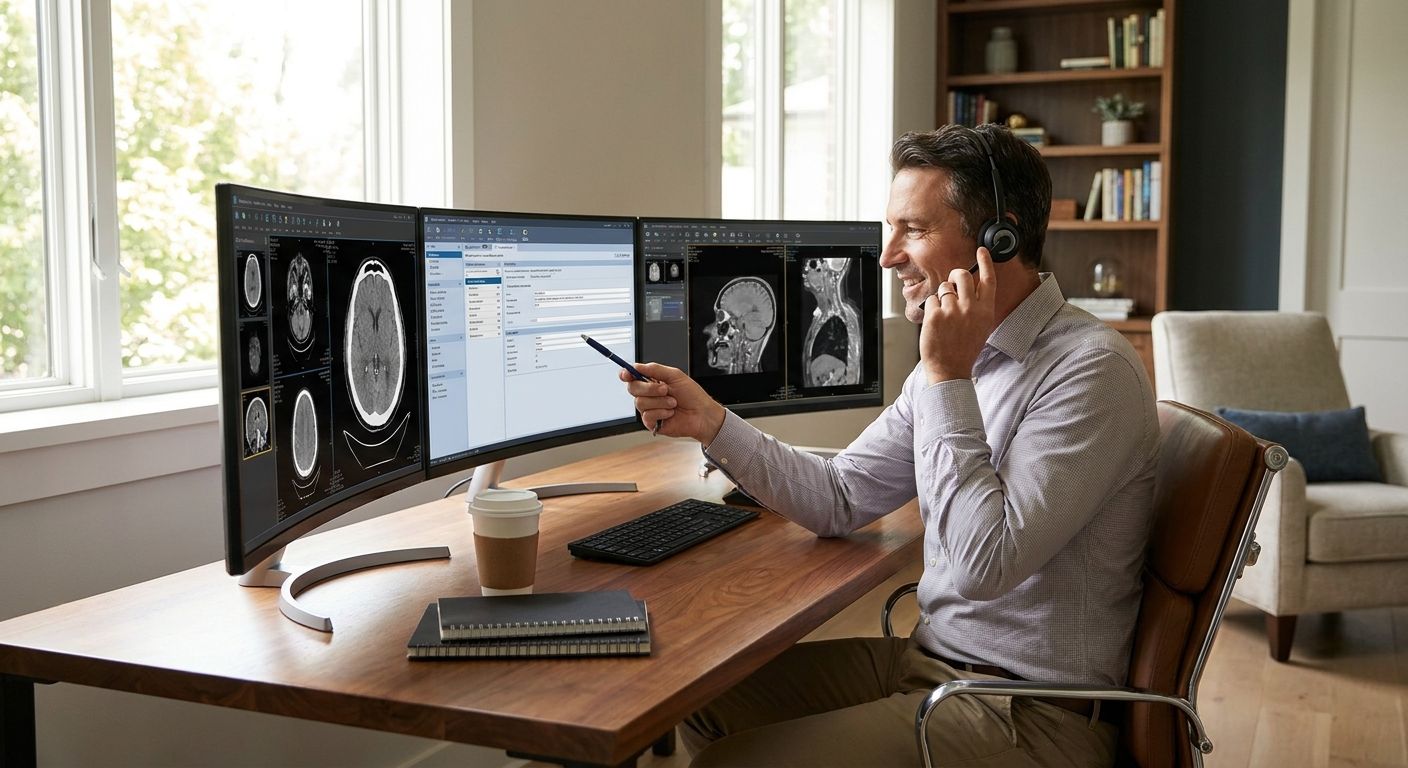
- Fully remote, done from a home reading room
- Flexible early-morning or overnight scheduling
- Easier to combine with another clinical job
Teleradiology protocoling shifts cons:
- Protocoling-only teleradiology postings are uncommon; most contracts bundle protocoling into read volume
- Per-decision pay tends to run lower than per-read pay
Best for: remote-focused physicians who want light protocoling work layered onto a flexible schedule.
Verdict: consider if you already want teleradiology jobs with remote flexibility and can negotiate a protocoling-heavy shift within that contract.
3. Non-clinical radiology jobs at AI and imaging tech companies: best for leaving the reading list behind
AI and imaging-software companies hire radiologists to build protocol logic, label training data, and validate automated protocoling tools rather than staff clinical shifts. This is protocoling expertise turned into product work instead of frontline coverage.
Non-clinical AI company roles pros:
- No call, no clinical productivity quotas
- Protocoling expertise translates directly into product decisions
- Often fully remote
Non-clinical AI company roles cons:
- A full exit from clinical reading can be hard to reverse later
- Far fewer openings than clinical postings
- Compensation structure looks nothing like a clinical RVU model
Best for: physicians who want to stop practicing bedside protocoling and start building it into software.
Verdict: niche fit - pursue non-clinical radiology jobs at AI companies only if leaving direct patient reading entirely is genuinely the goal, not a temporary break.
4. Quality assurance and peer review radiologist jobs: best for oversight-focused protocol audits
QA and peer-review positions audit protocol selection and read accuracy across a health system or accreditation body, rather than doing frontline protocoling on incoming orders.
QA/peer review roles pros:
- Schedule-friendly, often part-time
- Directly rewards protocoling judgment and pattern recognition
QA/peer review roles cons:
- Standalone full-time QA-only postings are rare
- Most of these roles are layered on top of an existing clinical position, not a replacement for one
Best for: physicians who want oversight-focused protocol review instead of frontline volume.
Verdict: add-on only - treat quality assurance and peer-review radiologist work as a supplement to a clinical role in 2026, not a standalone search target.
5. Part-time and semi-retired protocoling shifts: best for stepping down gradually
Some practices let physicians winding down their full clinical schedule take on protocoling-and-triage-only shifts for part of the week, handing full reads to other radiologists on the team.
Part-time protocoling shifts pros:
- A gradual step-down from full clinical volume
- Keeps a license and clinical skills active
- Hours are often negotiable
Part-time protocoling shifts cons:
- Entirely dependent on a practice being willing to carve this work out
- Not a formally advertised job category
Best for: physicians nearing retirement who want to stay engaged without carrying full read volume.
Verdict: good bridge role - worth raising directly with an existing group before assuming it exists as a posted opening.
6. Academic informatics and PACS-integration jobs: best for protocol-logic system design
Academic and informatics-focused positions where physicians configure protocoling rules inside PACS and order-entry systems, and train residents on protocol decisions, instead of covering a full clinical reading list.
Academic informatics roles pros:
- Intellectually distinct work tied to system design
- Often carries an academic promotion track
Academic informatics roles cons:
- Usually paired with teaching or informatics leadership duties, not a pure protocoling role
- Fewer openings than general academic postings
Best for: physicians who like protocol logic and want an informatics angle on it.
Verdict: pursue only if the academic and informatics side genuinely interests you - the protocoling piece alone won't fill a full-time role.
How this ranking works
Each setting above is ranked by how cleanly it separates protocoling from full diagnostic reading, based on how these positions are typically structured across radiology employers in 2026. Utilization review ranks first because the separation is structural - the job simply doesn't include a reading list. Everything below it is a hybrid or an add-on, which is a more honest description of how most "protocoling-only" searches actually resolve.
“If a job posting doesn't separate protocoling pay from read volume, assume it's bundled into your total RVU count, not a standalone role.”
Find protocoling-focused radiology roles
Search 5,000+ listings from 20 sources with AI-powered filters and swipe to save.
Which protocoling-focused role should you pursue?
For most radiologists searching for protocoling only radiologist jobs in 2026, utilization review and precertification roles are the closest thing to a real answer. They isolate the work contractually, skip on-call, and don't require you to also carry a reading list.
If full detachment from clinical reading doesn't appeal yet, a teleradiology protocoling shift or a part-time step-down arrangement gets you most of the way there while keeping a foot in diagnostic work. If the goal is to leave frontline protocoling altogether, a non-clinical role at an AI or imaging tech company is the more honest fit than trying to find a clinical job that doesn't exist.
FAQ
What is a protocoling-only radiology job?
A protocoling-only radiology job is a position where a physician reviews imaging orders and sets acquisition parameters - contrast, sequence, timing - without carrying a full diagnostic reading list. True examples are rare and concentrated in utilization review, precertification, and some non-clinical AI company roles in 2026.
Are protocoling only radiologist jobs common in 2026?
No. Most employers bundle protocoling into general reading shifts rather than posting it as a standalone job, so protocoling-heavy roles show up under titles like utilization review, precertification, or triage instead.
Do utilization review radiologist jobs pay less than diagnostic reading jobs?
Utilization review pay is typically structured as hourly or salaried rather than RVU-based, which caps upside compared to high-volume diagnostic reading but trades that for a predictable, on-call-free schedule.
Can teleradiology jobs be protocoling-only?
Some teleradiology groups run a separate protocoling queue for STAT and inpatient orders, but a fully protocoling-only teleradiology contract is uncommon - most bundle protocoling into overall read volume.
What credentials do I need for a utilization review radiologist role?
Requirements vary by payer and state, but generally include an active medical license in the relevant state and, for many insurers, specific credentialing or peer-review experience alongside board certification.
Are quality assurance radiologist jobs protocoling-only?
Rarely as a standalone full-time role. Quality assurance and peer-review positions usually sit on top of an existing clinical job rather than replacing the reading list entirely.
How do I find protocoling-only radiology jobs?
Search under adjacent terms - utilization review, precertification, triage, or non-clinical informatics - since employers rarely label postings "protocoling-only" even when the role fits that description.
Is protocoling-only work good for semi-retired radiologists?
Yes, when a practice is willing to carve it out. Part-time protocoling shifts let a physician step down from full clinical volume while keeping a license active, though these arrangements are usually negotiated directly rather than posted as open jobs.
One last thing
Most job postings never use the word "protocoling" - search under utilization review, triage, or precertification instead, since employers rarely carve out and label this work as its own category. A search built only around the literal phrase "protocoling only radiologist jobs" will miss the roles that actually match it.