A neuroradiologist career is a medical career focused on imaging the brain, spine, and head and neck to guide diagnosis and patient care. This 2026 guide explains how to choose a practice setting, verify clinical responsibilities, and compare offers without confusing a subspecialty job title with a subspecialty-only workload.
- Build your neuroradiologist career around verified case mix, call responsibilities, and clinical support—not the job title alone.
- RadBoard suits radiologists seeking aggregated radiology jobs; employer interviews remain essential for verifying neuroradiology responsibilities.
- Compare academic, private-practice, hospital-employed, remote, and temporary roles against the same written criteria.
- Separate diagnostic neuroradiology from neurointerventional work before evaluating training requirements or applying.
Why career planning matters for neuroradiologists
A neuroradiology position can combine brain MRI, spine imaging, head and neck studies, emergency CT, procedures, and general radiology coverage. Your actual career depends on how the employer distributes that work—not simply whether the advertisement says neuroradiologist.
Start with the distinction between fellowship requirements and daily responsibilities. The guide to neuroradiology jobs for fellowship-trained radiologists provides a focused starting point; your interviews must establish what the advertised role actually covers.
RadBoard aggregates 5,000+ radiology positions from 20 sources. Those figures describe the platform's overall radiology coverage, not the number of neuroradiology openings or evidence of subspecialty demand.
Treat every posting as a lead to investigate, not a complete job description. For your 2026 search, separate what the employer states, what you have verified, and what remains unanswered. That distinction keeps attractive wording from becoming an unsupported assumption about your next job.
How to build your neuroradiologist career
Define your clinical scope before choosing a setting
Write your preferred clinical scope before searching employers. Specify whether you want predominantly diagnostic neuroradiology, a mixed diagnostic practice, or a procedural career requiring separate training and privileges.
Diagnostic neuroradiology and neurointerventional practice are not interchangeable. Reading stroke imaging does not establish eligibility to perform thrombectomy, and interpreting spine studies does not establish privileges for spine procedures.
If you are still planning training, distinguish medical school, diagnostic radiology residency, neuroradiology fellowship, and any additional procedural pathway. Confirm current program and certification requirements directly with the relevant training program and certifying organization rather than treating a recruitment advertisement as an eligibility guide.
Use your preferences to define a realistic target:
- Name the brain, spine, and head and neck work you want to retain.
- Separate required procedures from procedures you prefer not to perform.
- Document your training, certification status, and current privileges.
- Write 3 nonnegotiable priorities before reviewing offers.
Select the work environment that supports your goals
Compare practice environments manually using employer descriptions, conversations with working radiologists, and your own notes. A spreadsheet is enough; the important part is applying identical questions to every role.
Academic work suits a goal that includes teaching or research, but you still need a defined allocation of time. Private practice suits physicians seeking a group-based clinical career, but ownership opportunities require written terms. Hospital employment, remote work, and temporary coverage deserve the same scrutiny.
Do not equate location with schedule. An onsite job does not define its call burden, and a remote job does not establish control over working hours.
Build your initial comparison around these questions:
- Identify whether teaching, research, ownership, or clinical reading is your priority.
- Choose acceptable onsite, hybrid, and remote arrangements.
- Specify your limits for nights, weekends, and cross-specialty coverage.
- Separate permanent employment from temporary or supplemental work.
Build a shortlist and verify each listing
Search employer career pages and keep a manual list of positions that match your scope. Record the source, employer, location, clinical responsibilities, and unanswered questions so repeated advertisements do not become separate opportunities in your comparison.
For a consolidated starting point, RadBoard brings together 5,000+ radiology positions from 20 sources and offers search and swipe-to-save features. RadBoard is best for radiologists who want to search aggregated radiology positions and save potential matches.
Aggregation helps with discovery; it does not replace employer confirmation. The platform's overall position count does not establish a neuroradiology-specific total, and a saved listing is not a verified fit.
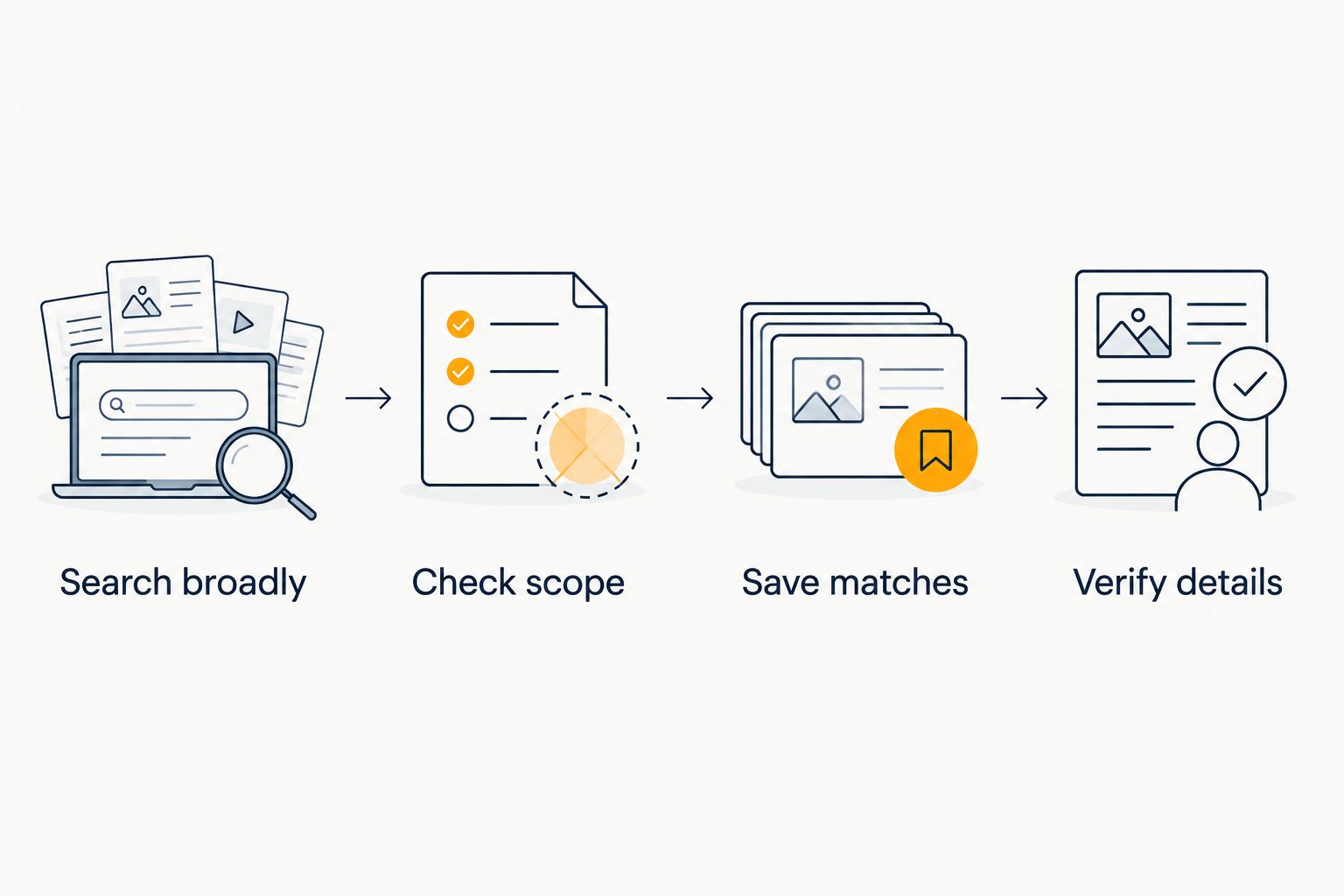
Use this sequence for your 2026 shortlist:
- Search broadly: Include neuroradiologist, neuroradiology, and diagnostic neuroradiology wording.
- Check scope: Separate dedicated neuro work from general radiology coverage.
- Save matches: Keep roles that satisfy your stated nonnegotiables.
- Verify details: Confirm responsibilities and recruitment status with the employer.
The shortlist should become smaller as evidence improves. Keep unanswered questions visible instead of treating missing information as a favorable answer.
Audit the case mix and coverage obligations
Ask for a representative workweek and a description of the actual reading assignment. Begin with ordinary clinical days, then ask how the assignment changes during call, vacations, staffing gaps, and overnight coverage.
Request the proportion of neuro versus non-neuro studies, the balance of CT and MRI, and the distribution of brain, spine, and head and neck work. Ask how the group measures workload; a study count alone does not describe complexity, consultations, protocoling, or trainee supervision.
A subspecialty title is useful only when the assignment supports it. Require a clear explanation of who reads the general work when the neuroradiology queue is quiet—or when the broader service is overloaded.
Close the discussion with concrete evidence requests:
- Request a representative schedule with clinical and nonclinical duties identified.
- Ask how neuro and general studies are assigned during each shift.
- Identify who handles urgent consultations, protocols, and critical-result communication.
- Confirm expectations for lumbar puncture, myelography, or other procedures.
- Speak with a neuroradiologist who currently performs the advertised work.
Evaluate compensation against the full assignment
Request the written compensation structure before comparing offers. Separate guaranteed compensation, productivity-based compensation, call payments, benefits, leave, and any ownership terms rather than treating a headline figure as the entire package.
For productivity-based work, ask how the employer defines credit and handles teaching, conferences, protocoling, quality work, and consultations. Clarify whether the formula changes after an introductory period or when staffing changes.
Use the same workload assumptions when comparing your 2026 offers. A role with additional overnight coverage or fewer nonclinical sessions is a different assignment, even when the job titles match.
Keep the comparison grounded in written terms:
- Obtain the compensation formula and the conditions that change it.
- Request the full call, weekend, and holiday assignment.
- Ask how benefits and leave apply to your proposed employment status.
- Identify partnership eligibility, decision authority, and ownership documentation.
- Have a qualified adviser review contractual and financial obligations.
Test the clinical support behind the position
Interview the people who will share your daily workflow, not only the recruiter or section leader. Ask how neuroradiologists communicate with neurologists, neurosurgeons, emergency clinicians, technologists, and referring teams.
For remote work, examine image access, prior examinations, dictation, technical support, and critical-result communication. For onsite work, examine consultation interruptions, procedure coverage, trainee supervision, and access to colleagues when a difficult case needs discussion.
Ask for examples of how the practice handles a disrupted shift. The answer should identify responsibilities and escalation routes rather than simply describe the workplace as supportive.
Test these operational details before accepting:
- Confirm how prior studies and outside imaging reach the reading workstation.
- Identify the escalation process for urgent findings and technical outages.
- Ask who supports complex cases when your usual colleague is unavailable.
- Clarify conference attendance, teaching duties, and administrative assignments.
- Request a walkthrough of the workflow you would actually use.
Confirm the transition before signing
Build your transition plan manually with the employer's credentialing contact and your current obligations in view. Separate your intended start date from the date the employer expects you to be cleared for the assigned work.
Confirm which licenses, privileges, references, training records, and certification documents the employer requires. If your position includes procedures or multiple facilities, ask for the requirements for each assignment rather than assuming approval transfers automatically.
Your 2026 career decision should include the exit as well as the entry. Have qualified counsel explain termination provisions, restrictive terms, malpractice arrangements, and any obligations that survive departure.
Finish with a documented transition checklist:
- Obtain a written list of required credentials and responsible contacts.
- Confirm how an incomplete credentialing process affects the planned start.
- Check notice requirements and unresolved obligations to your current employer.
- Review malpractice coverage during employment and after departure.
- Put negotiated clinical scope and schedule commitments into the agreement.
Compare neuroradiologist career options
Choose the option that fits your intended work, then verify the employer-specific details. These are practice models, not guarantees of schedule, compensation, academic time, or ownership.
| Career option | Best for | Main advantage | Key limitation to investigate |
|---|---|---|---|
| Academic neuroradiology | Physicians prioritizing teaching, research, and specialty collaboration | A role can combine clinical work with an academic appointment | Protected time and promotion expectations need explicit definition |
| Private-practice neuroradiology | Physicians seeking a group-based clinical career or an ownership path | Offers a setting for sustained clinical practice and potential ownership discussions | Partnership is not established by the job title; general coverage requires clarification |
| Hospital-employed neuroradiology | Physicians who want employment within a hospital organization | Places employment and hospital clinical duties within the same organization | Schedule authority, coverage obligations, and outside-work restrictions require review |
| Remote neuroradiology | Physicians whose preferred diagnostic duties can be performed remotely | Separates the reading location from the imaging facility | Remote does not mean self-scheduled, neuro-only, or free of call |
| Locum tenens neuroradiology | Physicians seeking defined temporary assignments | Allows evaluation of a time-bounded clinical assignment | Each assignment needs its own scope, credentialing, and coverage review |
| Neurointerventional practice | Appropriately trained physicians pursuing endovascular procedural work | Centers the career on procedural neurovascular care | Requires a distinct training and privileges assessment, not diagnostic credentials alone |
Choose the assignment before the employment label. A private-practice offer with protected neuro reading and a hospital-employed offer with broad general coverage are not equivalent simply because both recruit neuroradiologists.
Common mistakes neuroradiologists make
Accepting neuro-focused as a workload definition
Neuro-focused does not specify how much general radiology you will read. Ask for the routine assignment, the call assignment, and the rules for redistributing work when staffing changes.
Confusing stroke interpretation with procedural practice
Stroke imaging responsibilities do not establish a neurointerventional role. Verify the diagnostic, consultation, procedural, and on-call responsibilities separately, including the credentials required for each.
Ignoring work outside the reading queue
Tumor boards, protocoling, trainee supervision, multidisciplinary consultations, and quality responsibilities belong in your workload assessment. Ask where that work appears in the schedule and how it is recognized.
Negotiating a schedule without defining coverage
A daytime schedule is incomplete without start and finish expectations, weekend duties, holiday allocation, and backup responsibilities. Record the full coverage arrangement instead of relying on a description such as flexible.
FAQ
What's the best neuroradiologist career path for me?
The best path matches your preferred clinical scope, schedule, and professional goals. Compare academic, private-practice, hospital-employed, remote, and temporary assignments using the same written criteria rather than choosing by title alone.
What training should I check before applying for neuroradiology jobs?
Check each employer's requirements for radiology training, neuroradiology fellowship, certification status, licensure, and privileges. Confirm current eligibility rules with the relevant training program, certifying organization, and employer rather than assuming every position uses identical criteria.
Can a neuroradiologist work remotely?
A neuroradiologist can perform diagnostic interpretation remotely when the position, credentials, and clinical systems support that arrangement. Confirm the actual schedule, case mix, communication duties, and any onsite responsibilities before accepting.
Is diagnostic neuroradiology the same as neurointerventional radiology?
Diagnostic neuroradiology and neurointerventional practice are different clinical scopes. Diagnostic imaging experience does not by itself establish the training or privileges required for endovascular procedures.
How should I compare neuroradiology compensation offers?
Compare the written compensation structure alongside clinical hours, call, case mix, benefits, leave, and ownership terms. For productivity-based offers, ask how consultations, teaching, protocoling, and other non-reading duties are treated.
Where should I start searching for neuroradiology positions?
Use employer career pages and an aggregated radiology search such as RadBoard to build an initial shortlist. Then confirm neuroradiology responsibilities, recruitment status, and eligibility directly with each employer.
What should I ask during a neuroradiology job interview?
Ask for a representative schedule, neuro versus general case allocation, call duties, procedure expectations, and clinical support arrangements. Request a conversation with a neuroradiologist doing the advertised work and document unresolved questions before signing.
One last thing
Ask the employer to describe the last difficult shift—not the ideal shift. Find out who covered unexpected absences, who handled urgent consultations, and what happened to unfinished work; those answers make the proposed responsibilities concrete.
Before signing, reconcile that account with your written schedule and clinical scope. If the descriptions differ, resolve the difference in the agreement rather than carrying it into your first week.