
Reserve radiologist career planning is the process of matching military medical service with civilian radiology work to sustain both careers. Military reserve radiologist careers require you to evaluate the actual assignment, training obligations, mobilization exposure, and civilian coverage plan—not just the recruiting description.
- Military reserve radiologist careers require a verified assignment and a civilian practice prepared for military absences.
- RadBoard is best for comparing civilian radiology positions alongside a reserve career, not confirming military eligibility.
- Compare Army Reserve, Navy Reserve, Air Force Reserve, and Air National Guard pathways with medical officer recruiters.
- Get assignment duties, service obligations, training expectations, and employer leave procedures in writing before committing.
Why career planning matters for reserve radiologists
A civilian radiology schedule and a military assignment create separate obligations. Your civilian practice needs reading coverage, procedural continuity, and call coverage; your military organization sets its own training and readiness requirements. A workable career plan must address both.
For your 2026 search, distinguish reserve service from active-duty employment and civilian employment at military facilities. These are different career arrangements, not interchangeable versions of the same job. The broader guide to military radiology jobs for physicians who want to serve provides context for that distinction.
Choose the assignment first, then test whether your civilian job can support it. A familiar branch name or convenient unit location does not establish what you will do, where you will train, or how absences will affect your practice.
How to plan a military reserve radiology career
Define the military role you want
Start with a written description of your goals before contacting a recruiter. Separate your interest in military service from your preferred clinical work: you need to understand whether the proposed role involves radiology practice, broader medical responsibilities, leadership, or readiness activities.
Next, identify the organizations you want to investigate. Army Reserve, Navy Reserve, Air Force Reserve, and Air National Guard medical pathways merit separate conversations; a discussion with one recruiter does not establish another organization's requirements or assignment options.
Ask specifically for medical officer recruiting support. A general recruiting conversation is not a substitute for an explanation of physician accession and the proposed billet—the authorized position to which you would be assigned.
- State your objective: Clinical service, leadership development, or another defined military goal.
- Describe your scope: Diagnostic radiology, interventional radiology, and current subspecialty practice.
- Identify your constraints: Travel, family responsibilities, civilian call, and procedural coverage.
- Request a billet description: Duties, reporting organization, duty location, and qualification requirements.
Verify eligibility before building a timeline
Use an official medical officer recruiter to establish which accession pathway applies to you. Physician eligibility is not determined by civilian board certification alone; military medical qualification, professional credentials, citizenship requirements, age rules, and accession policies require separate review.
For 2026 applications, ask for current requirements rather than relying on an old discussion thread or another physician's experience. Prior military service, training status, and professional history can change which questions the recruiter needs to resolve.
Prepare your documents manually in a secure folder. Keep a simple status sheet showing what you submitted, who requested it, and which decisions remain unresolved; do not send sensitive records through an unverified channel.
- Prepare your CV: Include training, employment history, licenses, and certifications.
- Document clinical work: Summarize current modalities, procedures, and hospital privileges.
- Resolve eligibility questions: Ask the recruiter to distinguish requirements from waiver requests.
- Confirm the sequence: Identify reviews and approvals required before an appointment or assignment.
Find civilian work that supports service
Build a comparison sheet from employer career pages and direct conversations first. Record shift structure, call responsibilities, military leave procedures, productivity expectations, and the process for arranging coverage. A job described as flexible still needs an actual absence plan.
RadBoard aggregates 5,000+ radiology positions from 20 sources and includes natural-language search and swipe-to-save features. That supports the civilian search; it does not establish whether an employer's leave arrangements fit your military obligations.
RadBoard is best for reserve radiologists comparing civilian radiology positions across multiple sources. Its limitation is equally important: neither a saved listing nor a search result confirms military eligibility, an assignment, or an employer's handling of military leave.
Treat remote work, block scheduling, part-time employment, and locum assignments as options to investigate—not evidence that military service will fit automatically. Ask each prospective employer to explain how the arrangement works during an extended absence.
- Compare schedules: Record working blocks, call rotations, and notice requirements.
- Ask about coverage: Identify who handles diagnostic reads, procedures, and urgent consultations.
- Examine productivity terms: Request an explanation of targets during military leave.
- Save supporting documents: Keep the offer, leave policy, and relevant written clarifications together.
Map the full duty calendar
Request the unit's expected training calendar and ask what sits outside it. A recurring drill schedule does not describe every possible training course, readiness appointment, travel requirement, or mobilization obligation.
Build your 2026 planning calendar manually before accepting overlapping commitments. Mark civilian call, procedures, credentialing deadlines, family obligations, expected military duty, and travel. Then identify which conflicts require employer or unit action rather than assuming you can trade shifts later.
Ask the recruiter and unit representative to distinguish routine expectations from obligations that depend on orders or operational requirements. A typical schedule is a planning reference, not a guarantee against additional duty.
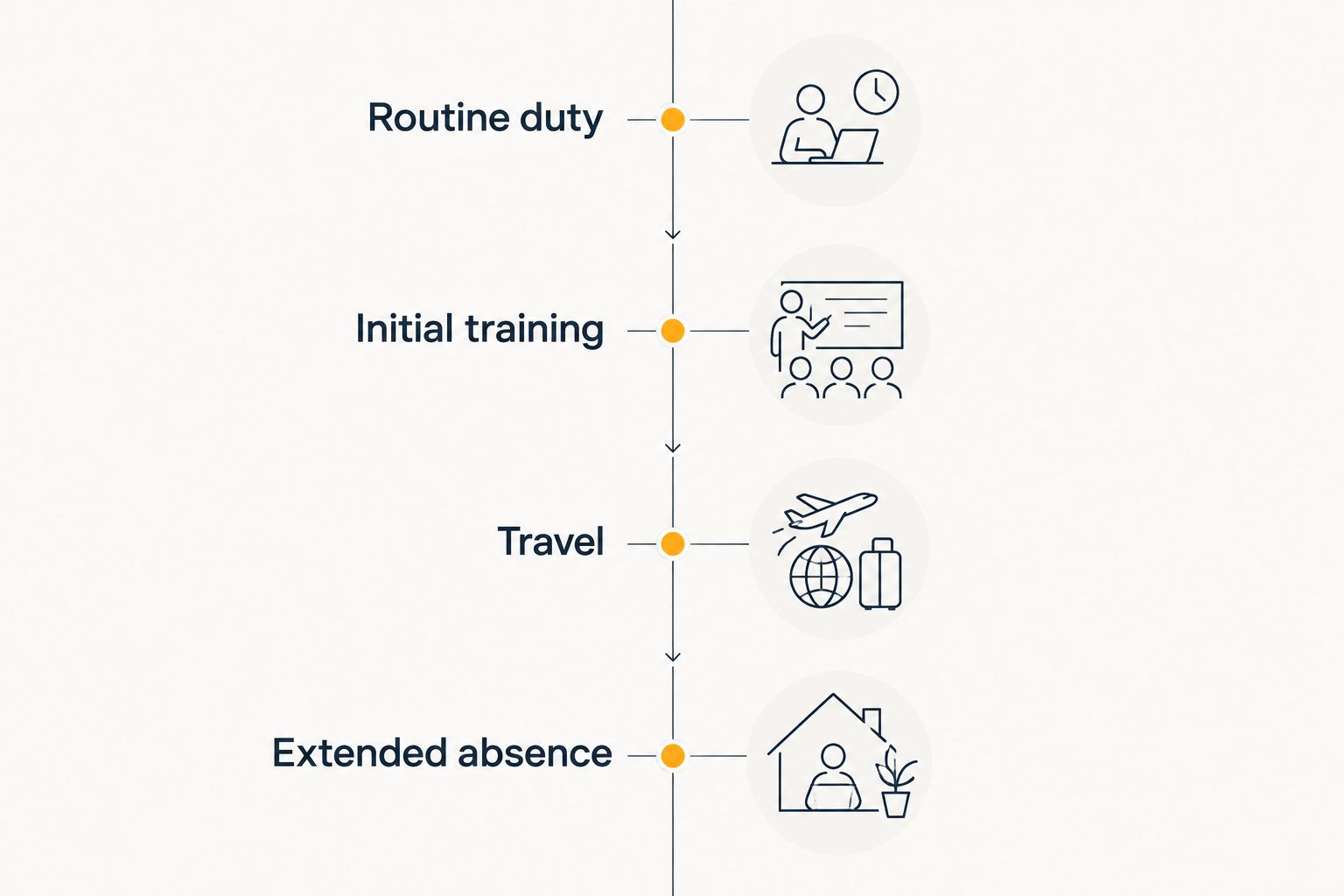
- List routine duty: Confirm reporting locations and expected attendance requirements.
- Separate initial training: Ask about required officer training and scheduling procedures.
- Account for travel: Include transit and recovery time around civilian clinical shifts.
- Test extended absence: Identify what would happen if military service interrupts your normal work pattern.
Review employment protection and clinical continuity
Read the civilian contract and military leave policy together. The Uniformed Services Employment and Reemployment Rights Act, or USERRA, provides employment and reemployment protections subject to statutory conditions; it does not replace a practical plan for your patients, privileges, and return to work.
Under USERRA, the general cumulative service limit for reemployment eligibility is 5 years with the same employer, with statutory exceptions. Source: 38 U.S.C. § 4312, federal reemployment eligibility framework applicable to this 2026 planning discussion. Notice, return-to-work timing, and other conditions also matter; ask an employment attorney or an official USERRA assistance provider about your circumstances.
Review employee status and independent-contractor status carefully. Do not assume that contractual flexibility creates employee reemployment protections, or that a military leave policy answers every question about partnership, incentive compensation, or hospital privileges.
- Check employment status: Establish which protections and contract provisions apply to your arrangement.
- Request a leave process: Identify the employer contact, documentation route, and scheduling procedure.
- Protect clinical continuity: Arrange procedural handoffs, pending-result responsibility, and coverage communication.
- Plan your return: Ask how privileges, system access, and clinical orientation will be handled.
Evaluate benefits against the actual obligation
Keep military obligations, civilian compensation, insurance, retirement, and education benefits on separate lines in your decision sheet. Combining them into a single attractive package makes it harder to see which benefits require additional eligibility or service commitments.
For 2026 decisions, request the current written terms of any benefit discussed during recruiting. Ask which document establishes eligibility, what service obligation attaches, and what happens if your training, assignment, or professional circumstances change. A general benefits description is not an individual eligibility determination.
Education planning needs its own verification. Yellow Ribbon Program benefits depend on qualifying Post-9/11 GI Bill eligibility and school participation; joining a reserve component alone does not establish entitlement. If graduate education is part of your plan, confirm eligibility with VA and the school's certifying official before treating the program as part of your career decision.
- Separate benefit categories: Track insurance, retirement, education, and other stated benefits individually.
- Record eligibility conditions: Identify the authority responsible for confirming each benefit.
- Identify added obligations: Ask whether accepting a benefit changes your service commitment.
- Check household effects: Review dependent coverage and education plans using current official terms.
Compare reserve pathways and civilian search options
These options answer different questions. Military organizations determine accession and assignments; a civilian job-search platform helps you compare the employment side of a combined career. Do not use civilian listings as evidence of a military radiology billet.
| Option | Best for | Main advantage | Key limitation |
|---|---|---|---|
| Army Reserve medical pathway | Physicians evaluating Army reserve service | Direct discussion of Army medical accession and proposed assignments | Requires verification of the specific billet, duties, and obligations |
| Navy Reserve medical pathway | Physicians evaluating Navy reserve service | Direct discussion of Navy medical accession and proposed assignments | A general physician recruiting description does not establish radiology duties |
| Air Force Reserve medical pathway | Physicians evaluating Air Force reserve service | Direct discussion of Air Force reserve medical requirements | Location preference does not establish a suitable assignment |
| Air National Guard medical pathway | Physicians investigating a particular state's or unit's medical roles | Unit-focused discussion of duties and assignment requirements | A nearby unit does not establish a radiology role |
| RadBoard civilian radiology search | Reserve radiologists comparing civilian employment | Aggregates radiology listings across multiple sources | Does not confirm military eligibility or employer leave arrangements |
Use the table to choose whom to contact, not to rank branches by an assumed lifestyle. Ask comparable questions across organizations so you can distinguish a documented assignment from a general description of military medicine.
Common mistakes reserve radiologists make
Treating routine training as the maximum commitment
A recurring schedule is not the full obligation. Ask separately about initial training, readiness requirements, travel, and mobilization, then test your civilian coverage plan against an extended absence.
Assuming remote reading solves scheduling conflicts
Teleradiology changes where you work, not whether you owe a scheduled shift. Check clinical coverage, work-location rules, and any military restrictions before assuming you can keep reading during military duty.
Accepting a role without understanding clinical scope
A radiology-trained physician needs to understand the actual assigned duties. Ask whether the billet uses your subspecialty, requires broader responsibilities, or includes nonclinical work; do not infer scope from a specialty label alone.
Confusing recruiting statements with final terms
A conversation helps you identify questions. The governing appointment, assignment, benefit, and service documents establish the terms you need to understand before committing; keep unresolved points visible until the responsible authority answers them.
Leaving the civilian practice out of coverage planning
Your practice needs an operational plan even when employment protections apply. Identify the appropriate employer contact and discuss coverage procedures without treating patient handoffs, call swaps, or credentialing as someone else's undefined responsibility.
FAQ
Can I work as a civilian radiologist while serving in the reserves?
A civilian radiology career can coexist with reserve service, but the arrangement must accommodate military obligations. Verify the proposed assignment, civilian schedule, leave procedures, and coverage plan before committing.
Which reserve branch is best for a radiologist?
The best reserve pathway is the one with a verified assignment that fits your qualifications and service goals. Compare Army Reserve, Navy Reserve, Air Force Reserve, and Air National Guard medical pathways through their medical officer recruiting channels.
Will I work only in my radiology subspecialty?
A proposed reserve assignment does not establish subspecialty-only work unless its duties support that conclusion. Ask for the billet description and discuss clinical, leadership, readiness, and broader medical responsibilities.
Does a reserve radiologist have a guaranteed fixed schedule?
Do not treat a routine training calendar as a guarantee of a fixed schedule. Ask separately about initial training, additional requirements, travel, and mobilization obligations.
Does USERRA protect my civilian radiology job?
USERRA provides employment and reemployment protections when its statutory conditions are met. Your employment status, service history, notice, and return-to-work circumstances require individual review.
Does reserve service automatically qualify me for Yellow Ribbon benefits?
Reserve membership alone does not establish Yellow Ribbon eligibility. Confirm qualifying Post-9/11 GI Bill eligibility with VA and participation with the school's certifying official.
Can RadBoard confirm military radiologist eligibility?
RadBoard supports civilian radiology job discovery, not military eligibility determinations. Use an official medical officer recruiter to verify accession requirements and proposed military assignments.
One last thing
Ask both organizations to explain your return, not just your departure. For your 2026 decision, document who restores civilian scheduling, verifies privileges, reactivates reading access, and determines whether clinical reorientation is needed. A career plan is incomplete until you know how you resume practice after military service.