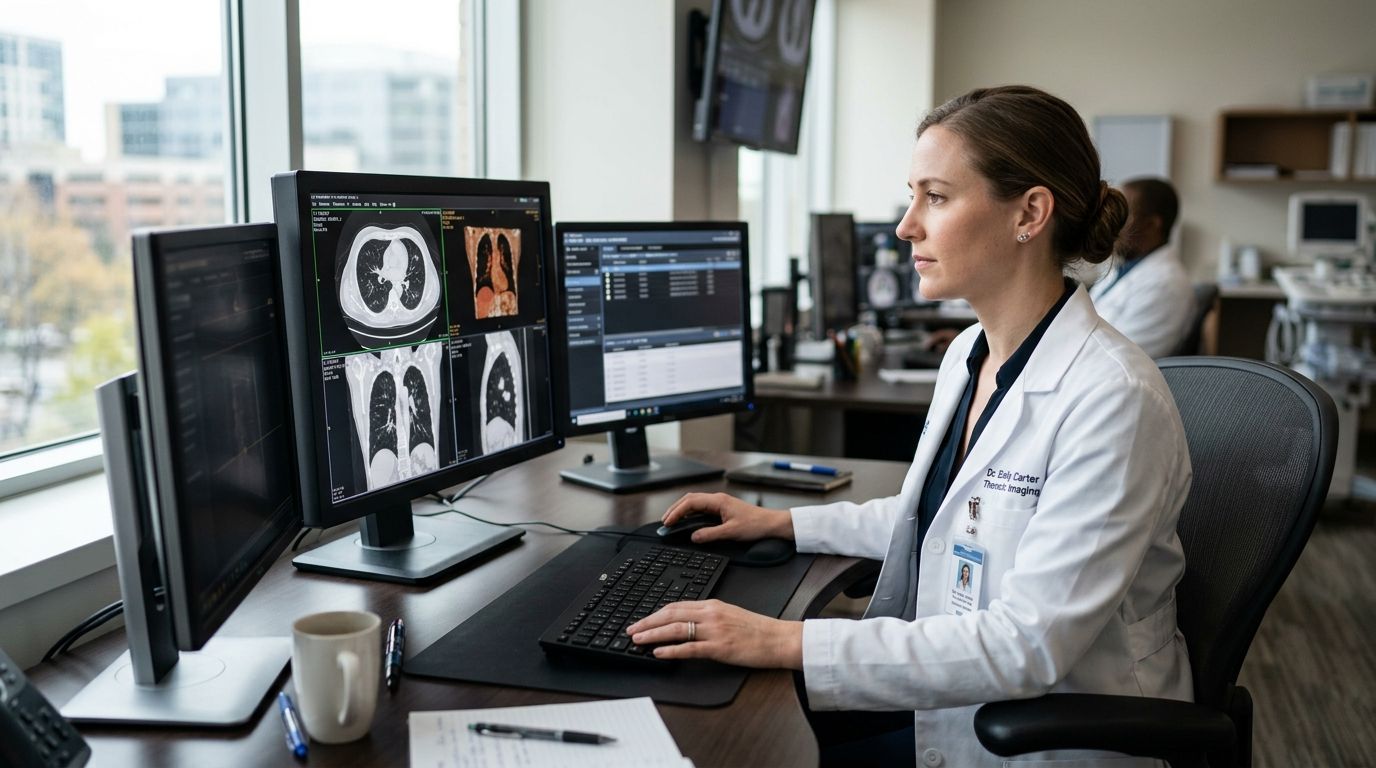
Chest radiologist jobs cover diagnostic reads of the lungs, mediastinum, pleura, and thoracic vasculature, with the goal of catching lung cancer, pulmonary embolism, and interstitial disease before they become emergencies. This segment differs from general diagnostic radiology because volume is dominated by CT chest protocols, lung cancer screening low-dose CT, and increasingly, structural heart and cardiac CT crossover work that pulls chest-trained radiologists into cardiothoracic imaging teams.
- Chest radiologist jobs in 2026 concentrate in hospital-employed cardiothoracic sections, academic centers, and teleradiology night coverage for STAT PE and trauma reads.
- Lung cancer screening volume keeps rising as more health systems adopt low-dose CT protocols, pushing demand for dedicated chest readers.
- RadBoard aggregates 5,000+ radiology positions from 20 sources, filterable by subspecialty including chest and cardiothoracic imaging.
- Fellowship-trained chest radiologists see stronger leverage in academic and quaternary hospital hiring than general diagnostic candidates.
Why chest radiologist jobs matter in 2026
Chest imaging sits at the intersection of two growth areas in radiology: oncologic screening and cardiac crossover. Low-dose CT lung cancer screening has expanded coverage criteria over the past several years, and hospitals running these programs need radiologists comfortable with Lung-RADS reporting at volume. At the same time, cardiac CT and structural heart programs increasingly recruit chest-trained radiologists who can read coronary calcium scoring and pre-TAVR CT alongside standard chest protocols.
This dual demand means chest radiologist jobs in 2026 span a wider range of settings than a decade ago: pure diagnostic chest sections, combined cardiothoracic groups, and teleradiology night coverage built around STAT pulmonary embolism and trauma chest reads. A radiologist searching this segment needs to know which setting matches their fellowship training and call tolerance before applying.
RadBoard's aggregation of 3,700+ active listings across subspecialties gives a working view of where chest and cardiothoracic openings cluster by region and practice type, without relying on a single job board's inventory.
Define your chest imaging scope before you search
Chest radiology job postings vary widely in what "chest" actually means day to day. Some roles are pure diagnostic chest CT and radiograph reads; others fold in cardiac CT, PET/CT for lung cancer staging, or interventional chest procedures like thoracentesis and biopsy.
- List every modality you're fellowship-trained or credentialed in: chest CT, cardiac CT, PET/CT, chest MRI
- Decide if you want procedural volume (biopsies, thoracentesis) or pure diagnostic reads
- Flag whether you're open to cardiac crossover work or want chest-only reads
- Note your comfort level with Lung-RADS and structured screening reporting
- Check whether you want academic tumor board involvement or community volume
Update your CV to lead with chest-specific volume
General radiology CVs bury chest experience under a long modality list. For chest radiologist jobs, put subspecialty volume and screening program experience near the top, not in a footnote.
- State your annual chest CT and screening CT volume if you track it
- Name any Lung-RADS or ACR Lung Cancer Screening Registry involvement
- List cardiac CT credentialing (CAQ, board certifications, or fellowship rotations)
- Include any tumor board or multidisciplinary lung nodule clinic participation
- Mention interventional chest procedure competency if applicable
Search job boards and hospital career pages directly
Before paying a recruiter or relying on a single source, work the free channels. Most academic medical centers and large hospital systems post chest and cardiothoracic openings directly on their career pages, and they update faster than some aggregators.
- Check academic medical center radiology department pages monthly
- Search state radiology society job boards for regional openings
- Set Google Alerts for "cardiothoracic radiologist" plus your target states
- Review ACR's career center for fellowship-tied postings
- Ask fellowship program directors about alumni openings they hear about first
Once you've exhausted the free search, a platform that pulls listings into one place saves the repetitive work. RadBoard aggregates radiology jobs from 20 sources into a single search, and its AI-powered filtering lets you narrow to chest and cardiothoracic subspecialty tags instead of scrolling generic diagnostic radiology postings. The radiology job platform also supports swipe-to-save for shortlisting openings you want to revisit before applying.
Evaluate call structure and read volume expectations
Chest sections vary enormously in call burden. A community hospital chest job might mean nightly PE and pneumothorax STAT reads; an academic chest section might mean daytime-only reads with fellows handling overnight triage.
- Ask for average daily chest CT volume per radiologist
- Confirm whether STAT PE and trauma chest reads fall on you or a general nighthawk service
- Check if screening CT volume is scheduled separately from diagnostic volume
- Clarify weekend and holiday chest coverage rotation
- Get the actual RVU target tied to chest-specific reads, not a blended diagnostic average
Weigh academic versus community versus teleradiology chest roles
Chest radiologist jobs split cleanly into three settings, and each rewards different priorities.
- Academic: lower volume per case, more complex referrals, teaching and tumor board time
- Community hospital: higher throughput, less complexity, tighter turnaround expectations
- Teleradiology: flexible scheduling, heavy STAT chest and PE volume overnight, less procedural work
If structural heart or cardiac CT crossover interests you, look specifically at cardiac CT radiologist jobs for structural heart programs, since these roles often sit inside cardiothoracic sections rather than standalone chest groups.
Negotiate screening program involvement and reporting tools
Lung cancer screening programs generate high volume with structured reporting requirements. Before accepting an offer, confirm what reporting software and nodule tracking tools the program uses, since this affects your daily workflow more than base compensation.
- Ask which structured reporting template the screening program uses
- Confirm nodule follow-up tracking is automated, not manually managed by radiologists
- Check if AI-assisted nodule detection tools are integrated into the workflow
- Verify who handles patient notification for screening results
Comparison: where chest radiologist jobs cluster in 2026
| Setting | Best for | Key limitation |
|---|---|---|
| Academic cardiothoracic section | Chest radiologists wanting teaching and complex referrals | Lower base RVU volume, slower promotion tracks |
| Community hospital chest/cardiothoracic group | Radiologists wanting high throughput and stable schedules | Heavier STAT chest and PE call burden |
| Cardiothoracic radiology jobs for chest and cardiac imaging | Radiologists wanting combined chest and cardiac CT volume | Requires cardiac CT credentialing on top of chest training |
| Locum tenens cardiothoracic radiology jobs | Radiologists wanting flexible short-term chest coverage | Less continuity with screening programs and tumor boards |
Chest radiologist jobs in 2026 favor candidates with documented screening CT and cardiac CT crossover volume, and community hospital groups pay for STAT PE call tolerance that academic centers don't require.
Search chest radiologist jobs now
Filter 5,000+ radiology jobs by subspecialty with AI-powered search.
Common mistakes chest radiologists make in their job search
- Applying to generic diagnostic radiology postings instead of screening for chest-specific volume, then discovering the role is 80% general body imaging
- Skipping questions about screening program reporting tools, then inheriting a manual nodule tracking system that eats into RVU-productive time
- Underestimating STAT PE and trauma chest call burden at community hospitals, especially in solo or two-person chest coverage models
- Not clarifying cardiac CT credentialing requirements before accepting a cardiothoracic role, then facing a gap between offer and actual scope of practice
- Ignoring lung cancer screening volume trends when evaluating long-term job stability, even though screening CT volume is one of the more predictable growth areas in diagnostic imaging through 2026
FAQ
What is a chest radiologist job in 2026?
A chest radiologist job focuses on diagnostic reads of the lungs, mediastinum, pleura, and thoracic vasculature, often including lung cancer screening CT and cardiac CT crossover work. Settings range from academic cardiothoracic sections to community hospital groups and teleradiology night coverage.
Do chest radiologist jobs require cardiac CT training?
Not always. Pure chest diagnostic roles don't require cardiac CT credentialing, but combined cardiothoracic sections increasingly expect coronary calcium scoring and structural heart CT competency alongside standard chest reads.
Is lung cancer screening volume growing for chest radiologists?
Yes. Expanded screening criteria over the past several years have increased low-dose CT volume at hospitals running dedicated lung cancer screening programs, creating steady demand for chest-trained readers through 2026.
What's the difference between academic and community chest radiology jobs?
Academic chest sections offer lower volume per case with more teaching and tumor board involvement, while community hospital groups run higher throughput with heavier STAT call burden for pulmonary embolism and trauma chest reads.
How do I find chest radiologist jobs without a recruiter?
Search academic medical center career pages directly, check state radiology society job boards, and use an aggregator like RadBoard that pulls listings from 20 sources into one searchable platform filtered by subspecialty.
Can teleradiology cover chest radiologist call?
Yes, many teleradiology groups specialize in overnight STAT chest reads including pulmonary embolism and trauma, giving chest-trained radiologists flexible scheduling without in-person hospital call rotation.
What should I ask about a chest radiology job's screening program?
Ask which structured reporting template and nodule tracking tool the program uses, whether AI-assisted nodule detection is integrated, and who manages patient notification for screening results before accepting an offer.
One last thing
The fastest-growing sliver of this segment in 2026 isn't pure chest reading, it's the crossover roles pulling chest-trained radiologists into cardiac CT and structural heart programs. If you're chest fellowship-trained but not cardiac CT credentialed, that gap is closeable faster than most subspecialty pivots, and it opens listings that pure diagnostic chest radiologists never see.