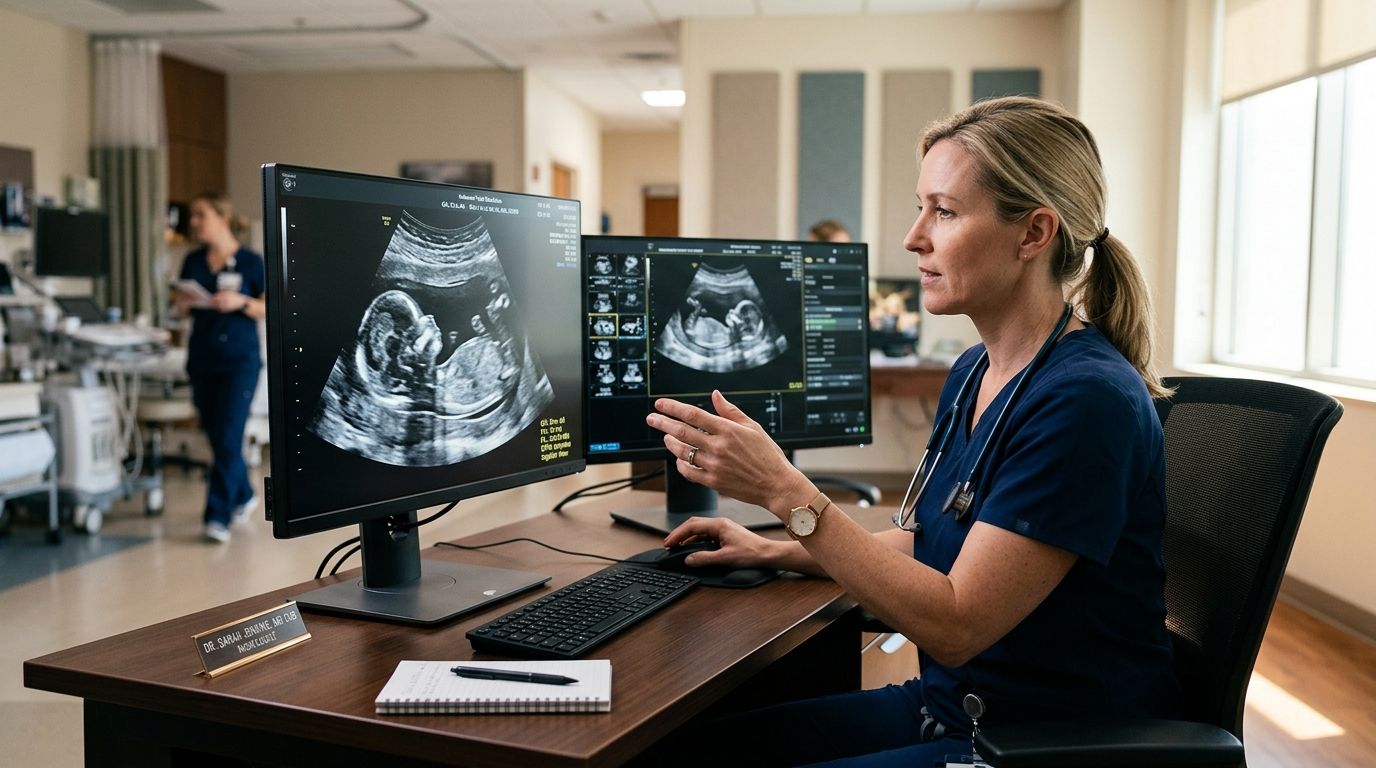
Fetal imaging radiologist jobs place diagnostic radiologists inside maternal-fetal medicine (MFM) programs, reading prenatal ultrasound and fetal MRI studies for high-risk pregnancy cases with the aim of catching structural and genetic anomalies before delivery. This segment differs from general OB-GYN imaging because the caseload skews toward complex, time-sensitive reads tied directly to a delivery date, and the radiologist works in a tight feedback loop with MFM physicians rather than a general referral pool.
The subspecialty pool is small. Most fetal imaging radiologist jobs sit inside academic centers, dedicated women's imaging groups, or hospital systems with an MFM division rather than general radiology postings, which is why a targeted search beats a generic job board scroll. A related track worth comparing is OB-GYN imaging jobs, which overlaps on ultrasound volume but carries less fetal MRI and genetic-anomaly reading.
- Fetal imaging radiologist jobs concentrate in academic MFM centers and dedicated women's imaging groups, not general radiology postings.
- RadBoard aggregates 5,000+ radiology jobs from 20 sources, including fetal imaging and OB-GYN ultrasound openings.
- Fetal MRI case volume and the MFM referral pipeline matter more than base salary when comparing 2026 offers.
- Locum tenens fetal imaging coverage fills gaps between permanent hires at high-risk pregnancy centers.
Why fetal imaging radiologist jobs matter for MFM-focused radiologists
Fetal imaging sits at the intersection of two shrinking pools: radiologists trained on fetal MRI protocols and hospitals with an MFM program large enough to justify dedicated coverage. That narrowness is the whole story for this job search in 2026 — postings are fewer, but they're concentrated in a handful of employer types instead of scattered across generic diagnostic openings.
RadBoard's aggregation of 5,000+ radiology positions from 20 sources means fetal imaging and women's imaging postings that would otherwise sit buried on a single hospital's careers page show up alongside academic and private-group listings in one search. That matters more for a niche subspecialty than for general diagnostic radiology, where volume makes manual searching tolerable.
How to find and land a fetal imaging radiologist job
Define the fetal imaging caseload you actually want
Before you search, decide what mix of studies you're willing to read day to day. Fetal imaging jobs range from mostly routine anatomy scans to heavy fetal MRI and genetic-syndrome workups, and the day-to-day is different at each end.
- List whether you want fetal MRI as a regular part of the caseload or an occasional add-on
- Decide if you want direct MFM physician contact on every complex case or asynchronous reporting
- Note whether you're open to reading routine OB ultrasound alongside fetal-specific studies
- Set a minimum acceptable ratio of high-risk to routine cases
Search hospital, academic, and private group postings directly
Start with the free, manual route before anything else. Academic medical centers and large hospital systems post MFM-affiliated radiology openings on their own career pages, often before they hit third-party boards.
- Check career pages of academic medical centers with a named MFM division
- Search hospital system sites for "fetal imaging," "fetal MRI," or "maternal-fetal medicine radiology"
- Scan professional society job boards (ACR, SRU) for subspecialty postings
- Set Google Alerts for your target cities plus "fetal imaging radiologist"
- Ask current MFM physician contacts if their group is hiring imaging support
Filter listings by fetal MRI and ultrasound volume
A posting that says "women's imaging" doesn't guarantee fetal MRI exposure. Volume claims separate a real fetal imaging job from a general OB-GYN imaging role with the word "fetal" bolted on.
- Ask how many fetal MRI studies the group reads per month
- Confirm whether fetal MRI is read on-site or sent to a separate subspecialist
- Check if the group tracks anomaly-detection rate or has a formal QA process
- Ask about access to 3T MRI with fetal-specific sequences
Vet how closely the group works with MFM physicians
The collaboration model determines whether you're a true fetal imaging radiologist or a general reader who happens to see prenatal studies. Groups embedded in an MFM program hold joint case conferences; groups that aren't don't.
- Ask if there's a standing joint conference between radiology and MFM
- Find out if you'll give same-day verbal reads on urgent anomaly findings
- Confirm whether genetic counselors are looped into your reporting workflow
- Check if the MFM division has its own patient volume or shares referrals with OB-GYN generalists
Locum coverage is a common entry point into this world before committing to a permanent seat — see locum tenens women's imaging jobs for how that coverage model works and what it pays relative to permanent roles.
Compare compensation and call structure across offers
Base salary alone doesn't tell you what a fetal imaging job actually costs you in call burden. High-risk pregnancy cases don't wait for business hours, and call frequency varies enormously between academic and community settings.
- Ask how many nights and weekends of call the position carries
- Find out if urgent fetal anomaly reads require in-person presence or remote sign-off
- Compare RVU targets against the group's actual fetal imaging volume
- Check if subspecialty-only reading is guaranteed in writing or informal
Use AI-powered search to shortcut the manual scan
Once you've defined the caseload and vetted your short list of employer types, an AI-powered job search speeds up the part that's otherwise dozens of individual site checks. RadBoard's search and swipe-to-save tool pulls from 5,000+ aggregated radiology postings across 20 sources, letting you filter for fetal imaging and MFM-affiliated roles instead of scanning each hospital system separately.
- Use keyword filters for "fetal imaging," "fetal MRI," and "maternal-fetal medicine radiology"
- Swipe-save postings that mention MFM collaboration explicitly, not just "women's imaging"
- Set alerts for new academic and private-group postings matching your subspecialty
- Cross-check saved postings against the employer's own career page for full job descriptions
Search fetal imaging jobs now
Filter 5,000+ radiology postings by subspecialty and employer type.
Negotiate schedule and subspecialty-only reading terms
Once you have an offer, the negotiation that matters most for this segment isn't salary — it's whether the subspecialty-only reading clause survives staffing shortages.
- Get subspecialty-only reading commitments in writing, not verbal assurance
- Negotiate a cap on the ratio of general OB-GYN reads to fetal-specific studies
- Ask for a review clause if the MFM referral volume drops
- Confirm CME time is allocated for fetal imaging-specific conferences
“If a group can't tell you how many high-risk deliveries it covers per month, it's not really a fetal imaging job.”
Comparing employer types for fetal imaging radiologists
| Option | Best for | Key limitation |
|---|---|---|
| Academic MFM center | Radiologists wanting complex fetal MRI case mix and a teaching role | Base pay often trails private groups; heavier resident supervision load |
| Community hospital OB imaging division | Radiologists wanting steady volume without academic duties | Fetal MRI access varies by site; complex cases may transfer out |
| Private OB-GYN imaging group | Radiologists wanting subspecialty-only reading, no hospital call | Referral volume depends entirely on the group's MFM partnerships |
| Locum tenens fetal imaging coverage | Radiologists filling gaps between permanent contracts | Short assignments; inconsistent access to fetal MRI equipment |
| Teleradiology fetal imaging reads | Radiologists wanting remote flexibility | Real-time MFM physician consultation is harder without on-site presence |
RadBoard aggregates postings across all five of these employer types, which is the practical advantage of an AI-powered search over checking each hospital system one by one in 2026.
Common mistakes fetal imaging radiologists make in the job search
- Confusing "women's imaging" with fetal imaging. A posting heavy on mammography and pelvic ultrasound may have almost no fetal MRI volume.
- Not confirming the MFM referral pipeline before signing. A group with no standing MFM relationship can't guarantee case volume, no matter what the job description implies.
- Underestimating call burden for urgent anomaly reads. High-risk pregnancy findings don't wait for a scheduled read window, and that reality gets glossed over in interviews.
- Skipping the equipment check. Not every hospital with an MFM division has a 3T scanner with fetal-specific sequences on-site.
- Treating locum fetal imaging coverage as a permanent-job trial without asking about it directly. Some locum assignments never convert; ask upfront if the group is testing candidates for a permanent seat.
FAQ
What is a fetal imaging radiologist job?
A fetal imaging radiologist job involves reading prenatal ultrasound and fetal MRI studies for high-risk pregnancies, typically in close collaboration with maternal-fetal medicine physicians. The role concentrates in academic centers, hospital MFM divisions, and dedicated women's imaging groups.
How is fetal imaging different from general OB-GYN imaging?
Fetal imaging focuses on structural and genetic anomaly detection using fetal MRI and detailed anatomy ultrasound, while general OB-GYN imaging covers routine prenatal and gynecologic studies. Fetal imaging roles usually require direct MFM physician coordination on complex cases.
Do fetal imaging radiologist jobs require fellowship training?
Many fetal imaging positions prefer or require abdominal, body, or pediatric radiology fellowship training with fetal MRI exposure. Some academic programs also value dual training in obstetric ultrasound interpretation.
Is locum tenens fetal imaging coverage common in 2026?
Yes, locum tenens coverage fills short-term gaps at hospitals and MFM centers between permanent hires. Assignments are often shorter and equipment access can vary more than in a permanent role.
What should I ask before accepting a fetal imaging job offer?
Ask about monthly fetal MRI volume, call frequency for urgent anomaly reads, and whether subspecialty-only reading is guaranteed in the contract. These three factors matter more for job satisfaction than base salary alone.
Can teleradiology cover fetal imaging studies?
Some fetal imaging reads happen remotely, but real-time consultation with MFM physicians on urgent findings is harder without on-site presence. Remote fetal imaging roles work best paired with a clear escalation protocol.
How many hospitals aggregate on RadBoard for fetal imaging searches?
RadBoard pulls from 20 sources covering 5,000+ radiology positions, which includes fetal imaging, women's imaging, and MFM-affiliated postings alongside general diagnostic listings.
One last thing
The fetal imaging job market in 2026 rewards specificity over volume: a search filtered for "fetal MRI" and "MFM collaboration" surfaces a smaller, more relevant list than a broad "radiology job" search ever will, and that smaller list is exactly where the real fetal imaging radiologist jobs sit. Save the postings that name MFM collaboration explicitly and treat everything else as a maybe.