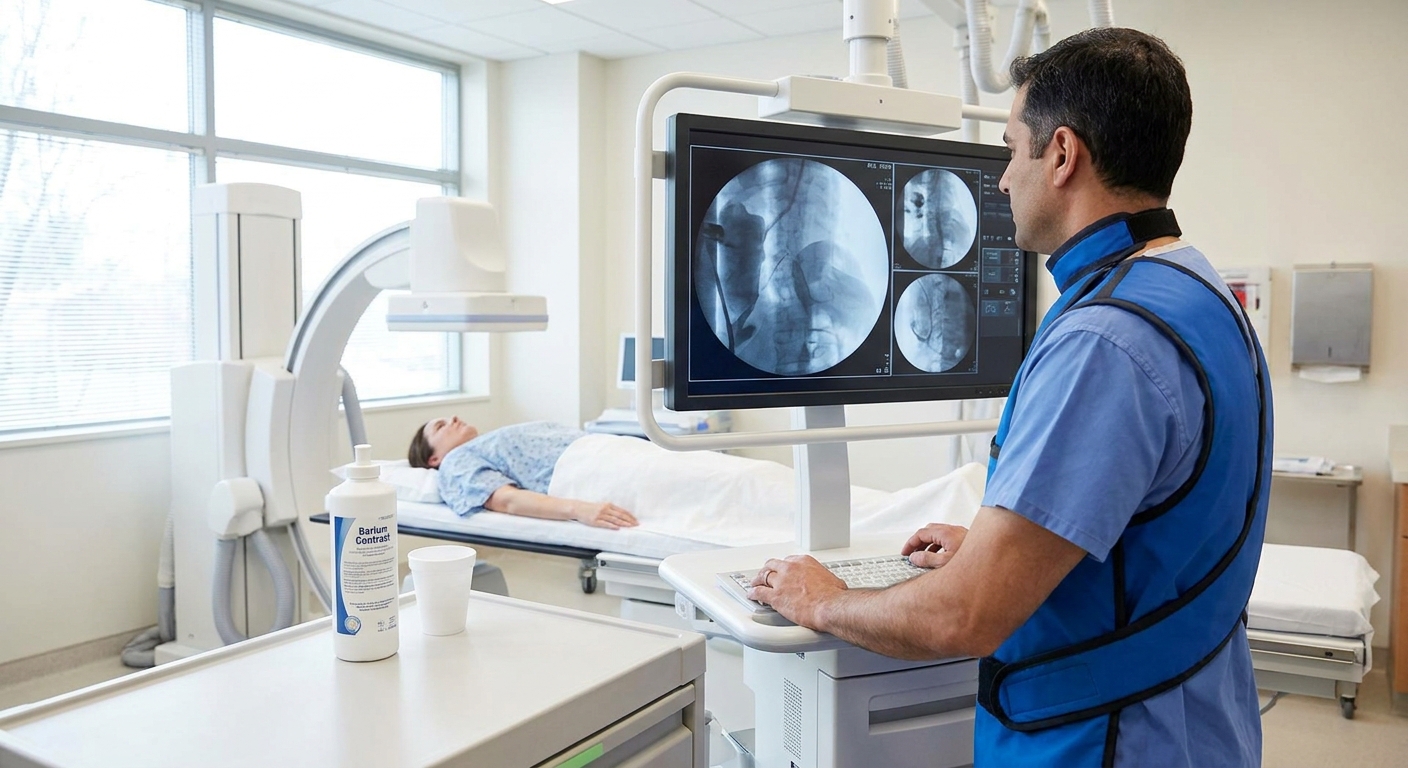
Fluoroscopy still pays the bills at plenty of practices even as barium studies shrink on the schedule, and the radiologists who land the best fluoroscopy jobs know exactly which settings still need real-time GI reads. This guide breaks down what to look for in fluoroscopy radiologist jobs focused on GI and barium studies, and which practice types actually deliver the volume.
- Outpatient imaging centers with GI referral bases offer the steadiest fluoroscopy radiologist jobs with no overnight call.
- Academic dysphagia clinics pay in case complexity, not RVUs — verdict: Buy for subspecialists, Skip for generalists.
- RadBoard tracks 5,000+ radiology jobs from 20 sources, filterable by fluoroscopy and GI imaging volume.
- Avoid postings labeled 'general diagnostic' in 2026 that bury fluoro call inside a mostly cross-sectional workload.
Why this matters
Barium swallow, small bowel follow-through, and defecography volumes have thinned out at most hospitals as CT enterography and endoscopy took over diagnostic work. That doesn't mean the jobs disappeared — it means they concentrated. A handful of outpatient centers, VA sites, and academic dysphagia programs now carry most of the remaining GI fluoroscopy caseload, and job postings rarely say so explicitly.
RadBoard's radiology job platform pulls from 20 sources into a single searchable feed of 5,000+ positions, which matters here because fluoroscopy-heavy roles get buried under generic "diagnostic radiologist" titles more than almost any other subspecialty listing. You have to read past the headline.
Who this is for
This guide is for radiologists who trained with real GI fluoroscopy exposure — esophagrams, upper GI series, barium enemas, modified barium swallow studies with speech-language pathology — and want that skill set to stay part of their weekly workload instead of atrophying under a stack of chest CTs. It's also useful for residents deciding whether to chase a body imaging fellowship that keeps fluoroscopy on the table, and for radiologists five years out who miss the real-time interpretive work and want to find where it still lives in 2026.
What to look for in fluoroscopy radiologist jobs for GI and barium studies
Actual barium study volume, not just "fluoroscopy suite available"
A lot of job ads list fluoroscopy equipment as a facility feature without saying how often it runs. Ask for weekly or monthly barium study counts during the interview — a site doing 15 barium studies a month is a different job than one doing 60. Low-volume fluoroscopy postings usually mean the equipment sits idle and your skills go stale.
Speech-language pathology partnership for swallow studies
Modified barium swallow studies are done jointly with SLP, and the strength of that partnership determines both case volume and how interesting the reads are. Practices with an established dysphagia clinic and dedicated SLP staff generate consistent referrals; practices doing swallow studies as an afterthought generate one-off, low-complexity cases.
Call burden tied to fluoroscopy, not just cross-sectional imaging
Some hospital-employed roles fold fluoroscopy into general call coverage, meaning you're doing barium enemas at 2 a.m. alongside stroke CTs. If you want fluoroscopy as a scheduled, daytime skill rather than an emergency add-on, confirm whether fluoro cases fall under general call or run on a separate outpatient schedule.
RVU structure for procedural time
Fluoroscopy studies take longer per case than reading a CT, since you're at the table directing contrast administration in real time. Confirm whether RVU compensation accounts for that time investment or whether it's averaged against faster cross-sectional volume, which quietly penalizes fluoroscopy-heavy radiologists.
Equipment age and table availability
A fluoroscopy unit older than 10 years without digital spot imaging slows down studies and adds retake time. Ask how many fluoro tables the site runs and how often they're booked back-to-back versus sitting open for same-day add-ons.
Referral base stability
GI fluoroscopy work depends on a referring GI or surgical group that still orders barium studies instead of defaulting to endoscopy or cross-sectional imaging. A practice with one or two loyal GI referrers is more fragile than one embedded in a multi-specialty group with built-in demand.
Top picks for fluoroscopy radiologist jobs
Academic dysphagia and GI fluoroscopy clinics — the subspecialist's play. These programs run modified barium swallow studies in partnership with SLP and often see 40+ swallow studies a month at teaching hospitals. Case complexity runs high because referrals come from oncology, neurology, and ENT services managing post-treatment dysphagia. Verdict: Buy for anyone with fellowship training who wants fluoroscopy as a defined subspecialty niche rather than a side task — see how these roles compare on subspecialty-only reading positions.
Outpatient imaging centers with GI referral volume — the no-call safe pick. These sites run scheduled barium studies during business hours with zero overnight fluoroscopy call, and volume stays consistent because GI groups route routine esophagrams and upper GI series here instead of the hospital. Verdict: Buy for radiologists who want fluoroscopy without disrupting a normal schedule — check outpatient imaging center roles with no call for current openings.
Multi-specialty group practices with abdominal imaging demand — the volume play. These groups fold GI fluoroscopy into a broader abdominal imaging rotation, so you get barium studies mixed with MRI enterography and CT abdomen/pelvis reads. Volume runs steady but fluoroscopy is a smaller slice of the week, often under 20% of total caseload. Verdict: Consider if you want fluoroscopy alongside broader abdominal imaging rather than as your main focus — compare against body imaging jobs for abdominal specialists.
VA hospital radiology positions — the steady federal option. VA sites still run defecography and barium enema studies for veteran populations with higher rates of GI and pelvic floor referrals than the general population, and federal benefits add stability most private practices don't match. Verdict: Consider for radiologists prioritizing job security over case volume flexibility.
General hospital-employed diagnostic roles with rotating fluoro call — the generalist fallback. Fluoroscopy shows up here as an occasional add-on to a mostly cross-sectional workload, and volume depends entirely on which GI group happens to be on staff that quarter. Verdict: Skip if maintaining fluoroscopy skill is the actual goal — this setup lets it fade.
Search fluoroscopy radiology jobs now
Filter 5,000+ radiology positions from 20 sources by subspecialty and setting.
What to avoid
- "General diagnostic radiologist" listings that mention fluoroscopy once. These postings often bury one line about "fluoroscopy as needed" inside a job description that's 90% cross-sectional imaging — the fluoro volume rarely materializes.
- Teleradiology and nighthawk postings claiming fluoroscopy coverage. Real-time barium studies require someone physically at the table directing contrast, so remote fluoroscopy coverage is close to nonexistent — treat any claim otherwise as a red flag.
- Freestanding surgery center roles advertising "full imaging suite." Surgery centers rarely run enough GI referral volume to justify real fluoroscopy caseload; the equipment listing is often aspirational rather than active.
Verdict comparison
| Practice Setting | Barium Volume | Call Burden | Best For | Verdict |
|---|---|---|---|---|
| Academic dysphagia clinic | High (40+/month) | Low, scheduled | Fellowship-trained subspecialists | Buy |
| Outpatient imaging center | Moderate-high | None | Work-life balance seekers | Buy |
| Multi-specialty group | Moderate | Low-moderate | Broad abdominal imaging generalists | Consider |
| VA hospital | Moderate | Low | Federal benefits priority | Consider |
| Hospital general diagnostic | Low, inconsistent | High, rotating | Anyone else | Skip |
FAQ
What are fluoroscopy radiologist jobs for GI and barium studies?
These are radiology positions centered on real-time contrast imaging — barium swallows, upper GI series, small bowel follow-through, and defecography — rather than static cross-sectional reads. In 2026, the highest-volume versions of these jobs sit at outpatient imaging centers and academic dysphagia clinics.
Is fluoroscopy volume declining across radiology practices?
Yes, most hospitals have shifted routine GI evaluation toward CT enterography and endoscopy, concentrating remaining barium study volume at a smaller number of sites. Outpatient centers with strong GI referral relationships and academic swallow study programs still run consistent caseloads.
Do fluoroscopy jobs pay differently than general diagnostic radiology roles?
Compensation structure varies more than the base rate — fluoroscopy studies take longer per case, so RVU-based pay can undervalue the time unless the contract accounts for procedural time separately. Ask specifically how fluoroscopy time factors into RVU calculations before signing.
Can I find fluoroscopy radiologist jobs through teleradiology?
Rarely, because barium and contrast fluoroscopy studies require someone physically present to direct the exam in real time. Teleradiology postings that claim fluoroscopy coverage should be verified carefully before assuming remote GI fluoroscopy work exists.
What subspecialty training helps most for GI fluoroscopy jobs?
Abdominal imaging and body imaging fellowships typically include the most fluoroscopy exposure, particularly programs with active modified barium swallow and defecography protocols. General diagnostic residency alone often isn't enough to stay comfortable at the fluoroscopy table.
Do VA hospitals still run GI fluoroscopy studies?
Yes, VA radiology departments maintain defecography and barium enema volume tied to higher rates of GI and pelvic floor referrals in the veteran population they serve. These positions offer steady federal benefits alongside consistent procedural volume.
How do I know if a job posting has real fluoroscopy volume?
Ask directly for monthly barium study counts and how many fluoroscopy tables the site operates during the interview, since job descriptions rarely specify volume. A site running under 20 barium studies a month likely won't keep your fluoroscopy skills sharp.
Are academic radiology jobs better for GI fluoroscopy work?
Academic dysphagia and GI fluoroscopy clinics often see the highest case volume and complexity because referrals come from oncology, ENT, and neurology managing post-treatment swallow dysfunction. They suit fellowship-trained subspecialists more than generalists looking for occasional fluoro exposure.
One last thing
The fluoroscopy suite is often the least-used room in a modern imaging department, which means the radiologists still running real barium volume in 2026 tend to hold onto those positions for years — turnover in this niche is lower than in cross-sectional-heavy roles, so openings don't come up often. When one does, move fast and ask for the actual monthly case count before the interview, not during it.