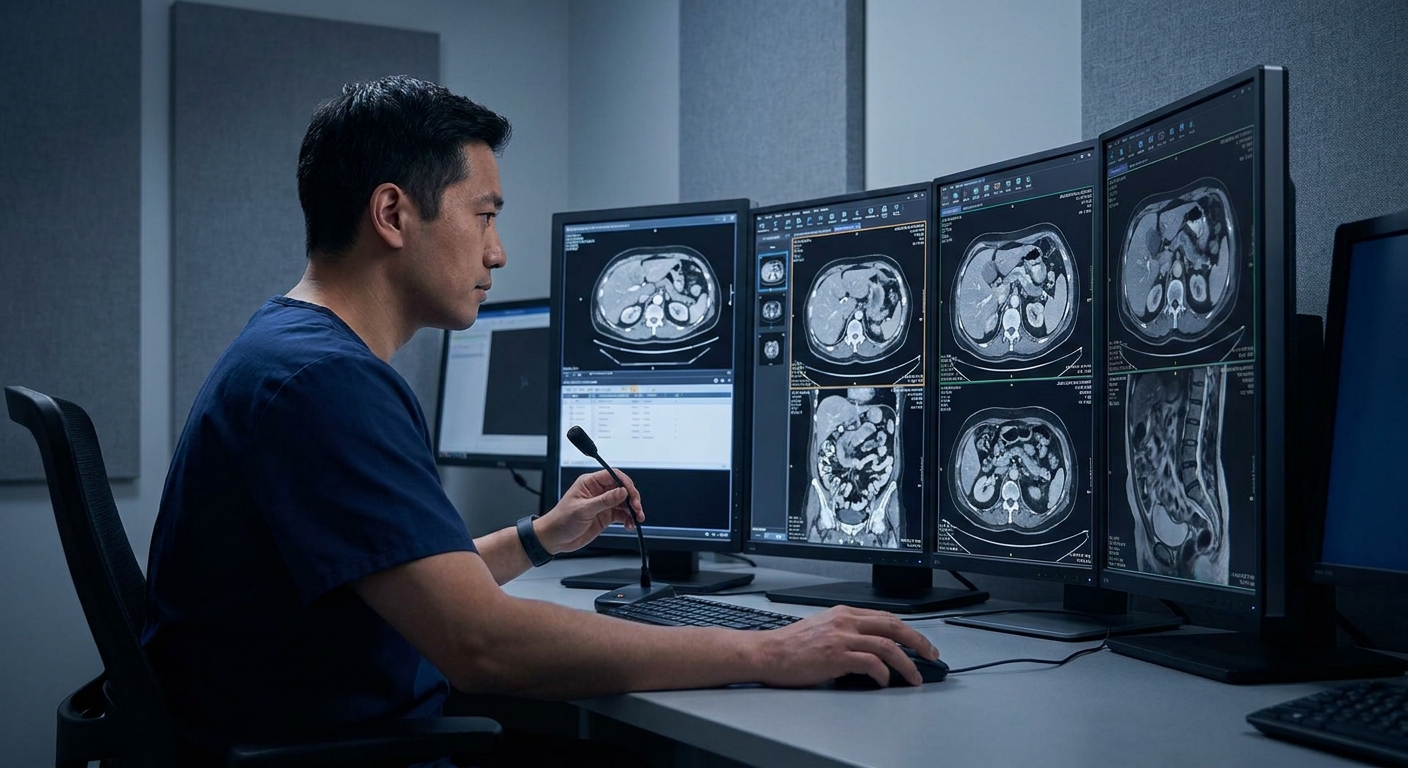
Body imaging radiologist jobs reward abdominal and pelvic imaging fellows who can read cross-sectional CT and MRI at volume, not general radiologists who split time across five organ systems. This guide ranks the settings where that case mix actually shows up in 2026 and tells you which ones to skip.
- Body imaging radiologist jobs concentrate in cancer centers, private practice groups, and no-call outpatient centers in 2026 — Buy the fellowship-matched setting.
- Outpatient imaging center jobs with no call suit abdominal MRI specialists who want volume without overnight reads.
- Private practice partnership tracks still move abdominal imaging specialists to equity fastest — Buy.
- Academic radiology jobs protect subspecialty focus but dilute case volume with teaching FTE — Consider.
- Skip general radiology postings that bury abdominal reads inside a 1-in-4 overnight call rotation.
Why this matters
Abdominal and pelvic CT/MRI is one of the highest-volume read categories in any general radiology group, which means body imaging radiologist jobs get advertised loosely — a posting that says "body imaging" often means 40% abdominal reads and 60% whatever else needs covering that shift. RadBoard tracks more than 5,000 radiology positions across 20 sources in 2026, and the subspecialty tag on a listing is frequently wrong or incomplete.
The 2026 RadBoard US Radiology Job Market Report counted 3,700+ active listings, and body imaging shows up across at least four distinct employment settings with very different call structures. An outpatient imaging center job with no call looks nothing like a cancer center role on paper, but both get filed under "body imaging" in generic job boards. Reading the case mix, not the job title, is what separates a good fit from a bad one.
Who this is for
This guide is for fellowship-trained abdominal imaging radiologists, or general radiologists with 3+ years of high-volume abdominal/pelvic CT and MRI experience, who want a role where that subspecialty is the majority of the workload — not a side duty bolted onto a general call pool.
What to look for in body imaging radiologist jobs
Case mix concentration
Ask what percentage of daily reads are abdominal or pelvic CT/MRI before anything else. A role advertised as body imaging with under 50% abdominal volume is really a general diagnostic job with a subspecialty label.
Call burden and overnight coverage
Body imaging emergent reads (bowel obstruction, appendicitis, trauma) are common overnight, so call structure matters more here than in most subspecialties. A no-call outpatient setup and a Level 1 trauma center call pool are both labeled "body imaging jobs" but deliver opposite lifestyles.
Oncologic imaging affiliation
If tumor staging and RECIST measurements are a big part of the role, proximity to a cancer center or tumor board changes the day-to-day work meaningfully. Radiologists who trained heavily in oncologic imaging should weight this criterion above general abdominal volume.
MRI protocol control
Enterography, prostate MRI, and HCC surveillance protocols require radiologist input on sequencing, not just interpretation. Jobs where techs run a fixed protocol with no radiologist override tend to frustrate fellowship-trained readers within a year.
Employment model
Academic, private practice, outpatient center, and teleradiology settings all carry body imaging postings in 2026, and each has a different ownership timeline and administrative load. Match the model to your career stage, not just the salary line.
Compensation tied to subspecialty RVU value
Body imaging generates high RVU output per study relative to some other subspecialties, so compensation models that pay flat salary regardless of read volume undervalue the work. Ask directly how RVU credit is calculated before signing.
Search body imaging jobs by case mix
Filter 5,000+ radiology positions by subspecialty and call structure.
Top picks for abdominal imaging specialists
Cancer center radiology jobs — the oncologic imaging home base
Staging CT and MRI for solid tumors is the daily workload, with tumor board participation built into the schedule. Case mix runs high on abdominal and pelvic oncologic imaging, and call is typically low to moderate with mostly daytime coverage. Cancer center radiology jobs fit abdominal imaging fellows who trained with an oncologic imaging emphasis. Buy.
Private practice radiology jobs — the equity play
Partnership-track private practice groups still move abdominal imaging specialists to ownership faster than any employed model, often within 2-3 years of joining. Call is shared across a subspecialty pool rather than dumped on the newest hire. Private practice radiology jobs for partnership tracks suit specialists who want equity and are willing to take a shared call rotation to get it. Buy.
Academic radiology jobs — the teaching track
Academic centers protect subspecialty focus better than most general hospital jobs, but teaching and research FTE cuts directly into read volume, sometimes to 60% clinical time or less. Academic radiology jobs for teaching and research physicians work for abdominal imaging specialists who want to keep a foot in fellowship training and don't need maximum RVU output. Consider.
Outpatient imaging center jobs — the no-call pick
High elective abdominal and pelvic MRI volume, zero overnight call, and predictable hours define this setting. The tradeoff is less oncologic complexity and fewer inpatient correlations, since outpatient centers rarely see acute abdominal emergencies. This is the safest lifestyle pick for abdominal imaging specialists who've already done their high-acuity years. Buy.
What to avoid
- Generic "body imaging" postings inside a general call pool — the title says body imaging, but the schedule still rotates you through neuro, MSK, and chest overnight reads.
- Teleradiology night-block contracts with no protocol input — you read volume but never touch MRI protocols, which stalls subspecialty skill growth for fellowship-trained readers.
- Academic offers with undefined non-clinical FTE — a verbal "20% research time" that turns into 40% once you start cuts your case volume without adjusting your salary.
Verdict comparison
| Setting | Case mix concentration | Call burden | Ownership path | Verdict |
|---|---|---|---|---|
| Cancer center radiology | High, oncologic focus | Low-moderate, mostly daytime | Employed, no equity | Buy |
| Private practice partnership | High if subspecialty-matched | Moderate, shared pool | Partner track, 2-3 years | Buy |
| Academic radiology | Moderate, split with teaching | Moderate, resident-covered | Employed, tenure-track | Consider |
| Outpatient imaging center | High, elective volume | None | Employed | Buy |
FAQ
What is a body imaging radiologist job?
A body imaging radiologist job centers on abdominal and pelvic CT and MRI interpretation, often overlapping with oncologic imaging and GI/GU pathology. In 2026, these roles appear across cancer centers, private practice groups, outpatient centers, and academic departments with very different call structures.
Is body imaging the same as abdominal imaging?
Yes, the terms are used interchangeably in most job postings and fellowship program names. Both refer to subspecialty training in cross-sectional CT and MRI of the abdomen and pelvis.
Do body imaging radiologists take overnight call?
It depends entirely on the setting. Outpatient imaging centers typically carry no call, while private practice and academic body imaging roles often include a shared overnight pool for acute abdominal reads.
Is fellowship required for body imaging radiologist jobs?
Most cancer center and academic body imaging jobs prefer or require abdominal imaging fellowship training. General radiologists with heavy abdominal CT/MRI experience can qualify for outpatient and private practice roles without formal fellowship.
Can teleradiology count as a body imaging job?
Yes, teleradiology groups run dedicated body imaging read pools, especially for overnight abdominal emergent studies. Protocol input is usually limited compared to on-site academic or cancer center roles.
What's the difference between body imaging and oncologic imaging jobs?
Oncologic imaging jobs concentrate specifically on tumor staging, RECIST measurements, and cancer center workflows, while body imaging is the broader category covering all abdominal and pelvic pathology. Cancer center radiology jobs sit at the overlap of both.
How much do body imaging radiologists make in 2026?
Compensation varies widely by setting, call burden, and geography, with private practice partnership tracks generally paying more once equity kicks in. Check current listings and the 2026 RadBoard US Radiology Job Market Report for salary benchmarks by subspecialty.
Do body imaging radiologists need IR training?
No, interventional radiology training is not required for body imaging roles, though some cancer center jobs prefer familiarity with image-guided biopsy referrals. Pure diagnostic body imaging jobs focus on interpretation, not procedures.
One last thing
Body imaging specialists get pulled into hybrid roles more often than other subspecialties — cancer centers in particular expect abdominal imaging radiologists to coordinate directly with interventional teams on biopsy referrals, even without IR training. If a posting mentions "multidisciplinary tumor board" but doesn't specify read volume, ask for the actual RVU breakdown before the interview, not after the offer.