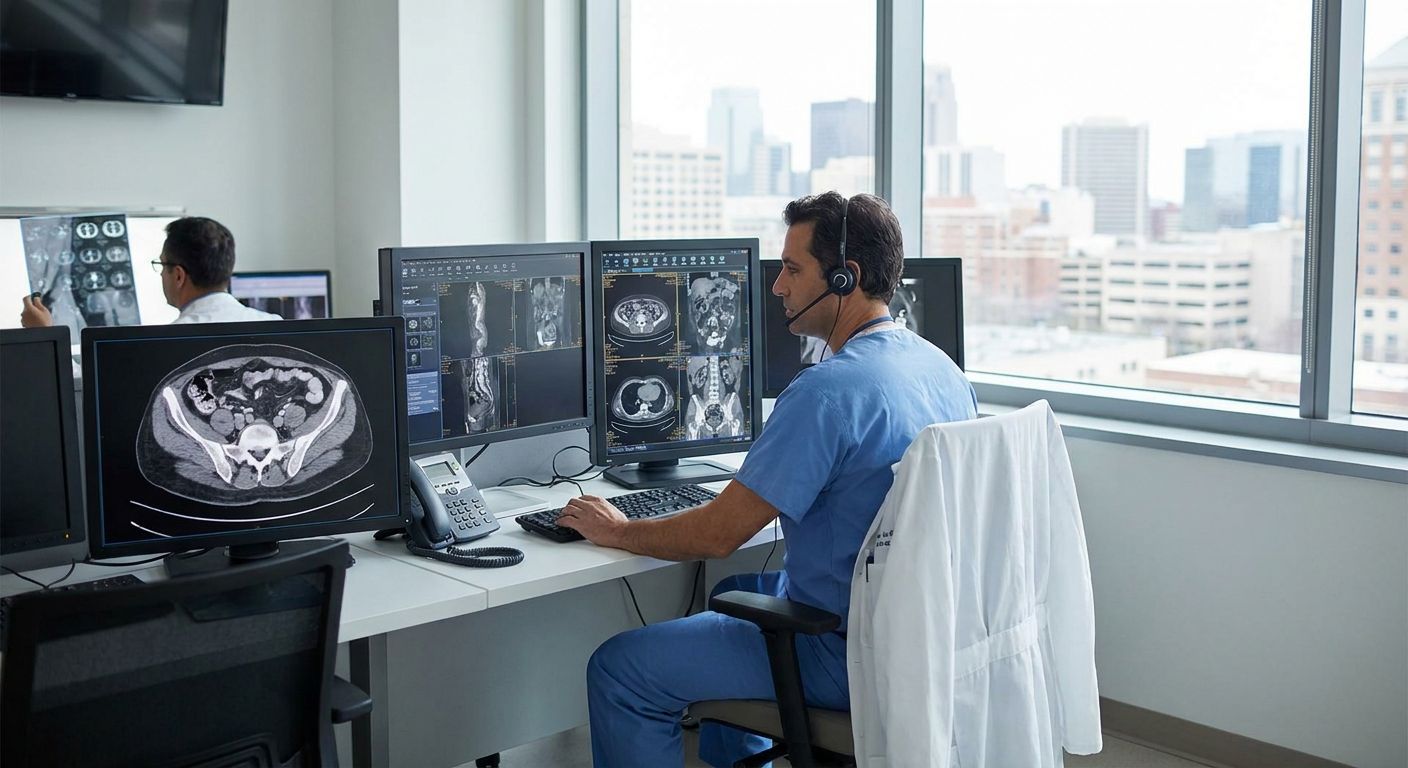
Genitourinary radiology jobs split into at least three distinct career shapes in 2026: prostate MRI-focused reading, transplant imaging at liver and kidney centers, and broader body imaging roles where GU is one organ system among several. Picking the wrong shape early costs years of retraining later.
- Genitourinary radiology jobs range from prostate MRI-focused reads to transplant imaging roles in 2026 — prostate MRI-focused roles win for PI-RADS 2.1 specialists.
- Transplant imaging jobs at liver and kidney centers suit radiologists wanting narrow, career-long GU focus. Buy.
- Body imaging generalist roles cover genitourinary radiology jobs alongside GI and hepatobiliary reads. Consider if you want breadth over pure GU volume.
- RadBoard aggregates 5,000+ radiology openings from 20 sources, including genitourinary radiology jobs updated for 2026 hiring cycles.
Why this matters
GU imaging doesn't get the hiring attention that neuro or MSK does, but the work is dense: prostate MRI staging with PI-RADS 2.1, renal and adrenal mass characterization, CT urography for hematuria workups, and transplant imaging for donor and recipient evaluation. A radiologist who reads GU cases 60% of the day looks nothing like one who reads them as 15% of a general body imaging shift, and job postings rarely spell out that difference clearly.
RadBoard pulls listings from 20 sources into one radiology job platform, which means genitourinary radiology jobs posted under "body imaging," "abdominal imaging," or "oncologic imaging" titles all end up searchable in one place. That matters because most employers still don't use "GU imaging" as a standalone job title in 2026 — you have to know what to search for and what to screen out.
Start with the RadBoard job platform if you want to filter listings by subspecialty volume rather than title alone.
Who this is for
This guide is for board-certified or board-eligible diagnostic radiologists with fellowship training in abdominal or body imaging who want their next role weighted toward genitourinary cases specifically — prostate MRI, renal mass workups, bladder and adrenal imaging, or transplant evaluation. It's also relevant to fellows finishing abdominal imaging training in 2026 who are deciding how narrow to go before their first attending contract locks in a reading pattern for years.
What to look for in genitourinary radiology jobs
PI-RADS 2.1 fluency and prostate MRI volume
Ask what percentage of daily volume is prostate MRI and whether the practice reports using PI-RADS version 2.1, the current ACR-endorsed structured scoring system. A practice that can't answer the PI-RADS version question usually hasn't standardized prostate MRI reporting, which means inconsistent volume and inconsistent urology referral relationships.
Renal and adrenal mass workload
Renal mass characterization and incidental adrenal lesion workup make up a large share of true GU imaging outside of prostate work. A job with heavy CT abdomen/pelvis volume but no dedicated renal mass protocol MRI access will feel like general body imaging with a GU label stapled on.
Transplant imaging exposure
Renal and liver transplant centers need radiologists comfortable with donor nephrectomy planning, post-transplant complication imaging, and Doppler correlation. This is a narrower, more procedural-adjacent track than general GU reading, and it's usually tied to an academic or large health-system transplant program rather than a community practice.
CT urography and hematuria protocols
Dedicated CT urography protocols for hematuria workups are a marker of a practice that treats GU imaging as a real subspecialty line, not an afterthought. If the imaging center runs a generic three-phase abdomen protocol for every hematuria referral, GU volume will stay thin regardless of what the job title says.
Urologic oncology tumor board integration
Jobs tied to a cancer center or multi-specialty urology group often include a standing urologic oncology tumor board. That's where GU imaging expertise gets used at full depth — staging, restaging, and treatment response — instead of one-off outpatient reads.
Subspecialty-only versus mixed-call reading
Some contracts guarantee subspecialty-only reading; most still mix in general call, nights, or cross-coverage. Confirm this in writing before signing, because verbal assurances about "mostly GU" workload tend to erode once staffing gaps appear.
Top picks for genitourinary radiology jobs in 2026
The high-volume anchor: prostate MRI-focused reading roles
The spec that matters here is PI-RADS 2.1 structured reporting used as the default workflow, not an occasional add-on. Practices built around dedicated prostate MRI reading tend to have the tightest urology referral loops and the most consistent case volume of any GU-adjacent role in 2026.
This is the pick for radiologists who want prostate imaging to be the center of their career rather than a rotating assignment. Buy — prostate MRI-focused radiologist jobs built around PI-RADS interpretation offer the clearest subspecialty identity in this category.
The specialist's specialist: transplant imaging jobs
Transplant imaging jobs sit at the narrow end of GU subspecialization, covering both renal and hepatic transplant evaluation rather than GU alone. The trade-off is scope: you get deep expertise in one clinical pathway instead of broad genitourinary coverage.
This suits radiologists who already know they want a career built around one referral relationship — the transplant surgery team — rather than general urology. Buy for radiologists targeting a narrow, procedurally-adjacent track — transplant imaging radiologist jobs at liver and kidney centers deliver that focus directly.
The broad base: body imaging generalist roles
Body imaging roles cover GU cases alongside GI and hepatobiliary reads in the same shift, which means less pure GU volume but more schedule flexibility and a wider hiring pool. The spec to check is what fraction of the daily list is genitourinary versus other abdominal organ systems — ask for a number, not a percentage range.
This is the right starting point for a fellow who isn't ready to commit to GU-only reading yet. Consider — body imaging radiologist jobs for abdominal imaging specialists work well as a stepping stone, less well as a long-term GU-only plan.
Find genitourinary radiology jobs now
Search 5,000+ radiology listings from 20 sources on RadBoard.
What to avoid
- "Abdominal imaging" listings with no GU protocol detail. If the job description mentions liver and pancreas protocols but says nothing about prostate MRI or renal mass CT, GU volume is likely incidental, not core.
- Teleradiology "subspecialty" pools marketed as GU-focused. Many nighthawk and overflow contracts labeled "subspecialty" actually pool reads across every organ system; ask for actual GU case counts per shift before assuming specialization.
- Fellowship-required postings with no PI-RADS version stated. A practice still citing an outdated PI-RADS version, or none at all, hasn't kept its GU protocols current for 2026 referral standards.
Verdict comparison
| Job type | GU volume | Transplant exposure | Call burden | Verdict |
|---|---|---|---|---|
| Prostate MRI-focused reading | High, PI-RADS 2.1 driven | Low | Varies by practice | Buy |
| Transplant imaging (liver/kidney) | Moderate, transplant-specific | High | Often academic call pool | Buy for narrow focus |
| Body imaging generalist | Low to moderate, mixed with GI/hepatobiliary | Low | Broad general call | Consider |
| Subspecialty-only teleradiology (unverified GU mix) | Unclear without case-count confirmation | Low | Shift-based, often light | Skip unless GU volume is confirmed in writing |
FAQ
What counts as a genitourinary radiology job in 2026?
A genitourinary radiology job centers on prostate, kidney, bladder, and adrenal imaging, often including PI-RADS 2.1 prostate MRI reporting and CT urography. Many postings bundle this work under broader titles like body imaging or abdominal imaging rather than labeling it GU specifically.
Do genitourinary radiology jobs require a fellowship?
Most genitourinary radiology jobs prefer or require abdominal imaging fellowship training, since GU cases are typically taught within that fellowship track. General diagnostic radiologists without fellowship training can still find GU-heavy roles, but competition for the highest-volume positions favors fellowship-trained candidates.
Is genitourinary radiology in demand in 2026?
Genitourinary radiology demand tracks closely with prostate MRI volume growth and transplant program expansion in 2026, both of which have pushed hospitals and imaging centers to seek dedicated GU-capable readers. Demand is strongest at academic centers and cancer centers with active urologic oncology programs.
What's the difference between GU imaging jobs and body imaging jobs?
GU imaging jobs concentrate on prostate, kidney, bladder, and adrenal cases as the majority of daily volume, while body imaging jobs spread reading across GU, GI, and hepatobiliary systems. The practical difference shows up in daily case mix, not job title, so confirming actual GU case counts matters more than the listing name.
Do transplant imaging jobs require separate training beyond a body imaging fellowship?
Transplant imaging jobs generally build on standard abdominal imaging fellowship training, with on-the-job exposure to donor evaluation and post-transplant complication protocols. Formal transplant-specific fellowships exist but are not universally required for these positions.
Can teleradiologists specialize in genitourinary imaging?
Teleradiologists can specialize in genitourinary imaging, but true GU-only teleradiology contracts are less common than general or multi-organ overflow reading pools. Confirm actual GU case volume per shift before assuming a teleradiology contract offers real subspecialty focus.
What is PI-RADS and why does it matter for GU imaging jobs?
PI-RADS (Prostate Imaging Reporting and Data System) is the ACR-endorsed structured scoring system for prostate MRI, currently on version 2.1. A GU imaging job built around PI-RADS 2.1 reporting signals a practice with standardized prostate MRI volume and an established urology referral relationship.
One last thing
The fastest way to separate a real GU imaging job from a body imaging job wearing a GU label is to ask for last month's actual case count by organ system, not a projected percentage. Practices with genuine genitourinary radiology volume in 2026 can produce that number in a sentence; practices that can't are telling you something about how the role will actually read once you start.