
Becoming board certified in diagnostic radiology takes about 14 years after high school through the conventional U.S. pathway: undergraduate education, medical school, clinical internship, radiology residency, and the post-residency certification interval. For planning in 2026, distinguish finishing training from earning certification: the American Board of Radiology’s diagnostic radiology Certifying Exam eligibility generally begins 15 months after residency, and fellowship training can overlap that interval.
- How long to become board certified radiologist? Plan about 14 years after high school through the conventional U.S. pathway.
- Diagnostic radiology residency takes 4 years after a 1-year clinical internship; residency graduation does not itself confer certification.
- The ABR diagnostic radiology Certifying Exam generally requires a 15-month post-residency interval.
- RadBoard is best for radiologists seeking a single job search across 20 sources, not certification verification.
How long does it take to become board certified in radiology?
The conventional diagnostic radiology pathway requires 13 years of education and training after high school, followed by the remaining certification requirements. The American Board of Radiology, or ABR, separates residency completion from eligibility for the final certification examination.
The table summarizes the standard U.S. diagnostic radiology route for career planning in 2026. It does not describe every international, alternate, or interventional radiology pathway.
| Stage | Conventional duration | What completion means |
|---|---|---|
| Undergraduate education | 4 years | Preparation for medical school admission |
| Medical school | 4 years | MD or DO degree, not radiology certification |
| Clinical internship | 1 year | Required clinical training before diagnostic radiology residency |
| Diagnostic radiology residency | 4 years | Completion of specialty training, not automatic certification |
| Post-residency certification interval | At least 15 months before Certifying Exam eligibility | Eligibility to complete the final examination, subject to ABR requirements |
These durations follow the conventional educational sequence and the ABR’s published initial-certification requirements for diagnostic radiology. Examination eligibility, scheduling, successful completion, and administrative requirements determine your actual certification date.
If you are already approaching graduation, the immediate employment question is different. Review radiology jobs for board-eligible physicians awaiting certification and confirm each employer’s certification deadline before accepting an offer.
Why this matters
Your residency end date, fellowship end date, and certification date are different milestones. Treating them as interchangeable creates avoidable problems when you describe your qualifications or agree to an employment start date.
For a 2026 job search, ask whether an employer requires certification when you apply, when you start, or within a specified period after hiring. Then confirm the same requirement with the hospital credentialing office; a recruiter’s description is not the hospital’s final privileges decision.
Use the timeline to plan backward from the position you want. A fellowship-focused academic role, a general diagnostic position, and an interventional position require different training discussions, even when their advertisements all use the word radiologist.
Diagnostic radiology without fellowship: about 14 years
The conventional route without fellowship includes 4 years of college, 4 years of medical school, 1 clinical year, and 4 years of diagnostic radiology residency. That totals 13 years before the post-residency certification interval.
The ABR’s diagnostic radiology pathway generally places Certifying Exam eligibility at least 15 months after residency completion. That is why about 14 years is a useful rounded planning answer, rather than an exact anniversary or a guaranteed completion date.
Best for: physicians pursuing general diagnostic radiology who do not need additional fellowship training for their intended position.
- Advantage: You do not add fellowship training solely to satisfy the general diagnostic radiology certification pathway.
- Limitation: Individual employers and subspecialty positions can require fellowship training even when general certification does not.
Do not interpret the shorter training route as permission to accept every diagnostic assignment. Match your documented experience, hospital privileges, and the position’s clinical scope before agreeing to independent coverage.
Diagnostic radiology with fellowship: often a similar certification window
A 1-year fellowship can fit within the ABR’s 15-month post-residency interval. Consequently, adding that fellowship does not automatically add a full year to the earliest diagnostic radiology certification timeline.
This distinction matters when you compare training options. Fellowship completion and initial diagnostic radiology certification are separate events; an additional subspecialty certificate can involve its own training and examination requirements.
Best for: physicians seeking focused training that matches a specific subspecialty role.
- Advantage: Fellowship provides concentrated experience in the clinical area you intend to practice.
- Limitation: Fellowship does not replace the ABR’s initial-certification requirements or guarantee that a particular employer will accept your qualifications.
Before choosing a program, ask what credential its graduates pursue. Do not assume every fellowship title corresponds to a separate ABR subspecialty certificate, or that completing fellowship automatically produces one.
Integrated interventional radiology: 6 postgraduate training years
The conventional integrated interventional radiology route includes 1 clinical year and 5 years of integrated residency, according to the Accreditation Council for Graduate Medical Education’s training framework. With conventional college and medical school durations, that places training completion about 14 years after high school, before accounting for final certification requirements.
Best for: physicians choosing interventional radiology as their intended specialty during medical school.
- Advantage: The integrated pathway combines diagnostic and interventional training within a coordinated residency structure.
- Limitation: The diagnostic radiology certification calendar is not a substitute for the ABR’s interventional radiology/diagnostic radiology requirements.
Other interventional training routes exist, including independent residency after diagnostic radiology training. Ask your program and the ABR which pathway applies before calculating your finish date; do not add generic fellowship and residency durations together without checking credit for prior training.
How do the main pathways compare?
| Pathway | Best for | Main benefit | Main limitation |
|---|---|---|---|
| Diagnostic radiology without fellowship | General diagnostic practice | No additional fellowship requirement for general initial certification | Some jobs require subspecialty training |
| Diagnostic radiology with fellowship | Focused subspecialty practice | Additional concentrated training | Fellowship and board certification remain separate milestones |
| Integrated interventional radiology | Physicians committed to interventional practice | Coordinated diagnostic and interventional training | Different certification requirements from diagnostic radiology alone |
Choose the training pathway for the work you intend to perform, not just the earliest possible certification date. A shorter timeline is useful only if it prepares you for the position’s actual responsibilities.
What happens between residency and certification?
Residency graduation confirms completion of your training program. Board certification requires the certifying board to confirm that you have satisfied its training, examination, and other applicable requirements.
For the ABR diagnostic radiology pathway, distinguish the qualifying examination from the final certification examination. Passing an examination during residency does not turn residency graduation into automatic certification.
Use this sequence to organize your next steps:
- Confirm training. Obtain your program’s documentation of completed training and ask whether any leave or missing requirement changes your completion date.
- Confirm eligibility. Check your individual ABR record rather than estimating eligibility from classmates’ schedules.
- Schedule examination. Use the examination format and dates assigned to your cohort, including any announced transition requirements.
- Verify certification. Update your application materials only after the board confirms your certification status.
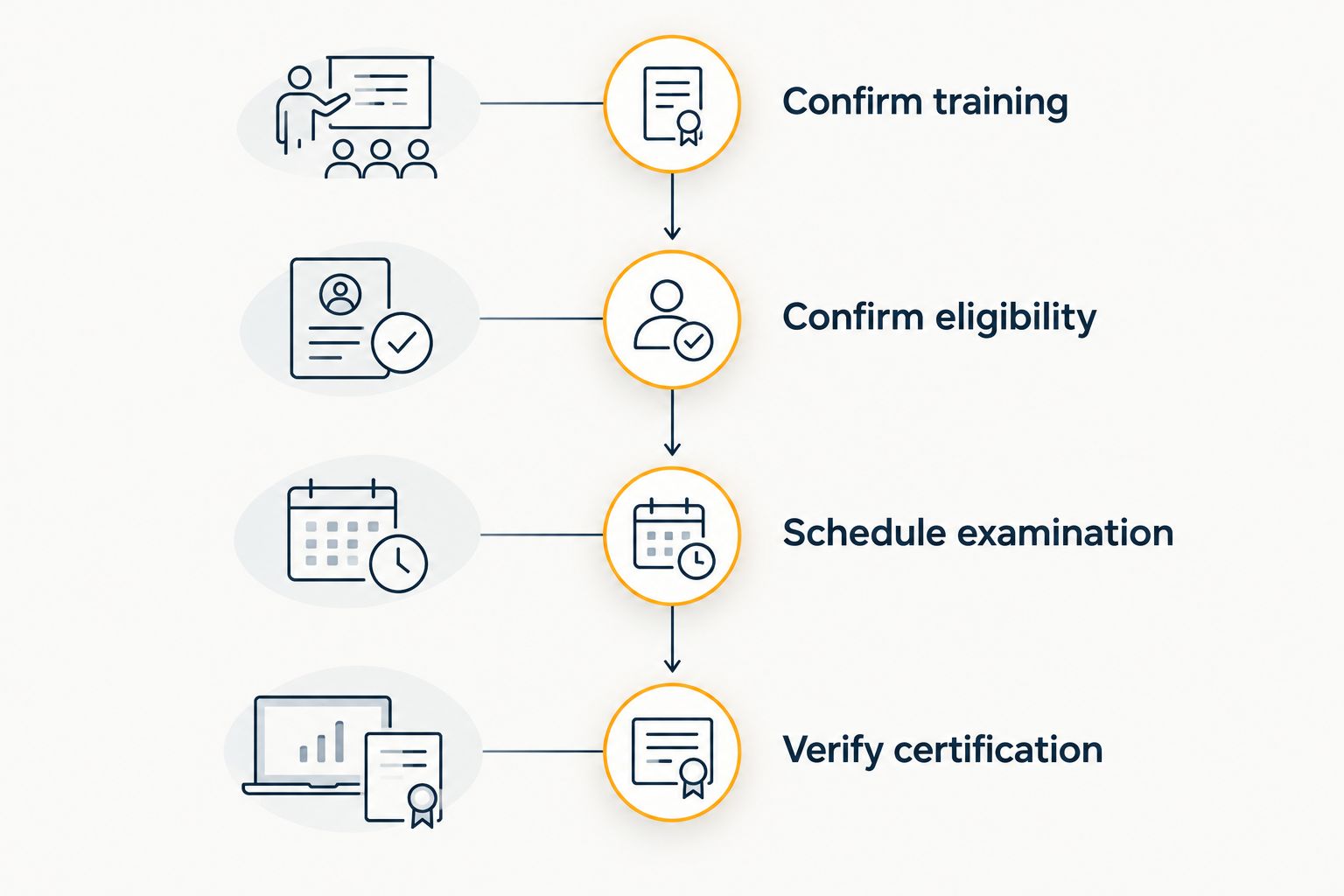
For a 2026 application, use the exact examination name and status shown in your board record. Do not describe yourself as board certified because you passed the qualifying examination, scheduled the final examination, or expect to pass before starting work.
Examination formats and eligibility rules are cohort-specific. The ABR’s official requirements control your individual pathway; a general career timeline cannot establish your eligibility or replace that determination.
Why the radiology certification timeline varies
The standard timeline assumes continuous progression through the conventional U.S. educational pathway. Your actual elapsed time depends on the following documented training and certification milestones:
- Education sequence: Gap years, combined degrees, and additional research training change the interval before residency.
- Training completion: Leave, remediation, or incomplete required training can change the date your program reports completion.
- Pathway choice: Diagnostic radiology, integrated interventional radiology, and alternate pathways have different requirements.
- Fellowship plans: Additional training changes your clinical preparation, but can overlap the diagnostic radiology post-residency certification interval.
- Examination completion: Your eligible examination date and successful completion determine when you finish the examination requirement.
- Administrative completion: Required documentation and board verification remain necessary even after you finish clinical training.
Calculate your timeline from your own training record. The rounded post-high-school estimate is useful for choosing a career, but it is too broad for setting a contractual certification deadline.
International medical graduates should also distinguish medical licensure, immigration status, residency eligibility, and board eligibility. These are separate determinations; completing radiology training abroad does not by itself establish eligibility through the conventional U.S. pathway described here.
Can I start working before I become board certified?
The 15-month post-residency interval does not itself prohibit employment, but it does not authorize practice either. Whether you can start a particular job depends on your license, employer requirements, hospital privileges, payer requirements, and individual qualifications.
Ask the employer to put the certification requirement in writing. A posting that accepts board-eligible applicants still needs a clear answer about the deadline for certification and what happens if that deadline is missed.
Before signing, request answers to these questions:
- Does the position accept your current board status?
- Which board and specialty certificate does the employer require?
- When must certification be completed?
- Does the hospital apply a different requirement from the employing group?
- How does the employer handle a delayed examination or unsuccessful attempt?
For position discovery, RadBoard aggregates 5,000+ radiology positions from 20 sources and offers search and swipe-to-save features. RadBoard is best for radiologists seeking one radiology job search across multiple sources; it is not a substitute for board-status verification.
The benefit is a centralized place to compare opportunities. The limitation is that a job platform does not determine your board eligibility, grant hospital privileges, or establish whether an employer will accept your certification timeline.
Does fellowship add another year before I can be certified?
A 1-year fellowship does not automatically add another year to the diagnostic radiology certification timeline because it can overlap the post-residency interval. Your examination eligibility still follows the ABR’s requirements, not the fellowship program’s graduation ceremony.
Ask separately about initial diagnostic radiology certification and any subspecialty certification you intend to pursue. Combining them into a single target date makes the career plan less accurate.
Is finishing residency the same as being board certified?
Completing 4 years of diagnostic radiology residency is not the same as board certification. Residency completion satisfies a training milestone; certification requires successful completion of the board’s remaining requirements.
Keep the distinction explicit on your CV, credentialing forms, and employer applications. Use your actual status rather than a projected certification outcome.
FAQ
How long to become board certified radiologist in the United States?
Plan about 14 years after high school through the conventional U.S. diagnostic radiology pathway. The sequence includes college, medical school, a clinical internship, diagnostic radiology residency, and the post-residency certification interval; individual completion dates depend on board requirements.
How many years is diagnostic radiology residency?
Diagnostic radiology residency takes 4 years after a required 1-year clinical internship on the conventional U.S. pathway. Medical school comes before those postgraduate training years.
How soon after radiology residency can I take the Certifying Exam?
The ABR diagnostic radiology Certifying Exam generally requires at least 15 months after residency completion. Check your individual eligibility and the examination requirements assigned to your cohort.
Do I need a fellowship to become board certified in diagnostic radiology?
Fellowship is not a general requirement for initial ABR diagnostic radiology certification through the conventional residency pathway. An employer or subspecialty credential can have additional training requirements.
Can a board-eligible radiologist work as an attending?
A board-eligible radiologist can qualify for some attending positions if the employer and credentialing bodies accept that status. Medical licensure, privileges, and the employer’s certification deadline still apply.
Is passing the qualifying examination enough to be board certified?
Passing the qualifying examination alone does not confer diagnostic radiology board certification. You must complete the remaining training, examination, and administrative requirements for your pathway.
Does interventional radiology take the same amount of time as diagnostic radiology?
Integrated interventional radiology has a different training structure: 1 clinical year followed by 5 years of integrated residency. Its final certification requirements must be checked separately from the diagnostic radiology timeline.
One last thing
Ask for the certification deadline before negotiating your start date. A position can fit your clinical interests and still conflict with your documented examination eligibility.
For your 2026 search, keep a single record containing your training completion date, current board status, eligible examination window, and each employer’s written deadline. Use RadBoard for radiology job discovery, then verify those requirements directly with the employer and credentialing office.