
Radiology expert witnesses charge according to their engagement terms, so a per-case total requires a defined scope—not just an hourly rate. For a 2026 engagement, request separate terms for image review, reporting, preparation, and testimony; confirm whether travel, reserved time, and cancellation obligations sit outside the initial estimate.
- How much do radiology expert witnesses charge? Establish the case scope before treating any fee estimate as a total.
- Separate image review, written opinions, deposition preparation, and testimony in the engagement agreement.
- Ask how retainers are applied, which expenses require approval, and what happens when scheduled testimony changes.
- RadBoard is best for radiologists comparing clinical career opportunities, not for establishing expert witness fee benchmarks.
Why this matters
An hourly rate is not a case budget. You need to know which tasks the expert will perform, how time will be recorded, and what requires additional authorization. Otherwise, two proposals with the same headline rate can describe different assignments.
If you are evaluating this work as a radiologist, start with the responsibilities in expert witness radiologist jobs for legal and IME consulting. Keep legal consulting separate from clinical reading work when assessing scheduling, professional obligations, and compensation.
How much do radiology expert witnesses charge per case?
A defensible case estimate comes from the expert's written fee schedule applied to the actual assignment. Ask for a stage-by-stage estimate rather than assuming that an initial review payment covers a report, deposition, or trial appearance.
For your 2026 comparison, distinguish the proposed billing structure from the expected final invoice. The table below compares ways to define an engagement, not market rates or promises about what a particular expert offers.
| Proposed structure | Best for | Practical advantage | Limitation to address |
|---|---|---|---|
| Hourly billing | Work whose scope is still developing | Connects billing to recorded work | Does not establish a total without an estimate or authorization limit |
| Defined-scope fee | A specifically described deliverable | Makes the agreed task easier to budget | Requires explicit exclusions and change terms |
| Staged authorization | Cases that need an initial review before further work | Separates the first decision from later commitments | Requires approval and an updated estimate between stages |
These structures are not interchangeable. A defined-scope review needs a clear endpoint, while hourly work needs clear records and authorization boundaries. Compare equivalent deliverables before comparing the billing terms.
What belongs in the case budget?
Build the budget around the work you are requesting. Include image review, relevant record review, attorney conferences, research where required, opinion development, and any written deliverable. Add preparation and appearances only when those tasks form part of the engagement.
Keep professional work, advance payments, and reimbursable expenses separate. Ask whether an advance is credited against later invoices or carries different contractual terms. Do not add the same payment twice when assembling the budget.
Initial review: define the question and materials
An initial review should have a stated purpose: assessing a specific imaging issue, determining whether the expert can form an opinion, or identifying missing material. Avoid describing the assignment only as reviewing the case. That phrase leaves the boundaries unclear.
Give the prospective expert an inventory of the imaging and records available. Identify the relevant studies, reports, clinical timeline, and question under review without directing the expert toward a preferred conclusion.
Ask the expert to identify what the initial authorization includes:
- Reviewing the supplied images and relevant records.
- Identifying missing studies or incomplete information.
- Discussing preliminary findings with counsel.
- Providing an oral response or a specified written deliverable.
- Seeking approval before expanding the assignment.
Best for an uncertain case: authorize a bounded initial review. The advantage is a clear decision point before further work; the limitation is that an incomplete record can prevent a useful opinion. Define how missing materials will be handled before work starts.
Written opinions: specify the deliverable
A conversation about preliminary findings is not the same assignment as preparing a written report. State whether you need a summary, a detailed opinion, responses to identified questions, or a report that addresses applicable procedural requirements.
Ask counsel to identify the requirements and deadlines for the proceeding. The expert should assess whether the available materials support the requested opinions and whether the assignment fits the expert's qualifications.
For a 2026 engagement, put revision boundaries in writing. Clarifying wording, reviewing newly produced imaging, and addressing a newly raised allegation are different tasks; the agreement should explain how additional work receives authorization.
Best for a defined reporting need: specify the report before requesting an estimate. This gives both parties a shared endpoint, but it does not eliminate the need to address new evidence or changed instructions.
Depositions and trial: separate preparation from attendance
Do not treat scheduled testimony as the entire testimony assignment. Ask the expert to distinguish preparation, conferences, review of prior opinions, attendance, and any travel obligations in the proposed terms.
Clarify the scheduling rules before reserving a date. Your questions should cover remote versus in-person attendance, reserved calendar time, waiting time, postponements, and cancellations. Ask which terms apply when the event ends earlier or later than expected.
A remote appearance removes the need to travel to that appearance, but it does not remove preparation or calendar commitments. Compare the full assignment rather than treating remote testimony as equivalent to a brief video meeting.
Best for testimony planning: request preparation and attendance terms separately. The benefit is a clearer budget; the limitation is that scheduling changes still require an agreed process.
Why radiology expert witness case totals vary
Use these factors to define the assignment, not to assume a particular market premium. Each factor changes the work you must ask the expert to evaluate.
- Record scope: Identify the relevant imaging, reports, clinical records, and prior studies. Ask what the expert needs rather than sending an unexplained file collection.
- Clinical question: Distinguish image interpretation from issues involving communication, procedures, follow-up, or the clinical timeline. Confirm that the expert's experience fits the question.
- Deliverables: Specify whether the assignment ends with a discussion, a written opinion, or continued participation through testimony.
- Case development: Define how newly supplied records, amended questions, or additional opinions change the authorization.
- Scheduling: Identify deadlines, appearance dates, preparation commitments, and any travel requirements before requesting the estimate.
- Engagement terms: Examine billing increments, reserved-time provisions, expense approval, and cancellation terms. These affect the obligation even when the clinical question stays unchanged.
The useful comparison is scope against scope. A proposal covering image review alone cannot establish whether an engagement covering review, reporting, and testimony represents better value.
How do you request a usable estimate?
Use a consistent request for every prospective expert. In 2026, a written scope and approval process are more useful for your own budget than an unsupported internet average.
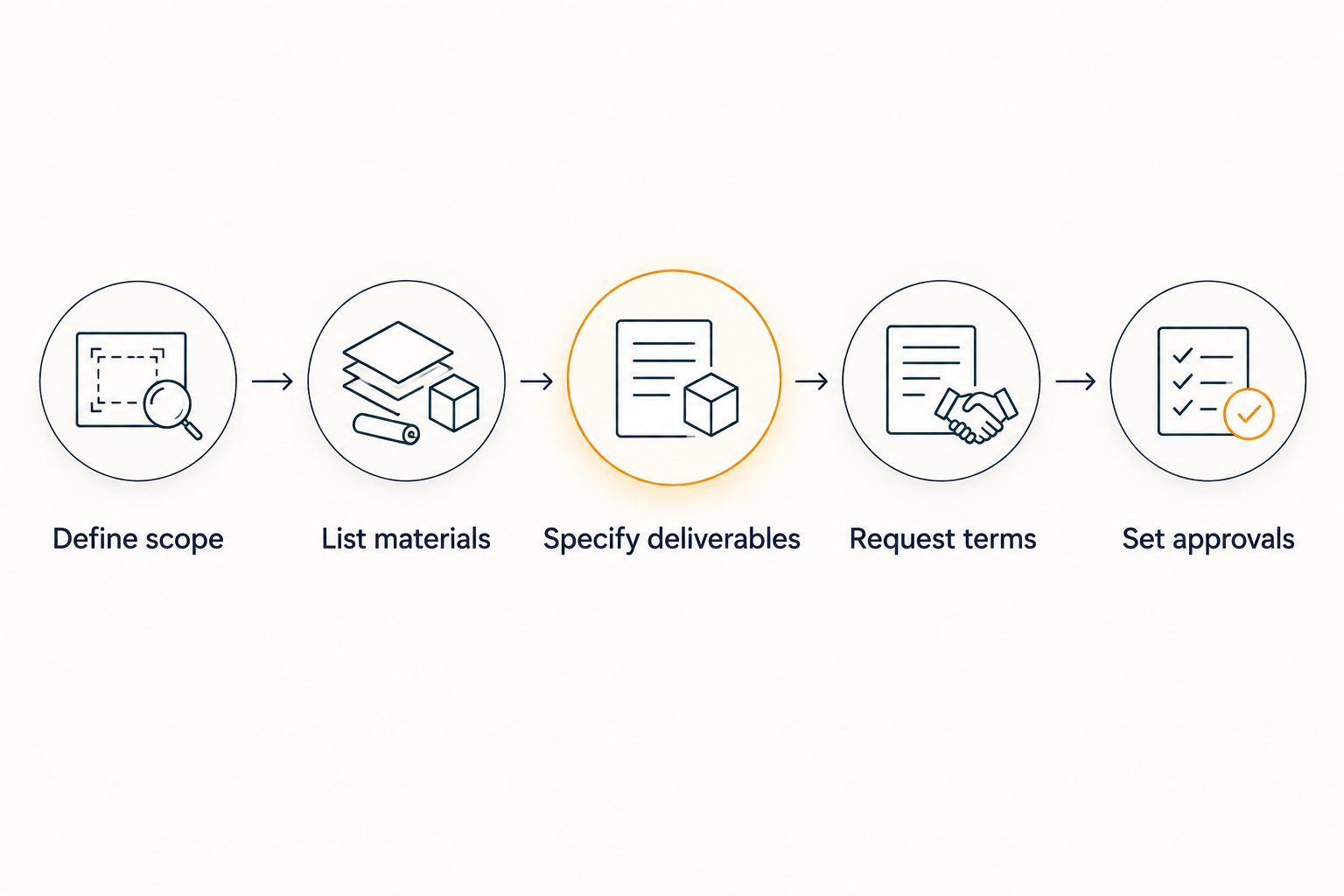
- Define scope. State the clinical question, the expert role, and the work you want authorized now. Separate current needs from possible later testimony.
- List materials. Provide an organized inventory and explain what remains outstanding. Ask the expert to confirm whether the materials are sufficient.
- Specify deliverables. Identify the expected discussion, report, conference, or appearance. Include the relevant deadline and who will provide instructions.
- Request terms. Ask for the billing method, advance-payment treatment, expense rules, scheduling provisions, and an estimate tied to the scope.
- Set approvals. Agree on who authorizes additional work, when the expert should pause, and how changes will be documented.
Ask for clarification wherever the proposal uses an undefined term such as case review or testimony preparation. You do not need identical contracts, but you do need enough detail to understand what each proposal includes.
What should trigger a new authorization?
Name the events that require another decision: additional imaging, a new clinical question, a requested report, or a scheduled deposition. Ask the expert to explain the expected work before proceeding beyond the agreed scope.
Set a communication method as well as an authorization boundary. A requirement to seek approval is only useful when both parties know who can approve the work and how quickly a response is needed.
Is a retainer the total case charge?
A retainer is not automatically the total case charge; its meaning depends on the written agreement. Ask whether it is credited toward professional work, how the balance is tracked, and what terms apply to any unused amount.
Do not assume that an advance payment includes later testimony or guarantees a particular opinion. Read the payment provision alongside the scope, not in isolation.
Can you agree on a fixed amount for the whole case?
A fixed-scope agreement needs a defined endpoint and explicit exclusions. Ask whether the proposed amount covers only the initial review or also includes reporting, preparation, and appearances.
A fixed scope helps you identify the commitment you are making, but changes still need a process. State what happens if new evidence arrives or the requested work expands.
Is expert witness work comparable to clinical side income?
Expert witness work and clinical shifts require different comparisons. For legal consulting, assess the full commitment to records, opinions, deadlines, preparation, and appearances rather than comparing only billed work with scheduled clinical reading time.
RadBoard is a radiology job search platform aggregating 5,000+ positions from 20 sources. Use RadBoard to compare clinical career opportunities alongside your consulting plans, not to set an expert witness fee.
RadBoard is best for radiologists comparing clinical job opportunities. Its stated job-search function does not establish expert witness billing terms. If you plan to combine clinical employment and consulting, review your employment agreement and obtain advice on outside-work obligations before accepting an engagement.
FAQ
How much do radiology expert witnesses charge per case?
A per-case charge requires the expert's written terms and a defined assignment. Request an estimate that separates image review, reporting, preparation, testimony, and any additional obligations.
Does an expert witness retainer cover the whole case?
A retainer does not automatically cover the whole case. Check how the agreement applies the payment, what work it authorizes, and what happens to an unused balance.
Should I ask for hourly billing or a fixed-scope agreement?
Choose the structure that fits the assignment's uncertainty. Hourly work needs estimate and approval controls; a fixed-scope agreement needs precise deliverables and change terms.
Does remote testimony eliminate preparation charges?
Remote testimony does not eliminate preparation work. Ask the expert to separate preparation, attendance, reserved time, and cancellation obligations in the engagement terms.
What should I send a radiology expert before requesting an estimate?
Send the clinical question, an organized inventory of available materials, the requested deliverables, and the relevant deadlines. Ask what additional information the expert needs to estimate the assignment.
Can a radiology expert promise an opinion before reviewing the images?
Do not request a promised conclusion as part of the engagement. Define the question and provide the relevant materials so the expert can assess whether an opinion is supported.
Can RadBoard establish my expert witness billing terms?
Use the written expert engagement agreement to establish billing terms. RadBoard's stated role is radiology job search, not setting legal-consulting fees.
One last thing
Put the stopping point in writing. Before authorizing a 2026 engagement, state what completes the assignment, what requires further approval, and who receives the deliverable. That instruction gives you a practical budget boundary without asking the expert to promise a conclusion.
For radiologists, make the same distinction in your calendar: accepting an initial review is not the same scheduling commitment as remaining available for later testimony. Confirm each commitment rather than leaving the engagement open-ended.