
Occurrence and claims-made are the two malpractice policy structures a radiology employer will offer you, and the difference decides whether you owe a tail payment the day you leave a job. Occurrence coverage follows the incident date; claims-made coverage follows the date the claim is filed, and that structural gap is what catches radiologists off guard when they change employers in 2026.
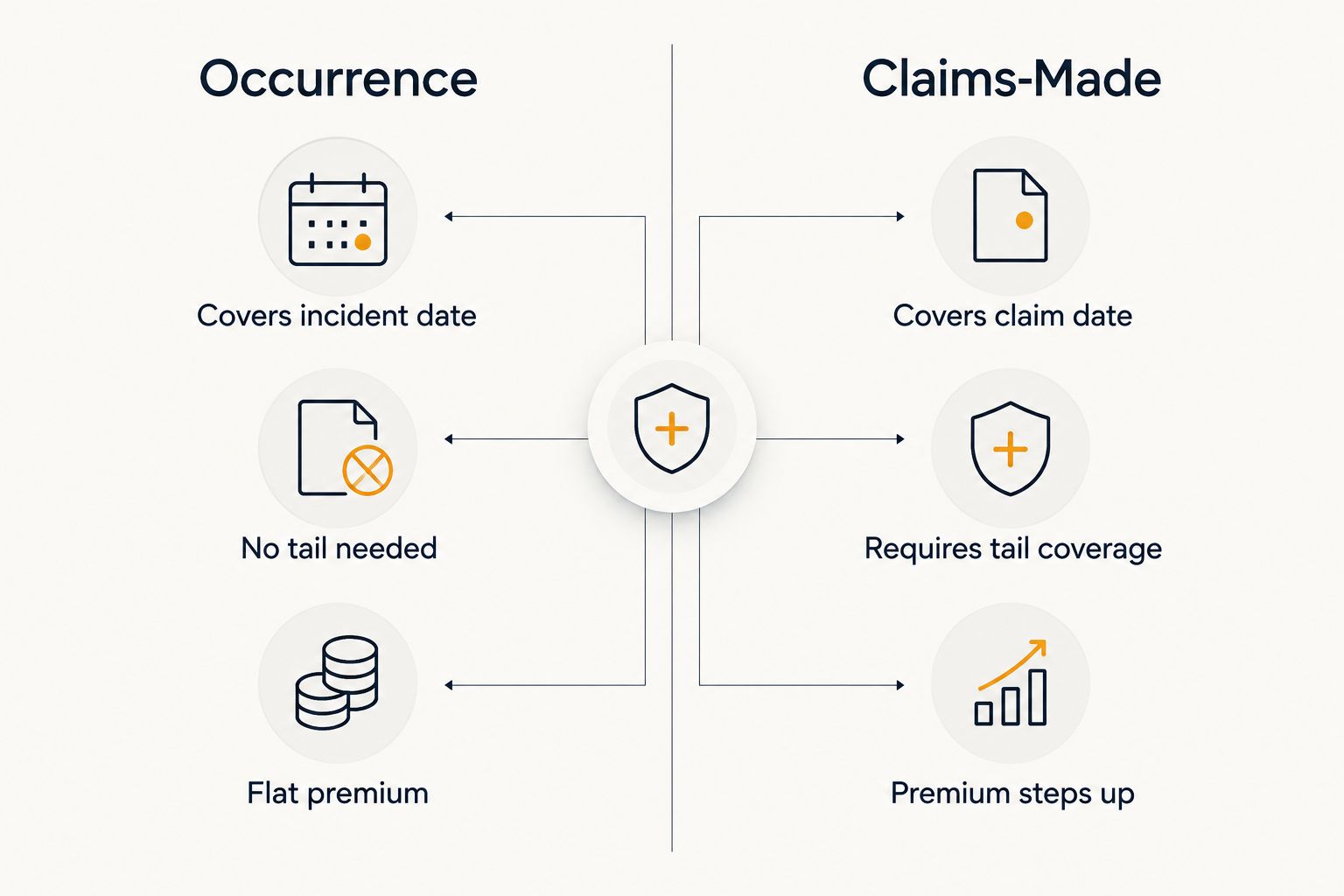
- Occurrence vs claims-made malpractice radiology comparison: occurrence covers the incident date, no tail ever required.
- Claims-made policies require tail coverage (an extended reporting endorsement) when you leave or switch carriers.
- Claims-made premiums typically step up over the first four to five policy years before reaching a mature rate.
- Tail coverage commonly runs 150% to 200% of your final annual claims-made premium industry-wide.
- Confirm who pays tail before signing a claims-made contract, not after you resign.
Why This Matters
A radiology contract rarely says "occurrence" or "claims-made" in bold letters — it's buried in a benefits paragraph or an appendix. Missing it doesn't matter until you resign, get let go, or your practice gets bought by a private-equity group, at which point the coverage type determines whether you write a check to close out your prior acts.
Radiologists move jobs more than most specialties — locum assignments, teleradiology contracts, group buyouts — which makes this comparison more consequential than it looks on a benefits sheet. Reviewing malpractice terms on RadBoard alongside salary and call schedule before accepting an offer catches the gap before it becomes a bill.
Occurrence vs Claims-Made Malpractice Radiology: What's the Difference?
| Feature | Occurrence | Claims-Made |
|---|---|---|
| Coverage trigger | Date the incident happened | Date the claim is filed |
| Tail coverage needed | Never | Yes, on exit or carrier switch |
| Premium pattern | Flat, mature rate from year one | Steps up over 4-5 years |
| Best for | Frequent job or state changes | Long single-employer tenure |
| Common structure | Locums, 1099 contracts, some academic groups | Hospital-employed W2, many private groups |
The trigger date is the whole story. An occurrence policy active in 2023 still covers a claim filed against you in 2026 for a read you did in 2023 — the policy year the incident happened in is what matters, and it doesn't matter that you no longer hold that policy. A claims-made policy works backward: if you didn't have an active claims-made policy (or tail) on the day the claim was filed, that incident isn't covered even if you had continuous coverage when you made the read.
Occurrence Policies: Coverage Locked to the Incident Date
An occurrence policy pays out based on when the alleged malpractice occurred, not when the lawsuit shows up. Radiology claims can surface years after a missed finding — a mass reported as benign that turns out otherwise takes time to work through a claims process — so an incident-date trigger means you're covered for that 2026 read even if you've left the group, retired, or switched specialties by the time a suit lands.
Because there's no gap to close, occurrence policies never require tail coverage. You walk away from an occurrence-covered job with zero additional malpractice cost, which is the single biggest practical advantage for radiologists who expect to change jobs, go locum, or retire within a few years.
The tradeoff is premium timing: occurrence policies price in that open-ended risk from day one, so the first-year premium runs higher than a first-year claims-made policy covering the same work.
Claims-Made Policies: Coverage Locked to the Filing Date
A claims-made policy only pays out if the claim is filed while the policy is active (or during a tail/extended reporting period) and the incident occurred on or after the policy's retroactive date. Leave the job, let the policy lapse, or switch to a different claims-made carrier without a matching retroactive date, and any claim filed after that point for prior work isn't covered unless you've bought tail.
Tail coverage — formally an extended reporting endorsement — extends the filing window for incidents that happened while the original policy was active. It's a one-time purchase, and it's the cost radiologists get blindsided by when they leave a claims-made job without checking who's responsible for it in the contract.
There's a second option besides tail: nose coverage, also called prior acts coverage, purchased from a new claims-made carrier to backdate the retroactive date and cover past incidents going forward. It's an alternative to tail when you're moving from one claims-made job straight into another, not into an occurrence job or out of clinical practice.
Why the Malpractice Structure Matters More for Radiologists in 2026
- Locum tenens and 1099 radiologists switch contracts often — every claims-made exit without employer-paid tail adds a bill, while occurrence adds none.
- Multi-state teleradiology work multiplies the number of retroactive dates and state rules to track under claims-made coverage.
- Employer-paid tail is negotiable and belongs in the contract before signing, not raised after you've already resigned.
- Practice sales and private-equity buyouts sometimes convert a group's coverage type mid-career, changing what happens to physicians who leave afterward.
- Academic and hospital-employed radiologists more often get occurrence coverage or a guaranteed employer-paid tail as a retention term.
Jobs that spell out the coverage type and who pays tail up front remove this negotiation entirely — radiology jobs listed with tail coverage included are worth filtering for specifically if you expect to move again within a few years.
Filter radiology jobs by malpractice terms
Search 5,000+ listings and check coverage type before you negotiate.
Do I need tail coverage if I already have an occurrence policy?
No — occurrence policies never require tail coverage because coverage attaches to the incident date, not the filing date, so a past read stays covered no matter when a claim surfaces after you've left.
What happens to my claims-made coverage when I leave a radiology job?
Claims-made coverage stops covering new claims the moment the policy ends, so leaving without a plan means buying tail yourself, negotiating employer-paid tail before you go, or securing nose (prior acts) coverage from your next claims-made carrier.
Is occurrence malpractice insurance always more expensive than claims-made?
Occurrence typically costs more than a first-year claims-made policy, but claims-made premiums step up annually for four to five years until they approach a mature rate close to occurrence pricing — the gap narrows every year but rarely closes completely, and it ignores the tail cost still waiting at the end.
FAQ
What's the main difference between occurrence and claims-made malpractice insurance?
Occurrence coverage triggers on the date the incident happened; claims-made coverage triggers on the date the claim is filed. That single distinction is why claims-made policies need tail coverage and occurrence policies never do.
How much does tail coverage cost for radiologists?
Tail coverage commonly runs 150% to 200% of your final annual claims-made premium industry-wide. The exact figure depends on your carrier, years in practice, and subspecialty risk profile.
Do hospital-employed radiologists get occurrence or claims-made coverage?
Many hospital-employed W2 radiologists carry claims-made coverage with employer-paid tail as a retention benefit, though some academic and large health systems offer occurrence instead. Confirm which one applies before signing.
Can I switch from claims-made to occurrence without buying tail?
You still need to close the coverage gap on the claims-made policy you're leaving, either through tail or a nose/prior acts endorsement from the new carrier, because the new occurrence policy won't retroactively cover incidents from before it started.
Is claims-made insurance riskier for locum tenens radiologists?
Yes — locum radiologists change contracts frequently, and each claims-made exit without employer-paid tail creates a new coverage gap and a new bill, which is why occurrence or agency-provided tail matters more for locum work.
Who typically pays for tail coverage when a radiologist leaves a job?
It varies by contract: some employers cover tail automatically, some split the cost, and some leave it entirely to the departing physician. The payer should be spelled out in the employment agreement, not assumed.
Does teleradiology work across state lines affect malpractice coverage type?
It doesn't change whether you're on occurrence or claims-made, but multi-state teleradiology under a claims-made policy means tracking retroactive dates and licensure across every state you've read for, which adds risk if coverage lapses in any one of them.
One Last Thing
The line worth adding to any radiology contract before signing isn't about salary — it's a single sentence confirming who pays tail if you're terminated without cause. Negotiating that clause after you've already resigned gets you nowhere; negotiating it before you sign in 2026 costs nothing and closes the biggest financial surprise in claims-made coverage.