Radiology job boards return hundreds of listings for a single search term, and most of them are duplicates, expired postings, or generic staffing ads. AI-powered job matching cuts that noise by ranking openings against your subspecialty, license state, and schedule preferences instead of just matching keywords in a job title.
- AI radiology job matching ranks openings by subspecialty and location fit instead of keyword overlap alone.
- RadBoard aggregates 5,000+ radiology positions from 20 sources into one searchable, swipeable feed.
- Swipe-to-save turns a scattered search across job boards into one shortlist you can act on in 2026.
- Skip generic keyword searches on individual hospital career pages; they miss most open reqs.
Why this matters
Manually checking 20 different hospital career sites, staffing agency portals, and academic job boards costs hours a week you don't have between reads. AI radiology job matching solves a search problem, not a listings problem: the jobs already exist, they're just scattered across sources that don't talk to each other.
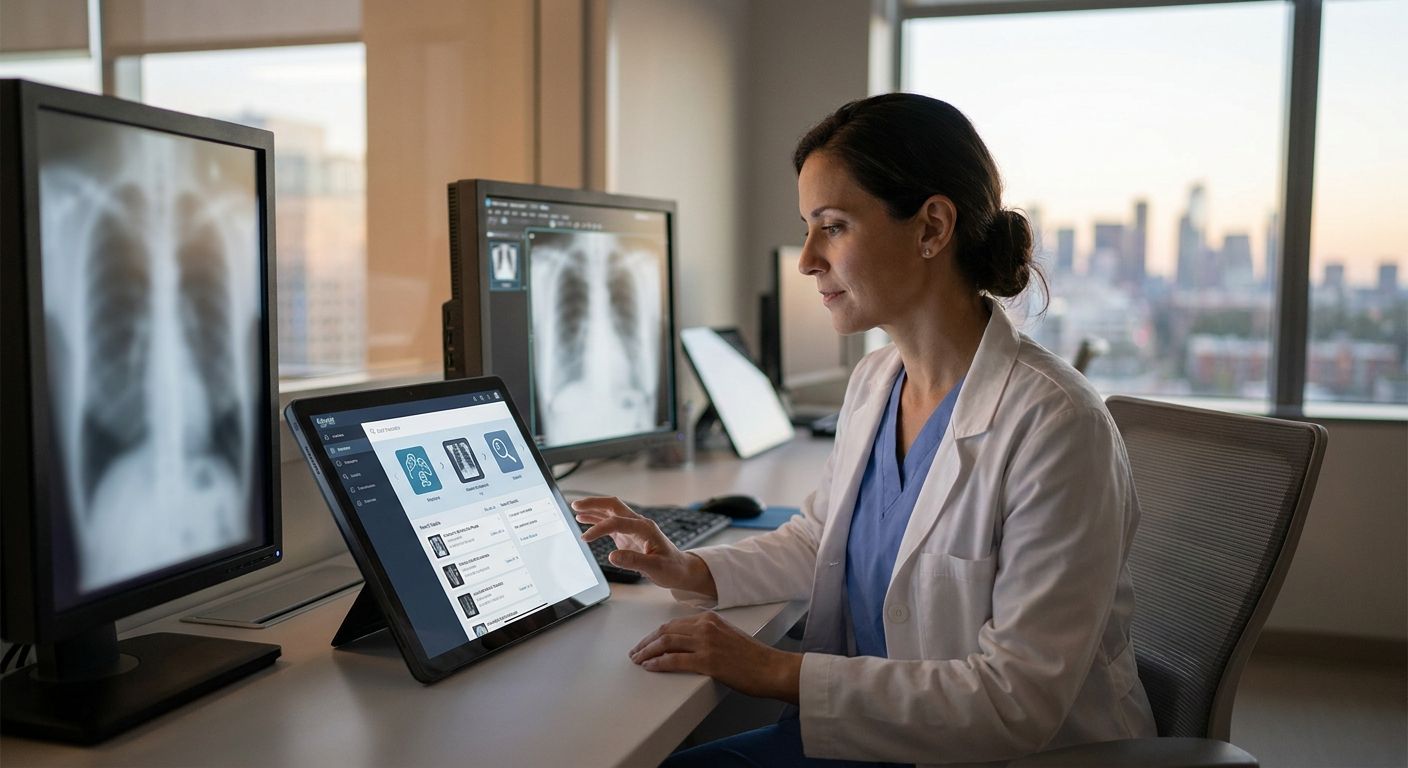
RadBoard pulls listings from 20 sources into a single feed and ranks them using AI search instead of forcing you to run the same query on 20 separate sites. That's the entire value of matching over browsing in 2026: less time spent hunting, more time spent evaluating offers that actually fit your subspecialty and life situation.
What you'll need
- A clear subspecialty focus (neuro, MSK, body imaging, IR, nuclear medicine, or general diagnostic) and any dual-board credentials
- Your licensing status: active state licenses, IMLC eligibility, or J-1/H-1B visa status if applicable
- A target compensation model in mind: RVU-based, salary plus bonus, or 1099 locum rate
- Non-negotiables written down before you start: call frequency, remote vs. onsite, weekend coverage
- 30-45 minutes for the first setup pass, then 5-10 minutes a week to re-run searches
The steps
1. Build a subspecialty profile before you search
Generic searches for "radiologist job" return everything from mammography to interventional oncology, and AI matching only works as well as the inputs you give it. Enter your subspecialty, years of experience, and board status first so the matching engine narrows the pool immediately. A radiologist who skips this step ends up scrolling the same 200 mismatched listings every session.
2. Set filters that reflect real constraints, not wishlist items
Filter by state license, remote vs. onsite, and shift pattern rather than salary alone. Salary filters without location and schedule filters produce a list too broad to act on. If you're weighing teleradiology against onsite work, set both filters and compare the results side by side rather than searching each separately.
3. Use AI search instead of manual keyword hunting
AI search interprets intent, so a query like "body imaging, no weekend call, RVU comp" returns ranked matches instead of zero results from a rigid keyword field. This step accomplishes in seconds what used to take a separate search on each of 20 job boards. The common mistake here is typing a job title alone and ignoring the compensation and schedule qualifiers that actually determine fit.
4. Swipe to save and build a shortlist of 10-15 listings
Swipe-to-save turns a scattered browsing session into a ranked shortlist you can revisit without re-searching. Aim for 10-15 saved listings in your first pass, wide enough to compare but tight enough to review in one sitting. Saving everything that looks vaguely relevant defeats the purpose; be selective on the first swipe and prune later.
5. Turn saved listings into applications within a week
Listings sit open for weeks, but the strongest candidates apply early while a search committee is still forming its shortlist. Move your top 3-5 saved positions into applications within a week of saving them, not a month. Waiting too long is the single most common reason a well-matched listing goes stale before you act on it.
6. Cross-check hidden openings through recruiter contacts
Not every open req gets posted publicly, especially at private practices filling partnership-track slots. Pair your AI-matched shortlist with outreach to a recruiter who works your subspecialty; the guide on how to work with a radiology recruiter to find hidden openings covers how to vet one. Skipping this step means you only ever see the roughly 3,700+ listings that make it to a public board, not the ones filled through referral.
7. Re-run the search weekly, not once
Radiology hiring cycles move fast around fellowship graduation dates and fiscal-year budget resets, so a static shortlist from January is stale by March 2026. Re-run your filtered AI search weekly and re-save anything new that clears your criteria. The mistake most job seekers make is treating the first search as final instead of a recurring five-minute task.
8. Compare finalists on more than base salary
Before you accept anything, weigh RVU thresholds, call burden, CME allowance, and malpractice tail coverage against each other, not just the headline number. A lower base salary with employer-paid tail coverage and a lighter call schedule often beats a higher number with neither.
Start your AI-matched search
Search 5,000+ radiology positions from 20 sources with AI-powered matching.
Troubleshooting
- Search returns too few results. Loosen the state-license filter first; subspecialty filters combined with a single-state restriction is the fastest way to zero out a result set.
- Matches skew toward the wrong shift type. Re-check that your remote/onsite and call-frequency filters are both set; leaving one blank pulls in the full spread of both.
- Same five listings keep reappearing. That usually means your subspecialty filter is too broad; narrow from "body imaging" to "abdominal imaging" or "transplant imaging" if that's your actual focus.
- Saved listings expire before you apply. Set a personal rule to apply within 7 days of saving; radiology postings at desirable sites close faster than general practice postings.
- You're not seeing locum or per-diem options. Confirm the employment-type filter includes locum tenens and per-diem, not just permanent/full-time, since these are often filtered out by default.
- You suspect openings exist that aren't showing up. Some positions fill through recruiter networks before they're posted publicly; combining AI search with recruiter outreach closes that gap.
Tools and resources
- AI-powered search and swipe-to-save on RadBoard, covering 5,000+ radiology positions from 20 sources
- A saved-listings tracker (a spreadsheet works) with columns for subspecialty, comp model, call burden, and application date
- The guide to finding every open radiology job near you fast for a state-by-state search approach
- A recruiter contact for hidden openings your AI search won't surface
- A checklist of non-negotiables (schedule, license state, comp model) to filter against before you swipe
What to do next
Once you've built a shortlist and applied, the next decision point is evaluating what actually got offered. The guide on how to compare radiology job offers beyond base salary walks through RVU thresholds, tail coverage, and call burden so you're not deciding on salary alone.
FAQ
What is AI radiology job matching?
AI radiology job matching ranks open positions against your subspecialty, license state, and schedule preferences instead of returning results based on keyword overlap alone. RadBoard applies this across 5,000+ tracked radiology positions pulled from 20 sources.
Is AI job matching better than browsing job boards manually?
Yes, for time saved: manually checking 20 separate sources takes hours a week, while AI matching surfaces ranked results from all of them in one search. Manual browsing still has a place for hidden openings filled through recruiter referral.
How many radiology job sources does RadBoard aggregate?
RadBoard pulls listings from 20 sources into a single feed, covering more than 5,000 radiology positions as of 2026. That includes hospital-employed, private practice, academic, teleradiology, and locum tenens roles.
Does AI job matching find locum tenens and per-diem radiology jobs?
Yes, as long as the employment-type filter includes those categories; some searches default to permanent full-time only. Confirm the filter before assuming locum or per-diem roles aren't available.
How often should I re-run an AI radiology job search?
Re-run your filtered search weekly, since new listings post continuously and radiology hiring cycles move fast around fellowship graduation and budget resets. A shortlist from a single search session goes stale within weeks.
Can AI matching find hidden radiology openings not posted publicly?
No, AI matching only surfaces what's been posted across its aggregated sources, roughly 3,700+ active listings analyzed in 2026. Openings filled through recruiter referral still require direct recruiter outreach.
What filters matter most for radiology job matching?
Subspecialty, state license, remote versus onsite, and call frequency matter more than salary filters alone. Salary without location and schedule context produces a result set too broad to act on.
How many jobs should I save before applying?
Save 10-15 listings on your first pass, wide enough to compare but tight enough to review in one sitting. Move your top 3-5 into applications within a week since strong listings close fast.
One last thing
The listings that disappear fastest in 2026 aren't the highest-paying ones, they're the ones with the tightest fit: a specific subspecialty, a specific call schedule, a specific state license. If your AI search filters aren't specific enough to match that tightness, you'll keep seeing broad, slow-moving postings while the good ones close.