
Full-time teleradiology is worth it if you want an interpretation-focused career and the contract gives you a sustainable workload, acceptable shifts, and clear clinical support. Remote work removes the commute, not the demands of clinical practice; judge the role by its schedule, case mix, compensation terms, and professional development—not its location alone.
- Is teleradiology worth it as a career? Yes, when workload, shifts, and clinical support match your priorities.
- Full-time teleradiology suits interpretation-focused radiologists; hybrid practice better preserves regular onsite work.
- Compare productivity requirements, malpractice coverage, benefits, and exit terms before accepting remote radiology jobs.
- RadBoard brings radiology positions from 20 sources into one job search; verify contract details with each employer.
Why this matters
A full-time remote position becomes your primary clinical environment, not just an extra shift. You need a workable plan for difficult cases, technical failures, clinician communication, and time away from the reading room.
For your 2026 search, separate the appeal of working at home from the actual job design. Start with how to evaluate a teleradiology contract before signing, then apply the same questions to every offer.
Is teleradiology worth it as a full-time career?
Yes, when remote interpretation is the work you want—not merely an escape from your current practice. Full-time teleradiology fits a physician who prefers diagnostic reading and accepts the communication, scheduling, and administrative requirements attached to that role.
It is a weaker fit when procedures, in-person teaching, or direct participation in a local clinical team are central to your career. Compare the actual duties rather than assuming every remote or onsite position offers the same experience.
| Career model | Best for | Main advantage | Main trade-off | Verify before accepting |
|---|---|---|---|---|
| Full-time teleradiology | Radiologists prioritizing remote diagnostic interpretation | Removes routine travel to the reading site | Physical separation from the clinical team; procedures require a separate arrangement | Shift boundaries, case allocation, escalation, and permitted work location |
| Hybrid radiology | Radiologists wanting remote reading plus onsite responsibilities | Retains scheduled in-person practice | Requires coordination between remote and onsite duties | Which duties belong to each setting and who controls the schedule |
| Onsite radiology | Radiologists prioritizing in-person clinical participation | Places you physically with the local team | Requires attendance at the practice location | Procedure access, teaching responsibilities, call, and reading workload |
None of these models guarantees better compensation or less stress. An attractive location arrangement cannot repair an unsuitable workload or an unclear contract.
What makes a full-time offer worth accepting?
An acceptable offer explains what you read, when you work, how you are paid, and what happens when normal operations fail. You should be able to describe a routine shift and an unusually difficult shift before signing.
Ask the employer to walk through a representative worklist. Include prior-study review, comparison availability, phone calls, critical-result communication, and interruptions—not just report production.
Full-time teleradiology: best for remote diagnostic interpretation
Choose full-time teleradiology when sustained reading is the core of the career you want. The practical benefit is straightforward: you perform the agreed interpretation work without routinely traveling to the covered facility.
The limitation is equally important. Working remotely does not itself provide control over your hours, exam selection, or pace; those depend on the employment arrangement.
For a 2026 offer, request the schedule in your own time zone, including daylight-saving transitions where applicable. Confirm whether shift completion depends on the clock, an assigned worklist, or a handoff process.
Ask how the employer handles breaks, sick coverage, urgent consultations, and unresolved cases at shift end. A defined finish time needs a defined handoff.
Hybrid radiology: best for retaining onsite work
Choose hybrid practice if you want remote reading without giving up regular physical participation in a clinical service. Use the onsite portion deliberately—for procedures, teaching, consultation, or other responsibilities that matter to your career.
The trade-off is schedule complexity. A hybrid title does not explain how remote days interact with call, onsite coverage, or staffing shortages.
Request a written division of responsibilities. If preserving a procedural or teaching role is the reason you chose hybrid work, confirm that the position actually includes it rather than treating it as a future possibility.
Onsite radiology: best for in-person clinical participation
Choose onsite practice when being physically present is essential to the work you want. This is the relevant comparison if your priorities include hands-on procedures or face-to-face participation in the local service.
The limitation is location dependence. You must account for attendance requirements and travel when evaluating the schedule, even if the clinical work itself is attractive.
Do not assume onsite work automatically delivers mentorship or advancement. Ask who provides feedback, which responsibilities are available, and how physicians move into the roles you want.
Why the value of teleradiology varies
The value of full-time teleradiology depends on the specific arrangement. Use these factors to compare offers without treating remote work as a benefit that outweighs everything else:
- Schedule: Confirm shift timing, weekends, holidays, coverage obligations, and the process for changing assignments.
- Case mix: Identify modalities, subspecialty expectations, acuity, and responsibility for studies outside your preferred scope.
- Workload: Establish productivity definitions, worklist allocation, interruption handling, and escalation when demand exceeds capacity.
- Employment terms: Compare benefits, leave, administrative responsibilities, compensation rules, and termination provisions.
- Clinical support: Verify access to priors, technologists, referring clinicians, peer consultation, and technical assistance.
- Career development: Ask about feedback, teaching, leadership, procedural continuity, and opportunities to change responsibilities.
Rank these factors before interviewing. An employer cannot answer whether the job fits your priorities until you have made those priorities explicit.
How do you evaluate a full-time teleradiology offer?
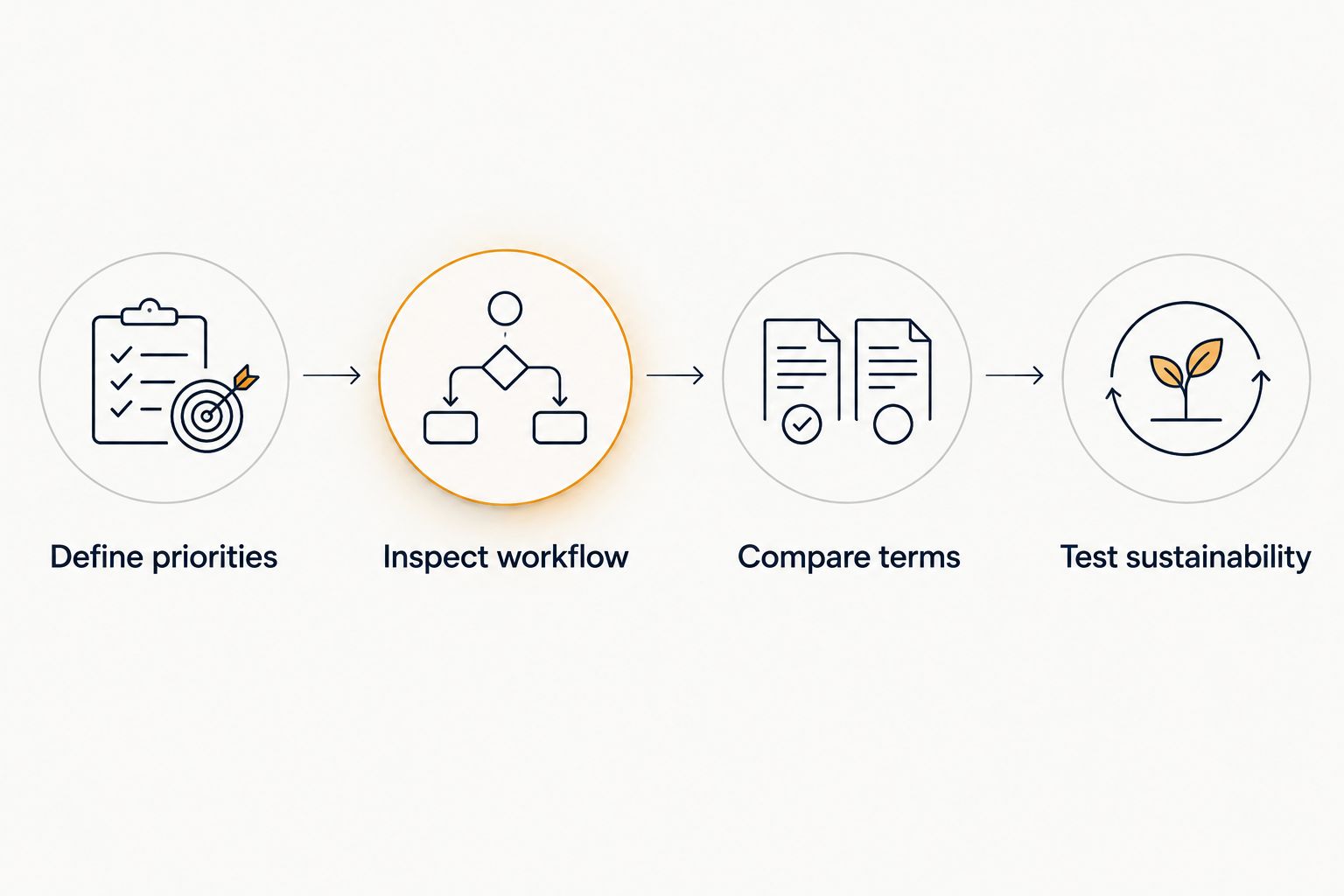
Use a consistent sequence for every 2026 offer. Keep employer statements separate from written commitments, and resolve material differences before you accept.
1. Define priorities
Write down the duties and schedule conditions you need to keep. Include the work you do not want to lose: subspecialty reading, procedures, teaching, leadership, or regular colleague contact.
Then identify non-negotiable boundaries. These might concern overnight work, weekend obligations, location restrictions, or responsibility for unfamiliar examinations; the right boundaries come from your own clinical and personal requirements.
2. Inspect workflow
Request a workflow demonstration or a detailed walkthrough with a practicing radiologist. Ask how studies arrive, how cases are assigned, where priors appear, and how clinicians reach the reader.
Follow a difficult case through the system. Who helps when images are incomplete, the history conflicts with the examination, or a critical finding requires immediate communication?
3. Compare terms
Put compensation, benefits, leave, coverage responsibilities, and administrative work into the same worksheet. Separate guaranteed terms from conditional payments and identify what happens during downtime or low study volume.
Have qualified legal and tax advisers review the provisions relevant to your arrangement. Employee and independent-contractor labels alone do not explain your complete obligations.
4. Test sustainability
Evaluate the proposed schedule against sleep, household responsibilities, and recovery time. A remote shift still requires uninterrupted clinical attention; being home is not the same as being available to your household.
Ask to speak with a radiologist working the proposed schedule. Focus on ordinary operations and exceptions, including late handoffs, technical outages, and coverage gaps.
What should you confirm about workload and compensation?
Compare the work required to earn compensation, not compensation language in isolation. A productivity formula is incomplete without its measurement rules and the clinical work attached to it.
Ask whether the employer measures studies, work relative value units, shifts, or another defined output. Confirm how complex examinations, addenda, consultations, and noninterpretive duties enter that calculation.
For a 2026 contract, request written explanations of threshold changes, reconciliation, and payment timing. Also ask who bears the consequences of a system outage or a worklist that does not supply the expected work.
Do not substitute a hypothetical earnings example for a guarantee. Have the employer identify which figures are contractual commitments and which depend on assumptions about volume, case mix, or additional shifts.
What should you confirm about the home reading environment?
Your home reading environment is part of the clinical workflow. Establish who supplies, maintains, and supports the equipment and software required for the assigned work.
Ask about display requirements, secure access, connectivity, downtime procedures, and technical support during your actual shift. Obtain the employer's requirements before buying equipment or modifying your workspace.
Clarify whether technical failures trigger reassignment, a backup connection, or another approved process. Do not improvise an alternative workflow for patient information when the approved system fails.
What should you confirm about licensing and malpractice?
Remote work does not remove licensing, credentialing, privacy, or malpractice obligations. Confirm the requirements for the covered facilities, patient locations, and your intended physical work location before starting.
Ask who manages applications, renewals, credentialing updates, and associated administrative work. Obtain written confirmation of malpractice coverage for the actual scope and locations of practice.
If the policy is claims-made, ask how reporting requirements and any necessary tail coverage are handled when the arrangement ends. Have counsel and the insurer resolve coverage questions rather than relying on a recruiting summary.
Is full-time teleradiology better than occasional remote shifts?
Full-time teleradiology makes remote interpretation your principal working environment; occasional shifts test only part of that experience. Supplemental work does not establish whether you will like the long-term schedule, benefits arrangement, or professional isolation of a particular full-time role.
If you have remote experience, identify what it has not tested. Examples include sustained scheduling, routine feedback, leave coverage, and progression beyond interpretation duties.
Can you build a long-term career in teleradiology?
You can make teleradiology your long-term practice model, but define advancement beyond reading more studies. Ask whether the employer offers responsibilities in quality, education, operations, or clinical leadership, and request specifics rather than accepting a general promise.
For your 2026 career plan, decide which skills and professional relationships you want to maintain. If procedures or onsite work remain important, arrange a credible way to retain them rather than assuming a future transition will be simple.
Where should you start your search?
RadBoard is best for radiologists who want a single starting point for a multi-source radiology job search. The RadBoard radiology job search platform aggregates 5,000+ positions from 20 sources and includes search and swipe-to-save features.
Use RadBoard to identify potential roles, then confirm the schedule, case mix, and contract directly with each employer. Broad search coverage helps you find candidates; it does not replace offer-level clinical and legal review.
FAQ
Is teleradiology worth it as a career in 2026?
Teleradiology is worth it when remote diagnostic interpretation fits your goals and the specific workload, shifts, and support are acceptable. Evaluate the contract and clinical workflow rather than assuming remote work means flexibility.
Can I work full-time in teleradiology without working nights?
A full-time teleradiology role does not inherently require nights, but the actual schedule must be confirmed with the employer. Request written terms covering shifts, weekends, holidays, and coverage changes.
Is teleradiology less stressful than onsite radiology?
Remote location alone does not establish lower stress. Compare workload, case complexity, interruptions, escalation support, and schedule before drawing that conclusion.
Can I do procedures while working in teleradiology?
Remote interpretation does not itself provide hands-on procedural work. If procedures matter to your career, confirm a separate onsite arrangement and the requirements for maintaining that work.
What should I ask about teleradiology malpractice coverage?
Ask whether coverage applies to your actual duties, covered locations, and employment arrangement. Confirm policy type, reporting obligations, and responsibility for any necessary tail coverage with the insurer and counsel.
Can I work from anywhere as a teleradiologist?
Do not assume a remote position permits work from any location. Obtain approval for your intended work location and confirm applicable licensing, credentialing, security, and coverage requirements.
How does RadBoard help with a teleradiology job search?
The RadBoard radiology job search platform aggregates 5,000+ radiology positions from 20 sources. Use it to identify opportunities, then verify each role's clinical duties and employment terms with the employer.
One last thing
Before accepting, ask: What happens when my shift ends and urgent studies remain? The answer connects workload, staffing, handoffs, and personal boundaries in a single operational question.
Request the policy in writing. A clear handoff process tells you more about the working arrangement than the word flexible in a job description.