
Locum tenens nuclear cardiology jobs cover short-term stress lab gaps at hospitals and outpatient cardiology practices running myocardial perfusion imaging (MPI), SPECT, and PET studies, and landing the right assignment in 2026 comes down to matching your credentials to each site's supervision rules before you sign.
- Locum tenens nuclear cardiology jobs fill MPI, SPECT, and PET stress lab gaps at hospitals and outpatient cardiology groups in 2026.
- RadBoard aggregates 5,000+ radiology jobs from 20 sources, including nuclear cardiology and nuclear medicine locum listings.
- Site-specific stress lab supervision rules, not day rate, usually decide how fast you can start an assignment.
- Credentialing turnaround is the single biggest variable in whether you land the assignment you actually want.
Why nuclear cardiology jobs matter for locum tenens radiologists
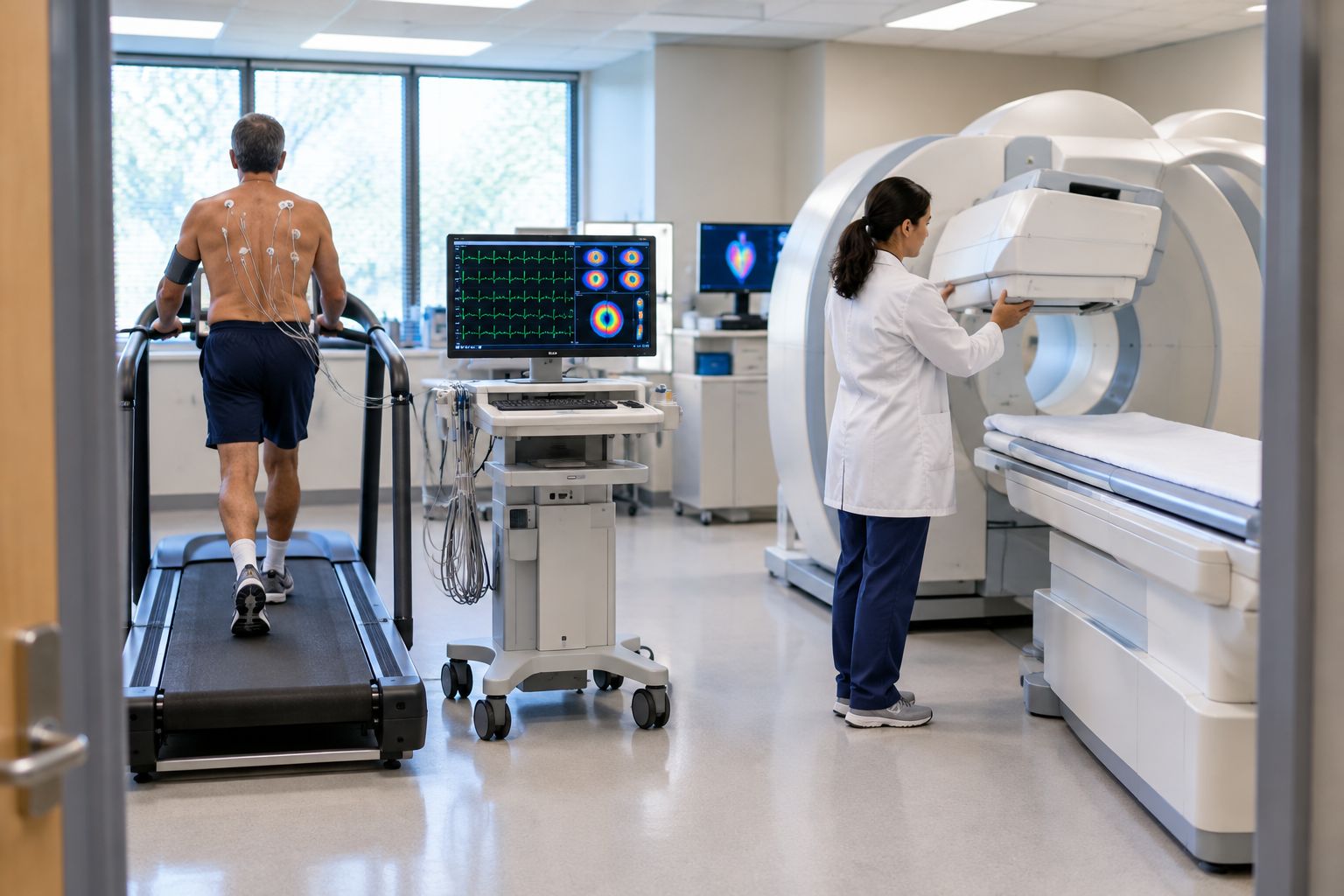
Stress labs run on a physician's signature. When a cardiology group or hospital imaging department loses coverage for MPI or PET myocardial perfusion reads, the lab either cancels studies or finds a locum tenens radiologist fast, and 2026 volume for these assignments still runs on that binary: covered or canceled.
Nuclear cardiology sits at the intersection of two credential paths. Some sites want a radiologist with formal nuclear medicine training, others accept a CBNC-certified reader working alongside cardiology staff, and a handful require both. That variation is why a generic "radiology locum" search wastes time — a search built around PET and SPECT locum coverage narrows the list to sites that will actually credential you for stress lab work.
Demand for short-term stress lab coverage also spikes around board exam cycles, parental leave, and vacation season, which means postings turn over fast and go stale within days of going live.
How to land locum tenens nuclear cardiology jobs
Confirm your nuclear cardiology credentials match the site's requirements
Sites don't all want the same thing, and finding that out after you've applied wastes both sides' time.
- ABR certification with documented nuclear medicine training, or CBNC certification, depending on what the site requires
- Active state medical license in the assignment state, not just your home state
- Current ACLS and BLS certification, since pharmacologic stress protocols require code readiness
- DEA registration if the role includes ordering or supervising radiotracer administration
- A malpractice history clean enough to clear the site's credentialing committee without added delay
If your training leans toward cardiac perfusion imaging specifically, lead with that on your CV rather than a general nuclear medicine background.
Search staffing agencies, hospital postings, and outpatient groups separately
No single source lists every open nuclear cardiology assignment, so checking one place and stopping costs you options.
- Locum staffing agencies with dedicated cardiology imaging desks
- Hospital career pages that post direct-hire locum needs before routing through an agency
- Outpatient cardiology groups running their own accredited labs
- Aggregated search tools like RadBoard that pull nuclear cardiology and nuclear medicine listings from multiple sources into one search, instead of checking ten agency sites by hand
Verify on-site stress lab supervision and staffing rules
This is where locum radiologists get burned most often: the posting doesn't mention what "coverage" actually requires on-site.
- Whether pharmacologic stress requires a physician physically present or general supervision is enough
- Technologist certification level and camera model, since not every SPECT camera runs the same reporting software
- Code cart location and emergency response protocol during pharmacologic stress
- After-hours or weekend call expectations tied to the assignment
- PACS and reporting system access timeline before your first shift
Negotiate day rate, travel terms, and malpractice tail before signing
Get every term in writing before the first shift, not after.
- Day rate benchmarked against nuclear cardiology's subspecialty pay range
- Travel, lodging, and mileage reimbursement terms spelled out in the contract
- Malpractice tail coverage confirmed before the contract ends, not scrambled for after
- License and DEA registration reimbursement if the assignment requires a new state
- Cancellation clause language that covers both sides equally
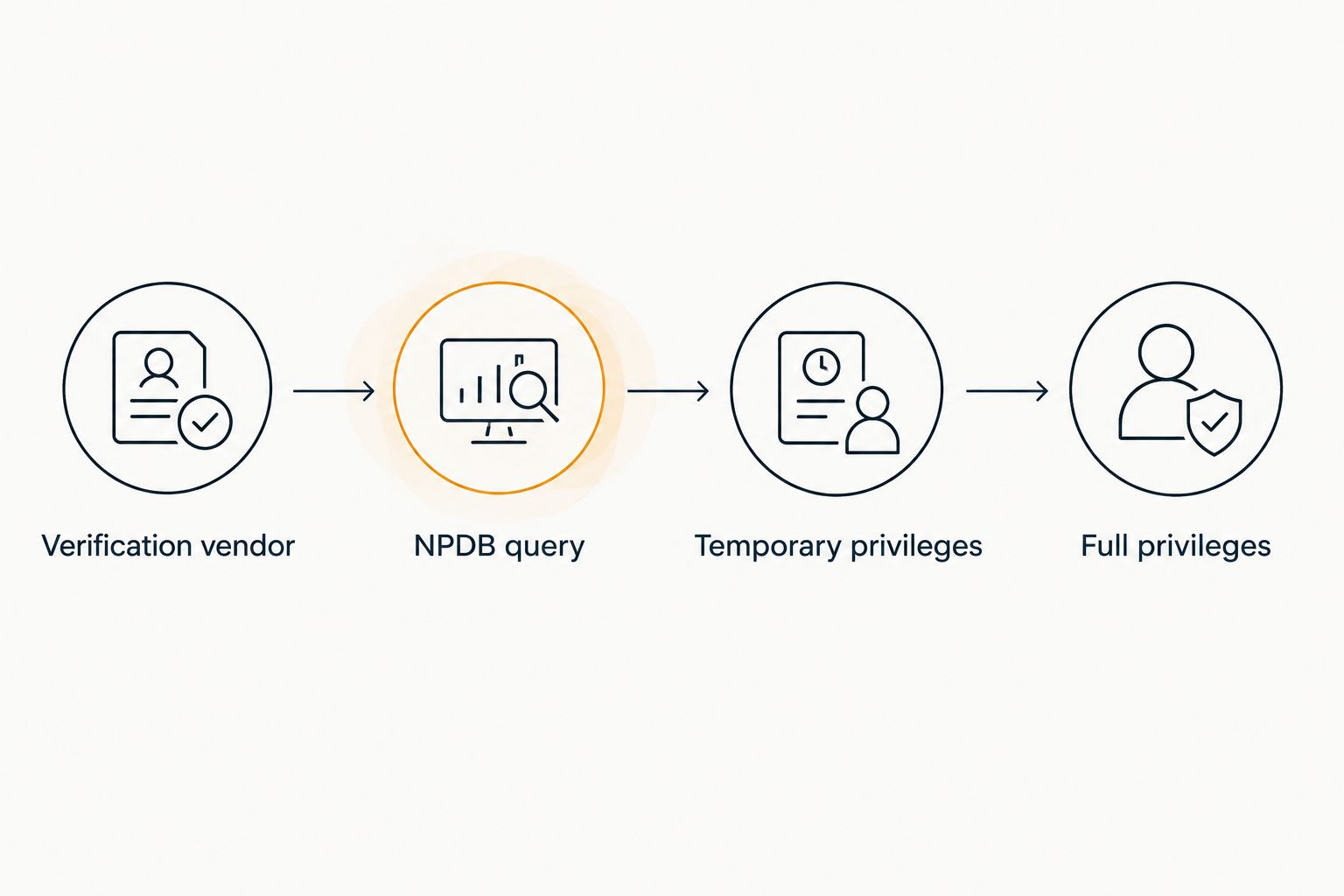
Get credentialed fast so the assignment doesn't slip to another candidate
The radiologist who's ready to start wins the assignment, not necessarily the one with the strongest CV.
- Primary source verification vendor turnaround time
- Temporary privileges option versus full medical staff privileges
- National Practitioner Data Bank query timing
- Malpractice certificate and CV gap documentation ready before you apply, not after an offer lands
- Credentialing shortcuts that repeat locum physicians use to shave weeks off the process
Line up your next assignment before this one ends
Gaps between contracts are the biggest hidden cost in locum work, not the day rate.
- Keep licenses active in more than one state so you're not starting from zero
- Track board certification and ACLS renewal deadlines alongside contract end dates
- Build relationships with more than one staffing agency in parallel with platform search
- Revisit open nuclear cardiology and nuclear medicine listings well before your current contract wraps
Track your true hourly rate across assignments
The headline day rate isn't what you actually earn once travel and admin time get counted.
- Add travel time and prep or documentation hours to the day rate, not just scheduled shift hours
- Subtract lodging and mileage costs not covered by the site
- Compare offers using a true hourly rate calculation instead of the headline number
- Weight assignments with faster credentialing turnaround higher, since idle weeks between contracts cost more than a slightly lower rate
Comparing your options for stress lab coverage
| Option | Best for | Key limitation |
|---|---|---|
| Locum staffing agency | Radiologists who want contract paperwork and travel logistics handled | Shows only that agency's own listings, not the full open market |
| Direct hospital or outpatient contract | Physicians comfortable negotiating rate and credentialing solo | All credentialing and license paperwork falls on you |
| Teleradiology stress-read platform | Reads that don't require physical presence during pharmacologic stress | Won't work for sites requiring a physician on-site during the test |
| RadBoard aggregated search | Scanning nuclear cardiology and nuclear medicine listings across many agencies and hospitals at once | It's a search tool, not a staffing agency — you still negotiate and credential directly with the employer |
RadBoard is best for radiologists who want to compare every open nuclear cardiology locum listing in one search instead of checking a dozen agency sites separately, not for physicians who want an agency to negotiate on their behalf.
“If pharmacologic stress requires a physician on-site, a teleradiology-only contract does not satisfy that requirement.”
Common mistakes nuclear cardiology locums make
- Assuming "general supervision" covers pharmacologic stress everywhere; state and site rules vary and often get missed until the credentialing committee flags it.
- Pricing a day rate off memory instead of checking current subspecialty benchmarks before countering an offer.
- Letting malpractice tail coverage lapse in the window between one contract's end date and the next one's start date.
- Committing to a start date before privileging is actually confirmed, then scrambling when the hospital's committee only meets monthly.
- Skipping the DEA registration check when the role includes ordering or supervising radiotracer administration in a new state.
Search nuclear cardiology jobs now
Compare locum tenens stress lab listings from 20 sources in one search.
FAQ
What is a locum tenens nuclear cardiology job?
A locum tenens nuclear cardiology job is a short-term assignment covering stress lab reads, MPI, SPECT, or PET myocardial perfusion studies when a hospital or outpatient cardiology practice loses its regular reading physician. Assignments run from a few days to several months depending on the gap being covered.
Do locum nuclear cardiology radiologists need CBNC certification?
Some sites require CBNC certification, others accept ABR certification with documented nuclear medicine training instead, and a few want both. Check the specific posting or ask the staffing contact before applying, since requirements aren't standardized across sites in 2026.
How much do locum tenens nuclear cardiology jobs pay?
Day rates vary by region, site case volume, and whether the role includes radiotracer administration. A subspecialty pay comparison is the fastest way to see how nuclear cardiology stacks up against other locum reading assignments.
How fast can you get credentialed for a stress lab locum assignment?
Credentialing speed depends on the primary source verification vendor and whether the hospital offers temporary privileges while full privileging is still in process. Sites that only grant full privileges after a monthly committee meeting take longer than sites offering a temporary track.
Can teleradiologists cover nuclear cardiology stress labs remotely?
Only for the reading portion. Sites that require a physician physically present during pharmacologic stress testing won't accept a teleradiology-only contract for that supervision requirement.
What's the difference between locum tenens and direct hospital hire for stress lab coverage?
Locum tenens is short-term and arranged through a staffing agency or direct contract for a defined period, while direct hire is a permanent position with the hospital's own credentialing and benefits structure. Locum assignments prioritize fast coverage over long-term commitment.
Does locum tenens nuclear cardiology work include malpractice coverage?
Most staffing agencies and hospital direct contracts include malpractice coverage for the assignment period, but tail coverage after the contract ends is negotiable and should be confirmed in writing before you sign.
Is locum tenens nuclear cardiology work in demand in 2026?
Stress lab coverage gaps open around board exam cycles, parental leave, and vacation season, and postings for nuclear cardiology and nuclear medicine locum work turn over quickly once a site loses coverage.
One last thing
The fastest-moving nuclear cardiology locums in 2026 aren't the ones with the strongest CV — they're the ones who already have a verification vendor on file and a temporary-privileges track pre-approved with two or three hospital systems, so when a stress lab posting goes live, they're reading cases inside a week instead of waiting a month for committee sign-off.