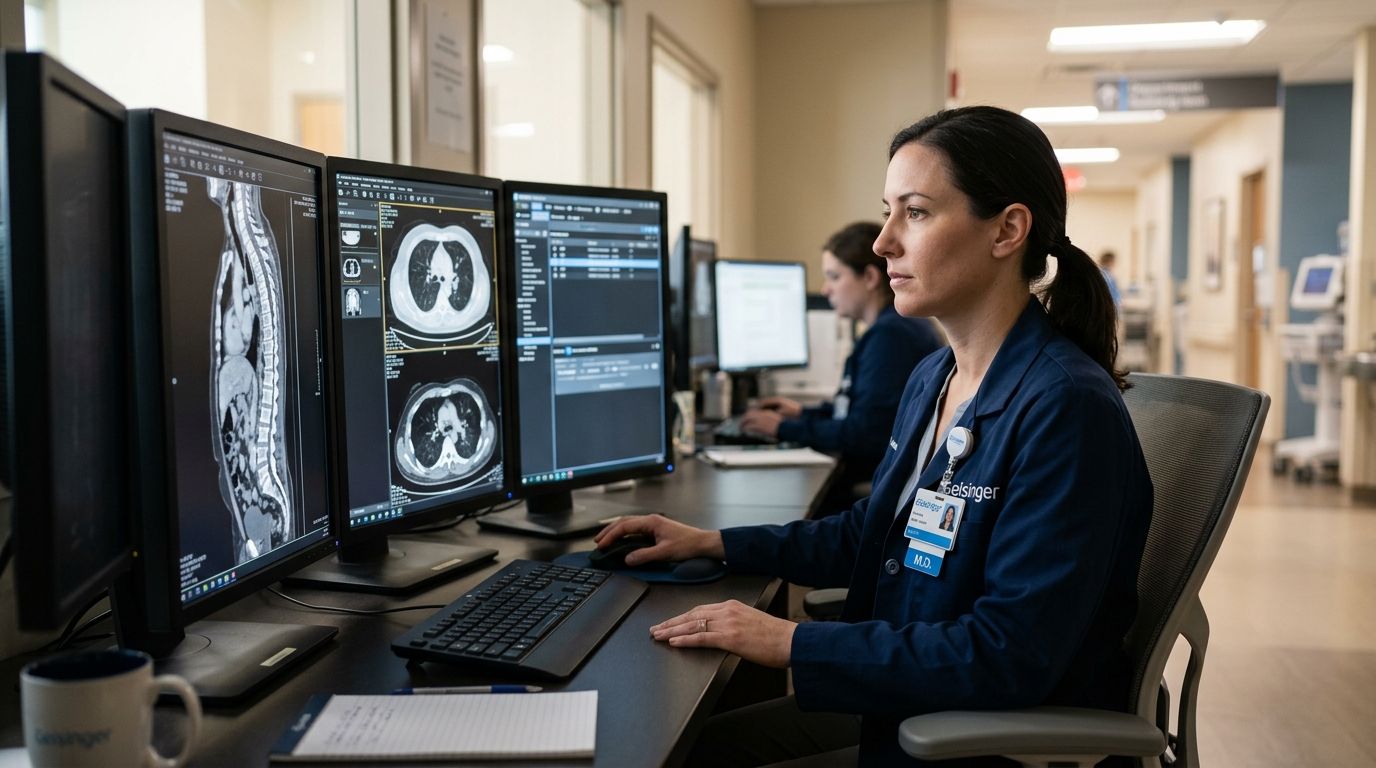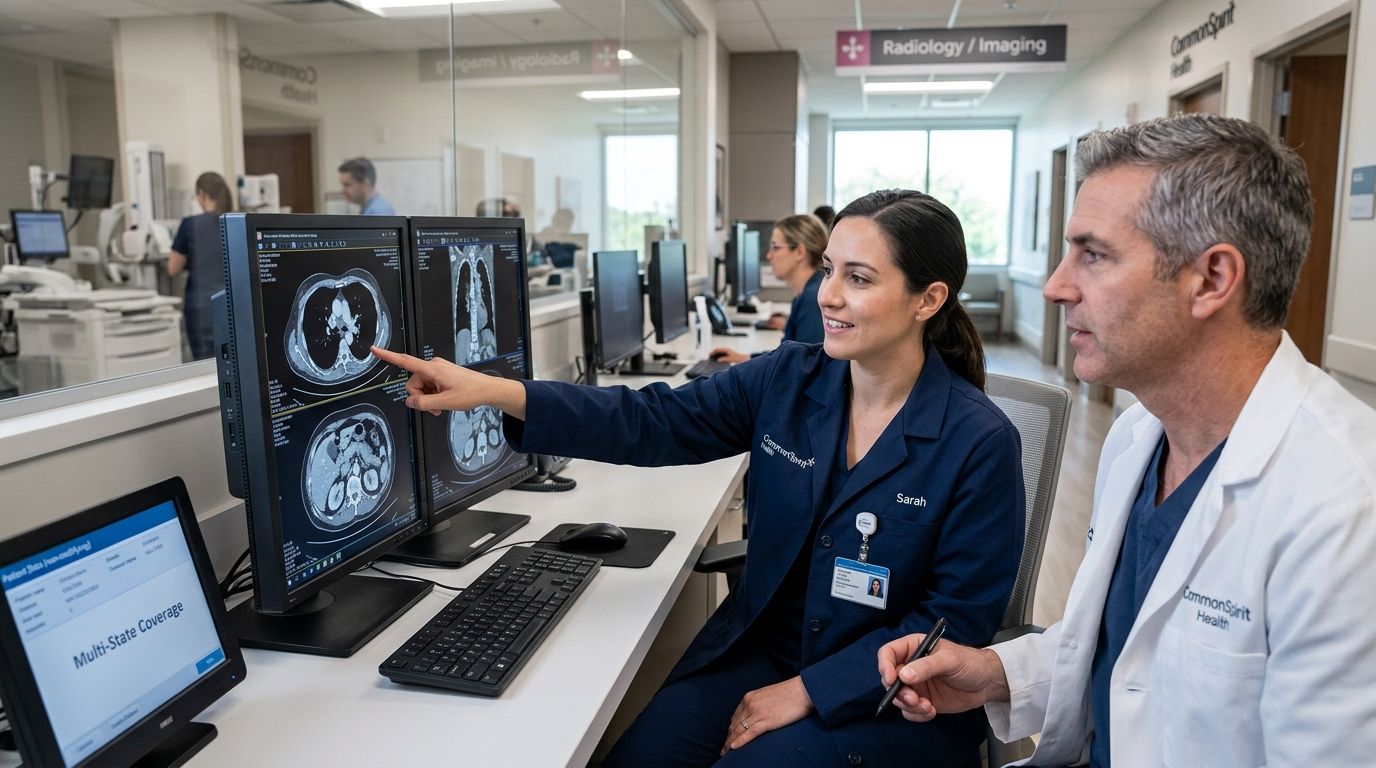
Cardiac nuclear imaging radiologist jobs place a radiologist or dual-certified nuclear medicine physician in a role reading SPECT and PET myocardial perfusion studies, usually inside a cardiology-heavy hospital system, a private cardiology group, or a dedicated nuclear cardiology lab. This segment differs from general diagnostic radiology hiring in one big way: employers filter hard on nuclear medicine credentials and authorized-user status before they ever get to schedule or salary.
- Cardiac nuclear imaging radiologist jobs favor ABR/ABNM dual certification or a CAQ in nuclear radiology over general diagnostic training.
- RadBoard pulls listings from 20 sources into one search, useful for a narrow subspecialty like nuclear cardiology where postings scatter across cardiology group sites.
- SPECT myocardial perfusion imaging still drives most volume; PET MPI roles cluster at academic centers and larger cardiology groups.
- NRC or Agreement State license transfer timing, not salary, is the most common reason cardiac nuclear imaging hires stall in 2026.
Why cardiac nuclear imaging jobs matter for this segment
Nuclear cardiology sits at the overlap of two boards, two licensing regimes, and two referral patterns. A radiologist chasing myocardial perfusion imaging (MPI) work needs authorized-user status under NRC or state radiation-control rules, familiarity with pharmacologic and exercise stress protocols, and comfort reading alongside cardiology attendings who order the studies. That combination shrinks the applicant pool and the job pool at the same time, which is exactly why postings for this subspecialty show up scattered across hospital cardiology department pages, nuclear medicine society boards, staffing agency sites, and general radiology job boards rather than one central place.
A radiology job aggregator that pulls from 20 sources into a single search matters more here than it does for a broad diagnostic radiology search, simply because no single site carries enough cardiac nuclear imaging volume on its own to give you a real market view in 2026.
Confirm the certification path employers actually expect
Before you apply anywhere, match your credentials to what the posting is really asking for. Job titles in this space use "nuclear cardiology" loosely, so read the qualifications section, not the headline.
- ABR primary certification plus a CAQ in nuclear radiology
- Dual ABR/ABNM certification for full nuclear medicine scope
- Board certification in nuclear cardiology (CBNC) if you'll read independently of a radiology group
- State licensure that already covers authorized-user status for radioactive materials
- A realistic timeline for NRC or Agreement State license transfer if you're relocating
Search cardiology-specific channels, not just general radiology boards
General radiology job boards under-represent cardiac nuclear imaging roles because cardiology groups post directly to their own career pages or through niche staffing firms. Widen the search before you assume the market is thin.
- Hospital cardiology department career pages
- Nuclear medicine society job listings
- General radiology staffing agency sites
- Nuclear medicine radiologist jobs for PET and SPECT readers aggregated across sources instead of checked one site at a time
- Direct outreach to multi-specialty cardiology groups that don't always post publicly
Filter listings by imaging modality and study volume
A "nuclear cardiology" title can mean SPECT-only, PET-only, or a mix bundled with general nuclear medicine call. Get this detail before you interview, not after you sign.
- SPECT MPI-only versus PET MPI-only versus combined SPECT/PET reading
- Stress protocol type: pharmacologic (regadenoson, dipyridamole) or exercise-based
- Weekly or monthly study volume, if the posting discloses it
- Whether cardiac reads bundle with general nuclear medicine work like thyroid uptake or bone scans
Evaluate equipment and accreditation at the site
Equipment age and lab accreditation affect both your workload and the quality of the studies you're reading. A SPECT/CT camera reads differently than a planar-only unit, and accreditation status affects referral volume for the whole practice.
- SPECT/CT versus planar-only camera systems
- PET/CT scanner vendor and installation year
- IAC accreditation status for the nuclear cardiology lab
- Attenuation correction capability, which affects image quality and re-read rates
Compare compensation structures for nuclear cardiology reads
Compensation in this niche runs on a mix of flat salary and per-study RVU, and dual-certified physicians sometimes get a stipend on top. Ask how the group structures this before you negotiate anything else.
- Flat salary versus per-study RVU-based pay
- Call coverage expectations specific to cardiac nuclear reads
- Stipends or bonuses tied to dual board certification in nuclear medicine
- How overnight or weekend cardiac call factors into total compensation
Negotiate credentialing and licensing support before you sign
Licensing delays cause more start-date slippage in this subspecialty than in general diagnostic radiology, because authorized-user transfers take longer than a standard medical license transfer.
- NRC or Agreement State radioactive materials license transfer timeline
- CME allowance earmarked for nuclear cardiology conferences specifically
- MOC or CAQ exam reimbursement written into the offer
- Malpractice tail coverage that names authorized-user status explicitly
Search cardiac nuclear imaging openings
5,000+ radiology jobs from 20 sources, filtered by subspecialty in one search.
Comparing employment options for cardiac nuclear imaging radiologists
| Option | Best for | Key limitation |
|---|---|---|
| Hospital-employed cardiac nuclear reader | Radiologists who want stable volume and defined call | Less control over stress protocol and camera upgrades |
| Private cardiology group nuclear reads | Physicians who want closer clinical integration with cardiologists | Compensation often tied tightly to referral volume |
| Multi-specialty radiology group with cardiac track | Radiologists who want cardiac reads alongside general diagnostic work | Cardiac case mix can be diluted by general call |
| Locum tenens nuclear medicine or cardiac coverage | Physicians testing the subspecialty or covering gaps between contracts | Short assignments limit continuity with referring cardiologists |
| Academic nuclear cardiology position | Physicians who want teaching and research alongside PET/SPECT reads | Lower per-study volume than a high-throughput private setting |
RadBoard is best for radiologists who want to compare all five of these paths in one search instead of checking hospital, cardiology group, staffing, and academic sites separately.
Common mistakes in this segment
- Assuming general ABR diagnostic certification alone qualifies you for authorized-user status without documenting the required nuclear medicine training hours.
- Not confirming whether a "nuclear cardiology" posting actually includes general nuclear medicine call — thyroid uptake, bone scans, GI bleeding studies — which dilutes the subspecialty focus you were hired for.
- Overlooking the NRC or Agreement State license transfer timeline and getting caught with a start date that slips by months.
- Signing on for a role expecting PET MPI volume when the site is running mostly SPECT, because the posting didn't specify camera type.
- Skipping the IAC accreditation check on the lab, which affects both reimbursement and referral volume for the whole group.
FAQ
What certification do I need for cardiac nuclear imaging radiologist jobs?
Most employers in 2026 want ABR certification with a CAQ in nuclear radiology, or dual ABR/ABNM certification. Some cardiology-employed roles accept board certification in nuclear cardiology (CBNC) if you're reading independently of a radiology group.
Is SPECT or PET more common in cardiac nuclear imaging jobs?
SPECT myocardial perfusion imaging still drives most of the volume in cardiac nuclear imaging jobs. PET MPI positions cluster at academic centers and larger cardiology groups that have invested in PET/CT scanners.
How long does NRC license transfer take for a nuclear cardiology job?
Authorized-user license transfer timelines vary by state and prior licensing history, and this step routinely runs longer than a standard medical license transfer. Confirm the timeline with the employer before you set a start date.
Do cardiac nuclear imaging radiologist jobs pay on RVU or salary?
Compensation runs on a mix of flat salary and per-study RVU pay, depending on the employer type. Hospital-employed roles lean toward salary, while private cardiology group reads more often use RVU-based structures.
Can a general diagnostic radiologist take a cardiac nuclear imaging job?
Only with the required nuclear medicine training hours and authorized-user status; general ABR diagnostic certification alone typically does not qualify you. Check the specific credentialing requirement in each posting before applying.
Where do cardiac nuclear imaging radiologist jobs get posted?
Postings scatter across hospital cardiology department career pages, nuclear medicine society boards, staffing agency sites, and general radiology job boards. An aggregator that pulls from multiple sources at once surfaces more of the actual market than checking one site.
What's the difference between nuclear cardiology and cardiac CT or cardiac MRI jobs?
Nuclear cardiology roles focus on SPECT and PET myocardial perfusion imaging and require authorized-user status, while cardiac CT and cardiac MRI jobs read structural heart imaging without radioactive materials licensing. The three subspecialties sometimes overlap in job postings but require different credentialing.
One last thing
PET myocardial perfusion imaging is expanding as tracers like Rubidium-82 and the newer FDA-approved flurpiridaz F-18 give cardiology groups a reason to add PET capacity alongside legacy SPECT cameras. Before you sign, ask directly whether the posting reflects current SPECT-only volume or a PET-capable protocol the group is still building out — that one question separates a role that matches your training from one that doesn't.