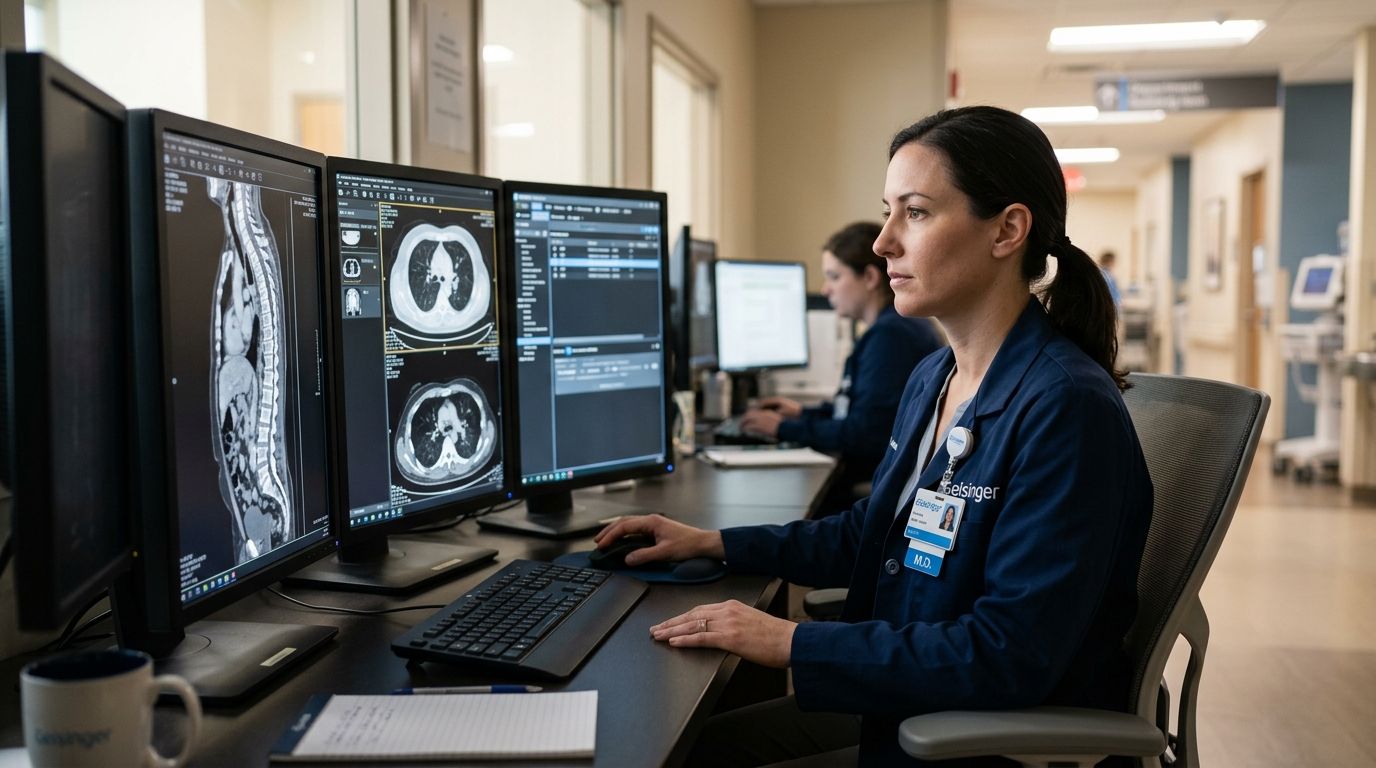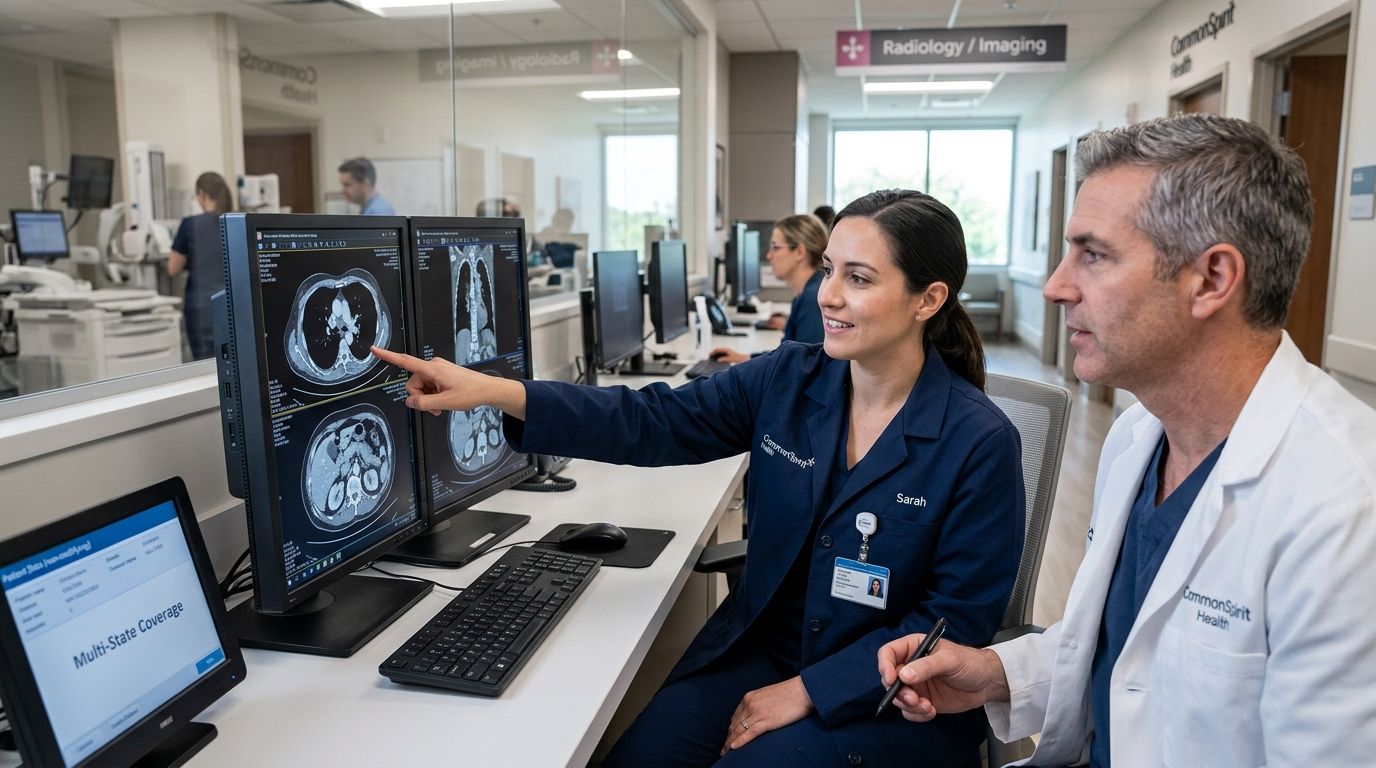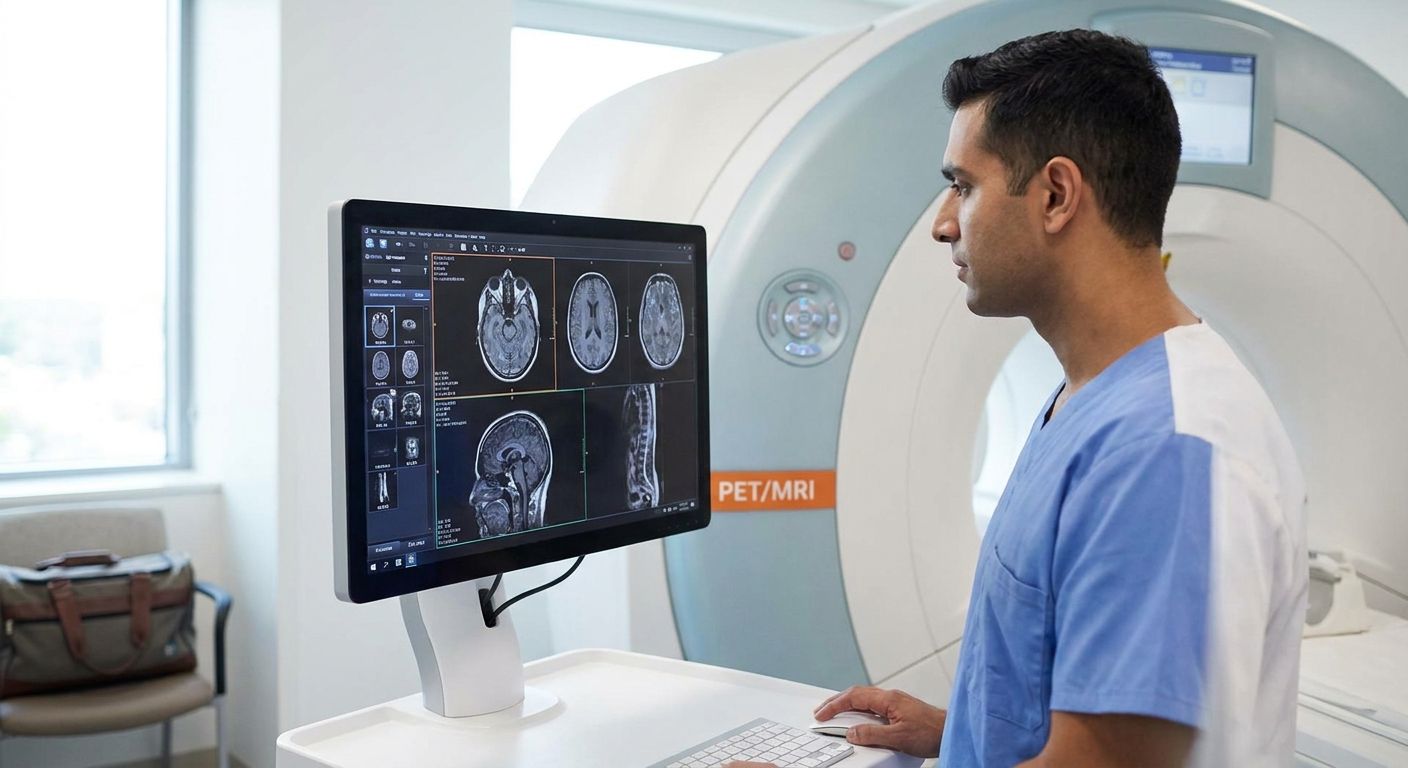
Locum tenens PET/MRI jobs put one radiologist on a scanner that fuses two modalities into one study, and most staffing boards still file them under generic nuclear medicine locums. This guide separates a true hybrid PET/MRI assignment from a PET/CT locum job that happens to sit next to an MRI suite, and tells you which settings are worth a signature in 2026.
- Locum tenens PET/MRI jobs fit radiologists with dual training in nuclear medicine and MRI reading, not general locums.
- Academic medical center hybrid PET/MRI coverage is the safest 2026 pick for dual-certified radiologists. Buy.
- National teleradiology PET/MRI overnight and weekend coverage pays for flexibility but needs multi-state licensing. Consider.
- Skip any hybrid PET/MRI locum listing that can't confirm a dedicated fusion protocol and matching scanner credential.
Why this matters
A hybrid PET/MRI scanner reads different from a PET/CT unit sitting fifty feet away. The radiologist has to interpret a fused PET dataset against MRI sequences instead of CT attenuation maps, and that's a narrower skill lane than most locum tenens listings imply. Few centers run true hybrid PET/MRI over the more common PET/CT, which is exactly why staffing agencies lump the two together and why job seekers waste time on mismatched listings.
RadBoard indexes 5,000+ radiology positions from 20 sources, and hybrid PET/MRI locum roles show up scattered across academic, oncology, and teleradiology categories rather than one clean bucket. Searching by modality on RadBoard surfaces the ones that actually specify PET/MRI equipment instead of PET/CT.
Who this is for
This guide is for board-certified or board-eligible radiologists with nuclear medicine training — an ABR Nuclear Radiology subspecialty certificate, ABNM certification, or an NM residency track — who also read MRI comfortably and want short-term contract coverage between permanent jobs, during a sabbatical, or as supplemental income in 2026. It is not for general diagnostic radiologists hoping to pick up an easy locum shift; hybrid PET/MRI credentialing rules out that path fast.
What to look for in locum tenens PET/MRI jobs
Dual-modality credentialing
A site running true hybrid PET/MRI expects credentials for both the nuclear medicine side and the MRI read, not one or the other. Confirm the facility's credentialing office lists both before you sign, because a locum contract that assumes cross-training you don't have gets terminated fast.
Scanner vendor and fusion protocol match
Siemens Biograph mMR and GE SIGNA PET/MR are the two dominant hybrid platforms in US centers, and reading habits differ between them. Ask which vendor the site runs and whether the fusion protocol is standardized or built ad hoc by the outgoing radiologist — an undocumented protocol means you're building workflow from scratch on day one.
Case volume and turnaround expectations
Hybrid PET/MRI cases take longer to read than a standard PET/CT because you're correlating two full imaging sets instead of one plus an anatomic reference. A locum contract that sets CT-level turnaround targets for PET/MRI volume is setting you up to fall behind.
License reciprocity and malpractice tail
Most locum tenens PET/MRI coverage runs across state lines, especially for teleradiology-adjacent roles. Verify the state license timeline before accepting a start date, and get the malpractice tail coverage terms in writing — this is the single most disputed line item when a locum contract ends early.
Contract length and renewal terms
Hybrid PET/MRI locum assignments run shorter than general diagnostic locums because fewer sites need year-round dual-modality coverage. Know whether the contract auto-renews or requires a fresh negotiation, since rate resets often happen at renewal.
On-call and weekend coverage structure
Some hybrid PET/MRI sites bundle in call coverage for inpatient PET studies, which changes the real workload beyond the posted shift count. Get the call frequency in writing before comparing pay across offers.
Top picks for hybrid PET/MRI locum coverage
Academic medical center hybrid coverage — the safe pick. Academic centers run the highest concentration of true hybrid PET/MRI scanners because oncology and neurology research protocols demand the fusion capability. Block scheduling here commonly follows a 7-on/7-off pattern, which gives you predictable weeks off between rotations. Locum tenens PET/MRI jobs at teaching hospitals also come with the deepest case variety, which matters if you're maintaining dual-modality reading skills between permanent positions. Buy.
National teleradiology overnight and weekend coverage — the remote play. Teleradiology groups that read PET/MRI remotely need radiologists licensed across multiple states and comfortable with night or weekend blocks. Pay premiums exist for off-hours coverage, but the licensing overhead is real — budget time for each state application before committing to a start date. These locum tenens nuclear medicine jobs overlap heavily with hybrid PET/MRI postings, so check the equipment line item carefully before applying. Consider.
Cancer center dedicated hybrid role — the subspecialty niche. Standalone cancer centers running hybrid PET/MRI for tumor staging and treatment response want radiologists who read oncologic imaging daily, not generalists. Assignments here tend to run in four-to-eight-week blocks tied to a specific coverage gap. If oncologic PET/MRI is your subspecialty focus, this is the tightest skill match on the list. Consider.
Multi-site health system floater coverage — the high-volume grind. Some health systems staff one locum radiologist across two or three hybrid PET/MRI sites in the same region, with travel days built into the schedule. The pay usually reflects the added travel burden, but week-to-week scheduling volatility makes this a hard fit for anyone who values a fixed calendar. Skip unless the rate specifically compensates for travel days.
Search hybrid PET/MRI listings now
Filter 5,000+ radiology jobs from 20 sources by modality and location.
What to avoid
- Listings labeled "PET/MRI" that are actually PET/CT with an MRI suite down the hall. If the job description can't name the fusion protocol or scanner model, assume it's a mislabel and ask directly before signing.
- Contracts silent on malpractice tail coverage. A locum tenens PET/MRI assignment that doesn't spell out tail coverage terms in the contract is a liability gap you inherit, not the agency.
- Credentialing timelines that start after you've already committed to a start date. Hospital credentialing for a new modality can outrun a short locum window; confirm the credentialing office has already begun the process before you block your calendar.
"A locum tenens PET/MRI assignment without a matching scanner credential for both modalities isn't a hybrid job — it's two separate jobs wearing one contract."
“A locum tenens PET/MRI assignment without a matching scanner credential for both modalities isn't a hybrid job — it's two separate jobs wearing one contract.”
Verdict comparison
| Setting | Best For | Schedule Pattern | Verdict |
|---|---|---|---|
| Academic medical center | Dual-certified NM/MRI radiologists wanting case variety | 7-on/7-off blocks | Buy |
| National teleradiology overnight/weekend | Radiologists holding multi-state licenses | Night and weekend blocks | Consider |
| Cancer center dedicated hybrid role | Oncologic imaging subspecialists | 4-8 week blocks | Consider |
| Multi-site health system floater | Radiologists comfortable with travel | Variable, week-to-week | Skip unless travel premium is explicit |
Before you accept any of these, run the math on true hourly rate for the assignment — a headline day rate on a hybrid PET/MRI contract often hides travel days, credentialing gaps, and call coverage that a straight per-shift comparison misses.
FAQ
What's the difference between locum tenens PET/MRI jobs and PET/CT locum jobs?
Locum tenens PET/MRI jobs require reading fused PET and MRI data on a hybrid scanner, while PET/CT locum jobs pair PET with CT for anatomic reference. The reading workflow, protocol, and credentialing differ between the two even though staffing boards often list them under the same nuclear medicine category.
Is dual certification required for hybrid PET/MRI locum work?
Yes, most sites require credentials covering both the nuclear medicine interpretation and the MRI read, not just one. An ABR Nuclear Radiology subspecialty certificate or ABNM certification combined with MRI reading competency is the standard bar in 2026.
Can teleradiologists read PET/MRI studies remotely?
Some national teleradiology groups do offer remote PET/MRI reading, typically for overnight or weekend coverage gaps. The radiologist still needs licensure in the state where the study originates, which means multi-state licensing becomes a real cost of entry.
How long do locum tenens PET/MRI assignments typically run?
Assignments range from short weekend or overnight blocks at teleradiology groups to four-to-eight-week blocks at cancer centers, with academic medical centers often running rotating 7-on/7-off schedules. The exact length depends on the coverage gap the site is filling.
Are locum tenens PET/MRI jobs available at academic medical centers?
Yes, academic centers run the highest concentration of true hybrid PET/MRI scanners because research protocols in oncology and neurology depend on the fusion capability. That makes them the most consistent source of hybrid PET/MRI locum openings in 2026.
What credentials does a radiologist need for locum tenens PET/MRI coverage?
A radiologist needs credentialing recognized for both nuclear medicine and MRI interpretation, plus an active state medical license in the assignment's location. Sites will not grant hybrid PET/MRI privileges on a nuclear medicine credential alone.
Is locum tenens PET/MRI work good for radiologists between permanent jobs?
It works well if you already hold dual nuclear medicine and MRI credentials, since the assignments keep those reading skills active while you search for a permanent role. It's a poor fit if you'd need to build hybrid reading experience from scratch during the contract.
Do locum tenens PET/MRI jobs pay more than standard nuclear medicine locums?
Pay varies by site volume, location, and licensing requirements rather than following one fixed premium, so compare specific offers rather than relying on a national average. Calculating the true hourly rate after travel, credentialing time, and call coverage matters more than the headline day rate.
One last thing
The credentialing gap is the real filter here, not the job listing. A radiologist with ABR Nuclear Radiology certification and MRI competence can work almost any hybrid PET/MRI locum on this list; a radiologist without both will get bounced by hospital credentialing before the first shift, no matter how good the contract terms look on paper. Confirm your own credential match before you spend time comparing pay rates in 2026.