Locum tenens prostate MRI jobs for PI-RADS reporting coverage fill a specific gap: a GU-trained reader goes on leave, a health system adds prostate MRI volume faster than it can recruit, or a hospital needs multiparametric coverage while a permanent search drags into its sixth month in 2026.
- Locum tenens prostate MRI jobs pay best when PI-RADS v2.1 volume and turnaround are defined upfront in the contract.
- Dedicated GU subspecialty locum coverage beats generalist diagnostic locum work for PI-RADS reporting accuracy and rate. Buy.
- Teleradiology short-term PI-RADS coverage skips relocation but needs multi-state licensing sorted before the first shift. Consider.
- Staffing-agency-sourced prostate MRI assignments fill gaps fast in 2026 but take a cut of the billed rate.
Why this matters
PI-RADS 3 lesions get argued over at tumor boards. Inconsistent prostate MRI reads bounce biopsy referrals back to urology, and a hospital that can't cover the study either delays it or ships it overnight to teleradiology at a markup. A locum radiologist who reads PI-RADS v2.1 confidently and fast closes a narrow hole, not a general body-imaging one.
Most job boards don't list "locum prostate MRI" as a stand-alone category in 2026 — the work shows up under diagnostic, GU subspecialty, or teleradiology postings depending on how the site tags it. RadBoard aggregates 5,000+ radiology positions from 20 sources and lets you search by subspecialty term instead of job title, which matters more here than in general radiology hiring because the title rarely says "PI-RADS" even when the volume does.
Who this is for
This guide is for fellowship-trained or high-volume GU radiologists who want short-term assignments reading prostate MRI, physicians between contracts who want to keep PI-RADS reporting sharp, and subspecialists testing a health system's imaging volume before committing to a permanent role.
What to look for in locum tenens prostate MRI jobs for PI-RADS reporting coverage
Defined PI-RADS reporting volume and turnaround
An assignment that says "prostate MRI as needed" tells you nothing about whether you're reading 3 studies a week or 30. Ask for average weekly PI-RADS volume and expected turnaround before you sign, because that number sets your real hourly rate, not the day rate on the offer sheet.
Credentialing timeline that fits a short assignment
A 4-week locum contract that requires 6 weeks of privileging math doesn't work. Confirm the site's credentialing timeline against the assignment length before you commit, especially at hospital-based sites with slower medical staff office processes than outpatient centers.
Protocol and vendor match for multiparametric MRI
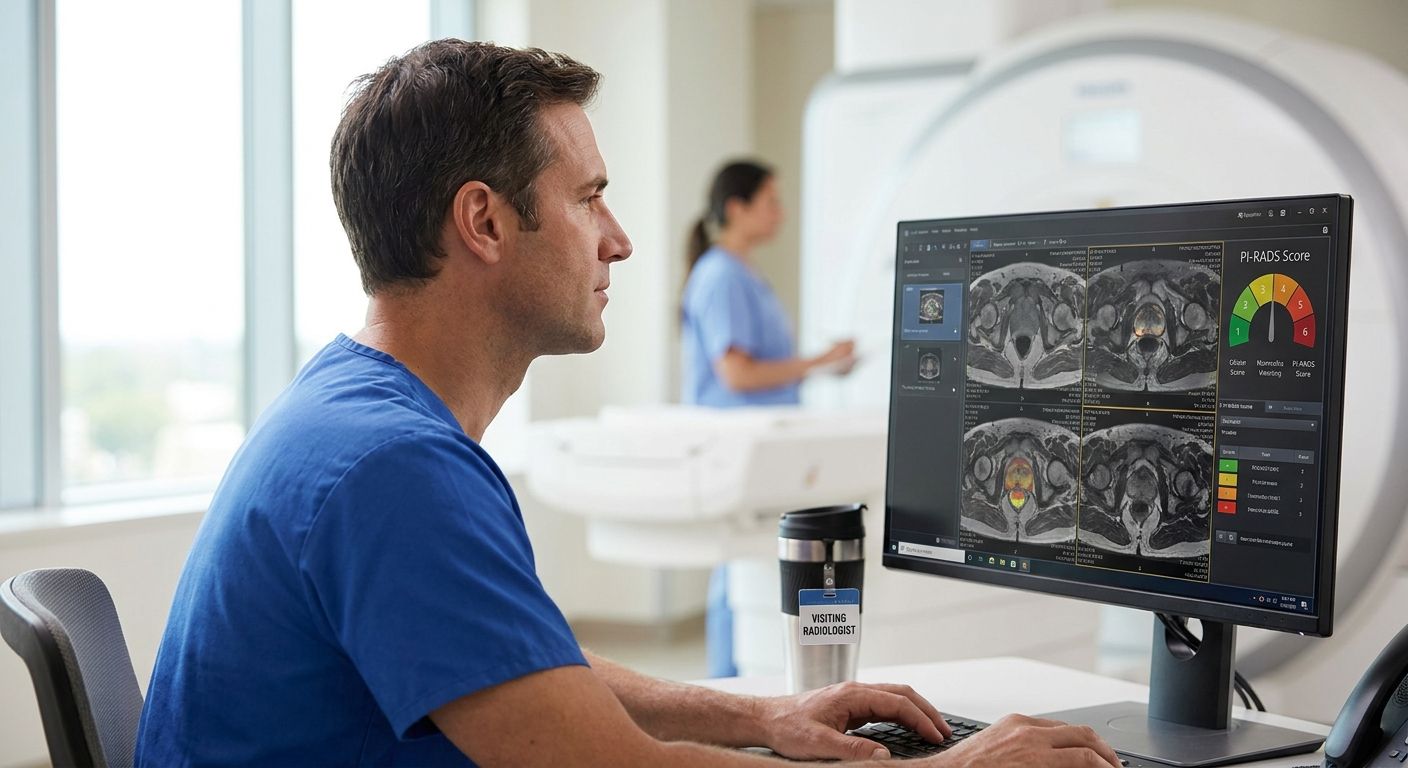
PI-RADS v2.1 depends on consistent T2, diffusion-weighted, and dynamic contrast sequences. A site running an older non-conforming protocol on a different vendor platform than you're used to slows your reads and raises your equivocal-call rate on day one.
Rate structure: per-study, per-shift, or hourly
Flat day rates undervalue prostate MRI locum work when volume runs high, and per-study rates undervalue it when volume runs low and you're paid for availability instead. Match the structure to the volume you confirmed in the first criterion, not the other way around.
Malpractice tail and second-read backup for PI-RADS 3
PI-RADS 3 findings carry the widest reader disagreement in the literature, and a locum assignment without second-read support on ambiguous cases puts more liability on you alone. Confirm who covers tail coverage on a short contract before your last shift, not after.
Top picks for PI-RADS reporting coverage assignments
The subspecialty match — GU-focused locum coverage. Sites that specifically request PI-RADS v2.1 experience pay for the skill instead of treating prostate MRI as an add-on to a general body slate. Verdict: Buy for GU-trained radiologists who want rate parity with the subspecialty demand. See prostate MRI radiologist jobs for PI-RADS interpretation for what these postings actually require.
The safe fallback — general diagnostic locum with prostate MRI mixed in. These assignments cover a broader body imaging slate where prostate studies are a fraction of the read volume, not the focus. Verdict: Consider if you want steady locum income and don't mind prostate MRI being a minority of your day rather than the reason you're staffed.
The remote route — short-term teleradiology PI-RADS coverage. Remote locum assignments skip relocation and let you cover prostate MRI overnight or weekend gaps from a home reading room, but they hinge entirely on having the state licenses the contract requires before shift one. Verdict: Consider, and check locum tenens teleradiology jobs for short-term remote coverage before assuming licensing is handled for you.
The bridge assignment — locum-to-permanent testing period. Some groups staff a locum GU reader for 8-12 weeks specifically to evaluate fit before extending a permanent offer. Verdict: Consider if you're open to converting, since these contracts often negotiate rate upward once the group sees your PI-RADS turnaround in practice.
The agency-sourced slot. Staffing agencies move fast on prostate MRI coverage gaps in 2026, but the billed rate and your net rate are two different numbers once the agency margin comes out. Verdict: Skip any agency assignment that won't disclose the split, Consider the rest.
“If a locum contract can't state expected PI-RADS reporting volume per shift, don't set your hourly rate on assumption.”
Search live prostate MRI locum listings
Filter 5,000+ radiology jobs from 20 sources by subspecialty and contract type.
What to avoid
- "General body" locum ads that quietly include prostate MRI without disclosing PI-RADS-specific volume — you find out the real workload after you've already started.
- Teleradiology contracts advertising "flexible schedule" that skip multi-state licensing support, leaving you to cover license fees and paperwork for a short assignment that may not recoup the cost.
- Flat day-rate contracts that lump PI-RADS reporting in with routine abdominal MRI reads, which undervalues the subspecialty skill you're actually being staffed for.
Verdict comparison
| Assignment type | PI-RADS volume defined | Rate structure | Verdict |
|---|---|---|---|
| GU subspecialty locum | Usually, in contract | Per-study or per-shift | Buy |
| General diagnostic locum | Rarely | Flat day rate | Consider |
| Teleradiology short-term coverage | Sometimes | Per-study | Consider |
| Locum-to-permanent bridge | Negotiable | Salary-equivalent | Consider |
| Agency-sourced assignment | Varies by agency | Agency-set rate | Skip if net rate undisclosed |
FAQ
What's the best locum tenens prostate MRI job in 2026?
The best locum tenens prostate MRI jobs in 2026 are GU subspecialty postings that state PI-RADS v2.1 volume and turnaround in the contract before you sign. Generalist diagnostic locum roles with prostate MRI mixed in pay less for the subspecialty skill.
Is teleradiology better than onsite for prostate MRI locum coverage?
Teleradiology works better for radiologists who already hold the state licenses a remote contract requires, since it skips relocation for a short assignment. Onsite locum coverage works better when you need faster credentialing or want direct access to prior imaging and referring urologists.
How much does a locum tenens prostate MRI radiologist get paid?
Pay depends on rate structure — per-study, per-shift, or flat day rate — and none of those numbers mean much without a defined PI-RADS reporting volume attached to them. Confirm expected weekly volume before comparing offers across contracts.
Do locum tenens radiology jobs cover malpractice tail?
Coverage varies by contract and by staffing agency, so tail coverage terms need confirmation before your last shift on any short assignment. This matters more on PI-RADS reporting work given the known reader variability on PI-RADS 3 findings.
What credentialing timeline should I expect for a locum prostate MRI assignment?
Hospital-based sites generally take longer to credential than outpatient imaging centers, and a short locum contract can end before privileging clears if you don't confirm the timeline upfront. Ask the site or agency for their typical credentialing window before accepting an assignment shorter than that window.
Are staffing agencies worth it for prostate MRI locum work?
Agencies fill prostate MRI locum gaps quickly in 2026, but the agency margin between the billed rate and your net pay varies widely. Ask for the net rate directly instead of the billed rate before comparing agency-sourced offers to direct contracts.
Can a locum prostate MRI assignment turn into a permanent job?
Yes — some groups staff a locum GU reader for a defined period specifically to evaluate fit before extending a permanent offer. These bridge arrangements often negotiate rate upward once the group has seen your PI-RADS turnaround firsthand.
What protocol issues affect locum prostate MRI reporting?
PI-RADS v2.1 depends on consistent T2, diffusion-weighted, and dynamic contrast sequences, and a site running a non-conforming protocol slows reads and raises equivocal-call rates. Confirm protocol and vendor platform before your first shift, not after.
One last thing
PI-RADS 3 lesions carry the widest reader disagreement of any category in the scoring system, which means the locum assignment offering second-read backup on those cases is worth more than a marginally higher hourly rate. Ask about backup before you ask about pay — the group that has an answer ready has done this staffing pattern before.