
Choose RadBoard if you are a radiologist searching for your next clinical position; choose Talent.com if you need to explore jobs across occupations. For 2026, the distinction is a radiology-focused search platform versus a general job-search platform—not a demonstrated difference in hiring outcomes.
- RadBoard vs Talent.com comes down to radiology specialization versus cross-occupation job discovery.
- RadBoard is the better starting point for radiologists, aggregating 5,000+ positions from 20 sources.
- Talent.com is the better fit when your search spans radiology and unrelated occupations.
- Neither platform replaces employer verification of workload, compensation, call obligations, or contract terms.
Why this matters
Choose a job platform around the work you want, not the largest headline listing count. A radiologist seeking subspecialty reading has a different search problem from a physician exploring an entirely different career.
A useful 2026 shortlist needs more than a matching title. You need to establish whether the position fits your clinical scope, schedule, location, and employment preferences before investing in interviews.
The comparison below separates platform fit from employer quality. Search features help you discover opportunities; they do not establish whether a practice offers acceptable coverage arrangements or a suitable contract.
At a glance
| Dimension | RadBoard | Talent.com |
|---|---|---|
| Best for | Radiologists seeking radiology positions | Job seekers exploring multiple occupations |
| Career breadth | Focused radiology search | Broad, cross-occupation search |
| Standout feature | AI-powered search and swipe-to-save | General job discovery across career categories |
| Household search | The radiologist's part of a household search | Exploring different occupations within a household |
| Offer evaluation | Evaluate employer terms independently | Evaluate employer terms independently |
| Listing verification | Confirm the specific opening with its employer | Confirm the specific opening with its employer |
| Pricing model | Check current candidate terms directly | Check current candidate terms directly |
The specialist platform describes an aggregation scope of 5,000+ radiology positions from 20 sources. Those figures describe its search offering; they are not counts of unique employers, guaranteed matches, or successful placements.
Talent.com's case rests on breadth. Use that breadth when you genuinely need to compare different occupations, rather than treating a general platform as automatically better for a narrowly defined physician search.
RadBoard wins for a defined radiology career search
RadBoard is the better starting point for radiologists seeking radiology positions. Its stated purpose matches that task: aggregate radiology opportunities and help physicians search and save them.
Start with your intended practice rather than a generic imaging keyword. A diagnostic radiologist, a procedural specialist, and a physician seeking academic responsibilities need different evidence from each posting.
Write down these requirements before searching:
- Clinical scope: Which studies and procedures do you want to cover?
- Practice setting: Do you want hospital employment, private practice, or another arrangement?
- Schedule: Which shifts and call responsibilities will you accept?
- Location: Does the position require onsite work, remote reading, or both?
The advantage is alignment, not a promise that every result fits. You still need to read the duties and establish whether the employer's expectations match your training and preferences.
The limitation is equally clear: a radiology-focused platform is not the natural starting point for a search that has moved outside radiology. Specialization helps when you know your destination; it narrows the scope when you do not.
Talent.com wins for exploring different occupations
Talent.com is the better starting point when your search spans unrelated career categories. Its general job-search scope fits a user who has not committed to a radiology position.
That distinction matters for physicians considering a substantial career change. Searching for clinical radiology work and exploring a different occupation are separate tasks, even when the same person is doing both.
For a 2026 career review, keep those tasks separate:
- Build a clinical shortlist around your qualifications and desired practice.
- Build an exploratory shortlist around the responsibilities of alternative roles.
- Compare entry requirements before treating an alternative role as an actionable option.
The benefit is room to explore. The drawback is that broad discovery does not establish clinical relevance, physician eligibility, or an appropriate level of seniority.
Do not interpret a familiar word in a job title as proof of fit. Read the credentials and duties first, especially when a search crosses from physician practice into operational or commercial work.
The specialist platform wins for its stated search-and-save workflow
The specialist platform explicitly offers AI-powered search and swipe-to-save features. That combination fits the task of discovering radiology opportunities and retaining candidates for closer review. It does not establish that automated search is more accurate than another platform.
Use search to express the job you want in practical terms. For example, distinguish a remote diagnostic role from an onsite position that includes procedures, and separate daytime preferences from overnight coverage.
Saving a position should begin evaluation, not end it. Attach your own questions to the shortlist:
- Is the subspecialty work exclusive or part of a general reading assignment?
- Does the schedule describe all required coverage?
- Who employs the physician and who controls the work?
- Which essential terms need written confirmation?
The benefit is a stated way to move from discovery to a retained shortlist. The limitation is that a saved listing remains an advertisement, not a verified employment offer.
For a practical follow-through, use the guide to moving from saved radiology jobs to a signed contract. Keep discovery, employer discussions, and contract review as separate decisions.
Talent.com wins for a household search across professions
Talent.com fits the shared discovery stage when household members work in different occupations. A general platform gives that search a broader occupational scope than a radiology-specific service.
Consider a radiologist and a partner in a nonmedical profession evaluating relocation. The household question is not simply whether a radiology position exists; it is whether both people can identify suitable work in the same area.
Use the general search to explore each person's occupational options, then evaluate the physician opportunity through a clinical lens. A location that works for one career does not settle the relocation decision.
This is a different advantage from clinical specialization. Breadth helps organize the household's exploration, while a focused search addresses the radiologist's requirements.
The limitation is important: finding postings for both people does not prove that schedules, commuting expectations, or start dates align. Confirm those details before making a joint move.
Neither platform wins on the quality of an employment offer
Judge the employer's offer separately from the platform that surfaced it. A relevant search result is evidence that a posting deserves review, not that its terms are favorable.
For a 2026 offer comparison, use the same criteria regardless of where you found the role. Otherwise, a polished description or familiar employer name can distract from the work you are agreeing to perform.
| Offer question | Evidence to request |
|---|---|
| What will you read? | Expected modalities, subspecialty mix, and procedural duties |
| When will you work? | Routine schedule, call obligations, weekends, and holiday expectations |
| How is work measured? | Productivity expectations and the definition of credited work |
| What support exists? | Coverage arrangements, technical support, and escalation procedures |
| What ends the relationship? | Notice requirements and relevant termination provisions |
Ask the same questions of every serious candidate. This makes the shortlist comparable and prevents a platform preference from becoming an employer recommendation.
Neither service wins this dimension because the decisive evidence belongs in employer discussions and written terms. Retain a role only when its substantive requirements fit your needs.
Both require verification before you invest in an opening
Confirm the specific opening with the employer before treating it as actionable. Apply that rule to every platform, including a specialist aggregator.
The stated aggregation scope does not establish how many positions match your geography, credentials, or schedule. It also does not establish that differently worded advertisements represent different jobs.
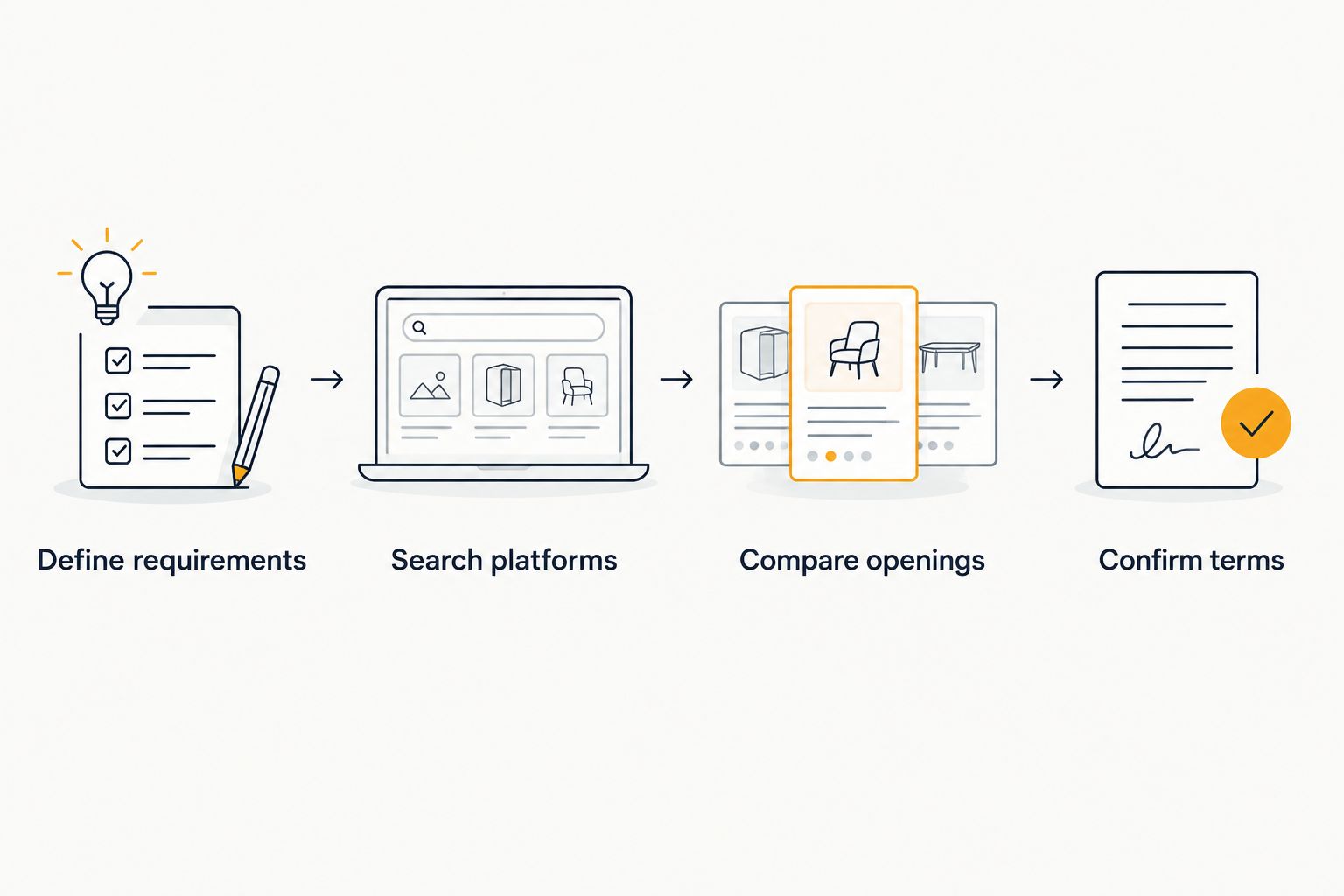
Use this sequence for your 2026 shortlist:
- Define requirements: Set your clinical scope, acceptable schedule, and location constraints.
- Search platforms: Use a specialist search for clinical focus and a general search when breadth serves a specific purpose.
- Compare openings: Match employer, location, duties, and any requisition details before counting opportunities separately.
- Confirm terms: Ask the employer whether the opening and its advertised responsibilities remain current.
This sequence prevents two mistakes: counting advertisements instead of distinct opportunities, and spending interview time on a role that fails an essential requirement.
Keep 3 requirements marked as nonnegotiable in your own notes. This is a search discipline, not a platform feature: it gives you a consistent reason to retain or reject a posting.
Pricing is not a supported reason to choose either platform
Check each service's current candidate terms directly before deciding whether to create an account or use an optional service. Do not choose a platform on an assumed pricing model.
Separate the candidate experience from any employer recruiting arrangement. Advertising terms for organizations do not, by themselves, establish what a physician agrees to when using a job-search service.
For your own comparison, establish:
- Which search and saving functions are included in the candidate experience.
- Whether any optional service creates a separate commitment.
- What account, cancellation, and data-use terms apply to your use.
A recurring commitment favors continued use; a one-time commitment suits a discrete task. Apply that distinction only after verifying the actual terms, rather than assigning either model to a platform without confirmation.
For this comparison, pricing is a tie with no declared advantage. The decision rests on occupational scope and the stated search workflow, not an unsupported cost claim.
Final verdict: choose clinical focus or occupational breadth
Choose RadBoard if you are a radiologist staying in clinical practice
Best for: a radiologist with a defined clinical job target. Choose the radiology-focused platform when your task is to find physician opportunities, search across its aggregated sources, and save positions for evaluation.
Keep the boundary clear. The search-and-save workflow supports discovery; you remain responsible for verifying the employer, scope of work, and contract.
Choose Talent.com if you are exploring across occupations
Best for: a career explorer or relocating household comparing different professions. Choose Talent.com when occupational breadth is part of the problem you need to solve.
Do not expect that breadth to substitute for clinical screening. Return to physician-specific requirements whenever a radiology posting enters your shortlist.
One-glance scorecard
| Dimension | Winner |
|---|---|
| Defined radiology search | Specialist platform |
| Cross-occupation exploration | Talent.com |
| Stated radiology search-and-save workflow | Specialist platform |
| Household discovery across professions | Talent.com |
| Employment-offer quality | Tie: assess the employer |
| Opening verification | Tie: confirm independently |
| Pricing model | No declared advantage |
FAQ
Is RadBoard better than Talent.com for radiologists?
RadBoard is the better starting point for a radiologist seeking radiology positions because its stated scope is radiology job discovery. Talent.com is better suited to exploration across occupations; neither choice establishes the quality of an employer's offer.
What's the main difference between a specialist and a general job platform?
A specialist platform focuses on a defined professional category, while a general platform covers multiple occupations. Choose specialization for a defined clinical target and breadth for career exploration.
Does a platform with more listings give me more suitable jobs?
A larger listing count does not establish how many jobs meet your requirements. Compare distinct openings that match your credentials, clinical scope, location, and schedule.
Can I use both platforms during the same search?
Yes, use both when each serves a defined purpose. Keep one shortlist and compare employer, location, and duties before counting advertisements as separate opportunities.
Which platform should a relocating household use?
Talent.com is the better fit for initial discovery when household members work in different occupations. Evaluate the radiologist's clinical opportunities separately and confirm that both people's practical requirements align.
How should I compare the cost of using these job platforms?
Check each platform's current candidate terms directly. Distinguish included functions from optional services and review any ongoing commitment before agreeing to it.
What should I verify before applying for a radiology job in 2026?
Verify the employer, physician eligibility, clinical responsibilities, schedule, and application route. Before accepting an offer, obtain written terms covering compensation, coverage obligations, and termination provisions.
One last thing
The same vacancy appearing twice is still one career option. Keep a shortlist of employers and openings, not a collection of advertisements.
For your 2026 search, assign each opportunity a simple status: needs clarification, ready for discussion, or rejected. Record the reason. That habit makes the next action clear regardless of which platform introduced the job.