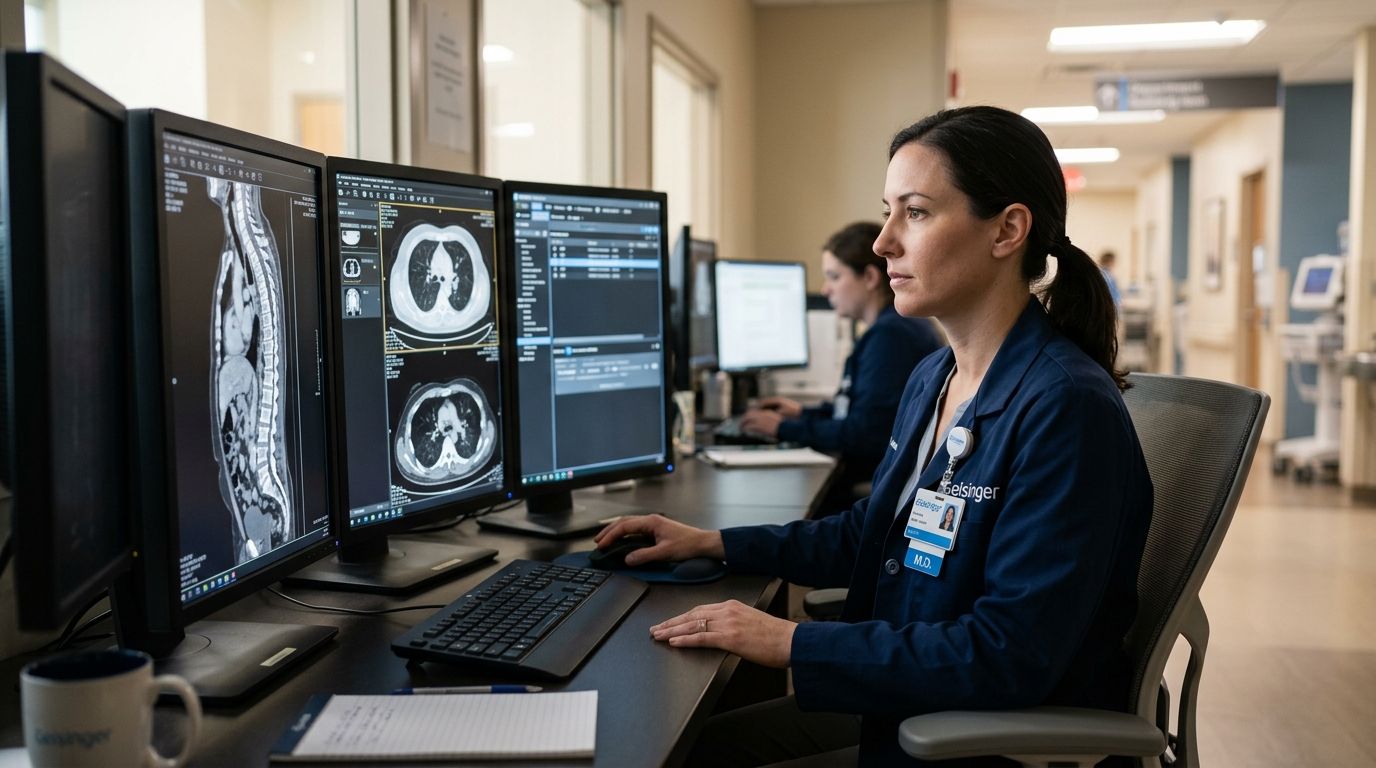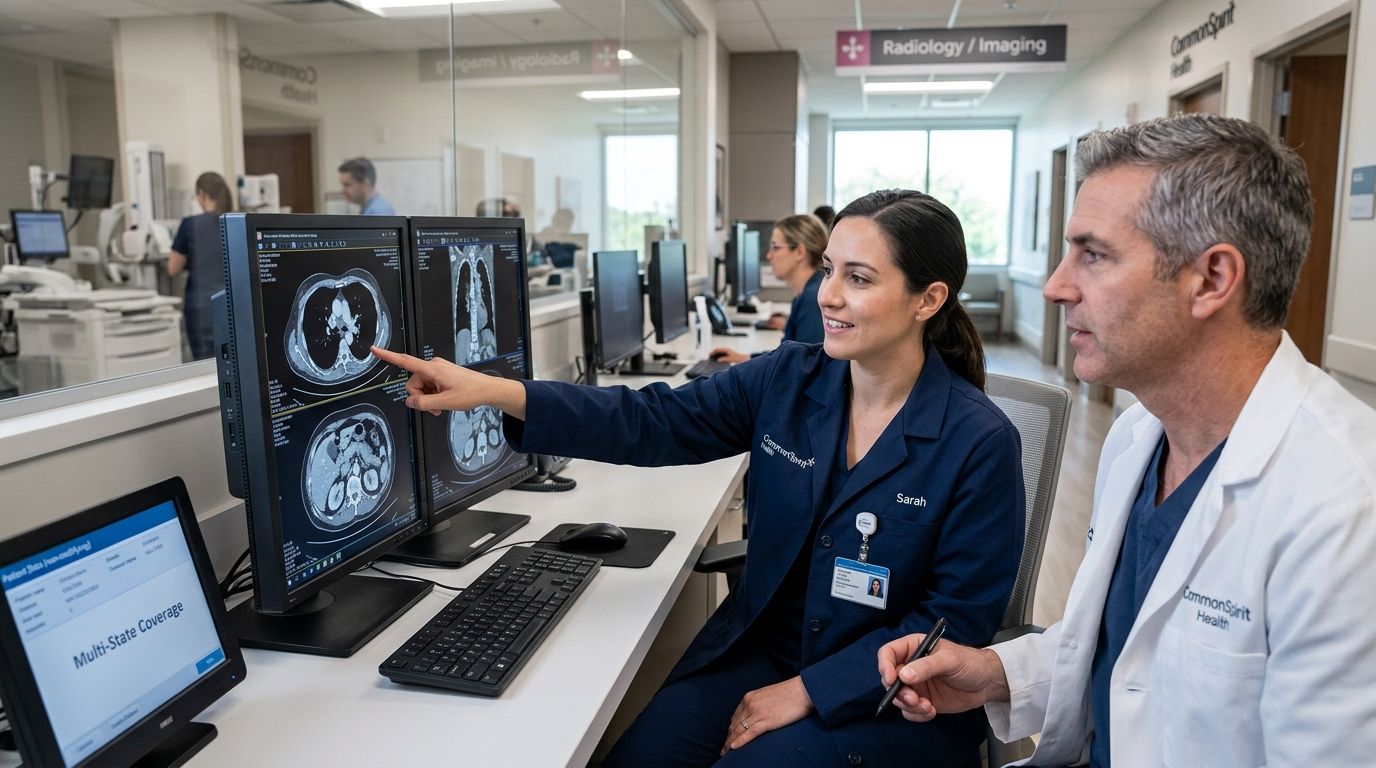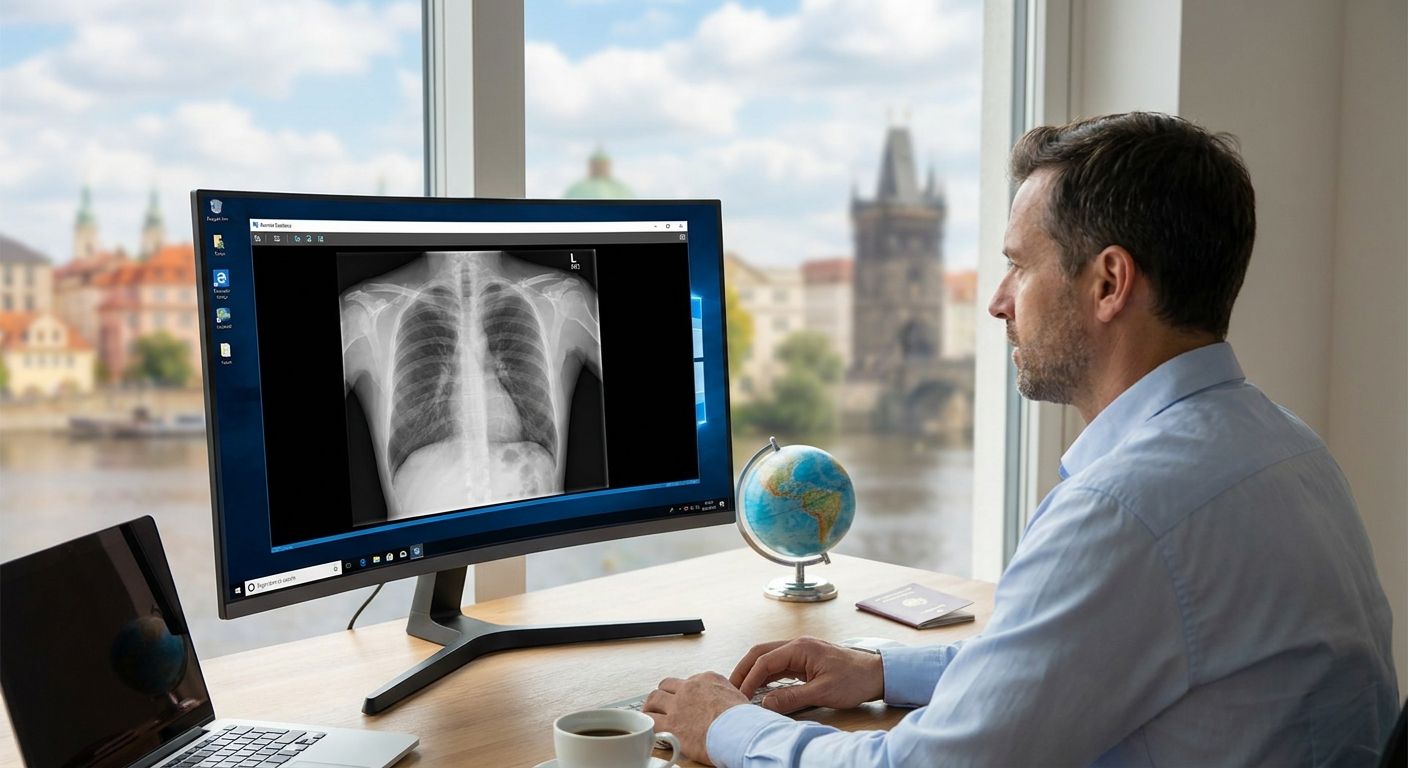
International teleradiology jobs let a US-licensed radiologist relocate abroad while continuing to read for domestic hospitals and imaging centers, structured around asynchronous or overnight reading blocks instead of a fixed onsite schedule. Physicians moving for a spouse's job, a sabbatical, or a permanent change in country of residence need a different playbook than a radiologist going remote within the US — licensure, malpractice, connectivity, and tax residency all get more complicated once you cross a border.
- International teleradiology jobs work when your state license, malpractice tail, and home reading room all clear compliance before you leave the US.
- RadBoard aggregates 5,000+ radiology openings from 20 sources, including remote and hybrid roles suited to physicians relocating abroad.
- Time zone offset, not location, is the real constraint — a 7-9 hour gap from the reading pool usually forces an overnight or split shift.
- Multi-state license maintenance and confirmed malpractice tail coverage matter more once you're outside the country than any perk in the offer letter.
Why international teleradiology jobs matter for relocating physicians
A radiologist who wants to live in Lisbon, Auckland, or Copenhagen but keep a US income has one real path: read remotely for a US-based group or hospital system under a teleradiology arrangement. The RadBoard job pool pulls from 20 sources and lists 5,000+ radiology positions, and a meaningful share carry remote or hybrid tags that fit this exact situation.
The search behavior here is different from a domestic remote job search. Relocating physicians filter for employers who explicitly permit overseas reading locations, not just "remote" — most teleradiology contracts are written with a domestic remote reader in mind, and the fine print on data security, licensure, and malpractice often assumes you're still inside the US. That gap is where most relocation plans stall out.
Confirm your state licensure covers remote reads from abroad
Licensure follows the patient's location, not yours, but living abroad still changes what a state medical board expects for renewal, verification, and continuing education documentation.
- Check whether your state board requires a US mailing address or in-state presence for license renewal
- Confirm the Interstate Medical Licensure Compact covers the states where your reading volume is highest
- Ask each state board directly whether physical residence outside the US affects license status — policies vary by state
- Set calendar reminders for CME deadlines that don't shift with your new time zone
- Keep a US-based registered agent or mail forwarding service if a state requires a domestic address on file
Verify your employer's policy on overseas reading locations
Many teleradiology groups write "remote" into the job posting without meaning "remote from another country." Get this in writing before you sign, not after you've shipped your workstation overseas.
- Ask HR or the recruiter directly: is reading from outside the US permitted under this contract
- Request the data security and PHI handling policy for international connections
- Confirm whether the employer's PACS and VPN infrastructure supports the latency of your target country
- Check if the group has precedent — other radiologists already reading from abroad — versus you being the first test case
- Get any overseas-reading approval added as a written addendum, not a verbal yes
Build a compliant home reading room overseas
A reading room that passes muster in the US doesn't automatically pass abroad. Monitor calibration, ambient lighting, and network redundancy all need re-verification once you change countries and internet providers.
- Match your monitors to the same DICOM calibration standard your employer requires domestically
- Test upload and download speeds against the group's minimum bandwidth requirement, not just "fast enough for video calls"
- Set up a backup internet connection (mobile hotspot or secondary ISP) for outage coverage
- Review what a compliant home reading room requires before finalizing your equipment list
- Confirm your homeowner's or renter's policy abroad covers the replacement value of workstation equipment
Sort out your visa and residency status abroad
A tourist visa or short-stay permit won't cover a long-term relocation, and immigration status abroad is separate from — and unrelated to — your US medical license or employer's HR department.
- Research the destination country's remote-worker or digital-nomad visa category, if one exists
- Confirm whether reading US cases from abroad counts as "local employment" under that country's immigration rules
- Talk to an immigration attorney in the destination country, not just a US-based one
- If the move is long-term or permanent, map out the country's path to residency and eventual citizenship early — the process is often years-long and tied to minimum residency periods, not something you start after you've already settled in. Physicians weighing a multi-year stay in Denmark, for instance, benefit from understanding upfront what applying for Danish citizenship actually requires in terms of residency duration, language testing, and documentation, since that timeline shapes decisions about property, schooling, and long-term contracts well before citizenship itself becomes relevant
- Check whether your spouse or dependents need separate visa sponsorship distinct from yours
Plan your call schedule around time zone offset
Time zone gap, not geography, is what makes or breaks an international teleradiology arrangement. A 7-9 hour offset from your reading pool usually means overnight or heavily split shifts, every week, indefinitely.
- Calculate the exact offset between your target country and the hospital system's primary time zone
- Ask whether the role is structured as overnight coverage, early-morning US shift, or asynchronous batch reading
- Confirm whether call volume spikes align with your new sleep schedule or fight it
- Test-run the schedule for two weeks before committing to a full relocation
- Ask current remote readers in the group how they've structured their week around the offset
Secure malpractice tail coverage for multi-state, multi-country work
Malpractice coverage gaps are the most expensive mistake in this entire move, and they're invisible until a claim surfaces years later.
- Confirm your current policy explicitly covers reads performed while physically located outside the US
- Ask whether tail coverage for multi-state teleradiology extends to your new country of residence
- Get the insurer's answer in writing, not a verbal assurance from the practice manager
- Compare claims-made versus occurrence policies for how each handles a move mid-contract
- Revisit coverage every time you add a new state license, since each one can trigger separate requirements
Negotiate equipment, connectivity, and time-zone stipends
International relocation adds costs a domestic remote radiologist never faces — customs duties on monitors, a second internet line, and sometimes a shift differential for overnight reading.
- Ask for a one-time relocation or equipment stipend to cover shipping and customs on workstation hardware
- Negotiate a monthly connectivity stipend that covers a backup ISP or mobile data plan
- Request a shift differential if the time zone offset pushes you into overnight hours
- Clarify whether CME and licensing renewal costs are reimbursed at the same rate as domestic staff
- Get every stipend written into the contract, not offered as a verbal side agreement
Comparing your options for reading from abroad
| Option | Best for | Key limitation |
|---|---|---|
| Full-time W-2 telerad employer | Physicians who want benefits and a stable schedule while abroad | Fewer employers explicitly permit overseas reading locations |
| 1099 independent contractor telerad | Physicians who want schedule control and multiple clients | You handle your own tax residency and malpractice arrangements |
| Locum tenens telerad | Physicians testing relocation before committing long-term | Assignments are short and coverage can be inconsistent |
| International teleradiology group (reading for overseas facilities) | Physicians who want to stop reading US cases entirely | Requires separate licensure or credentialing in the host country |
Verdict: a 1099 independent contractor arrangement gives relocating radiologists the most control over time zone and workload, but only if you've already confirmed licensure, malpractice, and tax residency on your own — a W-2 telerad employer that explicitly permits overseas reading is the safer default for a first move abroad.
Common mistakes physicians make relocating abroad via telerad
- Assuming "remote" in a job posting means "remote from any country." Most postings are written for domestic remote readers and never mention international reading at all.
- Skipping the malpractice tail conversation until after signing. Coverage gaps discovered post-move are far harder and more expensive to fix.
- Underestimating the time zone offset's effect on sleep and call quality. A 7-9 hour gap turns into permanent overnight work, not an occasional late shift.
- Treating visa status as separate from the job search. Immigration approval can take longer than the hiring process itself and should start in parallel, not after an offer.
- Not verifying home reading room compliance before shipping equipment. Monitor calibration and network redundancy standards don't automatically transfer between countries.
Find international-ready teleradiology jobs
Search 5,000+ radiology openings from 20 sources on RadBoard.
FAQ
What are international teleradiology jobs?
International teleradiology jobs let a US-licensed radiologist read cases for a US hospital or imaging center while physically living in another country, using remote workstations and PACS access. The employer, licensure, and malpractice arrangements typically remain tied to the US, not the country of residence.
Can a US radiologist read for US patients while living abroad?
Yes, as long as the state medical license stays active and the employer's contract and malpractice policy explicitly permit reading from outside the US. Not every teleradiology employer allows this, so confirming it before relocating is essential.
Do I need a license in the state where the patient is located or where I'm physically located?
You need a license in the state where the patient and imaging facility are located, not where you're physically sitting. Physical location abroad mainly affects malpractice coverage, data security compliance, and visa status, not the licensure requirement itself.
How does time zone affect teleradiology jobs abroad?
A large time zone offset from the hospital system's primary hours usually forces overnight or heavily split shifts, since call volume peaks on US daytime hours regardless of where you live. Physicians moving 7-9 hours ahead of their reading pool should plan for permanent overnight work, not an occasional adjustment.
Do teleradiology jobs abroad pay less than onsite roles in 2026?
Compensation depends on the employer and contract structure, not physical location, since most international teleradiology arrangements pay the same rate as domestic remote reads. What changes is stipend structure, since equipment, connectivity, and shift differentials often need separate negotiation for an overseas move.
Can I keep my malpractice coverage while living abroad?
Only if the policy explicitly extends to reads performed while physically located outside the US, which isn't automatic in most standard policies. Get written confirmation from the insurer before relocating, since a gap discovered after a claim is far more costly than a phone call beforehand.
What is the Interstate Medical Licensure Compact and does it help teleradiology jobs abroad?
The Interstate Medical Licensure Compact streamlines license applications across more than 35 member states for physicians who already hold a full and unrestricted license in one member state. It speeds up adding new state licenses but doesn't change the requirement that you hold a license in every state where your patients are located.
Is a 1099 contractor role better than a W-2 job for reading from abroad?
A 1099 role gives more schedule control but shifts responsibility for tax residency, malpractice, and licensure entirely onto the physician. A W-2 teleradiology employer that explicitly permits overseas reading is generally the safer starting point for a first international relocation.
One last thing
The single detail that derails more international telerad moves than any contract clause: physicians ship their workstation and book flights before confirming, in writing, that their state license and malpractice policy actually cover reading from their new country. Get that confirmation first — everything else in the move is reversible, that one isn't.