
SalaryExpert provides occupation-based salary estimates, a useful starting point for compensation research. A radiologist evaluating a specific offer also needs evidence about subspecialty, workload, call, and the compensation definition behind each figure. The best SalaryExpert alternative in 2026 is RadBoard if you need radiology job discovery; MGMA if you need physician compensation survey benchmarks.
- Compare SalaryExpert alternatives by evidence type: salary estimates, physician surveys, and advertised radiology positions answer different questions.
- RadBoard aggregates 5,000+ radiology positions from 20 sources; use it for job discovery, not as a compensation survey.
- MGMA supports physician compensation benchmarking; check the comparison group before applying a percentile to your offer.
- Doximity and Medscape provide physician compensation reports; broad specialty findings do not establish a specific position’s value.
Why this matters
A salary estimate answers a different question from a job advertisement or physician survey. Treating those sources as interchangeable creates a weak negotiation argument: the number looks relevant, but the underlying work is different.
For your 2026 search, separate estimated salary, reported compensation, and advertised compensation. Then match each figure to the position you are considering. An overnight reading role, an academic appointment, and a partnership-track position need different comparison groups—not simply the same specialty label.
SalaryExpert alternatives at a glance
Choose the source that matches your immediate decision. This comparison separates compensation research from job discovery rather than presenting every platform as a direct substitute.
| Source | Best for | Standout feature | Difference from SalaryExpert |
|---|---|---|---|
| SalaryExpert | Initial occupation and location research | Occupation-based salary estimates | Baseline for the comparison |
| RadBoard | Finding radiology career opportunities | Aggregates 5,000+ positions from 20 sources, with search and swipe-to-save features | Starts with positions rather than a salary estimate |
| MGMA | Physician compensation benchmarking | Physician compensation and productivity survey data | Centers on medical practice survey benchmarks |
| Doximity | Broad physician compensation context | Physician Compensation Report | Provides physician-focused specialty and geographic analysis |
| Medscape | Specialty-level compensation context | Physician Compensation Report | Provides survey-based physician compensation reporting |
Best for here means best suited to the task, not a claim that one source has the most accurate figure for every radiologist. Read the methodology and compensation definitions before comparing numbers across sources.
1. RadBoard: best for radiology job discovery
RadBoard is a radiology job search platform aggregating 5,000+ positions from 20 sources. Its search and swipe-to-save features support finding opportunities and building a shortlist. That makes it useful when your salary research needs to connect with positions you would actually consider.
Where it shines
- Radiology-specific job discovery keeps your search focused on the field.
- Aggregation brings positions from multiple sources into one search platform.
- Swipe-to-save gives you a way to retain opportunities for further review.
Where it falls short
- A job search platform is not a substitute for a physician compensation survey.
- An advertised figure does not establish what the eventual hire earns.
- You still need the employer to confirm compensation terms, duties, and workload in writing.
| Dimension | Job search platform | SalaryExpert |
|---|---|---|
| Starting point | Radiology positions | Occupation-based salary estimates |
| Main task | Discover and save opportunities | Research estimated compensation |
| Evidence to obtain next | Employer’s written offer and role details | Methodology and comparison-group fit |
Best for: Radiologists moving from general salary research to a shortlist of career opportunities.
Verdict: Hold this source in your search workflow; pair relevant positions with independent compensation evidence rather than treating listings as a market-wide salary survey.
2. MGMA: best for physician compensation survey benchmarks
MGMA publishes physician compensation and productivity benchmarks through its data resources. For a radiologist assessing an offer, the useful question is whether the available survey group matches the practice setting and compensation arrangement. The organization’s name alone does not make every benchmark applicable.
Where MGMA shines
- Physician compensation and productivity data support a more focused discussion than an occupation title alone.
- Survey definitions give you a basis for checking what the benchmark measures.
- Compensation and productivity can be considered together when the relevant data are available.
Where MGMA falls short
- Survey results describe a respondent population, not an employer’s commitment to you.
- A percentile is not a salary entitlement without matching workload and role characteristics.
- A broad comparison group does not resolve the value of call, ownership, or unusual duties by itself.
| Dimension | MGMA | SalaryExpert |
|---|---|---|
| Core evidence | Medical practice survey benchmarks | Occupation-based estimates |
| Useful question | How does this compensation compare with surveyed physicians? | What is the estimated salary for this occupation and location? |
| Essential check | Survey year, definitions, and comparison group | Estimate methodology and role match |
For a 2026 negotiation, identify the underlying collection period instead of assuming the publication label describes when physicians earned the compensation. Ask the employer to name the survey, edition, specialty group, and compensation measure behind its benchmark.
Best for: Radiologists reviewing an employer’s survey-based compensation rationale.
Verdict: Hold MGMA as a benchmarking source when the underlying group and definitions match the offer.
3. Doximity: best for broad physician compensation context
Doximity’s Physician Compensation Report covers physician compensation, including specialty and geographic comparisons. It is useful for orienting your research before investigating a particular employment arrangement. Use its methodology to understand the scope of the findings.
Where Doximity shines
- Physician-focused reporting keeps the comparison within medicine.
- Specialty and geographic analysis can frame questions about a proposed move.
- Report methodology provides context for interpreting the published findings.
Where Doximity falls short
- A broad radiology finding does not isolate your exact subspecialty and schedule.
- Aggregate compensation does not establish the guaranteed portion of an offer.
- Report findings cannot replace written details about the actual position.
| Dimension | Doximity | SalaryExpert |
|---|---|---|
| Main format | Physician compensation report | Occupation salary estimates |
| Best use | Broad physician market context | Initial occupation and location estimate |
| Next step | Check report scope against the role | Check estimate scope against the role |
Best for: Radiologists seeking a physician-focused overview before a detailed offer review.
Verdict: Hold Doximity as context, not as the sole basis for your requested compensation.
4. Medscape: best for specialty-level compensation context
Medscape’s Physician Compensation Report provides survey-based reporting on physician earnings. Use it to understand broad specialty compensation findings and to cross-check the questions raised by other sources. Keep the report’s respondent population and definitions attached to any figure you cite.
Where Medscape shines
- Physician survey reporting provides a specialty-focused reference.
- Methodology helps distinguish the report’s findings from advertised job compensation.
Where Medscape falls short
- Specialty-level findings do not price an individual employment contract.
- Broad results do not settle differences in hours, call, benefits, or ownership.
| Dimension | Medscape | SalaryExpert |
|---|---|---|
| Evidence format | Physician survey reporting | Occupation-based estimates |
| Main use | Specialty-level context | Occupation and location research |
| Main caution | Match respondent scope and compensation definition | Match estimate scope and occupation definition |
Best for: Radiologists adding another physician-focused reference to their compensation research.
Verdict: Hold Medscape as supporting context rather than a replacement for offer-specific analysis.
Why people switch from SalaryExpert
The practical reason to look beyond SalaryExpert is a change in the question you need answered. These are reasons to expand your research workflow, not claims about measured switching behavior.
- You need physician survey evidence. An employer citing compensation percentiles should identify the actual survey and comparison group. A general occupation estimate does not verify that claim.
- You need positions to compare. A salary estimate does not identify which opportunity matches your subspecialty, location, and schedule requirements.
- You need to separate compensation components. Guaranteed salary, productivity incentives, and ownership distributions require distinct treatment.
- You need workload context. A headline figure does not explain reading volume, overnight coverage, procedures, or administrative responsibilities.
Do not replace one isolated number with another. Add the evidence type that your current source does not answer.
How to build a usable radiologist salary benchmark
For a 2026 offer review, organize the evidence before calculating an average. Combining unlike figures produces a precise-looking result without a defensible comparison.
Define the role
Write down subspecialty, practice setting, employment status, location, and schedule. Separate academic responsibilities from clinical work and clarify whether the role includes procedures, supervision, or leadership duties.
Match the period
Put recurring compensation on the same 12-month basis. Keep signing incentives and relocation payments separate from recurring earnings, and record whether a cited amount is guaranteed or conditional.
Normalize workload
Record the full-time equivalent, annual working weeks, expected hours, call, and productivity requirements. Use a 1.0 FTE comparison only after confirming what full-time means for each employer; the label alone does not establish equivalent work.
Verify the evidence
Record the source, publication date, underlying data period, compensation definition, and comparison population. Mark employer statements separately from published survey findings so your notes do not turn an estimate into a contractual promise.
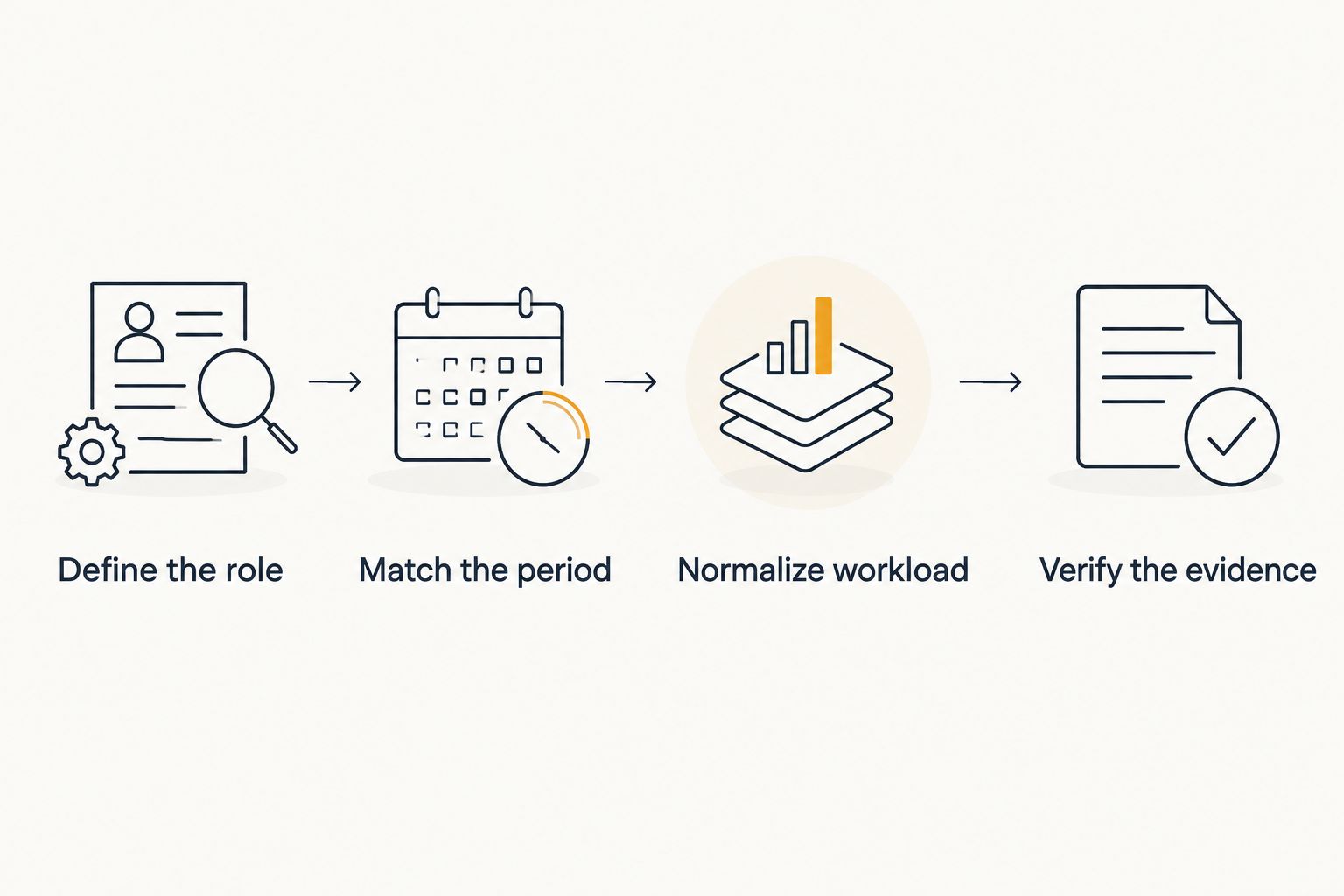
Your final comparison should show what each figure includes and excludes. If a position uses productivity compensation, review how to evaluate RVU targets before accepting a radiology offer before treating projected earnings as guaranteed income.
When staying with SalaryExpert is the right call
Keep SalaryExpert in your workflow when your question is narrow: you want an initial occupation-based salary estimate for a location. That is a legitimate research task. You do not need a different platform simply because your eventual decision requires additional evidence.
For 2026 research, treat SalaryExpert as a starting reference rather than a complete offer assessment. Add a physician survey when you need compensation benchmarking, and add job research when you need alternatives to the position in front of you.
FAQ
What are the best SalaryExpert alternatives for radiologists?
RadBoard is best for radiology job discovery, while MGMA supports physician compensation benchmarking. Doximity and Medscape provide broader physician compensation context; none of these evidence types should be treated as interchangeable.
Is a radiology job board better than SalaryExpert for salary research?
A radiology job board is better for finding positions, not for replacing an occupation-based salary estimate or physician survey. Use employer-confirmed terms from relevant positions alongside clearly defined compensation benchmarks.
Is MGMA better than SalaryExpert for a radiologist offer?
MGMA is better suited when your question concerns physician compensation survey benchmarks. The comparison is useful only when the survey population, compensation definition, and workload fit the position.
Can Doximity or Medscape tell me what salary to request?
Doximity and Medscape provide compensation context, not a definitive salary request for an individual contract. Match their findings to your specialty, duties, schedule, and employment arrangement before using them in negotiation.
Should I compare base salary with total compensation?
No. Compare base salary with base salary and identify incentives, benefits, and ownership-related earnings separately. Combining different compensation definitions makes the benchmark difficult to interpret.
Which date matters when I use a salary report in 2026?
Both the publication date and the underlying data period matter. A report published in 2026 does not automatically describe compensation earned during the same period.
What should I ask an employer about a salary percentile?
Ask for the source, edition, comparison group, and compensation definition. Then ask how the position’s FTE, productivity expectations, and call requirements match that benchmark.
One last thing
Ask the employer to explain the denominator, not just defend the salary. A compensation figure becomes useful only when you know the work attached to it: annual working time, coverage responsibilities, productivity requirements, and nonclinical duties.
Before your next negotiation, write one sentence defining the position you are benchmarking. If a source describes a different job, keep it as background—not as the deciding evidence.