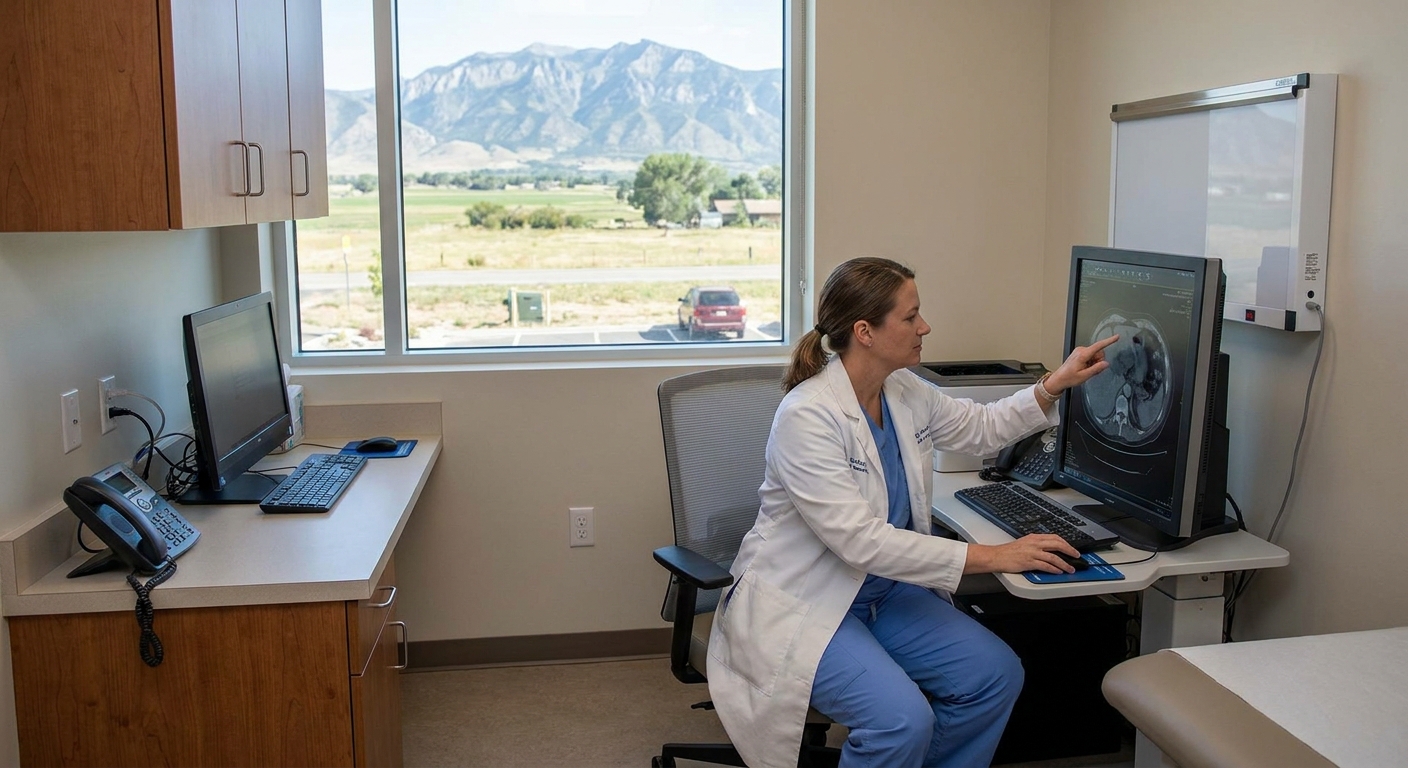
Rural hospitals covering imaging with one radiologist need a candidate who can read everything from stroke CT to obstetric ultrasound without a subspecialist down the hall to hand off to — this guide breaks down what to look for, three roles worth applying to right now, and what to skip in 2026.
- Solo radiologist jobs at single-coverage rural facilities demand broad diagnostic range and a real teleradiology backup contract, not a verbal promise.
- Hospital-employed rural roles win on stability; community health center roles win on loan repayment and mission fit.
- Skip any solo offer without a written after-hours coverage plan or a non-compete that blocks your next rural move.
- RadBoard aggregates 5,000+ radiology jobs from 20 sources, including active single-coverage rural openings updated for 2026.
Why this matters
A solo radiologist at a single-coverage rural facility is the entire imaging department — no partner to split call, no subspecialist to punt a tough MSK read to, no second opinion down the hall. That's a different job than a group practice slot, and the criteria for evaluating it are different too. Browse solo radiologist openings on RadBoard before you commit to a specific facility type, because the backup infrastructure varies more than the base salary does.
Rural facilities filled these roles differently in 2026 than they did five years ago. Teleradiology backup contracts, once optional, are now standard in most credible offers. The facilities still trying to staff solo coverage without one are the ones to scrutinize hardest.
Who this is for
This guide is for board-certified diagnostic radiologists — general or fellowship-trained — considering a role where you're the only radiologist on-site or on contract for a critical access hospital, rural community hospital, or standalone rural imaging center. You're comfortable reading CT, MRI, ultrasound, plain film, and often fluoroscopy across every organ system, and you want either the autonomy of running the department yourself or the lifestyle trade of a smaller, quieter facility.
What to look for in solo radiologist jobs for rural facilities
Teleradiology backup coverage
Single-coverage doesn't mean zero backup — it means the backup isn't in the building. A legitimate solo role has a contracted teleradiology group covering nights, weekends, and your PTO, with defined turnaround times written into the facility's service agreement. Ask to see the backup contract, not just hear about it in the interview.
Subspecialty breadth required
Rural solo work means reading neuro, body, MSK, breast, and pediatric studies in the same shift. Facilities that expect you to read everything without any triage-to-teleradiology option for outlier studies (fetal MRI, complex cardiac) are setting you up to either delay reads or overreach your training.
Call frequency and burnout protection
Solo coverage often means 1-in-1 call by definition — you're the only one there. What matters is whether the facility caps your hours, offers locum relief for vacation, or expects you available 24/7 with no defined limit. A written call schedule with built-in relief weeks separates a sustainable job from a burnout track.
Compensation structure
Rural solo roles pay through a mix of base salary, RVU production, and often a rural incentive stipend or loan repayment component. Compare total compensation, not just the base number — a lower base with a strong stipend can beat a higher base with none.
Contract terms and non-compete scope
Read the non-compete radius carefully. A 25-mile non-compete in a dense metro is trivial; the same radius in a rural county can mean relocating your whole family if the job doesn't work out. Malpractice tail coverage matters just as much here, since solo contracts are more likely to be independent contractor arrangements without built-in tail.
Relocation and community support
Rural facilities that actively help with housing, spousal employment leads, or school district information are signaling they've retained radiologists before. Facilities with no answer to "what happened to the last person in this role" are a red flag.
“If a rural facility can't show you the teleradiology backup contract, assume there isn't one.”
Top picks for solo radiologist jobs in 2026
The classic solo gig: rural hospital relocation roles
These are critical access and small community hospitals recruiting a single on-site radiologist to run daily reads plus procedural work, with teleradiology covering nights. One spec that matters: 24/7 backup coverage should be contractually guaranteed, not assumed. Facilities relocating candidates in 2026 are increasingly bundling housing stipends with the base offer. Roles built around radiology jobs for physicians relocating to rural hospitals tend to pair the highest autonomy with the clearest backup structure. Verdict: Buy if the facility can produce a signed teleradiology service agreement during your interview process.
The mission-driven pick: community health center solo roles
Community health centers serving underserved rural populations often run a single-radiologist imaging department tied to federal funding requirements, which usually means more structured hours and defined scope than a standalone hospital. These roles line up with radiology jobs at community health centers for underserved areas, and many carry loan repayment eligibility tied to the facility's federal designation. Verdict: Consider this path if loan repayment and predictable hours outweigh top-of-market RVU pay.
The safe pick: hospital-employed solo tracks
Hospital-employed solo roles trade independent contractor flexibility for W-2 stability — malpractice tail included, benefits bundled, and often a defined path to add a second radiologist as volume grows. These map to hospital-employed radiology jobs for physicians wanting stability. One number that matters: employed roles typically include tail coverage as a standard benefit, which independent contractor solo gigs usually don't. Verdict: Buy for candidates who want solo autonomy without solo financial exposure.
What to avoid
- Solo roles with no written backup contract — a verbal promise of teleradiology coverage isn't enforceable when the facility gets busy or the vendor relationship lapses.
- Independent contractor solo positions with no tail coverage — you're personally exposed to claims filed after you leave unless the contract states otherwise.
- Broad non-competes with no relocation support — a facility that won't help you settle but will restrict where you work next if it doesn't work out is asking for one-sided risk.
Verdict comparison
| Pick | Coverage Model | Backup Support | Contract Terms | Verdict |
|---|---|---|---|---|
| Rural hospital relocation role | On-site solo, days | Contracted teleradiology, nights/weekends | Often 1099, tail varies | Buy if backup contract is signed |
| Community health center role | On-site solo, structured hours | Facility-dependent, often lighter after-hours volume | Usually W-2, loan repayment eligible | Consider for mission fit |
| Hospital-employed solo track | On-site solo, days | Teleradiology backup standard | W-2, tail included | Buy for stability |
Find solo radiologist openings now
Search 5,000+ radiology jobs from 20 sources and swipe to save the rural roles that fit.
FAQ
What is a solo radiologist job?
A solo radiologist job means you are the only radiologist on-site at a facility, typically a rural or critical access hospital, reading across all modalities and subspecialties with teleradiology covering off-hours. It differs from group practice roles where reads are split among several radiologists.
Are solo radiologist jobs in rural areas well paid?
Rural single-coverage roles often pay through a base salary plus RVU production and a rural incentive stipend, and total compensation can exceed similar urban roles once stipends and loan repayment are included. Compare full packages, not just base salary, before deciding.
Do solo radiologist jobs include teleradiology backup?
Legitimate solo roles in 2026 almost always include a contracted teleradiology group for nights, weekends, and PTO coverage. Ask to see the signed service agreement before accepting an offer that claims backup exists.
Is a solo radiologist job better than a group practice job?
It depends on your tolerance for autonomy versus support: solo roles offer more independence and often a rural stipend, while group practice offers shared call and built-in subspecialty consults. Neither is universally better; it's a fit question tied to how you want to practice.
What should I check in a solo radiologist contract?
Check the teleradiology backup agreement, malpractice tail coverage, non-compete radius, and call schedule caps before signing. These four terms determine whether a solo role is sustainable or a burnout risk.
Can new graduates take solo radiologist jobs?
Some rural facilities hire radiologists straight out of residency or fellowship for solo roles, but the subspecialty breadth required makes this a harder first job than a group practice slot. A structured mentorship or phased onboarding period reduces the risk.
How much call do solo radiologists take?
Solo radiologists are the only on-site coverage during their scheduled hours, but a properly structured contract shifts nights, weekends, and vacation coverage to a contracted teleradiology group rather than leaving the solo radiologist on unlimited call.
One last thing
The single biggest predictor of whether a solo rural radiologist stays past year one isn't salary — it's whether the teleradiology backup contract was in place before day one or promised as a "we're working on it." Ask for the signed agreement during the interview, not after you've relocated.