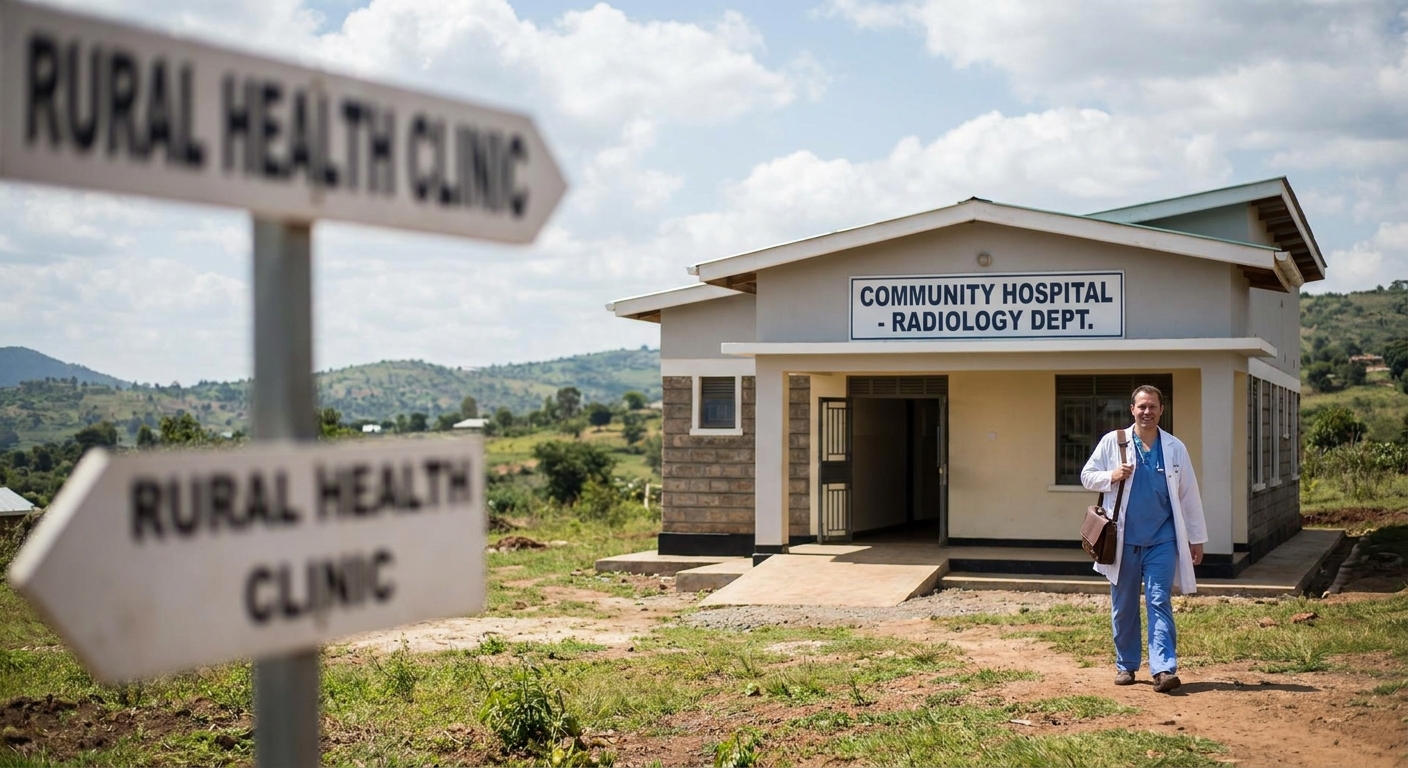
Rural hospitals in 2026 are offering signing bonuses, loan repayment, and full teleradiology backup to close a staffing gap that urban markets don't have. This guide breaks down which rural radiology jobs are worth the move and which ones look good on paper but burn out a solo reader in 18 months.
- Critical access hospitals in 2026 pay $50,000-$100,000 above metro-market averages for radiologists willing to relocate.
- VA rural clinics offer federal loan repayment and pension benefits that most private critical access hospitals can't match.
- Locum tenens contracts are the lowest-risk way to test a rural market before signing a permanent rural radiology job.
- Hybrid teleradiology-plus-call models cut solo call burden without giving up the rural salary premium.
- Skip any rural radiology job posting that doesn't specify backup coverage for nights and weekends.
Why this matters
Rural hospitals can't recruit the way academic medical centers do. No fellowship pipeline, no built-in call pool, and often no radiology group within 60 miles to lean on. That gap is why rural radiology jobs in 2026 carry higher base salaries, faster partnership tracks, and more aggressive relocation packages than comparable urban openings — but it's also why a chunk of these postings sit open for six months or longer.
The radiology job platform approach that works here is simple: filter by call structure and backup coverage first, salary second. A rural job with no teleradiology backup and a 1-in-2 call schedule isn't the same job as one with a nighthawk contract in place, even if the posted salary is identical.
Who this is for
This guide is built for radiologists relocating out of a metro fellowship or urban practice into a rural or critical access hospital setting — generalists comfortable reading a broad case mix, physicians chasing loan repayment or a faster partnership track, and anyone weighing a permanent rural contract against a locum tenens trial run first.
What to look for in rural radiology jobs
Call burden and backup coverage
Rural radiology jobs without a teleradiology backup contract put one physician on call for an entire county. Ask specifically how nights, weekends, and vacation coverage are staffed before you sign — a hospital that can't answer this in one sentence hasn't solved it yet.
Loan repayment and relocation incentives
Many rural and critical access hospitals in 2026 tie signing bonuses to multi-year loan repayment programs, sometimes $150,000 or more over a five-year commitment. These packages matter more for physicians finishing residency with six-figure debt than for radiologists ten years into practice.
Subspecialty support
A solo rural generalist still needs a place to send the complex neuro case or the pediatric read. Confirm the hospital has a standing teleradiology or academic-center relationship for subspecialty overreads, not a vague promise to "figure it out."
Housing and spousal employment
Relocation to a rural market often means a spouse changing careers or commuting. Hospitals serious about retention in 2026 are offering housing stipends and, in some systems, direct help placing a spouse in local employment or the hospital system itself.
Contract length and exit terms
Rural contracts often carry longer non-competes and buyout clauses than urban jobs, because the hospital is protecting a smaller local market. Read the buyout number before you read the salary — a $75,000 buyout on a two-year contract changes the math on an early exit.
State licensing timeline
Rural relocation frequently means a new state license. Some state boards clear radiology license applications in under 30 days in 2026; others take 90 days or more, which affects your realistic start date.
Top picks for rural relocation
Critical access hospital, solo generalist role — the classic anchor. One radiologist covers the full case mix for a hospital under 25 beds, often with a base salary premium of $50,000-$100,000 over metro averages in 2026. No subspecialty carve-out, no partner to split call with. Buy if you want autonomy and a broad case mix and the hospital has a documented teleradiology backup contract; skip if call coverage is undefined.
VA rural clinic radiologist — the benefits pick. Federal rural VA postings come with pension eligibility, structured hours, and loan repayment terms that most private critical access hospitals can't match dollar for dollar. Review the radiology jobs at VA hospitals for federal benefits before assuming a private rural offer beats it on total compensation. Buy for physicians prioritizing benefits stability over top-line salary.
Locum tenens bridge contract — the low-risk trial run. A 90-day locum assignment lets you work the actual call schedule and community before committing to a permanent rural contract. Check locum tenens radiology jobs for flexible contracts if you're unsure whether a specific rural market fits your pace. Consider this before any permanent rural signature — it's the cheapest way to avoid a bad two-year contract.
Hybrid teleradiology-plus-onsite-call — the burnout hedge. This model splits routine reads to a remote teleradiology group and keeps you onsite for procedures and local relationships, cutting solo night call to roughly half of a traditional rural schedule. See teleradiology jobs for radiologists who want remote flexibility for how these hybrid contracts are structured in 2026. Buy if the hospital has already signed the teleradiology partner — wait if they're still shopping for one.
Rural hospital with loan repayment assistance — the debt-payoff pick. Aimed at physicians finishing residency, these contracts trade a slightly lower base salary for structured, multi-year loan repayment, often exceeding $150,000 total in 2026 postings. Cross-check terms against radiology jobs with loan repayment assistance for new physicians before signing — repayment schedules vary widely by year one payout versus back-loaded terms. Buy for early-career physicians with six-figure debt; skip if you're debt-free and just want top salary.
What to avoid
- "Full-time, flexible schedule" postings with no call structure listed. This almost always means undefined solo call, not fewer hours.
- Signing bonuses with no clawback disclosure. A $40,000 bonus with a 100% clawback if you leave inside two years is a loan, not a bonus — read the fine print.
- Rural jobs advertising "broad case mix" with zero subspecialty backup named. That phrase is a red flag for a hospital that hasn't solved its overread problem yet.
Verdict comparison
| Position type | Call burden | Backup coverage | Relocation incentive | Verdict |
|---|---|---|---|---|
| Critical access hospital, solo | High (1-in-1 to 1-in-2) | Varies — confirm contract | Salary premium $50K-$100K | Buy if backup is documented |
| VA rural clinic | Moderate, structured hours | System-wide VA network | Federal loan repayment + pension | Buy for benefits stability |
| Locum tenens bridge | Set by assignment | Agency-managed | Daily rate, no long-term bonus | Consider before permanent contract |
| Hybrid teleradiology + call | Reduced, split with remote group | Built-in by design | Standard salary, less bonus | Buy once teleradiology partner is signed |
| Loan repayment rural contract | High, similar to solo model | Varies — confirm contract | $150K+ over 5 years | Buy for early-career debt payoff |
Compare rural radiology jobs now
Search 5,000+ radiology postings from 20 sources and filter by call structure.
FAQ
What's the best state for rural radiology jobs in 2026?
Salary and demand for rural radiology jobs vary by state licensing speed and Medicaid reimbursement rates rather than one clear winner. Check state-level breakdowns before assuming geography alone drives pay.
How much do rural radiologists get paid compared to urban hospitals?
Rural and critical access hospitals in 2026 commonly post salary premiums of $50,000 to $100,000 over comparable urban roles to offset call burden and location. The premium narrows when a hybrid teleradiology backup model reduces solo call.
Is loan repayment assistance common for rural radiology jobs?
Yes — many rural hospitals in 2026 structure signing packages around multi-year loan repayment, sometimes exceeding $150,000, aimed specifically at physicians finishing residency with existing debt.
Do rural hospitals offer teleradiology backup for call coverage?
Some do, and it's the single biggest differentiator between a sustainable rural contract and a burnout contract. Always ask the hospital to name the teleradiology partner before signing.
How long does it take to get licensed in a new state for a rural radiology job?
Licensing timelines in 2026 range from under 30 days in fast-processing states to 90 days or more elsewhere. Confirm the timeline early since it directly affects your realistic start date.
Are locum tenens contracts a good way to test a rural market?
Yes — a 90-day locum assignment lets you experience the actual call schedule and community before signing a permanent rural contract. It's the lowest-risk way to avoid a bad multi-year commitment.
What's the biggest downside of rural radiology jobs?
Undefined call coverage is the most common problem — a solo radiologist covering nights and weekends with no backup burns out faster than the salary premium justifies. Confirm backup coverage before comparing pay.
Can VA rural clinics offer better benefits than private critical access hospitals?
Often yes on total compensation, since VA rural postings include pension eligibility and federal loan repayment terms that most private critical access hospitals can't match. Private hospitals sometimes counter with higher base salary instead.
One last thing
The rural radiology jobs that fill fastest in 2026 aren't the ones with the biggest signing bonus — they're the ones where the hospital already has a signed teleradiology backup contract in place before the posting goes live. That single detail predicts retention better than salary does.