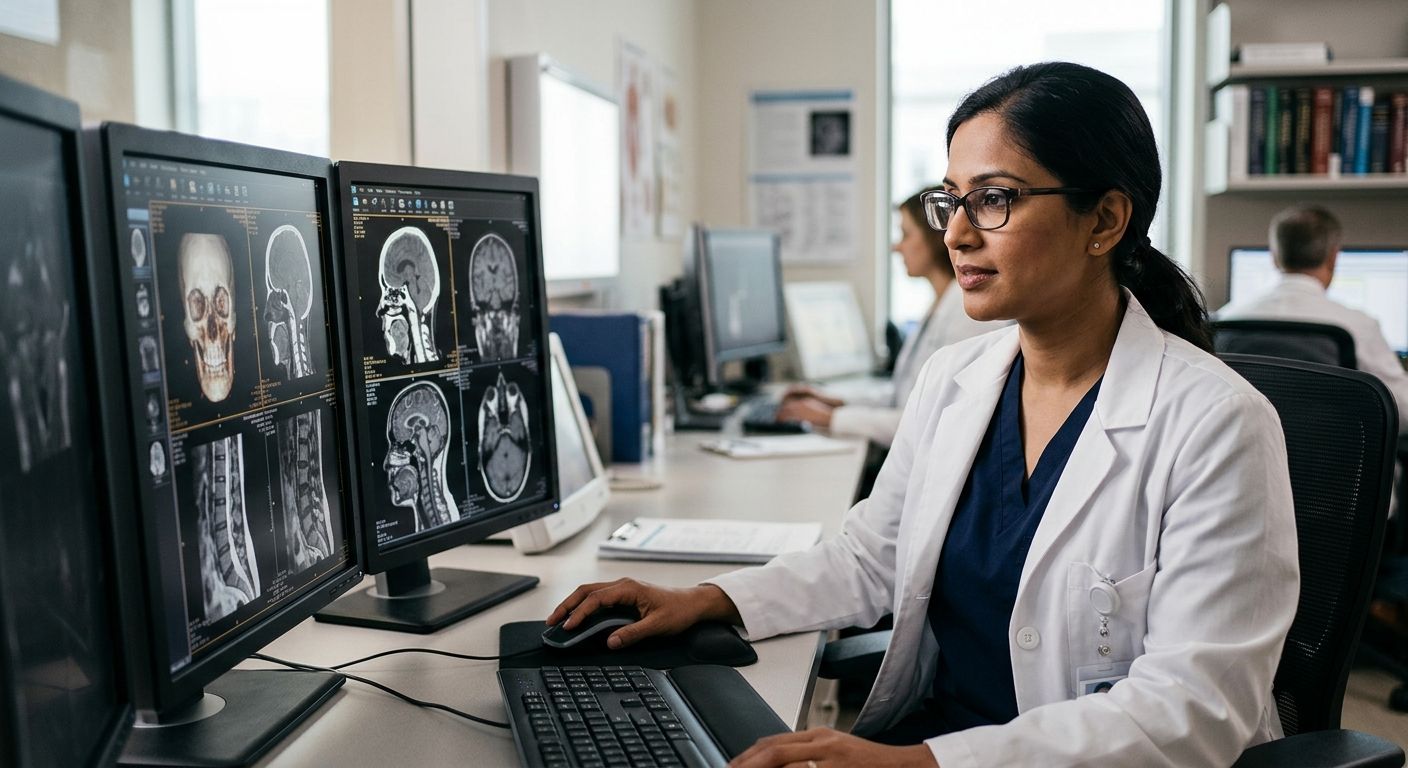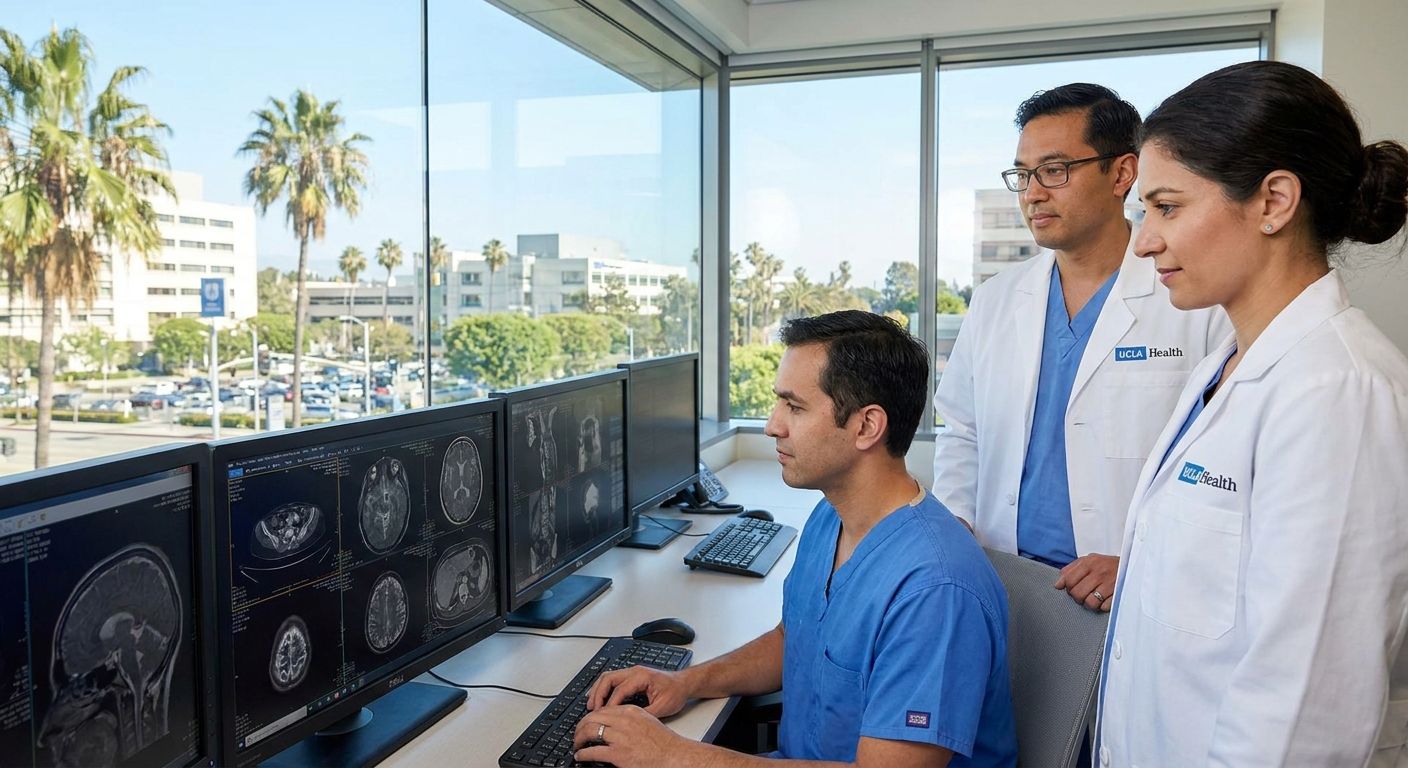
UCLA radiology jobs put Southern California attendings inside a University of California academic system, trading top-of-market private practice pay for academic rank, subspecialty focus, and protected research time in the Los Angeles market.
- UCLA radiology jobs fit Southern California attendings who want academic rank over the highest private-practice pay.
- RadBoard aggregates 5,000+ radiology positions from 20 sources, including Los Angeles academic openings, in one search.
- Compare UCLA against Kaiser Permanente, private practice groups, and teleradiology before signing an academic contract in 2026.
- California medical licensing runs months, not weeks — start the application before accepting a UCLA offer.
Why UCLA radiology jobs matter for Southern California attendings
Los Angeles radiology hiring runs through a handful of large systems: UCLA Health, Kaiser Permanente Southern California, Cedars-Sinai, USC, and a long list of private practice groups reading for community hospitals and outpatient centers. UCLA Health and the David Geffen School of Medicine at UCLA sit at the academic end of that market, competing for candidates against private groups that typically pay more per RVU but carry none of the academic rank, grant infrastructure, or teaching load.
For a Southern California attending, the question isn't whether UCLA is a strong employer in the abstract — it's whether an academic appointment is worth the trade against every private practice group and health system already inside a 30-mile radius. That's a different comparison than the one an out-of-state radiologist runs, since they're mostly weighing UCLA against staying put.
Searching one institution's career page misses that comparison entirely. RadBoard aggregates 5,000+ radiology positions from 20 sources — hospital systems, staffing firms, and job boards — so UCLA, Kaiser Permanente, Cedars-Sinai, and private groups show up side by side instead of across ten separate logins.
Finding and evaluating UCLA radiology jobs
Confirm the subspecialty and academic rank fit
Academic postings vary by rank, appointment type, and how much of the role is protected non-clinical time. Check this before you invest hours in an application.
- Check whether the opening is assistant, associate, or full professor track
- Match your subspecialty — neuro, body, MSK, breast, or IR — to the section's current staffing gaps
- Ask whether the role is clinical-only or a hybrid clinical/research appointment
- Compare the publication record the posting implies against your own CV before applying
Map the research and teaching requirements
Academic rank comes with obligations that private practice doesn't have. Get the specifics in writing before you assume the trade is worth it.
- Request the protected non-clinical time percentage in writing, not verbally
- Ask how the promotion committee weighs clinical RVUs against grant funding
- Confirm whether resident and fellow teaching is mandatory or elective
- Check for lab space or imaging research infrastructure if you run an active research program
Search every source before narrowing to one institution
Start broad. UCLA competes with Kaiser Permanente, Cedars-Sinai, USC, and private groups for the same pool of Southern California attendings, and the best offer isn't always the first one that surfaces.
- Check the UCLA Health and David Geffen School of Medicine career pages directly
- Search LinkedIn, radiology society job boards, and general medical job boards in parallel
- Run one search across the whole Los Angeles market on RadBoard, which pulls listings from 20 sources into a single AI-powered search with swipe-to-save
- Set alerts so new academic postings surface before the application window closes
Compare compensation structure beyond base salary
Academic pay structures at UCLA don't map cleanly onto a private practice RVU model, and comparing base salary alone misses the actual trade-off.
- Ask for the academic base salary range plus incentive RVU thresholds
- Factor in UC pension and benefits against a 401(k)-style private practice plan
- Confirm whether moonlighting or per diem shifts are permitted under the contract
- Check the CME allowance and conference stipend terms
The verdict for most Southern California attendings: academic pay at UCLA runs behind private practice on a per-RVU basis, and the gap is the price of protected research and teaching time.
Evaluate call and multi-campus coverage
UCLA radiology coverage isn't confined to one building. Multi-site call is one of the most underestimated parts of an academic offer in a market as spread out as Los Angeles.
- Ask which sites fall under the call pool — Westwood, Santa Monica, and satellite imaging centers
- Confirm night and weekend call frequency for your specific subspecialty
- Check whether teleradiology backup covers off-hours reads
- Factor cross-site commute time into your quality-of-life math, not just base salary
Start the California licensing and credentialing process early
Licensing is the step attendings underestimate most, and it's the one most likely to blow up a negotiated start date.
- Submit your Medical Board of California application before you accept an offer — processing runs months, not weeks
- Line up DEA registration and hospital credentialing in parallel, not sequentially
- Confirm whether the offer includes a start-date contingency tied to licensing timelines
- Ask HR for a written credentialing timeline, not a verbal estimate
Prepare for the academic interview format
Academic interviews at institutions like UCLA lean on your publication record and research direction more than a private practice interview does.
- Lead your CV with publications, grants, and academic appointments, not just clinical volume
- Prepare a research or case-based talk if the interview includes a section presentation
- Ask current faculty directly about promotion timelines and mentorship structure
- Ask how protected time is enforced day-to-day, not just whether it exists on paper
Comparing options in the Southern California radiology market
| Option | Best for | Compensation model | Key limitation |
|---|---|---|---|
| UCLA Health / David Geffen School of Medicine | Attendings who want academic rank, teaching, and research time | Academic base salary plus incentive RVUs | Multi-site call across Westwood, Santa Monica, and satellite clinics |
| Private practice groups in the LA basin | Attendings who want partnership track and higher clinical volume | Productivity-based RVU pay | Little to no protected non-clinical time |
| Kaiser Permanente Southern California | Attendings who want salaried stability inside an integrated system | Salaried, with benefits | Closed-panel structure limits outside consulting work |
| Teleradiology, LA-based and remote | Attendings who want schedule flexibility without relocating | Per-study or shift-based pay | No on-site academic or hospital committee involvement |
| Locum tenens coverage | Radiologists testing the Southern California market before committing | Contract day-rate | No long-term benefits or protected research time |
Buy for academic career-building: UCLA. Buy for maximum clinical income: private practice groups. Hold for stability without academic obligations: Kaiser Permanente. Buy for flexibility: teleradiology. Wait and test first: locum tenens.
Common mistakes Southern California attendings make
- Applying only through the UCLA Health portal and missing recruiter-only academic openings
- Accepting an academic offer without getting protected research time confirmed in writing
- Underestimating California licensing timelines and missing a negotiated 2026 start date
- Comparing UCLA base salary to private practice pay without factoring pension and benefits
- Ignoring multi-site call burden until after the contract is signed
Search LA radiology jobs in one place
Compare UCLA openings against 5,000+ listings from 20 sources.
FAQ
What is the fastest way to find UCLA radiology jobs in 2026?
Check the UCLA Health and David Geffen School of Medicine career pages directly, then run a parallel search across job boards and an aggregator like RadBoard that pulls listings from 20 sources at once. Academic postings often list on more than one channel before they close.
Is UCLA a good fit for private-practice trained radiologists?
It depends on whether you want academic rank and protected research time badly enough to accept lower per-RVU pay than most Los Angeles private groups offer. Radiologists who value teaching and grant work over maximum clinical income tend to fit better.
Do UCLA radiology jobs pay less than private practice in Los Angeles?
On a per-RVU basis, academic pay at institutions like UCLA typically runs behind private practice groups in the LA market. The gap is generally offset by UC pension benefits, protected non-clinical time, and academic rank, not by base salary.
How long does California medical licensing take for an out-of-state attending?
Processing through the Medical Board of California generally runs months rather than weeks, so start the application before accepting an offer. Waiting until after signing risks missing a negotiated 2026 start date.
What subspecialties are most in demand at academic centers like UCLA?
Academic centers typically staff around neuroradiology, body imaging, musculoskeletal, breast imaging, and interventional radiology sections, with demand shifting by section vacancy rather than a fixed pattern. Confirm the specific section's current staffing gap directly with the department.
Can a radiologist split time between UCLA and private practice?
Some academic contracts permit outside moonlighting or per diem shifts, but this varies by department and appointment type. Get the moonlighting terms in writing before assuming a split arrangement is allowed.
Is teleradiology a good alternative to a UCLA staff radiologist position?
Teleradiology suits attendings who prioritize schedule flexibility over academic involvement, teaching, or committee work. It generally pays per-study or per-shift rather than academic salary, and it carries none of the on-site research infrastructure a UCLA appointment offers.
What should Southern California attendings ask about call coverage before accepting a UCLA offer?
Ask which specific sites fall under the call pool, how often your subspecialty takes night and weekend call, and whether teleradiology backup covers off-hours reads. Multi-site call across a spread-out market like Los Angeles adds real commute time that base salary numbers don't capture.
One last thing
Academic radiology postings rarely list in only one place — a UCLA opening can appear on the department's own page, a general job board, and a staffing firm's listing simultaneously, with different application routes and different response times attached to each. Southern California attendings who search across all 20 sources RadBoard aggregates instead of one portal typically surface postings weeks before they'd otherwise find them through a single career page.