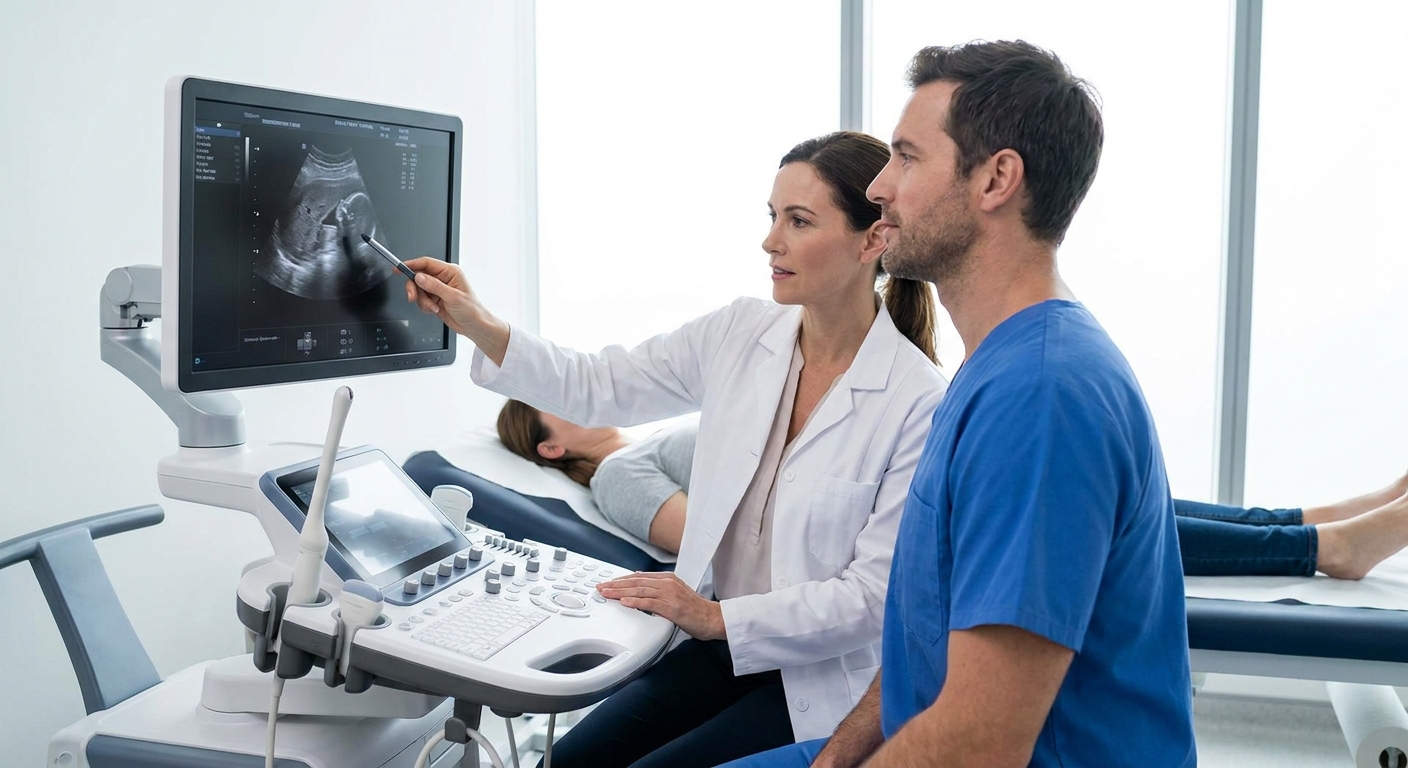
Ultrasound radiologist jobs in 2026 split into four real subspecialty lanes — women's imaging, abdominal and body ultrasound, MSK-guided procedures, and breast ultrasound — and picking the wrong lane costs sonography-focused radiologists years of case volume they can't get back.
- Ultrasound radiologist jobs cluster in women's imaging, body imaging, and MSK-guided reads — buy the subspecialty, not the job title.
- Women's imaging roles post the highest ultrasound volume among 2026 listings, often 50% or more of the daily worklist.
- Outpatient imaging center roles offer ultrasound-heavy schedules with no call — the safest pick for lifestyle-focused radiologists.
- Skip postings labeled 'ultrasound-focused' that turn out to be general body reads with occasional scans.
Why this matters
Ultrasound doesn't show up as its own filter on most job boards, so ultrasound radiologist jobs get buried inside generic "diagnostic radiologist" postings. RadBoard's dataset tracks 5,000+ radiology positions pulled from 20 sources, with roughly 3,700 listings active in 2026 — and only a fraction of those spell out ultrasound volume, supervision rules, or how scans get weighted against CT and MRI for RVU credit.
Radiologists who skip that screening step land in roles where ultrasound is 10% of the daily list instead of 40%. That gap compounds over a career: fewer reps means slower reads, a weaker negotiating position for ultrasound-heavy contracts down the line, and less leverage when a group later needs someone to run the vascular lab or supervise MSK injections.
Based on aggregated 2026 listing data, the lanes with the clearest ultrasound identity are women's imaging, abdominal/body ultrasound, and outpatient imaging centers — the rest require reading between the lines of a job description.
Who this is for
This guide is for board-certified or board-eligible radiologists who want ultrasound — pelvic, abdominal, MSK-guided, breast, or vascular — to be a real share of the daily worklist, not an afterthought bolted onto a general body imaging job. Filtering by ultrasound volume is easier on a platform built for subspecialty search: RadBoard tags positions across its 5,000+ listings instead of lumping everything under "diagnostic radiologist."
What to look for in ultrasound radiologist jobs for sonography specialists
Case volume and mix
Ask for the actual breakdown before signing — pelvic, abdominal, MSK, breast, and vascular ultrasound each carry different pacing and different technologist support needs. A job posting that says "some ultrasound" usually means under 15% of the worklist; one built around sonography interpretation should quote a percentage or a daily study count. If a recruiter can't answer with a number, treat the posting as general body imaging with a light ultrasound layer.
Supervision and credentialing rules
Direct versus general supervision requirements for ultrasound-guided procedures vary by state and by practice, and they determine whether you're physically present for every biopsy or aspiration. Groups running high MSK or breast ultrasound volume usually require ACR breast imaging accreditation or documented procedural competency. Confirm which certifications the role expects and whether the group covers the cost of maintaining them.
RVU structure for ultrasound vs. cross-sectional reads
Ultrasound RVUs are typically lower per study than CT or MRI, so a practice paying flat per-study rates without adjusting for modality can quietly undervalue a sonography-heavy schedule. Ask how the group weights ultrasound-guided procedures specifically — procedure RVUs often stack on top of the interpretation RVU and change the math on total compensation.
Call burden and STAT ultrasound coverage
OB/GYN and abdominal ultrasound generate a steady stream of STAT reads — ectopic workups, ovarian torsion, appendicitis — even in outpatient-leaning practices. Confirm whether ultrasound call folds into general body call or gets handled separately, since that single detail changes both compensation and actual sleep in 2026 contracts.
Subspecialty stacking potential
The strongest ultrasound-focused roles let a radiologist stack a second niche — breast, vascular, or MSK procedures — on top of a primary ultrasound assignment. That stacking is what turns a single-modality job into a defensible subspecialty career instead of a generalist role with extra scans attached.
Top picks for ultrasound-focused radiologists
The volume play. Women's imaging and OB/GYN ultrasound roles routinely run pelvic and obstetric scans as 50% or more of the daily worklist, more than any other ultrasound lane in the 2026 dataset. Groups in this space also tend to bundle mammography, giving a faster path to combined breast/pelvic credentialing. Verdict: Buy — see women's imaging radiologist jobs.
The generalist's bread and butter. Abdominal and body ultrasound work — RUQ pain, renal, appendicitis, general survey scans — makes up a steady 20-30% of daily volume in most body imaging positions, with less scheduling friction than procedure-based lanes. It's the most transferable ultrasound skill set across practice settings in 2026. Verdict: Buy — see abdominal imaging specialist jobs.
The wildcard. MSK ultrasound-guided injections and aspirations pay well per procedure and are in short supply relative to demand, but daily volume is lower and more schedule-dependent than pelvic or abdominal reads. Groups building sports medicine imaging partnerships are the ones worth chasing here. Verdict: Consider — see musculoskeletal radiology jobs.
The flexible pick. Remote-friendly breast ultrasound roles pair with screening mammography and can be structured around asynchronous reads, which suits radiologists who want ultrasound volume without a fixed on-site schedule. The tradeoff is less procedural variety day to day. Verdict: Consider.
The no-call safe pick. Outpatient imaging center roles built around ultrasound-heavy schedules typically carry no call and predictable hours, trading upside RVU potential for lifestyle stability. It's the lane to pick if 2026 is the year you want fewer nights answering the phone. Verdict: Buy.
Search ultrasound radiologist jobs now
Filter 5,000+ tracked positions by subspecialty instead of generic titles.
What to avoid
- "Ultrasound-focused" titles that are really general body imaging. Some postings use the phrase to attract applicants, but the actual worklist runs 10-15% ultrasound with the rest split across CT and MRI. Ask for a study-type percentage before you sign, not after.
- Academic centers where fellows absorb most of the ultrasound volume. Teaching hospitals often route routine scans to fellows for training purposes, leaving attending-level ultrasound reps thinner than the job description implies. Ask specifically what percentage of ultrasound reads go to attendings versus trainees.
- Teleradiology contracts that exclude live procedural supervision. Remote reads can cover diagnostic ultrasound interpretation, but MSK and breast procedural work almost always requires in-person presence. Confirm scope of practice before assuming a remote role covers your full ultrasound skill set.
Verdict comparison
| Ultrasound lane | Case volume | Call burden | RVU signal | Verdict |
|---|---|---|---|---|
| Women's imaging / OB-GYN | Highest (50%+ of worklist) | Low-moderate | Above general body baseline | Buy |
| Abdominal / body ultrasound | High (20-30%) | Moderate | Baseline | Buy |
| MSK ultrasound-guided procedures | Moderate, procedure-driven | Low | Procedure RVUs stack | Consider |
| Remote breast ultrasound | Moderate | Low | Screening-driven, steady | Consider |
| Outpatient imaging center | High | None to minimal | Volume-driven, no call premium | Buy |
FAQ
What are ultrasound radiologist jobs?
Ultrasound radiologist jobs are radiology positions where sonography interpretation — pelvic, abdominal, MSK, breast, or vascular — makes up a meaningful share of the daily worklist rather than an occasional add-on to CT and MRI reads. In 2026, these roles concentrate in women's imaging, body imaging, and outpatient center practices.
Is ultrasound radiology in demand in 2026?
Yes, demand is steady across women's imaging, MSK procedural, and outpatient center roles, three of the highest-volume ultrasound lanes tracked among RadBoard's 3,700+ active 2026 listings. Women's imaging carries the highest concentration of dedicated ultrasound volume.
Do ultrasound radiologists need extra certification?
Groups running high breast or MSK ultrasound volume typically require ACR accreditation or documented procedural competency beyond general radiology board certification. Requirements vary by state and by practice, so confirm the specific credential before accepting an offer.
Are ultrasound RVUs lower than CT or MRI RVUs?
Yes, ultrasound studies typically carry lower per-study RVU values than CT or MRI, which is why ultrasound-guided procedures often add a separate procedure RVU on top of the interpretation RVU. Ask how a group weights ultrasound specifically before comparing offers on salary alone.
Can radiologists work remote ultrasound jobs?
Diagnostic ultrasound interpretation can be read remotely, and breast ultrasound roles paired with screening mammography are among the most remote-friendly ultrasound lanes in 2026. MSK ultrasound-guided procedures almost always require in-person presence.
What's the difference between women's imaging and general body ultrasound jobs?
Women's imaging roles concentrate on pelvic and obstetric ultrasound and often bundle mammography, while general body ultrasound roles cover abdominal, renal, and general survey scans across a broader patient population. Women's imaging typically carries the higher ultrasound percentage of the two.
Do outpatient imaging centers offer good ultrasound-heavy jobs?
Yes, outpatient imaging centers often run high ultrasound volume with no call, trading some RVU upside for predictable hours. That combination makes them a strong pick for radiologists prioritizing lifestyle stability in 2026.
How many ultrasound studies does a radiologist read per day in a dedicated role?
Volume varies widely by lane, but women's imaging and outpatient center roles often push ultrasound past 40-50% of the daily worklist, compared to under 15% in general diagnostic radiology jobs. Ask for a specific study count during the interview rather than relying on the job title alone.
One last thing
The lane with the least competition in 2026 isn't women's imaging or MSK — it's outpatient centers advertising ultrasound-heavy schedules with no call, because most radiologists searching for ultrasound radiologist jobs filter straight to hospital-based women's imaging and skip outpatient postings entirely. Check RadBoard's outpatient imaging center listings before assuming the hospital track is the only ultrasound-heavy option worth chasing.